
How to Tell When Greenhouse Polycarbonate Needs Replacing
Greenhouse care
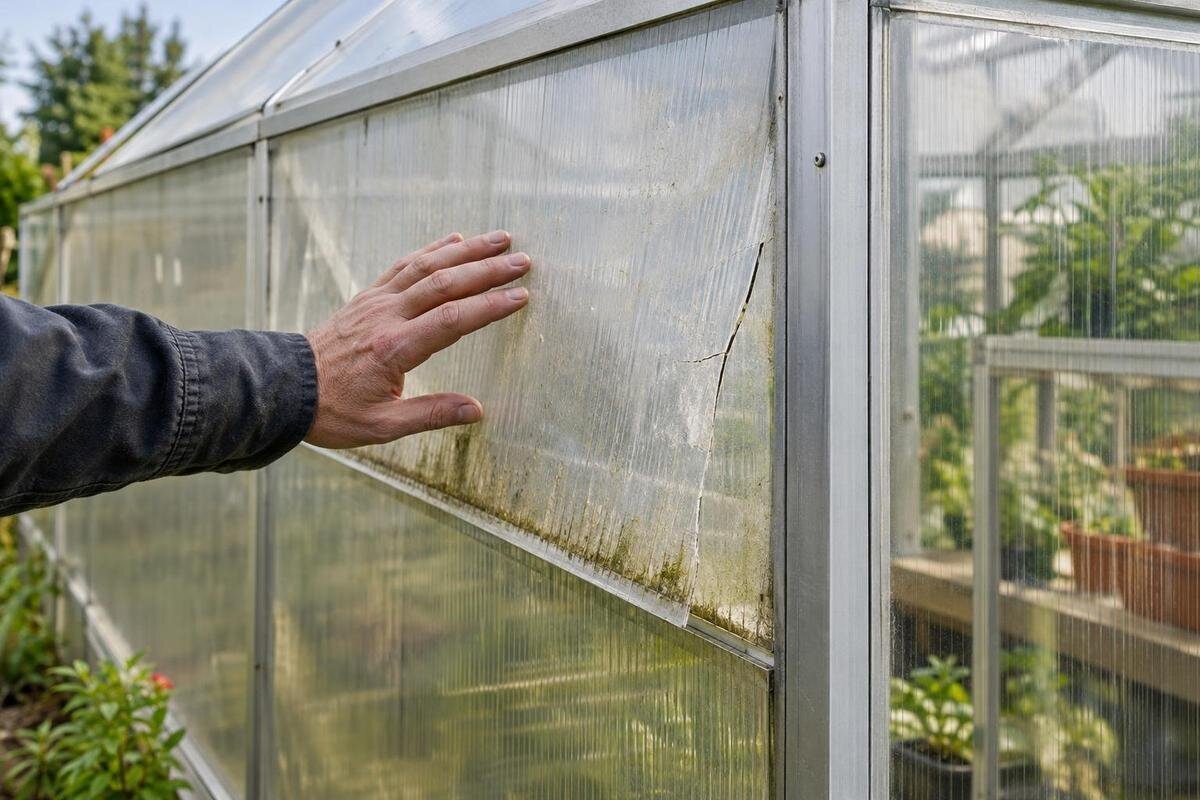
Polycarbonate can look older before it stops doing its job, so colour change on its own is not a reliable reason to replace a greenhouse panel. The useful distinction is between appearance and function: a clean, slightly cloudy sheet that remains intact and seated is different from one that is cracked, punctured, displaced or coming apart. Here is how to inspect the signs, identify the correct replacement and decide when a manufacturer or installer should review it.

Age alone does not set a replacement date
There is no dependable calendar date at which every greenhouse polycarbonate panel needs replacing. Age is useful background, but condition and fit matter more than age by itself. A sheet may lose clarity or change colour while remaining intact and correctly seated; another may be damaged much sooner by an impact or a problem with its fixing. Panels in the same greenhouse can weather differently because they face different directions or collect dirt differently, so an uneven appearance is not a diagnosis. Do not use one shade of yellow, a few fine marks or the year the greenhouse was bought as a standalone replacement signal. Compare it with an earlier photograph, if you have one, taken in similar light.
Ask whether the sheet still forms a continuous, secure part of the greenhouse covering. A through-crack, hole, broken edge or panel that has slipped from its intended position affects function more directly than a superficial scuff. A panel can look clear and still be loose, so clarity alone is not enough either. Look at the whole surface and its contact with the frame, and note whether it remains where the manufacturer's design intends it to sit. If you cannot tell a scratch from a crack by sight, do not flex, pull or prise at it to test it; check the manual or seek advice from the supplier or an installer.
Inspect the panel face, edges and fit
Inspect the visible face from a safe position rather than focusing only on the most obvious mark. Note any crack that appears to pass through the sheet, puncture, missing fragment, split channel on cellular polycarbonate, or edge that has lifted from the frame. Also look for an edge that sits differently from neighbouring panels or a sheet that remains bowed. A surface scratch and a break through the panel are not the same thing, but do not touch a damaged area to find out. These observations describe what you can see; they do not establish why it happened. Do not stand on the greenhouse or lean heavily on its glazing. If a roof sheet is loose or overhead, leave it undisturbed and arrange a safe assessment.
Check the perimeter and frame contact as well as the middle of the panel. Dirt on the outside may come away during cleaning, whereas haze or debris inside the hollow channels of a multiwall sheet cannot be wiped from its face. Record that distinction, but do not drill into a channel, peel off edge tape or apply sealant unless the manufacturer approves that method for your panel. Take a photograph of the whole sheet and a close view of the damage from a safe angle. Note the date and panel location, especially if the change is developing over time; a clear record is more useful than a diagnosis based on a brief glance. If several sheets are affected, photograph each one separately.
Look for a pattern across the greenhouse
Map how many panels are affected and where they are: roof or wall, one side or several, and near an edge, joint or opening. A single damaged sheet after a known impact may be isolated; similar movement or damage in several places raises a wider question about fit, retention or the greenhouse itself. A pattern is a reason to investigate, not proof of a fault. Note whether the issue appeared suddenly or gradually and whether it has returned after earlier work, but do not treat timing as a diagnosis. If panels keep shifting or a problem returns after an approved replacement, ask an installer to review the assembly rather than ordering sheets repeatedly.
Keep the notes practical: panel location, number, visible damage and when you first noticed it. This overview helps distinguish an isolated replacement from work affecting several parts of the greenhouse. If the assessment leads you to compare complete models, the T-Shaped Orangery Greenhouse is one listing to explore. All product links in this guide lead to complete greenhouses, not spare-panel records; their names do not establish glazing specifications or compatibility with your existing frame. Keep a parts enquiry separate from a new-greenhouse enquiry. One damaged panel does not, by itself, mean the whole greenhouse needs replacing.
Assess clouding and surface marks
Cloudiness, fading and fine surface scratches deserve a closer look, but they are not automatic replacement triggers. First distinguish dirt or residue on the outside from a change within the sheet. Use only a cleaning method allowed by the greenhouse manufacturer; avoid abrasive pads, harsh solvents or forceful washing if the care instructions do not permit them. A gentle clean may show that a mark was on the surface, but it will not reverse material ageing. Do not use a scratch-polishing product unless the manufacturer says it is suitable for the panel, as the surface treatment may differ by sheet.
After cleaning, judge the panel in context rather than expecting it to look new. Is it intact, securely fitted and suitable for what you grow or store in the greenhouse? If light levels matter to your use, consult the manufacturer's description of the glazing rather than inferring performance from colour alone. A photograph before and after cleaning can help distinguish surface grime from lasting change. Replacing sound panels for appearance is a different decision from addressing damage. Likewise, exploring a different design, such as the Pyramid Greenhouse, is a separate purchase decision, not a necessary response to ordinary clouding.

Damage that calls for an approved replacement
An opening through the sheet, a crack that crosses a panel, a puncture, a broken corner or a split exposing the internal channels is functional damage, not just ageing. Replacement is generally appropriate when the panel can no longer provide a continuous covering or remain in the position intended by the manufacturer. A panel that remains in place can still have a through-crack; apparent stability does not make it an approved repair. A loose roof sheet creates a practical safety concern, so do not climb up or handle it to confirm the full extent. Keep clear and arrange help. Avoid treating tape, adhesive, paint or household sealant as a lasting repair unless the manufacturer has approved that method for the exact panel and location.
Damage at an edge can involve more than the sheet itself. If a panel is torn where it meets the frame, or nearby panels show similar damage, ask whether retaining parts or the surrounding assembly need attention. Replacing a sheet without addressing a recurring fit problem may leave the issue unresolved. Have the supplier or installer distinguish damaged glazing from a damaged retaining component before deciding what to order. If that assessment points to wider renewal, you can compare complete models such as the Limited-Edition Aluminium Greenhouse with Storage. Keep the findings about your existing greenhouse as the basis for deciding between component replacement and a new structure.
Identify the exact panel before ordering
Before ordering, identify the greenhouse make and exact model, including any revision or version shown on a label, manual or original paperwork. Identify the panel as a part, not just as a rectangle of a similar colour. Polycarbonate sheets can differ in solid or cellular construction, thickness, overall dimensions, channel pattern, edge treatment and specified face orientation. The way a panel is held in place can also vary by model. Use an official spare-part code or manufacturer drawing where available. If there is no readable label, do not guess from the greenhouse's general shape; similar-looking frames may use different glazing components. Check any paperwork for a model name before measuring.
Photographs can help a parts team connect the model information to the affected panel. Include a full view of the greenhouse, the panel's roof or wall position and its edge or damage where safely visible. State any serial information and the number of panels needed. For a model such as the Bloomcabin Prestige Greenhouse, use the exact name from your paperwork rather than assuming a current listing identifies an older version. Ask the supplier to confirm the match and keep the part reference with the manual. If the old sheet has already been removed, do not rely on a distorted piece as the sole reference.
Why a similar-looking sheet may not fit
Two sheets can look alike and still not be interchangeable. A near match in length does not confirm the right thickness, internal wall structure, cross-section, curve, channel direction, UV-protected face, edge finish or fixing arrangement. Small differences can affect how the panel fits and is retained. Some greenhouse models specify which side faces out or how an edge is finished, so consult the model documentation rather than copying a neighbouring sheet or relying on a photograph. Matching only visible colour is especially unreliable after the older panel has weathered; the replacement may look different even when it is the correct specified part.
Do not force an uncertain replacement into a channel, enlarge holes, cut edges or change the fixing method to make it fit. Those steps can damage the sheet or compromise its fit, and the approved method is model-specific. If an exact part is unavailable, ask the manufacturer or a qualified installer whether an alternative is approved for that greenhouse and who is confirming the substitute. If no suitable replacement can be identified and you decide to explore a new structure, the Spacious Greenhouse listing belongs in that comparison. An unavailable part is a reason to review your options, not to improvise a fit.
When to ask an installer to assess it
Some checks should stop at observation. If the affected sheet is overhead, loose, difficult to reach or next to a visibly distorted frame, do not climb onto the greenhouse, pull the sheet free or try to realign the frame. Keep people clear of a panel that could fall and contact the supplier or an installer. Avoid an inspection if reaching the panel would mean standing on a bench or leaning heavily on glazing. Use photographs and the manual to explain what you can see; leave removal and assessment to someone who can work safely. Do not try to make an uncertain repair while waiting for advice.
Ask for professional review where damage is repeated, a replacement panel will not stay in place, several panels are affected or the frame appears to have shifted. These signs do not establish the cause; they mean buying another sheet alone may not resolve the problem. An installer can assess the model and surrounding assembly against the relevant instructions, then distinguish a panel issue from a problem elsewhere in the fitting. Use that assessment to define the work needed before comparing purchases. If the discussion turns to a complete replacement, the Classic aluminium greenhouse is a model to include in your comparison.

Choose between a panel and a wider replacement
Replacing one panel is most straightforward when the damage is isolated, the rest of the greenhouse is serviceable, the frame and retaining parts appear undamaged, and an exact approved panel can be identified. If several sheets are split, loose or unavailable, broaden the enquiry before committing to repeated individual replacements. Consider the number and location of affected panels, the condition of adjacent sheets, part availability and whether the problem may recur. The objective is to correct the failure, not simply hide the visible mark. A repeated fault warrants assessment before you decide how much to replace.
Compare practical options with the supplier or installer: one matching sheet, several approved components, or a new greenhouse. Each option should address the identified problem rather than merely change the appearance. Do not decide from the number of damaged panels alone; the model, fit and condition of the whole structure matter too. If full replacement is appropriate, include the Aluminium Lean-to Greenhouse only as an option to assess against your site, glazing and installation requirements. Changing the type of greenhouse is a separate choice from repairing the current one, so make clear whether your priority is to restore the existing structure or choose a different layout.
What to include in a parts enquiry
Make a replacement enquiry easy to answer by giving the greenhouse model and any part or serial number exactly as printed, plus the number and position of affected panels. Attach clear photographs from safe positions: a full view of the greenhouse, the panel in context and the damaged edge or face. If you have the manual, a drawing or original order confirmation, include the relevant reference. Dimensions may help, but ask which points the supplier needs and measure only if the panel is safely accessible; do not climb or remove a sheet just to obtain them. If you do not know whether the sheet is solid or cellular, say so rather than guessing.
Ask the supplier to confirm the part identifier, its match to the greenhouse model or revision, and any orientation or fitting notes in the official instructions. Keep the reply with your original enquiry so the panel location, quantity and part reference remain together. If the documents and photographs are insufficient, ask whether manufacturer review or an installer visit is needed. For a separate upgrade enquiry, you can reference the Limited Edition Aluminium Greenhouse and explain that you are comparing complete models rather than requesting a spare. Wait for confirmation of the replacement part before ordering.
Frequently asked questions
Does yellowed polycarbonate always need replacing?
No. Colour change or clouding alone does not prove that a panel has failed. Check for cracks, holes, internal damage and problems with fit, and consider whether the panel still suits its intended use. Follow the greenhouse manufacturer's guidance if you are unsure.
Can I patch a cracked greenhouse panel?
Do not assume that tape, glue or sealant is an approved or lasting repair. A crack through the sheet or a hole usually calls for a correctly matched replacement, but confirm the appropriate part and method with the manufacturer or an installer. Keep clear of a loose or overhead panel.
Can I use any polycarbonate sheet cut to size?
No. Sheets can differ in construction, thickness, profile, channel direction, edge treatment and specified face orientation. Similar dimensions or colour do not establish compatibility. Check the greenhouse manual or ask the supplier to confirm an approved match before ordering.
How do I identify the right replacement panel?
Find the greenhouse's exact model and any revision or part number in its manual, label or original paperwork. Send the supplier clear photographs of the greenhouse and panel location, along with other information they request. Do not climb or remove a sheet just to measure it.
Is there a fixed interval for replacing greenhouse polycarbonate?
There is no single interval that applies to every greenhouse panel. Use the manufacturer's instructions and assess the panel's condition, fit and function. Age can provide context, but a through-crack, loose edge or other functional damage matters more than a particular year.
A sound replacement decision comes from the panel's condition, how securely it fits and whether an exact approved part is available, not from colour or age alone. Record what you can see, use the greenhouse documentation to identify the model, and ask the manufacturer or an installer when fit, access or repeated damage is uncertain. That helps separate a cosmetic change from a genuine replacement need and reduces the risk of ordering a sheet that does not match.
