
Can Solar Panels Support Winter Greenhouse Heating?
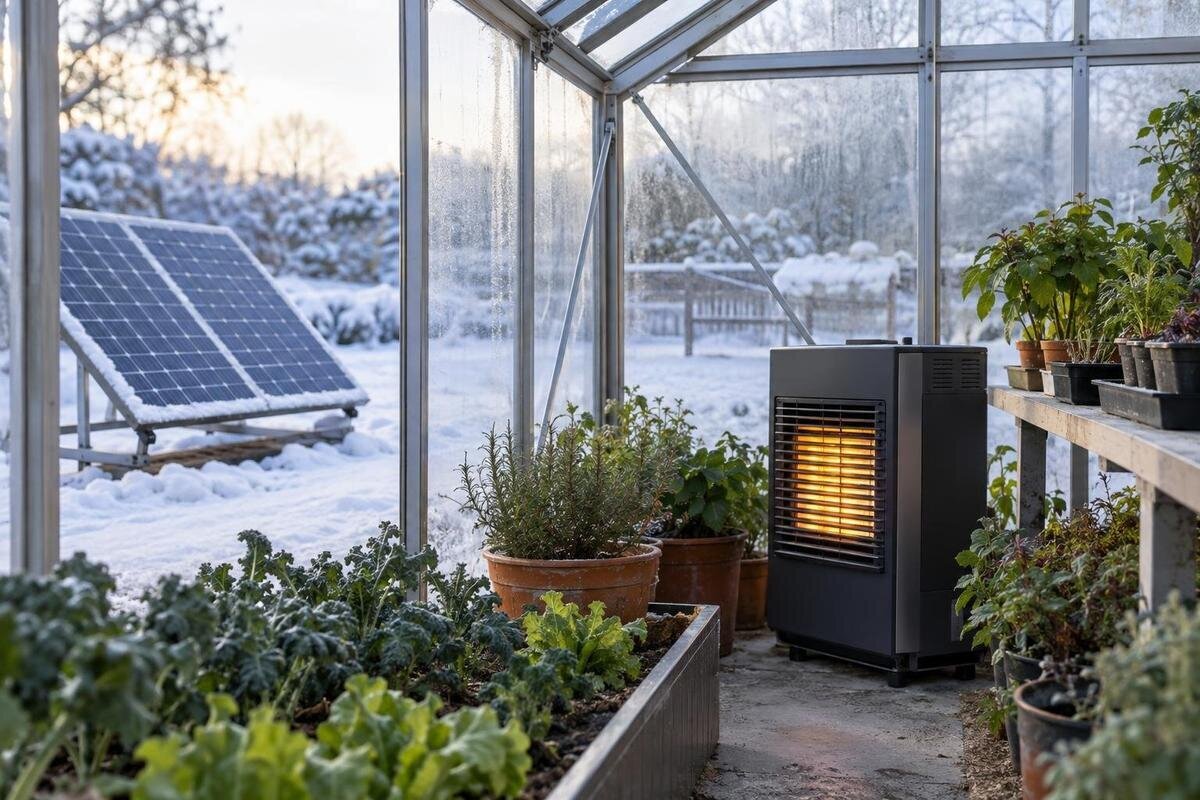
Greenhouse heating and winter energy
Solar panels can make a useful contribution to greenhouse heating, but Irish winter performance is as much a question of timing as annual energy. Heat may be needed overnight and through dull spells, when photovoltaic panels produce less or no electricity. The practical test is whether verified heater use, a site-specific winter generation estimate, storage and backup line up with the conditions you want to manage. This guide explains how to compare those figures without assuming a particular greenhouse will reach a guaranteed temperature or deliver a set bill saving.

01
How solar PV contributes to winter greenhouse heating
Solar photovoltaic (PV) panels can supply electricity for an electric greenhouse heater or reduce the amount drawn from the grid. In Ireland, winter days are short and output changes with the weather, while heating demand can continue after daylight ends. A system with a useful annual generation total may still fall short on a cold, dull evening. Cloud, local shade and the timing of demand matter; a panel count or a result seen on one bright afternoon cannot show whether the greenhouse will stay at a chosen temperature during the periods that matter. This is especially important if plants need protection overnight rather than a few daytime hours of warmth.
Treat PV as a contribution unless a site-specific energy plan demonstrates reliable cover for the winter hours you need. “Support” might mean supplying some daytime heating, charging a battery for evening use or lowering grid imports; self-sufficiency means meeting the load when solar output is poor as well as when it is strong. PV makes electricity. Solar-thermal equipment, which collects heat for a fluid or water, is a different system and does not automatically power a plug-in heater. This guide focuses on PV paired with electric heating and separates energy estimates from promises about temperature or cost.
Define the protection plants actually need
Before comparing panel output, define what you need the heating to achieve. Some growers want to protect selected frost-sensitive pots; others want to maintain conditions for active growth across a full greenhouse. Those aims can require very different heating hours. Check reliable care information for each plant rather than relying on one universal temperature, then write down the minimum temperature you want to maintain, whether it applies overnight, and which plants or bench must be protected. That target is an assumption for the energy plan, not proof that a particular heater or solar system can reach it. The Prestige greenhouse range is listed from 3.77 m² to 28.08 m², so use the exact chosen floor area rather than a generic size label; area alone does not establish heat loss.
Set the scope of the heating estimate before collecting consumption figures. It should identify whether you intend to heat the whole structure or a defined growing zone, as readings for one cannot stand in for the other. Record when protection is required—overnight only, throughout cold days or whenever conditions fall below the chosen minimum. Also distinguish a target for active growth from a minimum intended only to protect plants during cold weather. A solar estimate based on a few hours of heating is misleading if the plants need continuous protection. Keep these requirements consistent when comparing heater use with expected generation.
02
Measure the heater’s electricity use
Read the heater manual or rating label for its electrical input in kilowatts (kW). As a simple energy check, a 1 kW heater running at full input for six hours uses 6 kilowatt-hours (kWh). If a thermostat switches it on and off, elapsed time is not the same as actual running time, so use observed consumption where possible. Do not guess from the heater’s physical size or a greenhouse model name. Add the demand of any fan, controls, lighting, pump or other equipment expected to run at the same time; those loads compete for the same PV and battery supply. Keep rated power and energy separate: kW is the demand at a point in time, while kWh records energy used over a period.
Measure over representative cold periods and note the outdoor conditions, indoor minimum, plant-protection target and how long the heater actually ran. Data from a single mild night can understate demand; one unusually severe night may not represent a whole winter. Use a suitable energy monitor only with plug-in equipment and a device rated for that use; for fixed equipment, ask a qualified electrician to assess consumption. Record days with similar settings, including whether doors were opened or vents used, rather than comparing unlike conditions. Household bills often combine the greenhouse with other appliances, so may not isolate its heater use. When comparing options in the Spacious Greenhouse range, listed from 47 m² to 70 m², do not transfer readings from a much smaller enclosure directly to your chosen size. Glazing, exposed surface, draughts and wind also affect demand.
Compare winter solar generation with heating demand
Obtain a forecast of PV electricity by winter month for the actual proposed array, not just a headline annual yield. The estimate should be based on the intended site, orientation and tilt, array size and nearby shading, with its assumptions stated. A generic calculator or national average cannot account for a tree, chimney or neighbouring building at your location. Ask for figures for the months when heating matters most, rather than spreading an annual total evenly across twelve months. Check that the forecast relates to the exact proposed panel location and keep any uncertainty about shading or other assumptions visible. If the array is on a house roof or on the ground, keep that estimate distinct from any unverified greenhouse-roof plan.
Compare generation with measured or carefully estimated heater use for the same winter periods, but check the timing as well as the total. A monthly surplus can hide a daytime surplus and a night-time deficit, while persistent cloud can leave several poor days together. Hourly estimates or later inverter records are more useful for deciding how much can be used directly. If you have only monthly totals, use them to judge a broad contribution, not to guarantee night-time coverage. Electricity exported at midday is not available to the heater later unless stored, and any export value depends on your actual supplier terms. If you are choosing from the Aluminium Classic Greenhouse range, keep the greenhouse details separate from the proposed PV array specifications: the greenhouse’s floor area does not establish panel capacity or predict solar output.

03
Battery capacity and overnight heating
A battery can move some daytime PV electricity into evening use, but it stores energy rather than creating it. Check the manufacturer’s usable capacity in kWh, maximum continuous output in kW and compatibility with the inverter and heater. A headline or nominal capacity may not equal the energy available to appliances after limits and conversion losses. Power and capacity answer different questions: a battery may store enough energy for a period but still have an output limit below the combined demand of the heater and other running equipment. Ask for documented values for the complete system, including any reserve kept for other household uses.
Size storage for the gap it is meant to cover, not for an average sunny day. A battery may run down during a longer spell of weak generation; recharging it from the grid can maintain a reserve, but that energy is not solar-supplied. If you are considering a Limited-Edition Aluminium Greenhouse with Storage, distinguish its built-in storage section from electrical energy storage. The greenhouse listing does not establish PV battery capacity or heater compatibility. For the battery system, establish which loads it can support, under what conditions and for how long. Also check whether its reserve can be prioritised for the greenhouse heater when other household loads are present.
Plan for low-output spells and power cuts
Decide what supplies heat when PV generation and stored energy are not enough. If a suitable mains supply is available, grid electricity can cover the deficit, but the amount and cost belong in the plan. A grid-connected solar system is not automatically an emergency supply: some systems do not provide power during a mains outage unless specific backup capability is included. A battery alone does not prove that the heater will remain powered. Ask the installer to identify which circuits are backed up, the documented load they can serve and the expected duration under stated conditions. If grid independence is essential, make that requirement explicit before buying; if grid import is acceptable, the goal may instead be to reduce how much you use.
Include the intended greenhouse location and exact heater in the backup discussion; do not assume a nearby house supply can serve any proposed installation. If you are comparing Lean-to Greenhouse sizes, listed from 3.69 m² to 14.34 m², identify the selected model and its expected heating demand before discussing the supply. For any alternative power source, use equipment documented as suitable for that environment and have the arrangement reviewed by a qualified professional. Avoid improvised electrical or combustion setups inside a greenhouse. The backup plan must cover a shortfall in generation, rather than depend on how the panels perform on a bright day.
04
Reduce the heat demand before adding capacity
Reducing the area you need to keep warm can make a limited solar supply go further. Group plants with similar protection needs, protect only the necessary bench or use a suitable inner partition rather than heating unused space, if that arrangement fits the plants and your routine. The effect depends on the enclosure and how it is used, so do not assign a fixed percentage saving without measurements. Keep the heater and controls accessible and preserve necessary airflow. A smaller heated zone is a demand-management choice; it does not remove the need to protect plants through low-output periods.
Check for avoidable gaps and draughts, and consider a suitable night-time insulating screen only if it is compatible with the greenhouse and growing conditions. A screen can change light and moisture as well as heat loss, so follow the greenhouse maker’s guidance and retain appropriate ventilation rather than sealing the structure indiscriminately. The Limited Edition Aluminium Greenhouses range is listed from 3.77 m² to 28.08 m²; enter the exact chosen size and heated zone in your plan rather than assuming a model name implies a particular energy saving. Measure again after any change to see how actual heater use responds.
Check the proposed solar-array location
Panels need a suitable, documented support. Do not assume that a greenhouse roof is rated for PV modules or their mounting: a product description may not provide a load rating, and the roof’s appearance is not evidence. Before considering a roof-mounted array, check the relevant manufacturer documentation and have the proposed structure and mounting arrangement assessed by qualified professionals. Depending on the site, a separately assessed house roof or ground-mounted array may be an option, but each has its own shading and winter-yield assumptions. Avoid treating the greenhouse as a rooftop PV surface without explicit confirmation.
Keep floor dimensions separate from usable panel area: frames, vents, orientation, nearby shade and safe mounting space affect what can fit. The T-Shaped Orangery Greenhouse is listed from 16.52 m² to 30 m² of floor area; that is not a roof-area figure or evidence of suitability for supporting panels. Ask the solar installer to identify the proposed array location clearly in the winter forecast. An estimate for a house roof or ground-mounted array should not be transferred to a greenhouse roof with different shading or orientation.

05
Match the heater to the inverter and battery
Once the heater’s actual electricity use is known, compare its demand with the documented system limits. Confirm the heater’s electrical input and suitability for a greenhouse environment, then compare the total simultaneous demand—including fans, pumps or lights—with the inverter’s and battery’s stated continuous output. When comparing sizes in the Pyramid Greenhouse range, listed from 5.53 m² to 18.9 m², record the selected dimensions alongside the observed conditions and heater specifications. A generic watts-per-square-metre rule that has not been verified for the structure is not a substitute for this information. Where controls or other loads cycle, make sure the measured profile includes them rather than recording the heater alone.
Ask the solar or electrical professional to confirm component compatibility and record the agreed operating limits for the complete arrangement. Keep the heater, inverter and battery documentation together so that their input, output and usable-capacity figures can be compared without confusing one component’s rating with another’s. A listing for a single component does not establish that it works with the rest of the proposed system. Suitability for the greenhouse environment also needs attention: do not assume an ordinary indoor heater is appropriate, and do not modify electrical equipment yourself. Resolve these compatibility questions before relying on the arrangement to protect plants.
Judge the system against winter data and your tariff
Make a comparison at a time resolution that reflects the heating requirement. Put the chosen plant-protection target and measured heater kWh beside a site-specific winter PV estimate; add documented usable battery energy and output, with stated losses and other loads. Mark when the grid or backup must cover a deficit, and compare the same period on both sides of the calculation. For a running-cost estimate, multiply expected imported kWh by the unit rate on your current bill. Count any export credit only at the rate and under the terms your supplier confirms; an exported midday unit is not automatically worth the same as a unit bought later. Fixed charges do not disappear simply because solar reduces use.
Keep assumptions visible: heater hours, the conditions measured, other equipment, estimated output and whether battery charge is reserved for heating. Recheck the balance for a sustained period of poor generation rather than relying on a monthly average alone. If dependable figures for the exact site or heater are unavailable, mark the result as uncertain and treat solar as a supplement, not a guaranteed frost-protection supply. A system can still reduce imported electricity in brighter periods; its value depends on your priorities and actual tariff, not on a promised temperature or bill saving. Assessing a difficult winter period is more revealing than looking at annual electricity totals alone.
Frequently asked questions
Can solar panels heat a greenhouse overnight in winter?
PV panels do not produce electricity after dark. A battery can carry some daytime generation into the evening, but its usable capacity and output are limited, and it may not refill during several dull days. For dependable overnight protection, include a verified grid or other approved backup rather than assuming panels alone will cover the load.
How many solar panels would I need for greenhouse heating?
There is no reliable panel count without the heater’s measured kWh use and a winter yield estimate for the proposed array’s exact location. Ask for monthly output and, if possible, hourly profiles; annual production alone can hide a winter shortfall. The estimate should account for the proposed site and any nearby shade.
Will a battery make greenhouse heating self-sufficient?
Not necessarily. A battery shifts electricity to a later time but cannot create energy; its usable capacity, output limits and conversion losses matter. Consecutive low-sun days can exhaust the reserve. Check whether the heater is on a backed-up circuit and what supply covers a deficit.
Can I mount solar panels on the greenhouse roof?
Only if the greenhouse and mounting system are documented for that use and professionally assessed. A product name, image or floor-area figure does not establish roof capacity. A separately assessed house-roof or ground array may be an option; either way, get a winter estimate for the actual site.
How do I estimate the running cost?
Record the heater’s actual kWh use over representative cold periods and include other equipment. Estimate how much electricity will still come from the grid after solar and battery use, then multiply those imported kWh by your current unit rate. Count exports only at the rate your supplier confirms; do not assume a fixed saving.
Solar panels can reduce the electricity imported for greenhouse heating, but their output does not reliably coincide with every cold night or dull spell. Treat measured heater use, a winter-specific PV forecast, battery limits and a dependable backup as parts of one system. If the figures do not show coverage during low-output periods, plan for solar to offset grid electricity rather than provide the sole source of heat. Its role is clearest when the plant-protection target and the limits of the supply are both understood.
