
Raising Sweet Peas Under Glass for Earlier Flowers
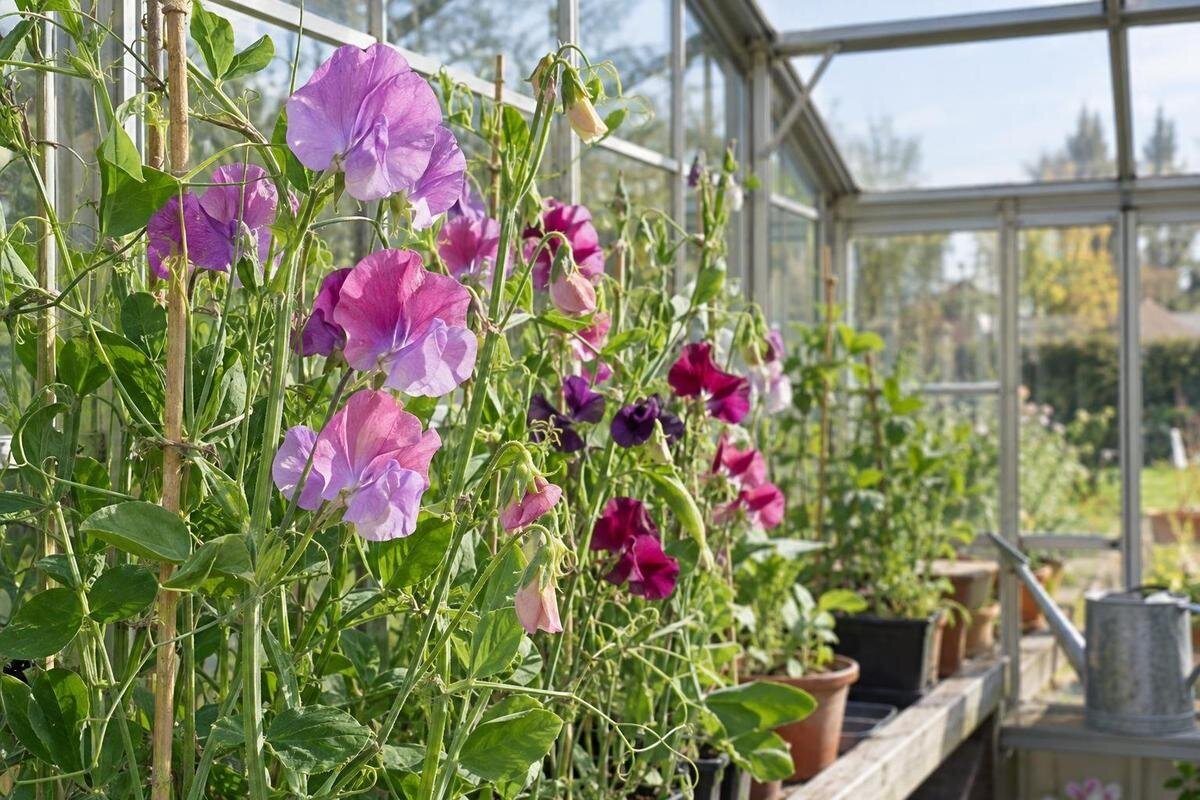
Early sweet peas under glass
Sweet peas are cool-season climbers, not plants to be kept hot under glass. A greenhouse can help you sow earlier and shelter young plants, but early blooms depend on light, cultivar, support and ventilation as much as on protection from the weather.

What a greenhouse changes for sweet peas
Under glass, the main advantage is control over the start of the crop. You can sow before the outdoor bed is ready, protect young growth from hard rain and gusts, and pick stems from a sheltered space. This can bring the first flowers forward when the greenhouse is bright enough for steady growth, but it does not guarantee a particular date. Cultivar, sowing time, winter light, root conditions and temperature all influence flowering. Sweet peas are cool-season climbers, so the aim is a protected, airy environment, not summer-like heat. Check the seed packet for the variety’s flowering period and mature height before deciding how many plants to raise. Early sowing only helps if seedlings keep growing; in a dim house, warmth alone cannot replace daylight.
A small early batch needs little more than a clear bed or container area, a support and room to reach the plants. A dedicated cut-flower house with separate rows, seedling staging and work space is a larger project. The Spacious Greenhouse listing covers options from 47 to 70 m², which gives a scale comparison, not a recommended size for sweet peas. Total floor area does not tell you how much remains after beds, paths and stored equipment are included. Sketch the crop and the work you will do around it before treating the greenhouse as productive growing space. If the house is shared with other plants, allow for their shade and for anything that might obstruct ventilation.
Work back from the flowering window
For early flowers, sweet peas are commonly sown under cover in autumn or winter. An autumn sowing has more time to establish before spring; if that window has passed, a winter batch can still get ahead of one sown outdoors later. Follow the chosen cultivar’s packet for its sowing window and expected flowering period, as varieties differ. The greenhouse’s light matters as much as the calendar: a sheltered but dim corner may produce slow, stretched plants. Keep a note of sowing and first-flower dates, and record any unusually warm or dull spell that could help explain the timing.
Use two or more sowings if you want a longer run of cut stems rather than one flush. A first batch can be raised for the earliest flowers and a later one for succession, but both need clear access to light, air and support. The Limited Edition Aluminium Greenhouses range is listed from 3.77 to 28.08 m². Treat this as total floor area, then check the exact configuration to see whether it can accommodate separate batches, a picking path and any seedling bench. Leave enough room to reach every row without stepping into the bed; crowded plants are harder to inspect and pick, and make poor use of additional seed.
Germinate in warmth, then grow seedlings cool
Sweet pea seed germinates well at about 15–18°C; this is a practical temperature for germination, not a target for keeping mature plants warm. Sow in deep individual pots or root trainers, which make it easier to move seedlings without disturbing their long roots. Use clean, free-draining seed compost, moisten it evenly and cover the seed to the depth on the packet. Keep the medium damp but not saturated, and check both temperature and moisture before adding extra heat if emergence is uneven. Seed left in waterlogged compost may rot, while a dry surface can interrupt germination.
Once shoots appear, move them into the brightest cool, frost-protected space available and remove any propagator cover that traps excess warmth. Aim for compact, steady growth rather than soft stems produced by warmth in poor light. Space pots so air can move between leaves, turn them if they lean towards one side of the greenhouse, and water when the compost begins to dry. A winter-sown plant may progress slowly when daylight is limited, so do not try to make up time by heating it. When seedlings reach roughly 10–15 cm, pinching out the tip can encourage side shoots but may delay the first flowers; leave some unpinched if the earliest stem is the priority.
Choose the brightest position available
Sweet peas flower best in a sunny position with strong natural light. In a greenhouse, look at the proposed bed through the day rather than judging it at midday alone: low winter sun, a wall, fence or evergreen canopy may shade it for hours. Check the area in the morning, around midday and later in the afternoon, and consider how nearby trees may change the light when they come into leaf. Persistent shade can slow growth and leave stems weaker or shorter, so keep plants clear of tall shelves and crops that will block light as they grow.
If you are considering an attached structure, assess the wall and the air route as carefully as the floor area. A wall may cast shade, and a sheltered position may also need deliberate use of its vents to keep air moving. The Lean-to Greenhouses category lists options from 3.69 to 14.34 m², but those figures cannot tell you whether a specific location is bright or well ventilated. Check the actual site, obstructions, door access and vent positions before putting in a bed. If the position is shaded for much of the day, consider another location rather than trying to compensate with warmth.

Prepare a deep root run in a bed or containers
Sweet peas make substantial roots, so give them a deep, free-draining growing medium rather than squeezing them into a shallow trough. In a greenhouse border, loosen the ground in advance and work in well-rotted organic matter where the soil needs improvement. Avoid a wet, compacted layer below the planting depth. In containers, choose deep pots with drainage holes and compost suited to container growing. Several plants can share a large container only if the spacing on the seed packet can be maintained and air can circulate around their leaves. Settle plants into their final position gently to limit root disturbance.
Leave enough floor space for the bed or containers, a path to reach stems and room to water at soil level. These are working dimensions, not just planting distances: a row placed hard against a wall or glazing is difficult to tie, inspect and pick. The Pyramid Greenhouse range is listed from 5.53 to 18.9 m²; use the specific footprint to sketch the bed, supports, pots and aisle rather than treating total floor area as growing area. Check that you can get to the back of the crop without brushing stems or standing in the bed. Decide where water and compost will be kept before filling every available corner with plants.
Set supports before the vines begin climbing
Sweet peas climb with tendrils, so put in a firm, continuous support before stems begin to sprawl. Garden netting, a trellis or vertical strings can work if they are securely fixed and within reach for tying and picking. Position the support so it does not block a door, vent or regular path. Do not attach it to glazing bars or other parts of the greenhouse frame unless the manufacturer says they are designed for that purpose. Netting is a simpler option for plants to climb through; training selected stems up strings gives more control over straight cut stems, but needs more frequent attention.
Check the variety’s mature height against usable internal clearance, not just the outside ridge measurement. A plant reaching the roof can be awkward to tie, ventilate around and cut. The Bloomcabin Prestige Greenhouse range is listed from 3.77 to 28.08 m², but floor area does not establish clear height or suitable support points. Check the measurements and instructions for the exact model before planning a tall variety or a cordon system. Leave some working room above the crop so you can tie stems and remove finished growth without pressing foliage against the roof.
Ventilate before the greenhouse overheats
A greenhouse can warm quickly on a bright day, even in early spring when the air outside still feels cool. Open doors or vents as the inside warms; do not wait for leaves to droop before acting. If the structure has openings on more than one side, using them together can help warm, stale air leave. Follow the greenhouse manufacturer’s guidance and take account of wind exposure. Ventilation also helps leaves dry after watering and avoids a persistently close atmosphere. As conditions cool, close openings as needed and keep an eye on the overnight forecast so young plants are not left exposed to a damaging cold spell.
Use a min–max thermometer near the crop rather than relying on how the greenhouse feels by the door, and note peaks on bright days. Sweet peas suit cool, bright growing conditions; prolonged heat can produce weaker growth and shorten the useful flowering period. The Aluminium Greenhouses range is listed from 3.77 to 28.08 m², but floor area is not a ventilation specification. Compare the vents and opening positions for the exact configuration you are considering, then decide how you will open them early enough on sunny days. A simple record of temperature and flowering can help you adjust ventilation for later sowings.
Allow space for paths, staging and storage
A cut-flower crop needs more than a row of plants. Allow space to carry a bucket, reach ties, water the roots and remove stems without brushing neighbouring vines. A path that seems wide enough while the plants are small can become awkward once the crop fills its support. If you use benches for seed trays, include them on the plan and check that they will not shade adult plants or obstruct airflow. Keep tools and other equipment out of the bed, and make sure you can turn at the end of a row without pulling on stems.
Some designs include built-in storage; the Limited-Edition Aluminium Greenhouses with Storage category makes that feature explicit. Check where the storage sits in the exact layout, allowing for both the space it occupies and the room needed to access it when deciding how much bed can fit. Keep ties, snips and labels somewhere reachable without crossing the crop, while leaving the main route clear for watering and picking. Planned staging space can save repeated handling of seedlings, but do not count an area as available for plants if it is already needed for shelves or stored equipment.

Water, feed and inspect the crop
Keep root moisture reasonably even, especially after planting and when containers dry faster than a greenhouse border. Water thoroughly at soil level, then let excess drain; standing water in pots is not a substitute for consistent moisture. Check containers more often in warm, bright weather, while a cool spell may slow water use. Morning watering gives foliage time to dry if it gets splashed. If plants wilt, check the root zone and the temperature before simply adding more water: dry compost, waterlogging and excess heat can all cause trouble, but need different responses.
Prepare the bed with organic matter rather than relying on heavy feeding to correct poor soil. During flowering, follow a suitable feed’s label if growth or container conditions call for extra nutrients; avoid excessive nitrogen, which can favour leafy growth at the expense of flowers. Inspect new growth and the undersides of leaves regularly for aphids, and remove badly damaged or diseased material promptly. Good spacing and airflow make checks easier. Clear away fallen petals, weeds and cuttings rather than leaving damp debris around the base of the plants.
Regular picking and access to the flowers
For a longer supply of flowers, cut or deadhead regularly rather than allowing pods to mature. Pick stems when the lower flowers have opened and there are unopened buds above, using clean snips and leaving enough foliage for the plant to keep growing. Frequent picking encourages further flowers; once seed pods form, more of the plant’s energy goes into seed production. Check the crop every few days during a productive flush, and remove weak or finished stems before they tangle with new growth. Handle plants gently, as tendrils readily wrap around neighbouring stems.
Consider how you will carry cut flowers out of the greenhouse as well as how you will reach them. The T-Shaped Orangery Greenhouse is listed in options from 16.52 to 30 m². When comparing its layouts, trace the picking route from each support to the entrance using the exact dimensions and door positions. Include space to set down a bucket while cutting and to turn with it without catching the vines. This makes the layout check specific to harvesting: you should be able to reach the flowers, use your snips and carry stems away without stepping into the bed or pulling on neighbouring plants.
Frequently asked questions
Can sweet peas be grown entirely in a greenhouse?
Yes. Sweet peas can be raised and flowered under glass if they have strong natural light, cool conditions after germination, secure vertical support and good ventilation. A greenhouse can shelter an early crop, but a shaded or overheated one may give slower growth and fewer useful stems.
When should I sow sweet peas for early flowers?
Autumn and winter sowings under cover are common ways to get an early batch established. Follow the seed packet for the chosen variety, and allow for the light and temperature in your greenhouse. Sow in batches if you want to spread the picking period.
What temperature do sweet peas need to germinate?
About 15–18°C is a useful germination range. Once shoots appear, move seedlings into bright, cool, frost-protected conditions rather than keeping them in a warm propagator. Growth may be slower in dim winter weather; extra heat cannot replace daylight.
Do sweet peas need full sun in a greenhouse?
They do best in a sunny position with plenty of natural light. Check for shade from walls, trees, shelves and taller crops, including when the sun is low. Good light supports steady growth and helps avoid weak, stretched stems.
How can I keep sweet peas flowering for longer?
Pick or deadhead regularly before seed pods develop, keep the root zone evenly moist and ventilate the greenhouse to limit prolonged heat. Frequent picking encourages further flowers. Staggered sowings can also spread the supply, provided each batch has enough light, space and support.
For earlier sweet peas, the useful advantage of glass is a sheltered start, not extra heat. Sow within the variety’s window, keep seedlings bright and cool, and install support before stems begin to climb. Then ventilate in good time and pick regularly. A small first batch will show how the light and temperature in your own greenhouse affect flowering, giving you a practical guide for adjusting later sowings.
