
Curling Greenhouse Tomato Leaves: Stress Signs or Disease?
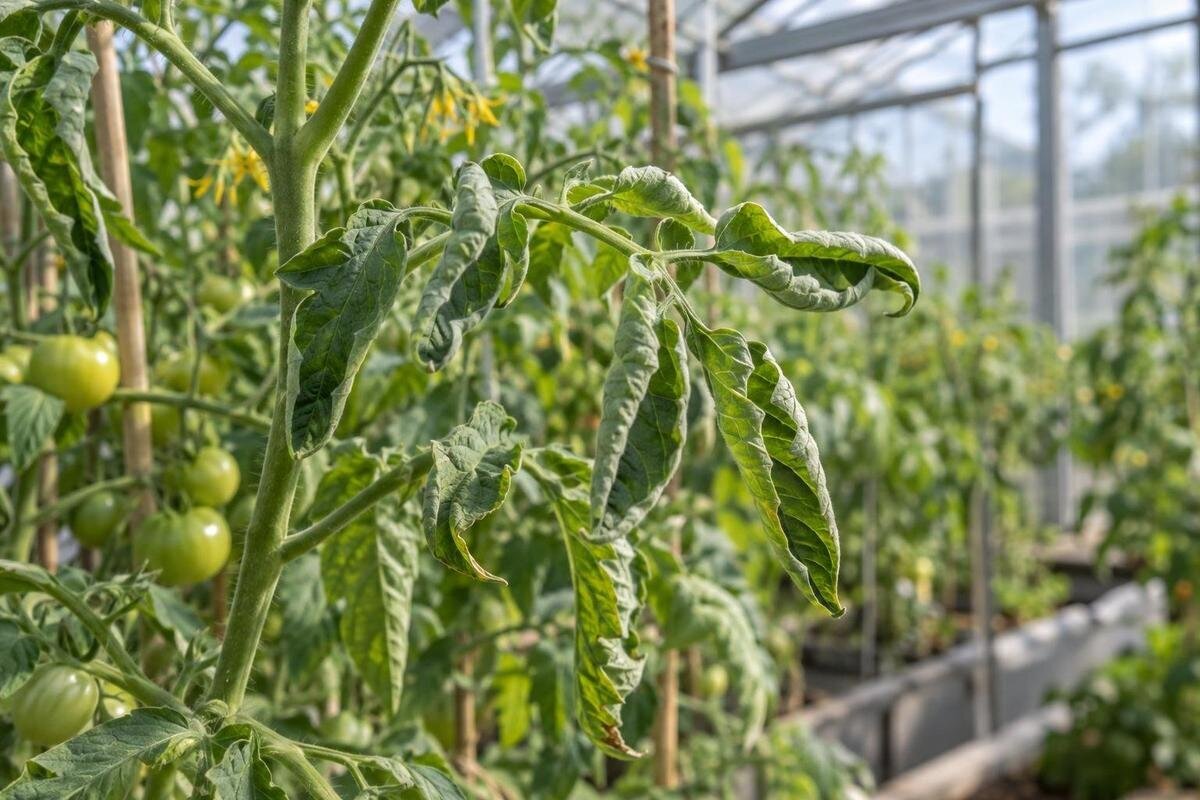
Tomato plant health
Curled tomato leaves in a greenhouse can look alarming, but curl is a symptom, not a diagnosis. A plant may roll older leaves in response to heat or a change in water supply, while pests, disease and root problems can also distort growth. The useful clues are where the curl begins, whether the leaves remain evenly green, what is happening at the growing tip and whether the pattern is spreading. Compare those signs before pruning, watering more or applying a treatment.

Which leaves are curling?
Leaflets can roll upwards, downwards or inwards, and a photograph of one leaf rarely reveals why. Record whether the affected leaves are older and lower on the plant or the newest ones at the top. Note whether they remain green and flexible or become thickened, mottled, yellow, spotted or brittle. Look at the stem, flowers and growing tip as well. A plant that continues to make normally shaped new leaves presents a different pattern from one whose newest growth is increasingly twisted or undersized. Curl direction alone is a weak clue; position and accompanying changes matter more.
Map which plants are affected: one plant, a group in a particular bed or a whole row. Similar symptoms in one location may share heat, light or watering conditions, while new cases appearing elsewhere deserve closer attention; neither pattern proves a cause. Note when the curl appeared and whether it followed a bright spell, missed watering, transplanting, pruning or feeding. Check whether it eases later in the day and what the next leaves look like. A dated sketch is more useful than memory, especially when several stresses may overlap. Compare plants of the same variety in different positions, too.
What physiological leaf roll usually looks like
Physiological leaf roll is a non-infectious response, not a virus. It often appears first on mature, lower leaves: the leaflets curl lengthways upwards or inwards, sometimes making the leaf look narrow or tubular. The foliage may feel firmer than usual but often remains evenly green, without clear mosaic, spots or dead patches, and the growing tip may continue to develop normally. Heat, uneven water supply, root disturbance, transplanting or substantial pruning can contribute; some tomato varieties are more prone to rolling. The direction of the curl is not unique to this response, so the pattern is useful but not conclusive.
One example to compare is a vigorous plant with a few older, green leaves rolled upwards after a warm, bright day, while the newest leaves remain normally shaped. That leans towards physiological roll, but it is still a clue, not proof. An older leaf may remain curled even after conditions improve, so judge the new growth as well. Mark affected positions on a bed plan to compare plants in different parts of the greenhouse. If you are also planning a new growing space, the Prestige greenhouse is listed from 3.77 m² to 28.08 m². Use the exact dimensions of the size you are considering to sketch beds and leave room to inspect lower leaves.
Heat and bright light inside a greenhouse
Sunlight can raise the air temperature inside a greenhouse quickly, and leaves in direct sun may be warmer than an outdoor thermometer suggests. A plant may roll its leaflets during the brightest part of the day and look less affected later. That timing is useful evidence for heat or light stress, particularly when plants in the same position show similar symptoms. It is not conclusive: a plant with damaged roots may react more sharply to a warm spell. Note conditions near the plants, and compare observations at similar times rather than relying on one outdoor weather reading.
Look for a location pattern near a sunny end, a sheltered corner or an area where air movement seems limited, and compare it with plants elsewhere. Use the greenhouse’s existing ventilation as intended and keep openings clear of crowded growth; conditions may vary within the same structure. A thermometer at canopy height can help show whether curl tracks the warmest period. When comparing larger growing spaces, the Spacious Greenhouse is listed from 47 to 70 m². Check the ventilation details separately from the floor area, and consider where you would take temperature readings across the proposed planting layout. Size alone does not establish whether conditions will be uniform.
Check root-zone moisture before changing the watering
Both too little and too much water can affect a tomato’s ability to take up water normally, so curled or drooping foliage is not enough reason to water immediately. The surface of a bed or pot does not reliably show how moist the root zone is. Check below the surface where the active roots are, compare an affected plant with a healthy one, and note whether the growing medium drains. A recent watering change, a blocked outlet, disturbed roots or a container drying faster than its neighbour may explain a local pattern. In pots, check each container separately rather than judging the whole group by the first one you inspect.
Look at the watering history as well as current moisture: has the plant been dry between waterings, or sat wet for a long spell? Return to a steady routine suited to the bed or container rather than alternating drought and saturation. Do not add fertiliser as a test; an unsuitable feed or salt build-up can add root stress, and curl alone does not identify a nutrient shortage. For a new layout with separate beds or groups of containers, the Classic aluminium greenhouse range is listed from 3.77 m² to 28.08 m². Sketch the intended watering zones within the exact footprint, keeping each accessible for moisture checks rather than assuming every plant needs the same watering pattern.

Pests that distort new tomato growth
Inspect the undersides of curled leaves and the youngest growth, using a hand lens if available. Aphids may form visible clusters around tender shoots or leaf veins, with shed skins or sticky honeydew nearby. Adult whiteflies can flutter when a leaf is disturbed, while their immature stages are attached underneath. Spider mites are much smaller: fine pale stippling, bronzing or delicate webbing may be more obvious than the mites themselves. A small hand lens can help distinguish tiny mites from dust. These signs can point to pest activity, but a pest may be present without being the sole cause of the curl.
Check several leaves on more than one plant, including apparently healthy plants beside affected ones. Insects concentrated where new leaves are twisting are more informative than one insect found elsewhere. Avoid spraying on the basis of curl alone: first identify what is present and whether it is causing damage, then seek guidance appropriate to that pest and crop. When planning a growing space, allow enough room to reach the plants and turn leaves over without struggling through crowded foliage. The lean-to greenhouse range is listed from 3.69 m² to 14.34 m². Compare the exact dimensions with your proposed planting plan, paying particular attention to access to plants at the back of each bed.
When leaf curl comes with disease-like changes
Take extra care when curl occurs with changes in colour or growth. Viral problems can include yellowing or a patchwork of light and dark green, small or distorted leaves, unusually short growth between leaves, a twisted top or stunting. Tomato yellow leaf curl virus is one example associated with curled, yellowing and distorted young growth, but similar signs can have other causes. Fungal or bacterial leaf problems often draw attention through spots, lesions, dead margins or mould-like growth alongside the curl. Nutrient or root problems and chemical injury can also distort leaves. None of these signs identifies a pathogen by itself.
Compare the newest growth over several days and see whether more plants develop a similar pattern. A plant whose new leaves are increasingly small, mottled and twisted while growth slows deserves closer assessment than one with an isolated older leaf rolled but still green. Mark the plant and its position, inspect for pests, and avoid taking cuttings until the cause is clearer. Herbicide exposure or a change in growing material can also twist new growth, so include recent changes in your notes. In a future layout, give beds and rows clear labels so observations refer to identifiable positions. If comparing the Limited Edition aluminium greenhouse range, listed from 3.77 m² to 28.08 m², include those labels on your planting sketch.
How to use photographs as evidence
Photographs are most useful when they show both the pattern and the detail. Take one image of the whole plant in its growing position, a closer image of an affected leaf still attached to the stem, and clear views of the upper and lower leaf surfaces and the growing tip. Include a nearby unaffected plant for comparison. Keep the camera distance and angle similar each time, and note the date. Natural, even light makes colour easier to compare than a strong flash or deep shadow. Retain the original images, as filters can obscure mottling.
When comparing records, look for two different patterns: one might show only mature, evenly green leaves rolled upwards with a normal growing tip; another might show the newest leaves smaller, yellow-mottled and twisted, with growth slowing. The first is more consistent with a stress response; the second needs closer assessment for disease, pests or another cause. Neither photograph proves a diagnosis. Add watering, feeding, pruning and weather notes so an adviser can interpret the images. Allow for whole-plant photographs when planning access routes, too. The T-shaped orangery greenhouse is listed from 16.52 m² to 30 m²; use its exact dimensions to work out where you could stand to photograph each bed from a consistent angle.
What to do while the cause is uncertain
Make small, reversible checks rather than several big changes at once. Confirm moisture at root level, look for pests, note greenhouse conditions and mark the affected plant. If symptoms followed a clear heat or watering event and new growth remains normal, correct that condition steadily and watch the next leaves; do not expect every older leaf to flatten. Avoid removing all curled foliage: green leaves still contribute to the plant, and unnecessary pruning creates another stress. Do not apply fungicide, insecticide or extra feed simply because leaves have curled. If one change helps, judge it by later growth.
If several plants are involved or a virus-like pattern is possible, limit handling between affected and healthy plants, clean hands and tools before moving on, and do not propagate from uncertain material. Mark a mildly affected plant rather than immediately discarding it if you are arranging expert advice; take further images and watch for progression. Keep its position identifiable so you can compare it with neighbouring plants without relying on memory. If considering the Pyramid Greenhouse range, listed from 5.53 m² to 18.9 m², check the precise footprint against your intended plant positions and inspection route. This is a layout consideration, not a treatment: the current symptoms still need to be assessed on the plants themselves.

When to ask for a horticultural diagnosis
Seek horticultural advice when distortion in new growth continues to worsen, when colour changes, mosaics, lesions or stunting accompany curl, when pests are difficult to identify, or when the number of affected plants is increasing. Rapid spread or a marked loss of vigour makes timely assessment more valuable. A single older leaf that stays green on an otherwise vigorous plant can often be watched briefly, but do not wait for a whole crop to decline if a concerning pattern is progressing. A horticultural adviser, consultant or plant diagnostic service may be able to assess the plant or photographs.
Prepare evidence before asking: photograph the whole plant, leaf tops and undersides, and growing tip; identify which leaves showed symptoms first; and note the variety if known, the bed or container, recent watering and feeding, pruning or transplanting, and any pests or unusual greenhouse conditions. Include a healthy comparison plant and a short timeline. A photo can narrow the possibilities but may not distinguish a virus from root stress, nutrient imbalance or chemical damage; an examination or laboratory test may be needed. Follow the receiving service’s instructions before sending any plant sample.
Records that help reveal recurring greenhouse stress
To reduce repeat episodes, build a routine around observation rather than emergency treatment. Check plants regularly, including leaf undersides and growing tips; keep watering consistent for the growing medium; watch greenhouse conditions during bright periods; and avoid abrupt, heavy pruning or unexplained feed changes. A clear path between plants makes inspection easier, while labels for varieties and rows help compare plants exposed to similar conditions. Record the planting date and variety where known. These habits cannot prevent every pest or disease, but they make early differences easier to notice.
Keep a simple log of dates, plant positions, leaf age, colour, watering and changes in ventilation, pruning or feeding. Review whether symptoms track a location, a recent event or new growth across the crop. Use those recurring patterns to identify what needs closer observation in the next growing season, rather than treating every curled leaf as a separate problem. If that review leads you to reconsider the growing space, the limited-edition aluminium greenhouse with storage is listed from 5.52 m² to 28.08 m². Compare the precise model dimensions with your proposed beds and access routes, including how you would reach plants beside the storage section for regular inspection.
Frequently asked questions
Does leaf curl by itself mean my tomato plant has a virus?
No. Physiological leaf roll can leave older leaves curled but evenly green, while pests, viruses, root stress and chemical injury can also distort leaves. Check the newest growth, leaf colour, undersides and whether the pattern is spreading. Curl alone cannot confirm a virus.
Should I remove leaves that have curled?
Not automatically. A green leaf still contributes to the plant, and removing several at once adds pruning stress. If disease seems possible, avoid taking cuttings and be careful not to move pests or plant sap between plants. Ask a horticultural adviser how to handle a plant with worrying symptoms.
Will watering more make the leaves flatten?
Not necessarily. Both dry roots and roots in persistently wet growing medium can affect water uptake. Check moisture below the surface before changing your routine, and consider drainage and recent watering. Old leaves may stay curled even after conditions improve, so watch the next growth.
How can I tell a pest problem from physiological leaf roll?
Look closely under several leaves and around new shoots. Aphid clusters, whitefly stages, fine stippling, bronzing or delicate webbing point to possible pest activity; an even green roll without visible pests may fit physiological leaf roll. These clues need interpretation, as pests can be hard to see and more than one problem can occur.
Can a photograph identify what is causing the curl?
A photo can show where symptoms began and how they are changing, but it cannot always distinguish a virus from root stress, nutrient imbalance or chemical damage. Take a whole-plant image, close-ups of both leaf surfaces and the growing tip, and include dates and recent care notes.
Tomato leaf curl is best judged by its pattern over time. A few older leaves that remain green on a growing plant often point to a non-infectious response; distortion moving into new growth, especially alongside mottling, spots, pests or stunting, deserves closer attention. Record what changed and where symptoms began, then act on evidence rather than curl alone. That approach avoids unnecessary pruning and feeding while making a genuine pest or disease problem easier to recognise.
