
Why Greenhouse Glass Keeps Cracking: Installer Checks
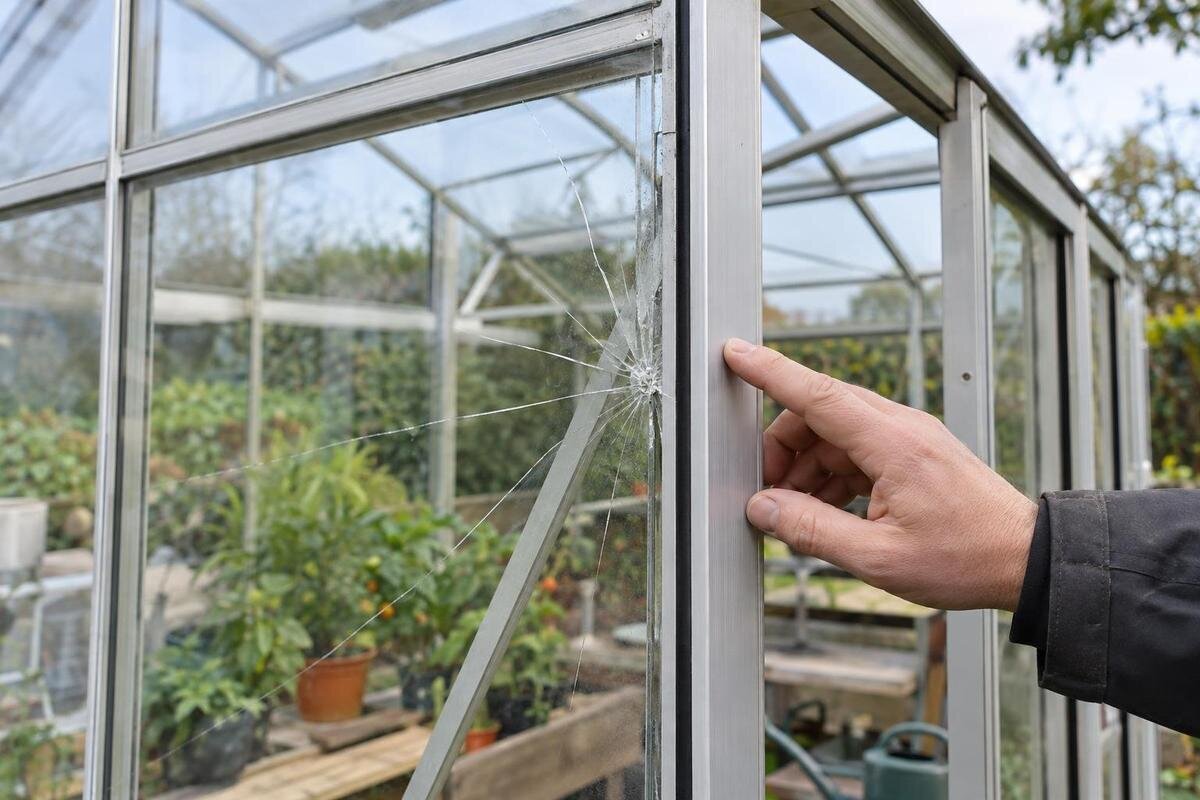
Greenhouse repair
When greenhouse glass cracks repeatedly, replacing the pane may not address the reason it failed. A qualified installer should trace the damage, examine how the pane is held, check the frame and its support, and consider conditions around the greenhouse and any earlier repairs. A crack pattern can provide clues, but it cannot prove the cause on its own. Keep people away from broken or unstable glass and do not remove it or disturb its retaining parts. This guide covers what to record, what an installer should inspect and when to discuss a wider repair.

Why a replacement pane may fail again
Glass may break after an impact or because of a flaw, but repeated damage can also involve how the pane is held, distortion in the frame, movement at its support, or changing conditions around it. These are possibilities for an installer to investigate, not diagnoses that can be made from a crack alone. Even a correctly specified pane can be subjected to pressure at its edges. If the same opening fails again after a replacement, ordering another pane by its visible shape may simply repeat the problem. The key question is whether the cause of the first failure was found and corrected, and whether the right component was used for that exact position.
The pattern helps determine how broad the inspection should be. One pane damaged after a clear impact is different from the same corner failing repeatedly, or several panes cracking in separate parts of the greenhouse. Damage in one opening may focus attention on local support or fit; damage in different areas may lead the installer to examine more of the frame and its supports. Neither pattern proves a cause. A crack can travel after it starts, and previous handling can make its origin hard to judge. Ask the installer to explain what the observed pattern does, and does not, tell them.
Keep clear of broken or unstable glass
Broken or unstable glass is an immediate cut hazard. Keep children, pets and other people away from the damaged bay; do not touch fragments, lean on the frame, or try to remove a pane or loosen bars, clips or gaskets. A cracked pane can shift when the structure is disturbed, and small fragments may be difficult to see. Avoid working beneath or beside it while waiting for an assessment. Do not climb or reach across the damaged area to look for a model label. If the frame appears displaced or more than one pane is affected, tell the installer before the visit so they can plan a safe inspection.
When you make contact, describe what is visibly damaged, whether fragments are still in place and whether neighbouring panes appear affected. Ask the installer what precautions are needed before anyone approaches or works on the greenhouse. Avoid improvised covers, adhesives or braces: these may put pressure on glass, hide damage or make the area harder to assess. If there has been a recent impact, mention it without trying to recreate the event or test whether the frame moves. Keeping the area undisturbed preserves useful evidence and leaves decisions about safe handling to someone equipped to assess the glazing.
Record where and when each crack appears
Write down when you first noticed each break and where it is: roof or side, which bay, and its position relative to a door, corner or ridge. Note whether the visible crack appears to begin at an edge, corner or nearer the centre, but do not approach unstable glass to check. From a safe distance, take a wider photograph showing the affected bay and a closer image using zoom. Include neighbouring panes if they are visibly affected. These records help the installer locate the damage and compare repeat failures; they are not a substitute for examining the glass and frame in person.
Add relevant events to the same timeline: a recent pane replacement, nearby building or garden work, a moved heater or object, changes to shade, or weather and temperature conditions when the break was noticed. Treat these as observations rather than proof of a cause. Record the greenhouse layout too, including whether it is freestanding or attached to a wall, and mark where the affected opening sits within it. Keep this record for any later replacement discussion. If you are considering a wall-attached replacement, the lean-to greenhouse range provides a product category to compare separately from the investigation into the existing pane.
Confirm the greenhouse model and approved glazing
Give the installer the exact model name if you know it, along with the manual, assembly drawings, purchase records, past repair invoices or earlier photographs. If the information is not to hand, say so rather than guessing from appearance. Greenhouses that look similar may use different pane shapes, glazing materials, thicknesses or retaining details. Do not assume that a pane is toughened glass, or that a replacement can be specified by measuring only the visible opening. The installer should identify the glazing type and the requirements for that position from manufacturer information or a reliable assessment of the model.
Record which pane has failed and how it sits in the frame, not just an approximate length and width. The installer can check whether the panel and retaining components match the model and opening, then confirm an exact part identifier from manufacturer records where available. The current Aluminium Classic Greenhouse listing can help distinguish that product family during an enquiry, but it cannot identify an older greenhouse or confirm that its spare parts will fit. If the original model is unclear, ask which photographs can be taken safely and what paperwork would help identify it before placing an order.

Ask for a frame and base alignment check
The installer should examine the frame for twisting, racking, bowed members, loose or displaced joints, misaligned glazing bars and signs of movement at its base or support. Where manufacturer drawings or instructions are available, the observed arrangement can be compared with them. A frame that looks straight from one viewpoint is not necessarily correctly aligned throughout. Changes in door or vent operation, new gaps, or glazing channels that no longer line up are useful observations to share, but they are not conclusive tests of the frame and should not be used to diagnose it yourself.
Movement or uneven support beneath the frame can affect the openings and the way panes sit. The installer should look for visible changes, such as shifted connections or gaps, and decide whether another specialist assessment is needed. Do not pack under the frame, retighten joints or alter anchors to make glass fit; an adjustment can create more stress or worsen the damage. If the structure cannot be repaired as designed, discuss the support requirements of any complete replacement separately. The Prestige Greenhouse with a metal base is a complete product to consider in that discussion, rather than a retrofit recommendation for the existing base.
Check how the pane is supported and retained
The installer should check the full perimeter where the panel sits: whether it is supported consistently, whether its edges are chipped or pressed against a hard surface, and whether any fitted gaskets, clips, capping bars or other retainers are present and positioned as specified. Uneven or excessive restraint can place stress on glass, while missing or loose retention can leave it insecure. The correct arrangement depends on the greenhouse design, so neither condition can be corrected safely by guesswork. Do not push the pane, shift clips, cut seals or try to prise out retaining parts.
If a replacement pane is required, it should be identified for the exact model and opening, including the specified material and any relevant edge details. A broken pane may be a poor template if it has shifted, lost a corner or was altered during an earlier repair. The installer should confirm the clearances and contact points against the maker's instructions before ordering. If the original glazing system cannot be identified or supported as designed, ask whether a documented repair is possible. Keep enquiries about complete products, such as the Limited Edition Aluminium Greenhouse, separate from the search for compatible glazing parts for the existing frame.
Consider temperature changes and uneven heating
Glass and frame materials respond to temperature, and uneven heating across a pane can contribute to stress. Whether that played a part depends on the glazing and how it is installed. Tell the installer if cracks recur in an area that shifts between sun and shade, near a vent, or close to a heater or reflective surface. Note the timing, if known, and whether the same area is affected each time. These details give the installer something to investigate; they do not prove that temperature caused the break. Avoid moving a heat source or changing coverings to test a theory before the assembly has been assessed.
Ask whether the glazing system provides the movement allowance specified for that greenhouse, and whether the retaining parts constrain the pane as intended. A qualified installer should use the relevant manufacturer instructions to judge this. Do not file a channel, enlarge a gap or loosen a bar as an experiment. If a whole new greenhouse is being considered after the inspection, carry the observations about sun, shade and nearby heat sources into the site-planning discussion. The Oasis Pyramid Greenhouse is one complete model to review at that stage; its name and appearance alone do not establish suitability for the site.
Look for impacts and changes around the greenhouse
A small impact can leave a mark before a longer crack becomes obvious. An installer can look for visible chips or impact points and ask whether a falling branch, garden tool, ball, mower debris or moved object could have reached the pane. They can also consider whether similar cracks appear elsewhere without visible marks. Such details may help narrow the investigation, but they do not establish what happened. Do not handle fragments or reach into the frame to search for a mark; leave close inspection to the person assessing the broken glazing.
Think back to what changed around the greenhouse since the earlier repair: pruning, landscaping, nearby work, storage against the frame, or more frequent contact with equipment. Share the timeline neutrally rather than assuming that any one event caused the break. Distinguish objects stored nearby from events you actually witnessed, and tell the installer where each was in relation to the damaged bay. If a complete replacement is being discussed, storage layout may also be part of your buying decision. The Limited Edition greenhouse with built-in storage offers a product category to explore for that separate requirement, rather than an explanation for the damage.

Review previous repairs and their findings
Tell the installer what was replaced last time, who carried out the work, what parts were used and whether anyone adjusted the frame or retaining system. Keep invoices, photographs and correspondence together, and mention if the pane was ordered using measurements alone. A previous repair may have used the correct glass while leaving an alignment issue unresolved; equally, a new break may have followed a separate impact. Repeated failure is not, by itself, proof of poor workmanship. The inspection should distinguish what can be established from what remains uncertain.
Ask for the findings in writing: which openings and support points were examined, what evidence supports the proposed cause, what remains uncertain, and which part identifier or manufacturer instruction supports the proposed repair. Keep the findings with the earlier repair records so that a later inspection can refer to them. If a full replacement is one option, compare the space and use you actually need rather than relying on a product name or photograph. The Spacious Greenhouse range covers 47 to 70 m², making it relevant to enquiries at that scale; site suitability still needs to be considered separately.
Decide whether to repair or replace the greenhouse
An installer may recommend replacing only the pane if the frame, support and retaining details are sound and the correct component can be identified. A defect in the frame or base, repeated damage across several openings, unavailable approved parts, or a structure whose condition cannot be verified may justify discussing a broader remedy. None of these points automatically means that the whole greenhouse must be replaced. Ask the installer to explain the practical repair options, any limits of the proposed work and whether the manufacturer should be consulted before a decision is made.
Before ordering, confirm the exact model and pane identifier, approved glazing type, location and any retaining parts included in the repair. Ask what will be checked after the work, especially if the same opening has failed before. If a new greenhouse is more sensible, compare its layout, access and intended use as a separate buying decision. The T-shaped orangery greenhouse is one complete product category to review when comparing layouts. Keep the proposed repair and replacement options clearly identified in your correspondence, so that a quotation for a new structure is not confused with a parts enquiry for the old one.
Frequently asked questions
Can I replace only the broken pane?
Possibly. A single pane may be all that needs replacing, but recurring damage should prompt an installer to check its support, fit and the surrounding frame first. The correct replacement also needs to be identified for the exact greenhouse model and opening.
Can the crack pattern show what caused the damage?
It can offer clues, such as where the crack may have started, but it cannot prove a cause by itself. The installer needs to consider the pane, its edges, the frame and the circumstances around the break together.
Should I adjust a glazing clip or frame bolt before the inspection?
No. Do not disturb the broken pane or alter clips, bars, gaskets, bolts or supports. Changes can create further stress, make the glass less secure or obscure evidence. Keep clear and let a qualified installer assess the structure.
What information should I give the installer?
Share where each crack appeared, when you noticed it, whether the same pane has failed before, and any recent repairs or changes nearby. Photos taken from a safe distance, the greenhouse model, its manual and repair records can also help.
Does repeated breakage mean I need a new greenhouse?
Not necessarily. An installer may find that a correctly identified pane and a repair to the glazing system are sufficient. A broader replacement is worth discussing only if the frame, support or availability of approved parts makes a reliable repair impractical.
A repeat crack is a reason to look beyond the pane, not a verdict on the glass, frame or previous repair. Keep the damaged area undisturbed, record where and when the failure appeared, and give the installer the greenhouse details and repair history. The useful outcome is a clear explanation of what was inspected, what remains uncertain and why the proposed replacement part or repair is appropriate. Once the cause and condition of the surrounding structure are understood, it is easier to decide whether a pane repair is enough or a wider replacement deserves consideration.
