
Winter Pergola Care in Ireland: Snow, Ice & Wind
In brief
Yes—but winter use requires protection, inspection and model-specific operation, not simply summer habits in colder weather.
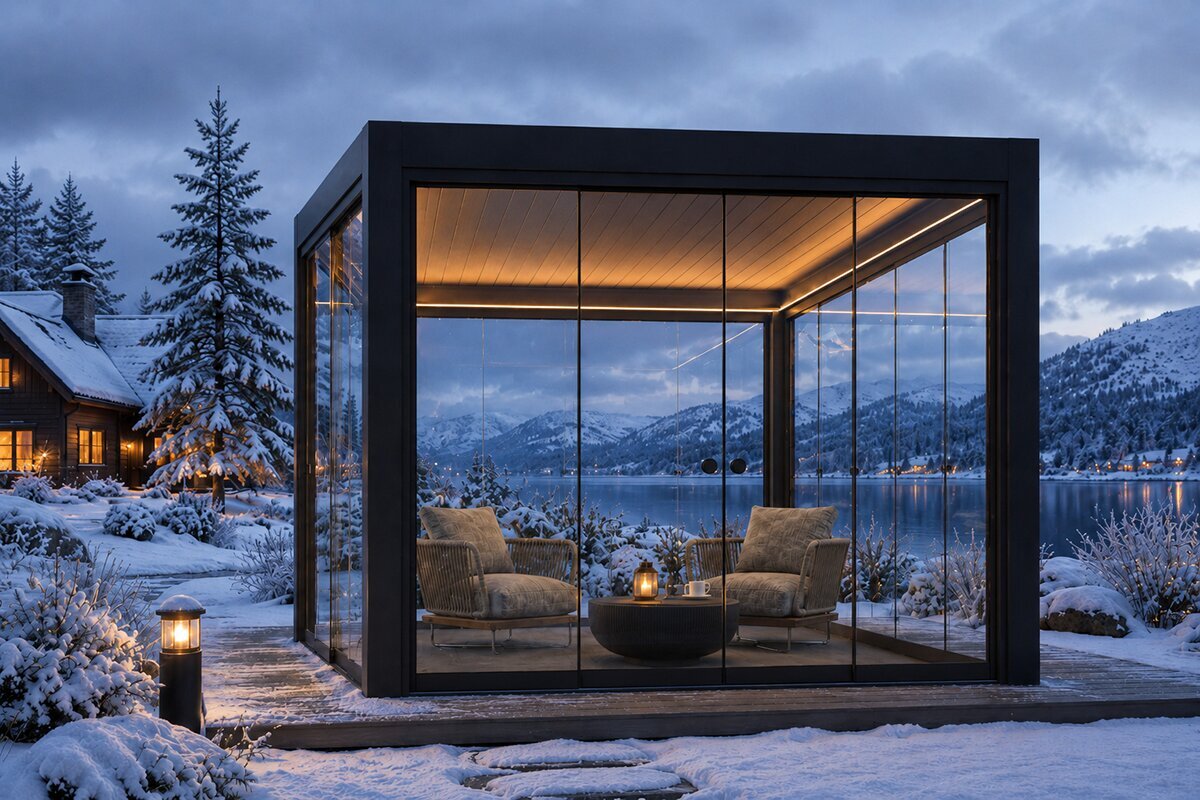
A crisp, bright day can make a sheltered terrace inviting. Carefully placed glass or side panels soften chilly breezes, while the overhead structure reduces direct exposure. Compared with uncovered seating, this arrangement can extend comfortable use into autumn, winter and early spring.
A powdery covering, saturated snowfall, uneven drifting and freezing rain each affect a structure differently, and pergola designs are not interchangeable. Ignore universal depth limits online. Decisions should instead reflect the relevant Bloomcabin documentation and conditions around the installation.
Powered louvres require extra restraint. If ice locks a blade, hinge or guide, never use the drive to wrench it free. Stop at abnormal resistance and identify the obstruction safely.
Prepare before cold weather: clear roof drainage, remove leaves from tracks, secure loose furniture and check where thaw water will run during frost. Early attention prevents many winter problems.
Changing to winter habits
Winter is a separate operating season, with different priorities from summer and autumn.
Summer priorities are shade, ventilation and rain cover. Winter shifts attention to snow, ice, frozen mechanisms, strong gusts and repeated freeze-thaw cycles. The structure is unchanged, but its operation must adapt.
A January afternoon may feel mild in a sheltered Irish garden while an elevated or exposed site receives wet snow. Winter conditions can differ sharply between properties on the same day.
Before moving anything in frosty weather, check for snow, ice, twigs or other obstructions. A powered mechanism cannot replace a visual inspection.
If you cannot confirm that current snow or ice lies within the product guidance, do not improvise. Leave the system untouched until you establish the correct model-specific procedure.
When snow settles overhead
Snow depth alone does not define the load, so universal height rules are unsuitable.
Dry powder can weigh far less than wet snow at the same depth. Wind may also create uneven drifts against one roof edge. Visible depth therefore reveals too little about the actual load.
Rapidly changing conditions deserve particular attention. Fresh snow may absorb water as temperatures climb above freezing, become heavier and then harden overnight. The same sequence can leave ice around edges, moving fittings and drainage openings.
Do not copy a general online recommendation for louvre angles. Consult the instructions belonging to that roof. An arrangement that sheds summer rain effectively may be unsuitable once snow is present.
Never test whether the drive can overcome snow or ice on movable louvres. Frozen edges, packed snow between blades or a blocked pivot may cause resistance.
Do not strike the roof or scrape it with hard metal tools, which may damage finishes, seals or profiles. Any permitted removal must follow safe product instructions.
Surroundings affect accumulation: a tall wall may cause drifting, tree shade can delay melting, and roof sections in direct sun may clear sooner.
A thaw converts accumulated snow into runoff. Clear drainage matters as much as roof conditions because even a modest covering can release substantial water quickly.
Where snowfall is recurring, consider it when choosing the model. Site exposure, roof type, supporting base and intended winter use should be planned together.
Freezing rain + ice
Cold air is less troublesome than a mechanism physically locked by ice.
Freezing rain may coat blades, pivots and rails with thin, firmly attached ice. From below, the roof can appear clear while contact points needed for movement remain frozen together.
Stop if a louvre, sliding panel or other moving part becomes unusually stiff. Greater motor force is not a safe answer to ice.
Floor rails can freeze too. Slush, snow and water in a glazing track may solidify and lock the panels. Keep tracks clean and minimise standing water where practicable.
Check the discharge point as well as the roof. Daytime runoff may freeze after dark, so keep it away from main paths, steps and doorways.
Following a freeze, patience is often preferable to repeated tests. Allow every affected part to defrost completely, then examine the mechanism before trying normal operation again.
Winter louvred roofs
Adjustability remains useful in cold weather, provided the roof is inspected before you ask it to move.
Louvres might be repositioned frequently during warmer months. When frost is possible, first look for a coating of snow, frozen edges, fallen twigs or any foreign object caught where parts must travel.
The relevant Bloomcabin documentation determines the intended winter roof position. No single louvre setting suits every model or weather condition.
Stop if the drive sounds unfamiliar or movement does not begin freely. Repeatedly pressing the control will not clear a blockage or improve reliability.
Clear channels and outlets before freeze-thaw weather. Trapped meltwater can refreeze elsewhere and create another blockage.
Bright winter sunshine may allow suitably positioned open louvres to send more daylight towards the terrace and neighbouring windows, but only where product guidance and the roof’s actual condition permit movement.
Cold-weather operation is worth considering when comparing traditional and bioclimatic designs. The movable option brings versatility, although it also calls for more attentive inspection whenever frost threatens.
Winter wind
A brisk breeze can make an otherwise moderate day unpleasant on an open terrace.
Sunshine can feel much colder in moving air. Glazing or selected side protection may calm the seating area and make it noticeably more comfortable.
Houses, walls and hedges reshape airflow. One corner may accelerate gusts while a nearby spot stays calm, so choose the protected side from the garden’s actual microclimate.
Glazing reduces airflow at seating height but also presents more surface to strong gusts. Coordinate the final side-panel arrangement with the supporting base and anchoring.
Winter storms may bring stronger gusts than ordinary terrace weather. Handle screens, sliders and movable accessories exactly as their instructions require.
Secure chairs, pots and decorations too. A windblown object could damage correctly installed glazing or roof components.
Full enclosure is often unnecessary. One or two well-chosen protected sides may improve comfort while retaining ventilation and an outdoor character.
Winter glazing
Glazing can shelter a pergola, but it does not create heated indoor accommodation.
Clear panels can reduce wind while preserving winter light and garden views. On a bright day, that shelter may make the terrace appreciably more pleasant.
Sliding glass can close the exposed side, then reopen when sunshine strengthens or temperatures rise. This flexibility suits Ireland’s changeable winter weather.
Fixed glazing suits a side that regularly needs weather protection. Pairing it with an opening garden side may work better than enclosing the whole pergola.
Condensation on cold panes is normal in an outdoor structure. Ventilation encourages drying and prevents surfaces remaining damp unnecessarily.
Slush may freeze inside the lower rail. Do not move sliding panels while ice obstructs their clear, easy travel.
Use a portable heater only within its manufacturer’s clearance, ventilation, positioning and safety rules. Glazing does not turn a pergola into an indoor room.
Irish winter conditions
Coastal, inland, elevated and sheltered Irish gardens need different winter priorities.
Ireland’s Atlantic influence generally brings cool, windy winters, but coastal exposure, rainfall, frost and shelter vary locally. Conditions at the terrace matter more than a national average.
Identify the site’s main concern—gusts, wet snow, ice, freeze-thaw changes or drifting—and build the winter plan around it.
Coastal gardens Wind-driven rain and strong gusts may matter more than deep snow. Prioritise drainage, secure support and protection on the exposed side.
Inland properties Inland air frost can occur even in spring. Watch for refreezing around outlets, paths and sliding-panel rails.
Exposed uplands Wind exposure, colder spells and occasional snow demand cautious handling and operation specific to the model.
Sheltered cities Reduced wind and stored warmth may improve winter comfort, but partly glazed spaces still need ventilation in sunshine.
Garden microclimates Hedges, walls and nearby buildings redirect gusts, rain and runoff. Observe these patterns before positioning drainage or glazing.
Foundations & frost
Winter reliability begins beneath the visible aluminium framework.
A pergola stays level only while its base remains sound. Poor drainage, frost-sensitive ground or local settlement can gradually alter the installation’s alignment.
Small movement is especially noticeable where long sliding-glass rails need precise alignment. Decorative paving or terrace slabs are not automatically suitable load-bearing support for posts.
Post loads need a sound route into the supporting structure. Timber decks, raised slabs and terraces over rooms require assessment of what lies underneath.
Irish sites respond differently to freezing and thawing. Drainage, soil, exposure and local conditions should guide the support design.
For a new terrace, coordinate foundations, drainage, electrical conduits and glass rails before installing the final surface.
After winter, inspect paving beside posts and tracks. One raised slab may be enough to redirect runoff.
On an older terrace, look for small changes that have developed since fitting. Movement of only a few millimetres might go unnoticed while walking but still interfere with a long rail or accurately positioned post.
Where freezing weather is a regular concern, assess the soil, intended side panels and drainage together at an early stage. Integrated planning gives the completed pergola a better prospect of staying aligned after successive winters.
Controlling runoff in freezing weather
Water flowing harmlessly during the afternoon may solidify in a hazardous place after nightfall.
Sun may thaw roof snow while air temperatures remain just above freezing. The runoff can then refreeze when temperatures fall later.
Keep outlets away from door thresholds, steps, busy paths and lower glazing rails. Safe drainage also accounts for discharged water freezing.
Before the first frost, remove leaves, seeds and dirt from roof channels and outlets. Summer debris can become a frozen winter blockage.
Snow piled beside the pergola may melt towards post bases or panel tracks even when the roof drainage works correctly.
In early spring, check whether frost, ground movement or snow clearance altered the slope and direction of runoff.
Returning the pergola to spring use
Before daily operation resumes, take a little time to check how the installation has come through winter.
Wait until all frozen material has disappeared, then inspect channels, louvre edges, exposed fixings, sliding rails and the terrace surface surrounding each post.
Move each glass panel gently through its usual route. If it catches where it did not before, investigate dirt or altered alignment instead of overcoming the problem with extra pressure.
Use the adjustable roof only after confirming an unobstructed mechanism and suitable conditions. New noises or resistance call for investigation before any further movement is attempted.
Changes in the garden count as well. Prune encroaching branches and reposition later additions such as planters or furniture if they intrude on a moving component’s route.
This seasonal review is not a substitute for professional structural assessment. Its purpose is to identify visible changes promptly, before they develop into larger difficulties.
Attached versus freestanding layouts
During winter, the relationship with the house affects exposure, drifting, runoff and the routes people use.
A wall-mounted design gains shelter from the building behind it, though the façade may encourage wind or snow to gather in particular places. Water routes and low door thresholds then need added attention.
Freestanding structures commonly receive wind from more directions. Their separation from the house can, however, make it easier to lead thaw water away from entrances and the building base.
Whichever arrangement you favour, map the usual drifts, roof discharge points and paths that household members need during cold weather.
An adjustable roof beside a large window can influence daylight entering the home. Any louvre change must nevertheless suit the current weather and follow the instructions supplied for that model.
Compare winter access, runoff and snow-clearing needs when deciding between the two layouts, rather than basing the choice solely on summer furniture positions.
Reading a winter morning
Good cold-weather decisions come from observing the structure rather than repeating a daily routine.
Imagine sunshine arriving after a frosty night while traces of white frost remain on several louvres. Wanting to sit outside is not a reason to move them immediately. Examine every moving junction first, and resume the approved operating sequence only after the mechanism is completely ice-free and behaving normally.
Cold-weather checklist
Eight practical routines can prevent many familiar winter difficulties.
01. Clear runoff routes before frost Lift leaves and seeds from outlets and the channels that feed them.
02. Maintain unobstructed sliding rails Remove grit, ice, slush and snow instead of allowing them to remain in the track.
03. Leave frozen louvres still Stop when resistance appears, then establish what is preventing normal movement.
04. Follow the model’s snow procedure Never borrow a universal depth threshold from a different roof or pergola design.
05. Look for ice below outlets Route thaw water so that door areas and frequently used paths do not become dangerously slippery.
06. Put loose terrace items away Chairs, pots or decorations driven by a gust may strike roof parts or glass.
07. Review the site after temperature swings Look for altered paving levels, blocked rails and newly redirected runoff.
08. Restore full operation carefully in spring Wait for complete thawing before putting every movable part through its ordinary travel.
Bloomcabin Ireland / Plan the next steps
A comfortable winter result starts by matching the pergola, supporting base and garden location.
Use these Bloomcabin Ireland resources to compare roof styles, dimensions, placement options and preparation of the ground.
Adjustable roof Explore the Bioclimatic Pergola →
Independent structure Explore the Bloomcabin Pergola →
House-side option Explore the Wall-Mounted Pergola →
Choosing dimensions Read the Pergola Size Guide →
Preparing the site Read the Pergola Foundation Guide →
Roof comparison Compare Classic and Bioclimatic Pergolas →
Choosing a position Compare Wall-Mounted and Freestanding Pergolas →
Winter FAQ
Common questions about cold-weather pergola use
Does a pergola stay in place throughout winter?
Outdoor pergolas remain installed, but weather limits and permitted operation vary with the model, its documentation and conditions at the property.
May I sit beneath it during snowfall?
Refer to the relevant model instructions and assess the kind of snow present. Do not move a component through an icy or snowy obstruction.
What should happen to snow-covered louvres?
Use only the procedure specified for that model, leaving the roof untouched whenever frozen material prevents free movement.
Will the motor release louvres that have frozen?
No. Stop at resistance and allow the obstruction to be dealt with safely instead of increasing powered force.
Does side glazing improve winter comfort?
It can shelter the seating area from wind and make bright days more enjoyable. It does not provide the insulation of an indoor room.
Which maintenance task matters most in winter?
Prioritise open water routes and debris-free tracks wherever components need to slide or pivot.
Is a portable patio heater suitable?
Only where its manufacturer permits the location and all stated ventilation, clearance and safety conditions can be followed.
What deserves attention when spring arrives?
Review runoff, paving, rails, visible connections and whether all movable elements complete their usual travel without resistance.
Let winter conditions lead
A pergola can be enjoyed in winter, provided its documented limits and the actual snow, wind and icing determine how it is operated.
Thoughtful siting can keep an aluminium pergola useful through many months of the Irish year. Combine sound support, clear drainage, suitable shelter and careful operation, never forcing a component obstructed by ice or snow.
Discover the Bioclimatic PergolaIreland: This article offers general guidance, not structural load figures. Wind, snow, ice, foundation and operating limits vary by pergola model and site. Follow the relevant Bloomcabin documents and applicable local requirements.
