
Aluminium or Cedar Greenhouse: Ownership Compared
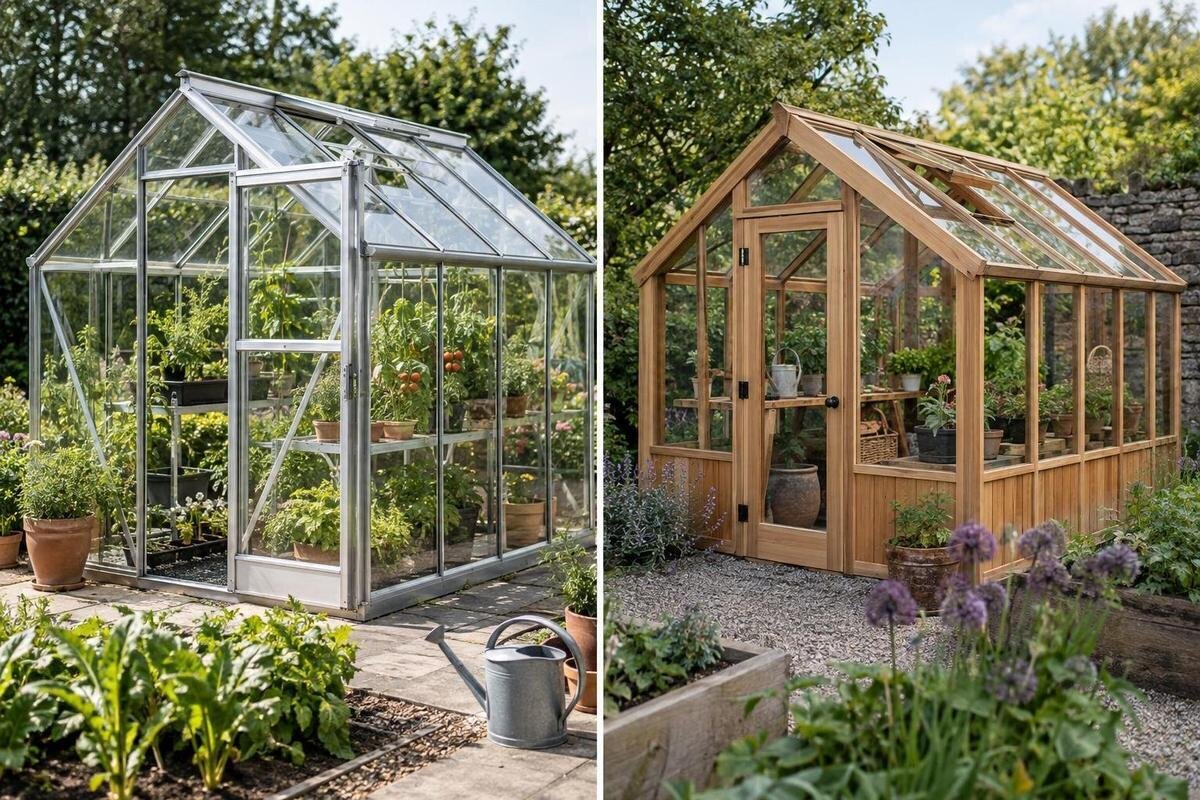
Greenhouse materials guide
A greenhouse frame does not become maintenance-free just because it is aluminium, and “cedar” alone does not reveal how much care a timber structure needs. A fair comparison looks at similarly specified buildings and their written care instructions: what to clean, where to inspect and whether any finish needs renewal. This guide focuses on ownership work rather than assuming either material is automatically the better choice.

01
Compare complete specifications, not just frame materials
Start with the complete greenhouse, not a single frame material. Compare intended use and footprint, frame dimensions, the way members meet, the base arrangement, glazing, doors, vents, seals and included fittings. A timber model with different glazing or a simpler base is not a fair test of cedar against aluminium. Construction quality belongs in the comparison: request drawings and information on connections and finishes, then assess those details on both options. Note differences in the supplied configuration, such as the number and type of openings, because they affect ownership as well as care. A material name is not a grade for workmanship, nor does it show how accessible a joint will be for inspection.
Record exact versions rather than broad range labels. Aluminium profiles and surface finishes vary; cedar can differ in species or grade, treatment and finish. Include each component that affects ongoing work, then compare the maker’s instructions on the same basis. The Classic greenhouse product page identifies a model to investigate, but “Classic” does not establish its finish, joint design or care routine. Obtain the specification, drawing and care document for the precise configuration, including any selected options, before treating a comparison as like for like. If documents describe different sizes or fittings, ask for clarification rather than assuming the maintenance burden is equivalent.
Routine cleaning and inspection of aluminium
Aluminium avoids timber-specific preservative care for the aluminium members, but the greenhouse still gathers dust, plant residue and dirt. Clean the frame and glazing as stated by the maker: a cleaner suitable for one surface may not suit another, and abrasive tools, pressure washing or strong chemicals should not be assumed safe. Routine cleaning also helps you notice changes at joints and around the base. Let the written manual set the interval; exposure and build details vary, so an annual rule borrowed from another model is unreliable. If dirt builds up more quickly at a particular edge, note it and ask whether the recommended method needs adjusting.
After cleaning, look for loose fixings, visible finish damage, blocked drainage points and wear at hinges, seals or opening mechanisms. Record changes rather than applying an unapproved touch-up product or lubricant. Think about access as well as the task: with a wall-adjacent layout such as a Lean-To Greenhouse, include the less visible wall-side junction in the inspection plan. Ask how that specific junction is finished and where it can be checked. Take reference photographs when the greenhouse is first assembled, including corners, the base and opening mechanisms. Later photographs from the same positions can help you explain a change to the supplier. Keep the assembly date and configuration with that record, so advice relates to the components you actually own.
02
What cedar care depends on
Cedar is a timber description, not a full care specification. Ask what wood is used, its grade, whether it arrives untreated or with a treatment or finish, and which faces and components are covered. Exposure, design and the coating supplied all affect what maintenance is appropriate. A change in colour from weathering is not, on its own, a care instruction; equally, a visible defect should not be dismissed as cosmetic without checking the maker’s guidance. Do not assume every cedar frame should be oiled or stained, or that the same product suits every finish. Confirm whether the instructions apply to interior and exterior faces, cut ends and replacement pieces as well. Separate your preferred appearance from the care required to keep the structure serviceable. Ask whether the supplied timber is intended to weather naturally or retain a particular finish, and what work each approach involves. That distinction helps you judge whether the upkeep matches the look you want over time.
A useful timber schedule should state how to clean the frame, where to check for moisture or finish damage, and whether a finish needs renewal. Look for a stated interval or trigger, compatible products and preparation instructions, including any surfaces to protect near glazing and sealant. If comparing that work with an aluminium option, such as the Limited Edition greenhouse listing, use its own finish and component-care instructions; a timber treatment timetable cannot be transferred across materials. If the supplier offers no model-specific advice, count that uncertainty rather than filling in a guessed schedule.
What a useful written care schedule should include
Request a written care plan for the exact model and configuration before choosing. It should distinguish routine cleaning from periodic inspection and from repair after damage. For each task, look for the part concerned, the method, the recommended frequency or condition that triggers action, approved cleaning or treatment products, and any cautions about glazing, seals or plants. If re-coating is recommended, the document should name the compatible finish and preparation required. It should also explain any application conditions, drying times and restrictions on using the greenhouse while the work is under way. These details matter when a frame surrounds established plants or benches that cannot easily be moved. Ask whether routine renewal can be completed with the glazing in place and what protection is required for adjacent surfaces. “Low maintenance” is not enough to compare unless the supplier explains which tasks that phrase includes and excludes.
Put both schedules into the same format so omissions are easier to spot. Check that the guidance covers the frame, base, glazing and fittings, rather than only the most visible surface. Where an option has a separately named base, as in the Prestige Greenhouse with Metallic Base, ask whether its inspection and cleaning are included in the frame instructions or documented separately. Record tasks that depend on installation or the surrounding site, and ask how those conditions affect the advice. A clear schedule helps you estimate recurring attention without pretending that every owner faces identical conditions.

03
Check finishes, fixings and connections
An aluminium frame’s surface finish, fixings and interfaces matter as well as the metal itself. Before purchase, ask whether the surface is coated or otherwise treated and how the supplier wants marks or damage handled. Inspect exposed connections, screws, corners and the frame-to-base junction for looseness or residue; follow the guidance before tightening anything or applying a cleaner. Timber frames also need attention at joints and at points where water or debris might remain. For either material, details that are hard to reach can turn a simple visual check into a longer job, so use product drawings to identify hidden edges and awkward corners. Establish which repairs are suitable for an owner and which need the supplier or an experienced installer. A small visible defect does not necessarily mean a small repair: access, adjoining glazing and the way a member is connected can affect the work involved. Do not assume local refinishing or replacement is possible without checking.
Add accessories and secondary structures to the same assessment. A greenhouse with built-in storage should be compared from its supplied parts list, so you can see whether the storage, frame and their connections have shared or separate care guidance. Do not infer that adjoining parts use the same finish or cleaner simply because they are sold as one model. Ask which components can be inspected or replaced individually and whether any routine job requires a specific product. These details affect the labour and consumables in a real maintenance plan, without changing the headline material.
Manage moisture around a cedar frame
Moisture needs attention in the cedar comparison, but a greenhouse is not simply wet outside or dry inside. Rain splash, watering, condensation, leaks, blocked drainage and debris can create different conditions in different places. In the care plan, identify the frame-to-base junction, corners, exposed cut ends and hidden sections, and keep them accessible for inspection. Clear away soil, leaves and plant material that conceal the surface or remain against timber. Do not add a barrier, sealant or coating unless the maker confirms it is suitable. Ask how to distinguish normal weathering from a sign that calls for repair.
Roof shape can affect how easily you reach upper joints, so assess the chosen drawing rather than extrapolating from another structure. A Pyramid-type greenhouse is identified by its form; the care plan still needs to identify its frame material, finish and access points. Check how debris and water may collect in the actual configuration, and whether you can inspect it without leaning on glazing. If a particular area is difficult to reach, include that access issue in your ownership estimate instead of assuming that all frame checks will be straightforward.
04
Include glazing, seals and moving parts
Frame material does not settle how much work the glazing and operating parts require. Identify whether the selected model uses glass or another glazing material, then follow the matching cleaning instructions. Check what the supplier says about doors, vents, hinges, handles, seals and any opening mechanism: these can need separate inspection even where the frame needs little surface treatment. Ask whether lubrication is required and which product to use, rather than applying a general-purpose oil by habit. Also confirm how the glazing is held in place and which parts can be replaced if damage occurs. Request part references for seals and fittings, and ask how replacements are identified for your configuration. A similar-looking component may not be interchangeable. Keep the relevant drawing with the care manual so you can describe a damaged part accurately; photographs alone may not reveal its profile, fixing method or dimensions.
Compare practical access to these components, too. The roofline, number of openings and layout affect where debris collects and what you can reach; do not assume one frame material has simpler glazing care. A shape label such as the T-Shaped Orangery Greenhouse should be checked against the chosen drawing and parts list, not used as proof of a particular glazing or maintenance arrangement. Ask the supplier to identify the routine for the frame, glazing and moving parts separately, then bring those items together when estimating the effort of looking after the whole greenhouse.
Estimate the work from area and access
Estimate the maintenance you can actually carry out. A small structure with hard-to-reach glazing may demand more awkward access than its footprint suggests; a larger one has more area to inspect and clean. Check clearance around the perimeter, access to roof edges, room to open doors and whether shelving or stored tools would block joints. Include interior and exterior cleaning, not just preservation of the frame. If you cannot safely reach a surface, you may need a different arrangement or suitable support; do not plan to lean on glazing or use the frame as a foothold. Consider access before planting, rather than relying on moving everything each time.
The Spacious Greenhouse is listed in a range from 506 to 753 sq ft. That stated area is not a care-time estimate, and it says nothing by itself about finish or maintenance difficulty. It does illustrate why area, access and layout belong beside material in an ownership comparison. For any model, base your estimate on the exact size and drawing you are considering, then note which surfaces can be reached and how often the supplier says each needs attention. If a schedule does not explain access to an upper or concealed area, ask how that inspection is intended to be carried out.

05
Consider the work you are willing to do
Ownership preference is about the kind of work, not a simple count of tasks. You may be comfortable washing a frame and checking joints but reluctant to renew a timber finish; another gardener may prefer wood and be happy to carry out the treatment its maker specifies. Aluminium can remove timber-specific treatment from the schedule, not cleaning, inspection or repairs. Whether cedar needs a finish renewal, and how often, must come from its exact care document. Avoid selecting on the assumption that one material guarantees fewer hours or that a familiar task will be easy on every design.
Compare recurring costs as well as time, without relying on a general price claim. Note any finish, cleaner, replacement component, tool or hired labour that the manufacturer’s schedule actually calls for; record when it is needed and whether the task is straightforward to reach. Separate regular tasks from occasional repairs rather than treating every possible replacement as an annual expense. For finish renewal, include preparation, clearing the work area and putting it back into use, not only application time. If an interval is given as a range, retain that range in your estimate instead of presenting a single optimistic figure. Consider who will do the work and whether that person is likely to keep the routine. Weather exposure, shade, water run-off and local debris can change the attention a particular site needs, so include your conditions when asking for advice rather than borrowing another owner’s calendar.
Questions to ask before ordering
Ask both suppliers the same questions: what timber species or grade and treatment are included; what exact finish is used on the aluminium; which pieces and surfaces are covered; what cleaning methods are permitted; what inspections and renewal schedule are specified; and what condition triggers repair. Ask whether the guidance covers the base, glazing, doors, vents and accessories. Request a model-specific drawing and parts list as well as the care document, so you can see which surface each instruction refers to. A generic sales description is not an adequate replacement for those details.
Write down the comparison as tasks, not adjectives: the action, component, maker’s interval or trigger, approved product, likely access and any recurring expense. Make sure both buildings are similar in intended use and overall specification before attributing a difference to cedar or aluminium. If one option has incomplete care information, treat that as an unresolved ownership question, not permission to assume minimal work. The sound choice is the greenhouse whose construction and documented routine match your preferences and the time you can realistically give it.
Frequently asked questions
Does a cedar greenhouse need treating every year?
There is no universal annual rule. Whether the timber needs a finish or preservative, and how often, depends on its grade, supplied treatment, finish and the maker’s instructions. Follow the schedule for the specific greenhouse rather than a generic cedar timetable.
Is an aluminium greenhouse maintenance-free?
No. The frame does not need timber preservative, but cleaning and checks may still be needed for its finish, fixings, joints, base and moving parts. The product’s care instructions should say which tasks apply and how to carry them out.
Which material is cheaper to maintain?
The material name alone cannot settle that. Compare the exact models’ cleaning and treatment instructions, any recommended products or replacement parts, the time involved and how easy each area is to reach. Include only costs and tasks supported by the manufacturers’ guidance.
Can I apply any wood oil or stain to cedar?
Do not assume that a general-purpose oil or stain is suitable. Check the greenhouse maker’s instructions for the specific timber and existing finish, including preparation and compatibility with nearby glazing or sealant.
What makes a fair cedar-versus-aluminium comparison?
Compare complete structures with similar intended use and specification, including the base, glazing, openings and fittings. Then set their model-specific care schedules side by side, so differences in construction and upkeep are not mistaken for a material-only difference.
Aluminium and cedar lead to different care questions, not a universal maintenance winner. Aluminium removes timber-specific treatment from the frame but still needs suitable cleaning and checks on its finish, joints and fittings. Cedar should be judged by its exact timber, treatment and documented renewal requirements. Compare complete structures against schedules you can follow; that is the clearest way to choose a greenhouse you will be willing to maintain.
