
Buying a Lean-To Greenhouse on Black Friday: Check Your Wall and Space
Black Friday buying guide
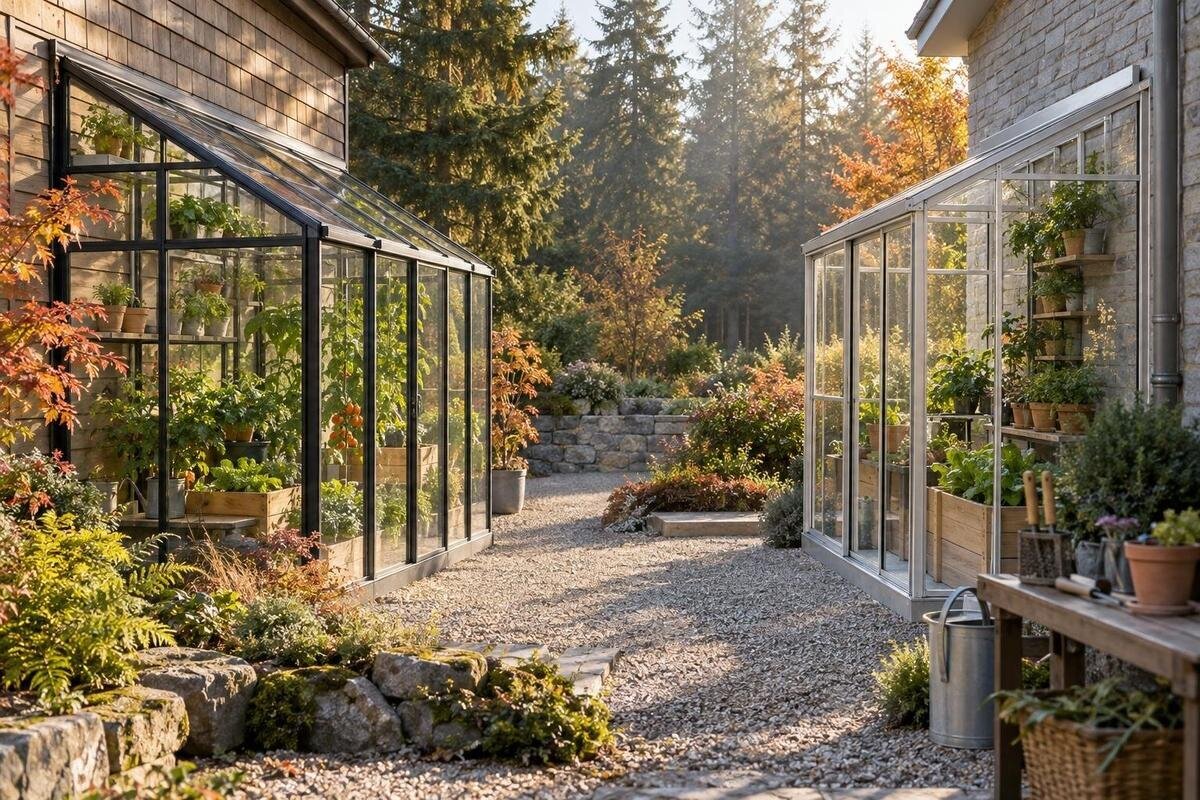
Planning to buy a lean-to greenhouse around Black Friday? A seasonal price is worth considering only after you know that the wall and garden can accommodate the exact model. Measure the usable wall length, the greenhouse’s projection into the garden and the height available; then account for openings, services, drainage and access. Use those checks to screen product pages before comparing any offer. This guide focuses on the wall and space questions that can rule out a model, not on assuming that a promotion makes every option suitable.

Check whether the wall suits a lean-to greenhouse
A lean-to greenhouse sits alongside a building, so the wall is part of the buying decision rather than a backdrop. Identify the exact wall and its usable length before comparing headline dimensions. For the aluminium lean-to greenhouse, treat the product name as identification only: check the information for that exact model for its wall-facing dimensions, suitable wall surface, fixing method and required clearances. A category label or photograph cannot confirm that your particular wall is suitable. If the listing does not explain the connection or the clearances, ask the retailer or manufacturer before ordering rather than guessing from another greenhouse’s installation.
Inspect the wall from the ground to the eaves, including its surface and condition. Loose cladding, damaged render, crumbling masonry or signs of unresolved water ingress are reasons to pause and seek an appropriate professional assessment; a greenhouse can make later inspection harder. Note changes in the wall surface, joints and corners, as the product instructions may specify how the frame is meant to meet it. Take photographs and record any concerns while comparing models. Also note whether access for future wall maintenance would be restricted once the greenhouse is in place. Do not treat a smooth-looking product image as evidence that the design will accommodate an uneven or damaged wall.
Measure the wall and the available footprint
Measure the usable wall length at the proposed position, then check it at more than one height if the wall, eaves or surrounding features change. Record where each measurement starts and ends, and note corners, setbacks or sections that cannot be used. Measure the available height as well, including the space beneath any eaves or guttering; do not count a projection as clear wall space. Measure to the actual lowest obstruction, rather than estimating from ground level. If the ground is uneven or sloping, check the space at several points rather than relying on one measurement. A small sketch with the figures in metres or centimetres is easier to compare with product information than a mental estimate.
Next, measure the projection from the wall into the garden and the clear area around the proposed footprint. Include room for the greenhouse door to open and for people to reach the entrance, nearby paths and garden features. Mark the outline on the ground with string or a hose to see how much space it occupies in practice. A page for the aluminium classic greenhouse is a separately named model, so its dimensions should not be carried across to a lean-to. Keep the figures for the exact design you are considering, and check whether stated dimensions include any base or projections.
Allow for openings, services and access
Make a list of everything on or beside the wall that could conflict with the greenhouse: windows, external doors, vents, taps, pipes, downpipes, sockets, meter boxes and access panels. Note their position and how far they project from the wall. A feature that seems minor on a photograph can occupy space needed by the frame or prevent a window or door from opening fully. Check the opening movement of both the building’s doors and the greenhouse door, not just their positions when closed.
Leave access to any service point or wall feature that must remain reachable, and do not cover ventilation openings. A simple sketch of the wall can show the height and position of each obstruction alongside the proposed greenhouse outline. Include the space needed to operate a tap, open a meter box or carry out routine maintenance. If a fitting would need to be moved, or you are unsure what a service is, get appropriate professional advice rather than planning an alteration from guesswork. The same applies if the frame seems to conflict with an opening: check the exact model’s information before assuming it can be adjusted or positioned differently.
Check light, shade and rainwater at the wall
Look at the proposed position at different times of day. The building itself, nearby fences and trees can cast shade, and the pattern may change over the year as the sun moves or trees come into leaf. Note whether the wall-facing location is shaded while the rest of the garden is bright, as this can affect where you place different plants. If you are viewing the site in late autumn or winter, observations from that visit alone will not show the full summer pattern; use earlier photographs or notes if you have them. Consider the light available for the plants you intend to grow, but do not rely on a universal compass direction as a substitute for checking the actual site.
Look up as well as around: eaves, gutters and downpipes may affect both clearance and where rainwater goes. If practical, observe the area after rain and note any runoff or pooling near the wall. Do not assume that a wall will make up for limited light or keep the greenhouse warm. Catalogue images of another named form, such as a pyramid greenhouse, do not show the conditions at your chosen wall; assess the actual position and the design you plan to buy.

Plan the interior and door access
Consider how you will use the space, not just whether the outer footprint fits. Think about the plants, trays and equipment you expect to keep inside, and whether you want a bench or shelving. Consider where you will set down watering cans, compost or harvested plants without blocking the route. Check the door position and opening direction in the product information, then allow for a clear route in and through the greenhouse. A layout that leaves no room to reach plants or carry items through the doorway may be frustrating even if the outside dimensions match your garden.
Where internal measurements are supplied, compare them with the outside dimensions rather than assuming the full footprint is usable growing space. Sketch the planned layout and leave room to move around the items you intend to use. A listing named aluminium greenhouse with built-in storage is a reminder to check what the exact model’s title and information actually describe: confirm the position and dimensions of any storage, what is included and how it affects usable space. Do not infer an aisle width or storage arrangement from a product name alone.
Confirm the base and ground requirements
Check what the exact lean-to model requires at ground level. A wall connection does not tell you what base or support is needed, and the product information may distinguish between the greenhouse dimensions and the base dimensions. Confirm whether a base is included or needs to be considered separately, and whether the proposed ground area is large enough. Check that the planned base position does not reduce the clearance needed around a path, door or drain. Look at the surface, level and drainage where the greenhouse will stand; avoid assuming that paving, soil or an existing garden feature will meet the requirements without checking.
If the site is uneven, the ground condition is uncertain or the required support is unclear, ask the manufacturer, retailer or a suitable installer before ordering. Do not use another model’s base details as a guide for a lean-to. For example, the name Bloomcabin Prestige greenhouse with a metallic base identifies a different product; it does not establish what base is supplied with or suitable for the greenhouse you are considering. Confirm the exact item, dimensions and requirements for your chosen model, and factor any separate preparation into your budget.
Read the dimensions on the exact product page
Compare the stated width, depth and height with your site measurements, paying particular attention to the length along the wall and the projection into the garden. Check the height at the wall and at the outer edge if the information gives a profile, and note whether figures refer to the frame, base or another part of the design. Record the source and date of the information if you are comparing several pages, so that later checks remain traceable. Do not estimate dimensions from a photograph. If the page or drawing uses a measurement you cannot reconcile with your sketch, ask for clarification before deciding that the model will fit.
A drawing can also help you understand the footprint, door position and relationship between the greenhouse and wall. A separately named shape, such as a T-shaped garden orangery, is not a substitute for the plan of a lean-to: use the dimensions and outline for the exact product you are considering. Check that the diagram and the written measurements refer to the same model, and do not assume that a similar name or image means the measurements are interchangeable.
Compare Black Friday prices on equal terms
A Black Friday label does not establish that a greenhouse is discounted or that its price is the lowest available. Check the current price and terms shown for the exact model and package. If a reference price or offer is displayed, make sure it relates to the same item rather than a different size or configuration. Do not infer a voucher, saving, deadline or stock status from the event name; use the information available for the particular listing when you make your decision.
Keep the product details and offer terms together when comparing options. If your wider search includes an aluminium limited-edition greenhouse, its listing is a different product identity, not a like-for-like price benchmark for a lean-to. Record the model name, configuration and date beside each price so that an earlier figure is not confused with a current one. Add any costs you expect to need, such as a base, delivery or assembly, and check which items are included or optional for the model you have selected. Comparing the total you would actually pay is more useful than comparing a percentage or headline price on its own.
Check delivery, package contents and assembly
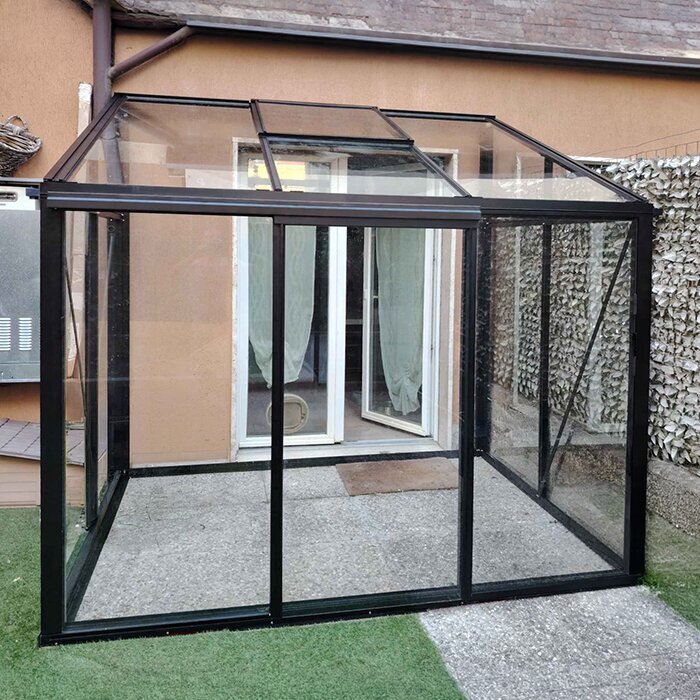
Before ordering, consider the route from the delivery point to the garden: gates, narrow paths, steps, corners and overhead obstructions can all affect access. Measure tight points rather than judging them by eye, particularly where a path turns or narrows beside a house. Check the packed dimensions and weight if they are provided, rather than assuming they match the finished greenhouse measurements. If essential information is missing, ask the retailer before placing an order. Also check what the package contains and whether any base or other item you need is listed separately; do not assume that an illustration shows everything supplied.
Read the current delivery and assembly information for the exact lean-to model, including any stated availability, delivery arrangements and whether assembly is included or needs separate planning. If you are arranging professional assembly, make sure the person doing the work has the product details before you commit to a schedule. A different listing, such as the Bloomcabin orangery, is not a reliable source for the delivery or assembly terms of a lean-to. Use the information attached to the item you intend to buy.
Shortlist only models that pass the site checks
Set practical pass-or-pause criteria before judging prices: enough usable wall length, adequate height and projection, unobstructed doors and services, workable access, and a footprint that leaves room for the intended use. If a model conflicts with a window, downpipe or access route, do not assume that an adjustment will be possible. Check the exact product information or rule it out. A greenhouse that only fits when a required clearance is ignored is not a good fit, even if its displayed price looks attractive.
Keep a simple site sheet with your measurements, a sketch, photographs and a note of anything that needs clarification. Date the measurements and revisit them if a planned path, door or nearby garden feature changes before purchase. Match each set of product details to its exact model so that figures from different listings do not get mixed up. If the wall, base or footprint requirement remains uncertain, pause the comparison until you have reliable information. Once a model passes those checks, its current price and terms can help you choose between suitable options rather than distract from a problem that the offer cannot solve.
Frequently asked questions
What should I measure before buying a lean-to greenhouse?
Measure the usable wall length, the distance from the wall to the furthest part of the greenhouse, and the available height. Also note the position of doors, windows, services, the proposed base and access routes. Mark the footprint on the ground and compare it with the dimensions for the exact model.
Can a lean-to greenhouse go against any wall?
No. Suitability depends on the wall’s condition and surface, the fixing requirements for the particular model and the clearances around it. Check the product information and seek a suitable professional assessment if the wall or the proposed fixing is uncertain.
Will a wall make a lean-to greenhouse warmer?
Do not assume that it will. A wall can affect shade and exposure, but conditions depend on the site, the building and the greenhouse design. Assess the light and shade where you plan to place it rather than relying on a product photograph or an expectation that the wall will provide enough warmth.
How should I compare a Black Friday offer?
Check the current price and terms for the exact model and package. Include any additional costs you expect, such as a base, delivery or assembly, and compare like with like. The Black Friday label alone does not establish a discount or a saving.
Can I use the dimensions of a similar greenhouse?
Use them only as a general point of comparison, not to decide whether a lean-to fits. Different models can have different footprints, heights and base requirements. Check the stated dimensions and any drawing for the exact product you are considering.
A lean-to greenhouse is a good purchase only when its actual wall requirements and footprint work with the site you have. A measured sketch, wall photographs and a note of what must stay accessible will make listing comparisons more reliable than a product title or Black Friday banner. Once those checks are satisfied, the current price and terms can help you decide between suitable options; if a critical fit detail remains unknown, do not treat an offer as an answer to it.
