
Buying a greenhouse for winter growing: what it can and can't do
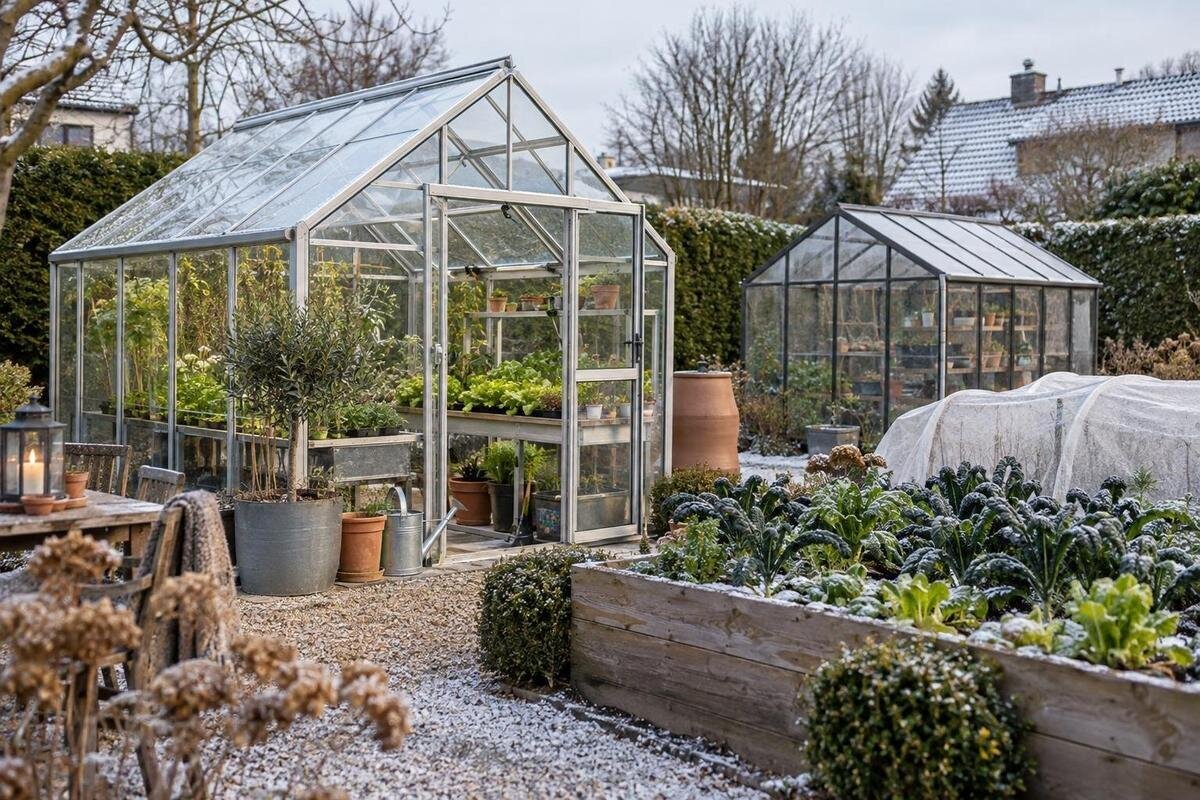
Greenhouse buying guide
Buying a greenhouse for winter growing is about matching the structure to a realistic crop plan, not assuming the enclosure will create summer conditions. In the UK, short days, low winter sun, wet spells and overnight cold can all affect whether a plant survives, grows slowly or produces a harvest. A greenhouse can reduce exposure and make some crops easier to tend, but an unheated model is not automatically frost-free. Before comparing designs, decide what you hope to grow, what conditions those plants need and what the site can provide.

Before you buy 1
What a greenhouse changes in winter
A greenhouse gives crops a more sheltered place than an open bed. When its doors and vents are closed, the covering reduces direct exposure to rain and wind, while daylight through the glazing can warm air and surfaces during the day. That shelter can extend the useful season for hardy plants, protect foliage from battering and make tending or harvesting easier through wet spells. It may also let you keep pots under cover rather than moving them whenever rain arrives. The benefit is a moderated growing space, not a promise that every plant will keep growing through winter; crop choice and the weather outside still matter.
After sunset, warmth leaves the enclosure; an unheated greenhouse can become very cold, and internal temperatures may approach outdoor conditions. How quickly that happens varies with sunshine, cloud cover, wind, the site, glazing, gaps and ventilation, so no single feature or label gives a dependable overnight minimum. Soil and compost can remain cold after the air warms, slowing roots and new growth. A greenhouse is not a controlled room: it shelters plants and changes their exposure, but cannot create sustained heat or daylight on its own. Treat it as one part of winter protection, alongside crop choice and any additional measures the plants require.
Match the structure to the crops you plan to grow
Start with a short list of crops and the job you expect the structure to do. Hardy winter salad leaves, spinach, hardy herbs and overwintering plants may benefit from shelter, although variety, sowing date and local weather affect results. Separate crops that mainly need protection from rain and wind from those expected to keep growing actively. A plant can survive cold without producing a harvest, and short days can slow growth even inside a greenhouse. Check variety-specific growing guidance and a suitable local sowing calendar, then note when you hope to pick. This plan helps show whether you need shelter, added protection or warmth.
For each crop, write down the conditions that matter: protection from heavy rain, shelter from wind, frost avoidance or enough warmth for continued growth. These are different buying targets, and the last may involve more than choosing a larger enclosure. If your plan depends on warm nights, account for suitable heating equipment, controls, safe operation and running costs before committing. When reviewing a listing for an aluminium classic greenhouse, compare its stated dimensions, glazing and included components with your crop plan. The category name alone says nothing about winter temperatures, so use the product details to assess the structure rather than assuming it will meet a particular crop’s needs.
Before you buy 2
Check the site’s winter light
Assess the exact plot before choosing a size or style. In winter the sun stays low, so a fence, hedge, house or tree can cast a long shadow across a spot that is sunny in summer. Check where shade falls in the morning and afternoon, and consider whether nearby plants may grow taller. Clear glazing cannot make up for a site with very little daylight, while a sheltered corner may also be darker. Avoid assuming a general orientation rule will solve a site-specific obstruction; judge the light available against the crops on your list. If you can, observe the proposed position at different times before deciding where the greenhouse will stand.
Consider how light will reach plants once the greenhouse is in use, too. Crowded pots, shelving and taller crops can shade shorter plants, so make sure your winter plan suits the space available. A product described as an aluminium lean-to greenhouse needs to be considered in relation to the adjoining wall and roofline: these may provide shelter but can also block low winter sun. Check the proposed position against the building through the day, then use the listing’s drawings and dimensions to see whether it fits. Neither the product name nor a general description can tell you how much winter light your own site receives.
Compare glazing, seals and frame details
Read the exact panel description rather than treating “glazed” as a specification. Panel material, construction and thickness can affect transmitted light, heat loss, weight, durability and handling; no option is automatically best for every plot. More insulating panels may transmit a different amount of light from clearer glazing, so compare stated information where it is available and consider what matters most to your crops. Check whether the description covers the roof and sides alike or whether their construction differs. Note any missing details instead of filling gaps from photographs or assumptions about another greenhouse.
Look at the joins and openings as well as the main panels: door and vent seals can affect how much air moves through the structure. Check whether the product description explains how panels are fitted, whether replacement parts are described and what the assembly instructions cover. A product such as an aluminium limited-edition greenhouse still needs to be assessed from its actual panel and assembly details; “limited edition” is not an insulation specification. If overnight warmth is central to your plan, make sure the stated construction and any separate heating arrangement suit that need rather than judging from appearance.

Before you buy 3
Ventilation still matters in cold weather
Plants, damp compost and watering add moisture to the air; condensation can form on cold panels, and persistently damp surfaces or foliage can encourage problems. Ventilation helps remove humid air, but opening vents also lets warmth escape. That makes air exchange a winter-management issue, not just an optional summer extra. Look for openings you can use as conditions change, and consider whether you will be able to reach them during ordinary jobs. Keeping a greenhouse fully closed may retain some daytime warmth but leave moisture with nowhere to go; permanently open vents may reduce the shelter you bought.
Read product drawings and specifications to see which openings are included, where they sit and how they are operated. The name or shape does not demonstrate airflow: a listing such as Garden Orangery T still needs to be assessed for its actual vent arrangement and operating guidance. If you intend to add vent openers or other accessories, check compatibility rather than assuming they can be fitted later. Ventilation can help manage condensation, but it cannot compensate for overwatering or crowded plants, so consider the way you will care for the crops as well as the openings themselves.
Plan for frost and overnight temperature drops
Treat frost protection as a separate requirement from shelter. An unheated greenhouse may moderate some temperature changes, but it can still reach freezing during a cold spell. Compost in pots may cool faster than soil in the ground, so container-grown plants can need different protection. Once the structure is installed, a maximum–minimum thermometer can record its high and low temperatures through cold nights. A warm daytime reading alone is not enough to judge whether vulnerable plants will be safe overnight. Build your plan around the lowest conditions your crops can tolerate, not just how comfortable the greenhouse feels in the afternoon.
If a crop needs frost-free conditions, decide how you will provide them before ordering. You might choose hardier varieties, move containers to a more protected place or assess a suitable frost-protection or heating system. Do not assume that extra glazing or a distinctive roof shape solves the problem: Bloomcabin Oasis pyramid greenhouse is a product name, not evidence of a particular overnight minimum. Check the published construction details and any stated limits. If electrical heating is part of your plan, confirm that the equipment is suitable for the setting and have any electrical work assessed by a qualified electrician. Include running costs in your decision.
Before you buy 4
Measure the usable growing area
A catalogue footprint is not the same as usable growing space. A doorway, frame uprights, sloping sides and a clear route all affect how many beds or pots will fit. Sketch where containers and a walkway could go before choosing, allowing room to water, harvest and remove spent plants without disturbing everything around them. Make sure the route works with the crops you expect to tend in winter, when boots and paths may be muddy. A greenhouse packed tightly from the outset can be awkward to use once foliage fills out, even if its outside dimensions initially seem generous.
Also decide what needs to stay under cover: tools, compost, pots and protective materials can take space if you plan to store them in the greenhouse. If a model is presented as an aluminium greenhouse with built-in storage, compare the product drawing and stated internal dimensions to see how the storage affects the area left for crops. Check whether any benches or shelves shown in photographs are included or merely illustrative. Base your estimate on the usable area and listed contents, not on a product label or an impression of space from an image.
Check the ground, exposure and assembly requirements
The plot needs to suit the greenhouse through wet and windy months, not only in fine weather. Check whether the ground is reasonably level, how water drains and how exposed the position is to gusts. Nearby trees can bring shade and falling debris; a wall may reduce exposure while also affecting available light. These are site considerations, not reasons to assume one position will suit every garden. Compare the manufacturer’s siting guidance with your actual location before choosing where to place the structure, and consider whether the proposed position will remain practical throughout the year.
Read the instructions for the required base, ground preparation, anchoring and assembly before ordering. Even when comparing a named option such as Bloomcabin Prestige greenhouse with metallic base, read the description to establish what is included and what preparation is required beneath it; the name is not a complete installation specification. Do not assume that a base removes the need for suitable ground or that every design is fixed in the same way. If the site is sloping, exposed or needs foundation work beyond your experience, ask an appropriately qualified installer to assess it rather than improvising.

Before you buy 5
Allow for winter access and routine maintenance
Winter use includes more than planting: harvesting in wet weather, checking vents, clearing away dead foliage and cleaning panels all take time. Consider which jobs you are prepared to do and whether doors, vents and glazing are reachable from your normal working area. Product care guidance should explain how to clean the panels and maintain the structure. For snow or strong winds, follow the manufacturer’s maintenance and weather instructions; do not infer allowable conditions from the frame material or from a description such as “sturdy”.
For a product such as Bloomcabin Orangery, use published internal measurements and layout drawings to see where crops, tools and a clear route could fit. Check the positions of doors and vents, whether routine jobs can be done without shifting pots, and whether paths remain practical when wet. If an everyday task would require moving several containers each time you open a vent, account for that before buying rather than after assembly. A layout that fits your winter routine makes it easier to tend crops regularly and keep the growing space in use.
Compare the full specification before ordering
Use the product page to check the details that affect your plan: external and internal dimensions, panel type, door and vent positions, included components, base requirements, assembly and siting guidance. Cross-check those details against your plot and the crops you intend to grow rather than relying on photographs. If information crucial to winter performance is missing, ask the seller or manufacturer before ordering. This is especially important if you are relying on frost protection; a broad phrase such as “winter-ready” does not tell you what overnight conditions a greenhouse can maintain.
Consider the complete setup, not just the structure. Ground preparation, containers, staging, a thermometer, frost protection and possible heating can affect the overall cost, though the items you need will depend on your crops and site. Separate essentials from optional extras, and check which are included or bought separately. A larger greenhouse cannot solve a shortage of winter light or provide warmth by itself. Before placing an order, also read the published delivery, returns and assembly terms, and make sure the site and access route are ready for the arrangement described.
Frequently asked questions
Can I grow vegetables in an unheated greenhouse all winter?
Some hardy vegetables can survive under cover and may provide harvests, but growth often slows as daylight falls and the soil stays cold. Results depend on the variety, sowing date and conditions at your site. Plan around crops that suit those conditions; an unheated greenhouse does not make every vegetable productive throughout winter.
Will a greenhouse stay frost-free overnight?
Not necessarily. An unheated structure can cool sharply after sunset and may reach freezing during a cold spell. Glazing, gaps, ventilation and exposure all affect the result. Once the greenhouse is installed, use a minimum–maximum thermometer to monitor cold nights. If your crops need frost-free conditions, plan suitable additional protection rather than relying on the structure alone.
Which crops are suitable for winter growing?
Hardy varieties of leafy crops, such as winter lettuce and spinach, and some hardy herbs are common choices. Check variety-specific growing guidance and local sowing advice: a plant can survive cold without continuing to grow quickly in low light. Decide what you want to harvest, then match the greenhouse and any extra protection to those needs.
Is a lean-to greenhouse warmer in winter?
Not automatically. An adjoining wall may offer some shelter, but it can also block low winter sun. A lean-to is still affected by its glazing, gaps, ventilation and overnight temperatures. Assess the actual position through the day and read the product’s construction details; the words lean-to alone do not establish its temperature or suitability for particular crops.
Should I heat a greenhouse for winter growing?
Only if your chosen crops need conditions that an unheated structure cannot provide. Work out how much warmth they require and how reliably it must be maintained, then consider suitable equipment, controls and running costs. Check that any heater is intended for the setting, and have electrical work assessed by a qualified electrician. Do not assume heating is included unless stated.
The best greenhouse for winter growing is the one that fits a specific, achievable crop plan and the site where it will stand. Weigh winter light, likely overnight cold, ventilation and usable area, then compare the actual glazing, openings, base and assembly details. A greenhouse can extend the season for hardy crops, while frost-sensitive or warmth-loving plants may need separate protection. Keeping that distinction clear helps you choose a structure for the harvest you can realistically support, rather than expecting the enclosure to create conditions it cannot provide.
