
Buying a Small Greenhouse for a Compact Garden
GREENHOUSE BUYING GUIDE
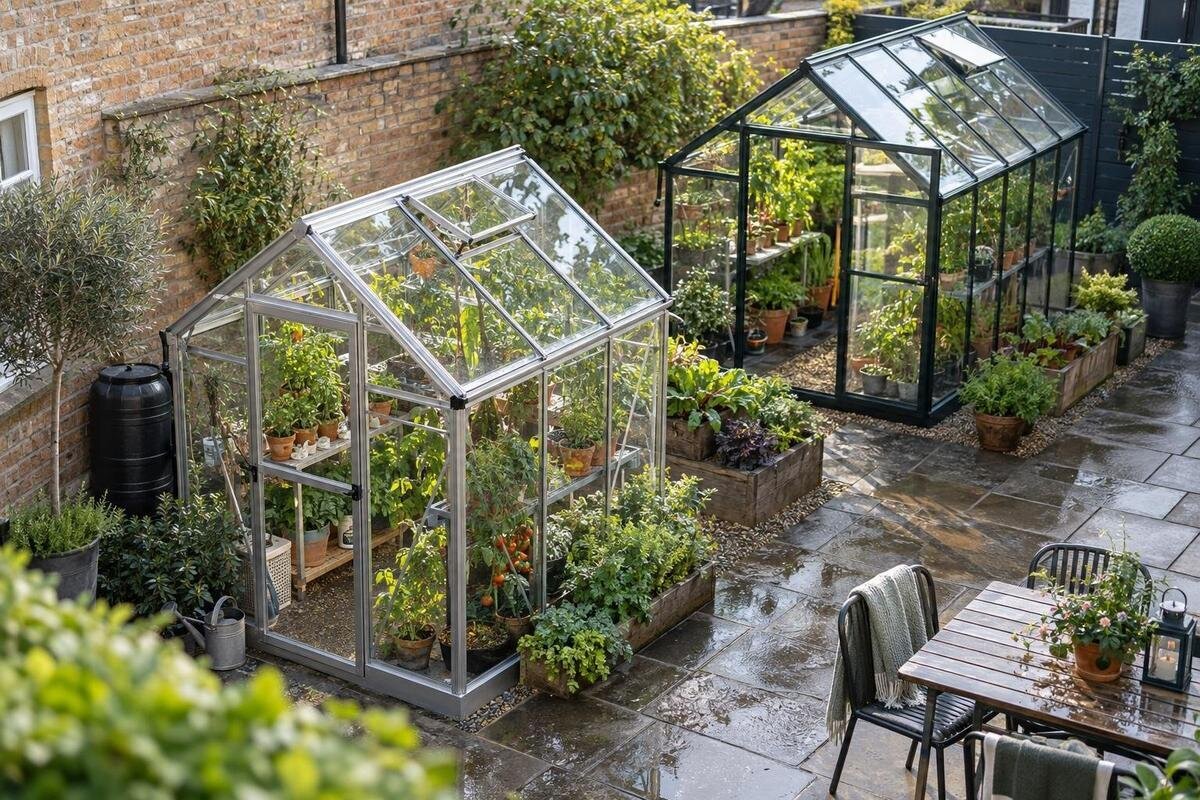
Buying a small greenhouse for a compact garden is a space-planning decision as much as a style choice. A model that looks modest in a photograph can still take over a narrow lawn, block a route or leave too little room to tend plants. Start with the part of the garden you can genuinely spare, then compare the greenhouse’s external dimensions with its useful interior and the space needed to reach it. A good fit is one you can use without sacrificing the everyday routes and tasks that make the garden work.

Measure the whole site, including the space around it
Measure the proposed location rather than estimating from a photograph or counting paving slabs. Record the maximum width and depth, then repeat measurements at several points if the boundary is uneven or the ground changes. The narrowest usable measurement can decide whether a footprint fits. Note fixed obstacles too: fence posts, a tap, drain covers, tree trunks or a path that cannot be moved. Include any border, raised bed or bin area you intend to keep. A greenhouse may fit on paper yet leave an awkward strip beside it, so measure the garden as you use it, not just the empty patch. Leave a realistic clearance where you need to walk, carry pots or use garden tools; an unusably narrow gap is not useful spare space.
Sketch the area to scale or mark the outline with string, then view it from the house and from the garden entrance. This helps reveal a blocked route or a door that would face an inconvenient direction. Check the space above the footprint as well as at ground level: branches, eaves or other projections can affect the position. Note uneven ground or low spots for your installation planning, rather than assuming the stated footprint answers preparation questions. Also mark places you need to reach regularly, such as a gate, tap or compost area. Keep measurements from fixed reference points so you can test alternatives on the same drawing.
Compare the footprint with the usable growing area
Do not treat the outside footprint as planting area. The frame, door position and any interior supports take space, while beds, pots, shelves and a route for your hands and feet use the space that remains. Check whether the product page gives both external and internal measurements; a dimension drawing is more useful than a single width-and-depth figure. Sketch your preferred arrangement inside the outline, even if it is only one bed and an aisle. This shows whether the greenhouse can hold the plants you want without making every task a reach across them. Include the room needed to set down a watering can or tray while you work, as this can make a small interior considerably easier to use.
Compare the growing area with the route you need to work. A central aisle may make both sides accessible but reduce planting width; placing containers around the edge may leave too little room to turn, water or move a tray. Allow for pots and equipment you intend to bring inside, not only mature plants. The classic aluminium greenhouse is one named option to put on a comparison sheet; its name does not establish the internal area, entrance position, glazing or included staging. Use the published dimensions and plan instead of estimating from a photograph.
Choose a shape that works with the garden layout
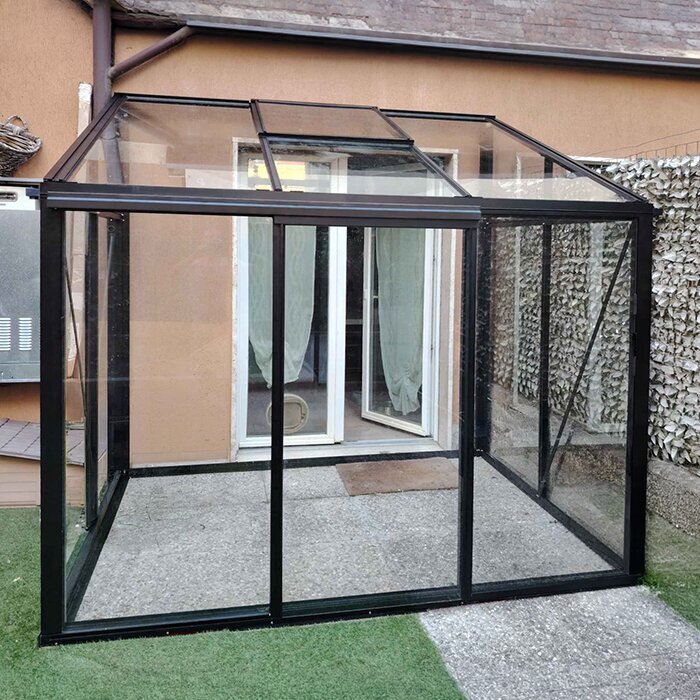
Compare freestanding and lean-to layouts by their actual outlines, not by assuming a wall-backed structure always saves space. A lean-to may be worth considering where a suitable wall is available, but its projection from the wall, entrance and installation requirements still need room. If it is close to a boundary, check that you can reach the parts that need assembly or maintenance. Include wall-mounted fixtures and pipes in your sketch, and confirm that the product instructions address the wall and fixings involved. The aluminium lean-to greenhouse is one named option to assess against those details, not a guarantee of fit.
A freestanding layout offers a different placement choice, while a T-shaped or other non-rectangular outline can create corners that either use a site well or make circulation awkward. Do not rely on a front photograph to judge this: compare the plan view, width, depth, overall height and entrance location. Consider which parts of the garden remain accessible after installation. Mark paths and nearby features on the same drawing, so you can see whether a greenhouse would block an existing route or make another part of the garden difficult to use. Also consider whether its longest side will force you to give up a useful strip of lawn or planting bed that is not obvious from the footprint alone.
Allow for doors, vents and working access
Check where the entrance sits and how the door operates. If it swings open, include its full movement in your site plan; if it slides or uses a track, allow a clear approach to it. A door that opens into a path, wall or border can make carrying pots and tending plants awkward, even when the greenhouse itself fits. Look for the door opening dimensions as well as the overall height and width. Those details matter when you bring in trays, compost or larger pots, and when you need to get them out again.
Vent openings and their controls also need to be reachable. Check how they open, where they are positioned and whether anything nearby could obstruct them; do not assume that two greenhouses with a similar outline have the same openings. Allow enough room to stand safely while operating them and to reach the areas that need routine cleaning. If the product information does not show how a door or vent moves, look for a more detailed drawing or ask the supplier before deciding. A clear plan for these everyday movements is more useful than judging access from a closed-door image. Think too about whether you can reach handles and catches without leaning over densely planted containers.

Match the interior to the plants you plan to grow
List the plants and tasks the greenhouse is meant to accommodate before choosing a size. Seed trays, pots, grow bags and taller plants use space differently, so sketch them into the interior rather than counting on a general area figure. Consider how much room you want for shelves or staging and whether you need access to plants at floor level. If you plan to grow plants that need height, compare the stated internal height and roof profile; do not infer headroom from the outside appearance. Grouping plants by the space they need at different stages can also show whether a compact layout will remain workable once trays become larger pots.
Think about how you will work inside as well as what you will grow. Leave a route for moving trays and reaching plants, and consider whether a shelf would block light or access to another area. A product named the T-shaped garden orangery should be compared using its plan view: check whether its outline and internal layout suit the beds or containers you have in mind. A distinctive shape does not automatically create more useful growing space. Check the dimensions and layout against your own planting plan before settling on a style.
Check sunlight, shade and nearby features
The position of the greenhouse affects the light available to your plants, so observe the proposed site at different times of day. Nearby fences, buildings, trees and garden structures can cast shadows that shift as the sun moves. A quick look at midday alone may not show the full pattern. If possible, check the area on more than one occasion and consider how deciduous trees or other seasonal features change the shade. This helps you compare locations before committing to a footprint that cannot easily be moved. Record where the strongest shade falls, rather than only noting that it occurs, because this may affect both the greenhouse position and the remaining planting area.
Include the surroundings in your product comparison: a tall structure, a wall or an overhanging branch may affect where a particular outline can sit and how easily you can reach it. The pyramid greenhouse listing is another named option to compare, but do not assume its shape will compensate for a shaded position or make a site easier to fit. Use the stated dimensions, plan and entrance details alongside what you have observed in the garden. Leave practical access for cleaning and routine care rather than placing the greenhouse tightly against every nearby feature.
Check the ground, base requirements and assembly route
Before choosing a site, check the product information for its ground preparation and base requirements. A suitable prepared surface is part of the buying decision, not a detail to leave until the greenhouse arrives. Find out whether a base is included, what the assembly instructions call for and whether the site needs work. Do not assume that a product image shows everything supplied or that a named base will suit every surface. If the ground is uneven or the fixing requirements are unclear, ask a qualified installer to advise on the particular site.
Plan the route from the delivery point to the garden as well as the final position. Gates, steps, tight turns and narrow paths can affect whether components can be brought to the site, so check any package or access information supplied before ordering. A name such as Prestige greenhouse with metallic base does not replace checking what is included or what preparation and fitting the instructions specify. Compare that information with your ground and route; if the site needs professional preparation, allow for it in your decision rather than treating the greenhouse price as the whole project. It is also sensible to identify where components can be placed temporarily during assembly without obstructing essential access.
Compare frame and glazing details
Product names and photographs do not tell you every detail of a greenhouse’s frame or glazing. Check the stated frame material, the type and thickness of the panels, how they are held in place and what maintenance the manufacturer recommends. Compare those details only where the listings provide them; do not infer glazing from a frame name or assume that similar-looking products use the same construction. If replacement panels or parts matter to you, check whether the product information explains how to obtain compatible ones. Keep notes in the same terms used on each product page, so that you do not accidentally compare an overall dimension or general description with a more specific listed detail.
Look at assembly information and any available plan or technical drawing alongside the description. Confirm which fittings and panels are included, and whether the instructions identify any requirements for the base or site. An orangery-style greenhouse listing is another named option to compare, but the style label does not establish its glazing, frame details or maintenance needs. Use the published product information to judge whether its stated construction suits your preferences and intended use. If an important detail is missing, resolve that question before placing an order rather than relying on an image.
Decide whether storage and extras justify their space
In a compact garden, storage needs can influence the greenhouse choice. Make a short list of what you expect to keep close at hand, such as pots, trays or small tools, then decide whether it belongs inside the growing area or elsewhere. Shelves and other fittings may be useful, but they can also occupy space you intended for plants or make it harder to reach the sides. Check whether any extras are included, optional or sold separately, and confirm that they are compatible with the greenhouse you are considering. Separating items used every day from occasional supplies helps you avoid dedicating valuable growing room to things that could be stored elsewhere.
If storage is a priority, check the layout and dimensions rather than assuming that it can be added without affecting the growing area. The aluminium greenhouse with built-in storage is a named option whose current product details can clarify what the description means, what is included and where any storage sits in relation to the interior. Consider how it will be accessed and whether it changes the route you need for tending plants. Compare the same points for separate garden storage, if you are considering it, so you can judge the overall use of the available space. The best arrangement is one that keeps frequently used items convenient without narrowing the working route.
Compare product details before placing an order
Put the options side by side using the same details for each: external width and depth, internal area, overall height, door and vent positions, frame and glazing information, base requirements and included components. Add the assembly information and any site requirements stated in the product description. A simple comparison sheet helps reveal which details are confirmed and which still need checking. It also prevents a product with a familiar name or appealing photograph from seeming more suitable than another option simply because its information is easier to scan. Keep the product page date or version of any downloaded plan with your notes, so you know which information your comparison is based on.
Treat labels as names, not as substitutes for measurements or ordering information. For example, limited-edition aluminium greenhouse does not tell you whether the footprint fits your plan, what the package contains or what installation details apply. Check the current product page for those points, along with delivery access, charges and returns terms. Confirm that the route into the garden can accommodate the delivery and that the stated requirements match your site. If a key dimension or inclusion is unclear, ask for clarification before ordering so you can compare like with like.
Frequently asked questions
How do I decide what size greenhouse will fit a small garden?
There is no single size that works for every compact garden. Measure the site at its narrowest points, allow for doors and access, then compare the external footprint with the useful interior. The right size is one that leaves enough room to move around the greenhouse and still lets you tend the plants you plan to grow.
Can a lean-to greenhouse make better use of a compact garden?
It can be worth comparing if you have a suitable wall, but the format does not automatically save usable space. Check the greenhouse’s projection, entrance position, access around it and the installation requirements. The wall and the space beside it need to work for the particular product, not just for the general idea of a lean-to.
Should I compare internal or external measurements?
Both matter. External measurements show whether the greenhouse fits the site; internal dimensions help you judge how much growing and working space remains. Check the plan for door position, supports and any included fittings, and do not assume the overall width and depth are clear planting space.
Does a small greenhouse need a base?
Check the product information and assembly instructions for the required ground preparation and any base components. Do not assume that a base is included or that it suits your site just because it appears in a product name or image. If the ground, wall or fixing requirements are unclear, ask a qualified installer.
What should I confirm before ordering a greenhouse?
Compare the external and internal dimensions, door and vent positions, glazing and frame details, required ground preparation and what the package includes. Also check the current assembly information, delivery access, charges and returns terms. These details help you compare products fairly and avoid relying on a photograph or a style name.
A compact garden benefits from a greenhouse chosen to fit its actual layout, not just the empty rectangle shown in a listing. Once you understand the external outline, useful interior, access, light and site requirements, you can compare styles on equal terms. If a candidate leaves too little room to reach and tend plants or makes the rest of the garden awkward to use, it may not be the right fit. A well-chosen small greenhouse should add growing space while allowing the garden around it to remain practical.
