
Buying a Glass Greenhouse: Understanding Glazing Options
GREENHOUSE BUYING GUIDE
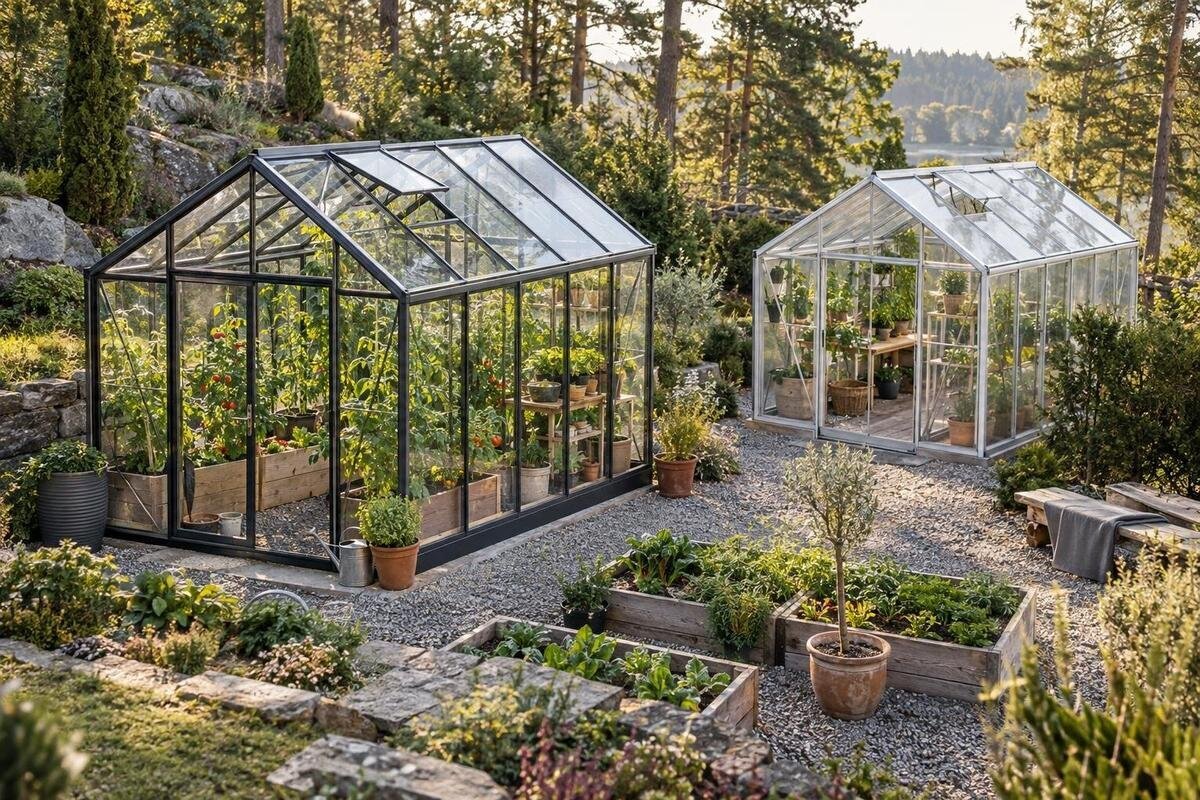
Glass is not a single, interchangeable greenhouse specification. A listing may mean ordinary horticultural glass, toughened safety glass or a specialist finish, and a structure can use different glazing in different areas. The choice affects the way light enters, the likely pattern of breakage and the effort involved in replacement and care. Before you buy a glass greenhouse, compare the stated pane type with your growing plans and household needs. The frame style, product title and photographs can help identify a model, but they cannot confirm its glazing package.

01
Identify the glazing included with the greenhouse
Start with the glazing details in the product description or technical documents. Look for the exact glass type, rather than a broad label such as glass, clear glazing or safety glazing. Then check whether it applies to every glazed area: roof, side walls, doors and opening panels may not all use the same material. If there are different configurations, establish which glazing is included in the version you are ordering and whether an alternative is optional. This gives you a fair basis for comparing greenhouse kits.
Use the Classic Greenhouse listing as a page to inspect, not as a glazing specification in itself. Record the stated glass type, where each type is used, and whether a finish is named. If these details are missing or unclear, ask the seller to confirm them in writing. A photograph may show transparent panels but cannot reveal how the glass was made, its safety classification or whether the pictured arrangement matches the version in your basket. Check, too, whether all the panes shown are included in the order. Save the answer alongside the product page, especially where a model has options, so that you can compare the same glazing package with other greenhouses rather than comparing incomplete descriptions.
Horticultural glass as a baseline option
Horticultural glass is a common form of basic greenhouse glazing. It is generally clear, unlaminated glass supplied as individual panes, although exact specifications vary between products. Its straightforward appearance makes it a useful baseline when comparing more specialised choices, and clear glass lets daylight into the growing space. Do not assume that horticultural glass is safety glass: ask the supplier to identify the precise type and provide any relevant product information. If a listing says only glass, the wording does not establish how a pane is likely to behave if it breaks.
The choice is less a matter of a simple good-or-bad verdict than of the setting and upkeep. Ordinary glass can break into large, sharp pieces, so consider who walks, works or plays near the greenhouse and how a broken panel would be managed. Dust, pollen, algae and dried water marks can also build up and reduce the light passing through, making access for cleaning worth considering. Check the maker’s care instructions and ask whether individual panes can be replaced. Consider whether you can safely reach the relevant areas for routine cleaning without leaning on the glass or frame. Those practical details matter alongside the initial glazing type.
02
Toughened glass and its breakage pattern
Toughened glass is heat-treated so that it behaves differently from ordinary annealed glass. It is generally more resistant to impact and thermal stress, but it is not unbreakable and can still be damaged. If it fails, it tends to break into many small pieces rather than large, pointed shards. This can reduce some risks associated with breakage, but fragments still need careful handling; the pane is not hazard-free. Treat the term as information about the glass, not a promise that the greenhouse cannot be damaged.
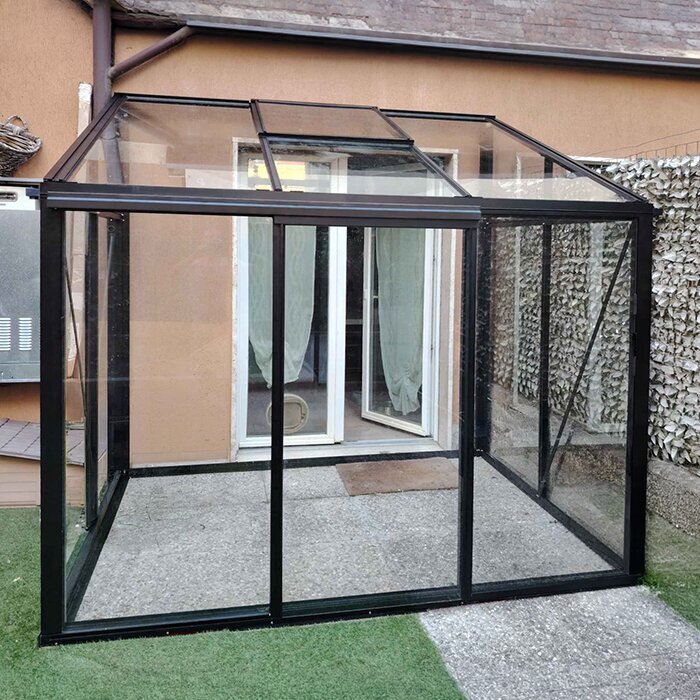
Confirm which panes are toughened rather than assuming that a safety-glazing option covers the whole greenhouse. Ask whether it applies to the roof, sides, doors and opening panels, and request the actual specification if the wording is unclear. The Lean-to Greenhouse listing can be assessed like any other model: look for the named glass and its coverage rather than inferring them from the title. Ask how replacement panes are identified, too. Toughened glass is heat-treated after being made to size and cannot simply be cut to fit afterwards. This makes an accurate panel reference particularly useful: record its position and dimensions only if the supplier tells you those are the details needed for a future replacement.
Laminated, diffused and other specialist glass
Laminated glass consists of layers bonded by an interlayer intended to hold much of the broken material together if a pane cracks. It is not unbreakable, and a damaged pane still needs assessment and replacement; its main distinction is how fragments are retained. It may not be available in an off-the-shelf greenhouse kit, so confirm that it can be supplied for the exact frame and panel positions before planning around it. Ask about the specified pane thickness and how it fits the glazing system rather than assuming that any laminated sheet will be interchangeable.
Other descriptions may refer to a surface or the way light is spread, rather than to a safety treatment. Diffused glass scatters light, while tinted, patterned or obscured glazing can alter brightness and the view through the panels. These finishes are not interchangeable with toughened or laminated glass. If a particular finish matters, ask how it affects light transmission, whether it is used across every panel and whether matching replacements are available. A phrase such as high light is not a substitute for a clear specification, and an option used elsewhere may not be offered for the greenhouse you are considering. Distinguish a named glass product from a general visual description, and ask whether the finish is integral to the pane or simply an optional treatment before treating two listings as comparable.

03
Compare light information, not appearance alone
Consider what your plants need rather than choosing solely by how bright a pane looks to the eye. Crops and growing stages differ in their light requirements, and a clear view outdoors is not a measurement of the light reaching leaves. Ask for visible-light transmission information and whether any figure applies to the glass itself or to a complete assembly. When comparing clear and diffused panes, look for data presented on the same basis. If the finish scatters light or changes the amount transmitted, the supplier should be able to explain what that means for the stated product.
Light at plant level also depends on more than the pane: cleanliness, frame shadows, condensation and shading around the structure can all influence what reaches a crop. Glass choice still matters, but a headline claim about clarity is not a guarantee of a particular growing result. The Limited Edition Greenhouse listing is another product page to review for an explicit glazing description and any published light data. If figures are not supplied, ask what information is available and base the decision on confirmed specifications rather than an image or a general claim. Keep in mind that glazing choice and seasonal shading are separate decisions; a comparison of panes cannot tell you how nearby buildings, fences or planting will affect the light available in your own garden.
Consider impact risks and the people using the greenhouse
Durability is not only a glass label. The risks to panes depend partly on how the greenhouse will be used: a ball or garden tool may hit a lower panel, while a door pane is handled more often. Consider likely contact points and who uses the space, especially children or visitors. Where the consequences of breakage matter, ask the supplier or a qualified glazing professional about a suitable safety-glass specification. Do not rely on a general claim that a greenhouse uses safety glass until you know which panels it covers.
Ask what documentation identifies the glass and whether it refers to a type, a test or a certification; do not infer certification from a product name. Also check the manufacturer’s guidance on how glazing is retained and maintained. For the T-shaped Orangery Greenhouse listing, as for any model, look for the glass specification separately from the title, with particular attention to doors and lower panels. If your project requires a specific safety outcome, have a suitably qualified professional confirm the appropriate specification before you order. It is helpful to separate the question of reducing the chance of damage from the question of what happens if a pane breaks, as different glass descriptions may address those concerns in different ways.
04
Cleaning and condensation affect everyday upkeep
The ease of cleaning depends partly on access to the roof and sides. Dust, pollen, algae and mineral marks can affect light passing through the panes, so follow the greenhouse maker’s cleaning guidance and use products it approves for the glass, seals and any surface finish. Do not assume that every cleaner or abrasive tool is suitable: coatings and adjacent materials may have different care requirements. The pane type alone will not tell you how often cleaning is needed; nearby trees, weather and how the greenhouse is used can affect how quickly dirt builds up.
Condensation is another part of upkeep. Moist air can condense on a cooler pane, leaving droplets or marks; that is not necessarily a fault in the glass. Ventilation and growing practices affect moisture levels, so changing glass type will not, by itself, solve condensation. Check whether the product instructions cover ventilation, seals and cleaning, and how to identify a damaged or loose panel. On the Pyramid Greenhouse listing, as with any model, look for care directions that apply to its actual glazing and finish rather than assuming one cleaning method suits every glass option. When comparing finishes, ask whether the manufacturer gives separate care advice for them, since a method suitable for plain glass may not be appropriate for every coated, patterned or adjacent surface.
Plan for replacement panes before you need them
Replacement glass is not automatically universal. The size, thickness, shape, edge treatment and retention method need to match the greenhouse’s glazing system; a pane that looks close may not fit. Ask before ordering whether replacement panels are available for the exact model, how they are identified and whether you can buy a single pane or need a larger set. This is particularly worth checking if the design is unusual or uses a finish that could be difficult to match. Availability and compatibility are separate questions, so ask about both.
Find out what information the supplier needs to identify a replacement. A model reference, panel position and original glazing description may all be useful. Do not plan to trim toughened glass or substitute another type without professional confirmation. If a pane breaks, use the manufacturer’s advice or a qualified installer rather than improvising a removal method. The Greenhouse with Built-in Storage listing is worth assessing only after its glazing and replacement details are clear; a product title cannot establish whether a spare pane will fit. Keep copies of the order confirmation, instructions and any parts list, as these may distinguish between panels that look similar but have different positions or fixing arrangements.
05
Read the full glazing specification before ordering
Before placing an order, make a written schedule for the greenhouse you are comparing: glass type on the roof, sides, doors and opening panels; any clear, diffused or other finish; which panes, if any, are safety glass; and what is included in the kit. Note optional upgrades or substitutions separately. If the description is silent or uses broad terms, ask the seller to confirm each point in writing. This makes comparisons more useful: a price cannot be judged against another until you know whether the same type and coverage of glazing are included.
Read the product documents for panel details, instructions and part references, rather than relying only on the headline description or gallery. Clarify any questions about handling and installation arrangements before committing; glass panes are brittle, and the supplier should explain what the kit requires. When reviewing the Prestige Greenhouse page, look for the same itemised details and ask about anything missing. Keep the answer with your order information so the specification is clear if you later have a query or need to identify a replacement. A simple table with one row for each glazed area can expose differences between two otherwise similar packages, such as an unspecified door pane or a finish that applies only to selected panels.
Match the glazing to your plants and priorities
Match the available evidence to the priority that matters most. If predictable light is central, compare like-for-like transmission information and the stated finish. If accidental impact is the concern, identify the safety-glass type and exactly where it is used. If upkeep and future repairs matter, ask for cleaning guidance and compatible replacement details. If none of these is a firm requirement, weigh the confirmed specification against your budget and the routine you are prepared to maintain. Ranking your priorities helps prevent an appealing feature from distracting you from a requirement that matters more.
Write down what you plan to grow, how the greenhouse will be used and what you need from the glazing, then compare actual specifications side by side. A page such as the Orangery greenhouse listing should be judged by its stated glass package, not its title or apparent style. If the page does not answer questions that affect your choice, ask the seller or a glazing professional rather than guessing. That check helps you order a greenhouse with a glazing specification you understand before delivery. Once you have a short list, revisit the same questions for each option instead of allowing one well-described feature to outweigh missing information elsewhere; an unknown specification is not equivalent to a confirmed one.
Frequently asked questions
What is the difference between horticultural and toughened glass?
Horticultural glass is a common basic greenhouse glazing and, if it breaks, can form large, sharp pieces. Toughened glass is heat-treated and tends to break into many smaller fragments. Neither description means a pane cannot break, so check the exact type and where it is used.
Is toughened greenhouse glass unbreakable?
No. Toughened glass can still be damaged and break. Its breakage pattern differs from ordinary glass, but fragments can still cause harm. Confirm which panels are toughened and seek advice from a glazing professional if you need a particular safety outcome.
Can I replace just one greenhouse pane?
Sometimes, but a replacement must match the greenhouse’s glazing system. Size, thickness, shape, edge treatment and fixing method can all matter. Ask the supplier whether a single pane is available for the exact model and what information is needed to identify it.
Does clear glass always give plants more useful light than diffused glass?
Not necessarily. Clear and diffused glass handle light differently, and the result depends on the glazing specification and growing conditions. Ask for comparable light-transmission information rather than judging by appearance alone; a product label cannot guarantee a particular growing result.
What glazing details should I confirm before ordering?
Check the glass type for the roof, sides, doors and opening panels; any finish; which panes, if any, are safety glass; what is included in the kit; and how replacements are identified. Ask the seller to clarify any vague or missing details in writing.
The best glazing choice is the one whose type, coverage and care requirements suit the way you will use the greenhouse. Compare glass descriptions carefully, consider light and breakage risks, and check that replacement panes can be identified for the model. When the written specification is clear, you can compare options on their actual glazing rather than on a title or photograph.
