
Buying a Greenhouse for a Coastal Garden: Materials and Maintenance
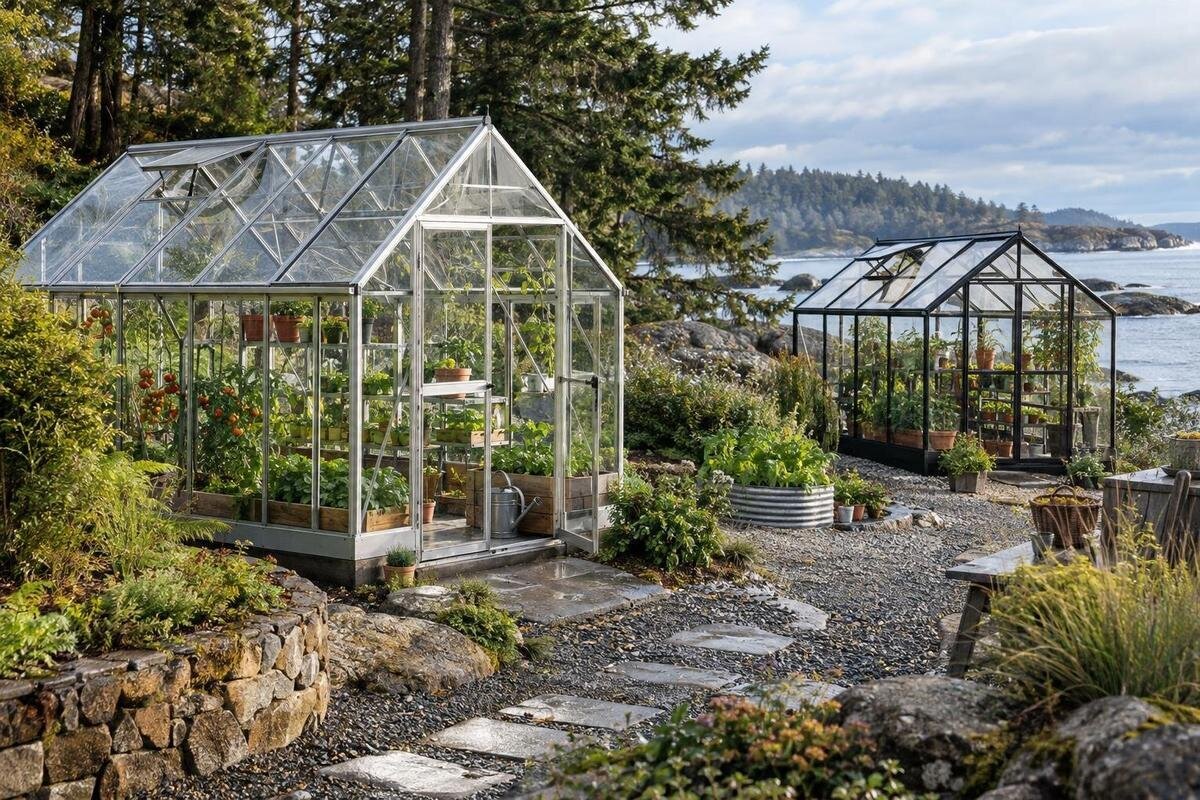
Greenhouse buying guide
Buying a greenhouse for a coastal garden is less about finding a single “coastal-proof” material than matching the whole structure, its finish and its care requirements to the spot you have. Salt carried in sea air, wind-driven rain, grit and long periods of damp can reach a greenhouse differently depending on shelter and orientation. Two gardens in the same seaside town may therefore call for different checks. Before comparing styles, assess the intended position, then ask how the frame, fixings, glazing, seals and base are specified for that exposure. The practical choice is one you can maintain and source parts for, as well as one that suits your growing space.

Assess the greenhouse site’s coastal exposure
Coastal gardens do not share one exposure level. A plot beside open water may receive more salt spray than one screened by buildings or landforms, while a sheltered corner can still stay damp. Hedges, walls and neighbouring buildings may reduce direct exposure in one place and leave another open to gusts. Salt can settle on exposed surfaces; wind can drive rain and fine grit into joints and tracks. The amount reaching a structure depends on its immediate surroundings, not just a postcode. Treat these as conditions to investigate at the proposed greenhouse position, rather than assuming every garden near the sea needs the same material or maintenance routine.
Walk the site from several directions and note where wind and rain usually approach, how much shelter remains through the year, and whether salt residue appears on nearby outdoor metalwork. Look separately at exposed and sheltered corners: a boundary that blocks direct spray may still channel gusts or leave an area damp. Seasonal changes matter too, since deciduous screening and changing garden use can alter shelter. Distance from the shoreline alone is not a reliable buying specification. Record what you observe, then ask a supplier or installer to relate those conditions to the exact model and location, rather than relying on a general assurance that a greenhouse is suitable for coastal gardens. If you are unsure, compare possible positions before settling on a footprint.
Compare frame materials and their upkeep
Frame material affects the kind of upkeep you may face, but a material name is only the beginning of the comparison. Aluminium does not develop the familiar red rust associated with iron, yet salt and moisture can still affect metal surfaces, finishes or attached components. Steel depends on the condition and care of its protective coating; timber needs attention to its finish and condition, with renewal potentially part of ownership. These are broad differences, not a maintenance schedule for a particular greenhouse. The material, treatment, joints, fasteners and maker’s instructions all matter, and fittings may need different care from the main frame. Avoid choosing on the assumption that one word on a listing means maintenance-free.
Compare the frame, finish and fixings as one assembly. Ask whether profiles, brackets, hinges and screws use different materials, which components have a protective finish, and what care is recommended in salty air. The classic aluminium greenhouse is one listing to include in your comparison, but its name does not establish a coastal rating, frame alloy, fastener specification or maintenance interval. Look for clear written details; if they are missing, ask the seller before ordering. Choosing a familiar material is useful only when you also understand what you must inspect, clean and eventually replace. Make sure any advice covers both the frame and its smaller connecting parts.
Check the finish, fasteners and warranty terms
Descriptions such as coated, treated or corrosion-resistant need context: ask which components are treated, what the finish is, and where it stops. A greenhouse may bring together rails, brackets, screws, hinges, catches and supports made or finished differently. Early wear can show at a joint or fastener rather than across a broad surface, so inspectability and part replacement belong in the purchase comparison. Ask whether the supplier’s care instructions address salt exposure, how to respond to a scratched or damaged finish, and which cleaning products are acceptable. Check what is specified for edges and less visible faces as well as the finish seen in a photograph. Colour and gloss alone do not reveal the protection beneath them.
Read the warranty for the exact model and finish, paying attention to conditions related to coastal location, routine maintenance and approved cleaners. Warranty wording sets out the seller’s terms; it is not an independent rating of coastal performance. Record any answer about salt air and what evidence you should retain, such as maintenance notes, before committing. A listing for an limited-edition aluminium greenhouse should be compared by its stated finish, fixings and care instructions, not by the words “limited edition”. If the product page does not explain whether the finish is intended for your exposure, ask for a clear written response rather than treating a general product description as a coastal guarantee.
Compare glazing, seals and replacement parts
Glazing is a separate decision from frame material. Compare the actual pane or sheet material, how it is retained, how you can clean it and whether replacement panels can be obtained later. Salt film, dust and fine grit can make cleaning part of routine ownership, so check the maker’s recommended method rather than assuming every surface tolerates the same cloth or cleaner. Do not infer the glazing type from a photograph or a model name. Ask which glazing is included as standard, whether options change the specification, and what parts are supplied to secure it. Consider who will be responsible for cleaning the panels as well as the frame.
Seals and panel-retaining parts deserve separate questions. Ask how the doors, vents and glazing joints are sealed, which components are replaceable, and how the supplier identifies matching replacement parts. Where a design uses differently shaped panels, request a parts diagram or written schedule so you can understand what may need replacing after damage. A pyramid greenhouse listing is useful to compare only if its product information specifies glazing and replacement support; the style name by itself confirms neither. Keep the panel material distinct from the frame material in your notes, and compare each alongside its cleaning requirements and parts availability.

Check siting and wind exposure
Wind exposure should be judged at the intended site, not guessed from a greenhouse’s appearance. A garden may be sheltered from one direction and open to gusts from another; fences and buildings can change local airflow, so shelter is not a simple yes-or-no test. Think about how the proposed position relates to surrounding boundaries and whether paths or planting would push you towards a more exposed corner. Coastal rain and wind can bring deposits to the frame and glazing, but do not try to estimate structural capacity from general advice online. Ask for the manufacturer’s stated site and installation requirements for the exact model before you choose a position.
Before ordering, ask what anchoring and ground preparation the greenhouse requires, whether a base is included, and who can confirm that the proposed position and foundation suit the product. If considering an aluminium lean-to greenhouse, check the actual instructions for wall attachment, clearances and the junction with the building; the label does not establish a suitable wall, weather seal or level of shelter. A wall does not automatically protect a structure from every direction of exposure. For a particularly open, uneven or difficult site, ask a qualified installer to assess the installation rather than adapting it by guesswork.
Plan for access around the greenhouse
Maintenance is harder when every side is tight against a fence, hedge or wall. Plan enough room to reach external glazing and frame joints for cleaning and inspection, and a route for carrying in tools or replacement panels. Think about the door opening, your usual approach to the entrance and whether a path will remain clear when the greenhouse is in use. Do not rely on reaching from inside for every exterior surface or standing on the frame to clean it. Show the practical working space around the greenhouse on your garden plan, not just its footprint, and consider whether you can keep that access clear as the garden changes.
Map the proposed position using the manufacturer’s footprint and door drawing, then compare it with fences, beds, paths, taps and neighbouring structures. A T-shaped garden orangery greenhouse can be considered alongside other layouts, but only a dimensioned plan will show how its entrances and working areas fit your plot. Check whether you can reach panels and mechanisms after planting, when beds and pots may narrow the route. Use stated measurements rather than a product image, and ask about the assembled footprint and any clearance the supplier recommends. This helps you judge the practical fit before the structure arrives.
Choose a maintenance routine you can sustain
Build a maintenance routine from the maker’s written instructions, not from a universal calendar. Ask how often they recommend checking the frame finish, fixings, seals, door and vent mechanisms, and whether guidance changes for salt exposure. Where cleaning is permitted, use the stated method and compatible products; abrasive pads or unsuitable chemicals may damage some finishes or glazing. Remove salt and grit in a way the supplier approves, and check for scratches, loose fittings, blocked tracks or worn seals. After particularly exposed weather, a visual check can reveal deposits or damage, but the maker should specify any follow-up needed. Keep a dated record if the warranty terms ask you to document care.
Before choosing, list the routine tasks you are willing to do and whether you can reach every surface without difficulty. Ask how the design affects cleaning and replacement rather than assuming that a simple-looking frame needs no care. For an aluminium greenhouse with built-in storage, verify what the storage feature actually includes and where it sits; the title alone does not tell you whether it can hold maintenance supplies or whether it narrows working space. Consider where you would keep cleaning tools and spare parts, and whether they will be easy to reach when needed. Choose a layout that fits both your gardening plans and the upkeep you can manage.
Confirm the base and installation requirements
Treat the base, fixings and ground preparation as part of the purchase specification, not accessories to sort out after delivery. Ask whether a base is included, what surface or foundation the manufacturer requires, how the structure is intended to be fixed down, and whether the chosen ground is suitable. Coastal exposure makes it especially unwise to assume that a heavy-looking frame or a sheltered wall can replace the specified installation. If the ground is sloping, soft, uneven or prone to holding water, have a qualified installer assess it and explain what preparation is needed. Follow model-specific instructions rather than substituting general online advice.
Confirm the included base material and finish, plus the compatible fasteners and the route for replacing damaged parts. The words Prestige greenhouse with a metallic base identify a product listing, but they do not tell you the metal type, coating, fixings or foundation requirements. Ask for these details in the written specification, and check that the supplier’s care guidance covers the base as well as the visible frame. Clarify who supplies any separate foundation or anchoring components, who installs them, and what work is outside the greenhouse kit. Keeping these answers together helps you compare the structure and the site-preparation work as separate parts of the decision.

Match the footprint to your garden
Choose a size that suits the plants, working habits and available footprint, rather than simply opting for the largest structure that appears to fit. Sketch the bed or bench area you need, then leave routes for moving pots, watering and reaching vents or panels. Check usable interior dimensions as well as overall external measurements; the frame, door opening and any internal fittings can affect how much room remains for growing. Decide whether you expect to work inside, stand at benches or grow directly in beds. A clear route for day-to-day tasks can be more useful than extra space that makes cleaning or access awkward.
Use the manufacturer’s dimensioned drawing to place the greenhouse on a simple garden plan. Include doors in their open position, the route from the house or shed, and clearance for maintaining the exterior. Consider views and shade where they affect your use, but do not let appearance push the structure into a harder-to-reach corner. Ask whether published measurements describe the assembled greenhouse and whether accessories or a base add to the footprint. If dimensions or door placement are unclear, get them confirmed before ordering. An image can help you recognise a design, but it cannot replace measurements for planning the space.
Questions to settle before ordering
Compare potential purchases using the same written questions: what are the frame and finish, what materials are used for the fixings, which glazing is supplied, and what is specified for seals, base and installation? Ask how to clean and inspect the greenhouse, where replacement panels and fittings can be sourced, and whether the supplier’s guidance addresses coastal exposure. If warranty terms set maintenance conditions, ask what they require. A clear answer should name the relevant components and circumstances, not simply repeat words such as durable or low-maintenance. Keeping the specification and responses together makes it easier to compare options fairly and refer back to the advice later.
Check practical ordering details too: what is included in the kit, whether the base or glazing options are separate, what delivery access is needed, and whether assembly is intended for an owner or a specialist. Confirm these points for the selected model and site. When reviewing the Bloomcabin orangery listing alongside alternatives, compare only details the page actually states and ask about anything missing; its name or image cannot establish coastal suitability. Check the seller’s process for reporting missing or damaged parts, and keep the order and care documents together. The purchase decision is clearer when both the greenhouse specification and its installation plan are understood.
Frequently asked questions
Is aluminium the best greenhouse material for a coastal garden?
There is no universal best choice. Aluminium does not rust like iron, but salt and moisture can still affect metal surfaces, finishes and fittings. Compare the exact frame finish, fasteners, care guidance and warranty terms, then judge them against the exposure at your chosen position.
How often should I clean a greenhouse by the sea?
Follow the manufacturer’s instructions for the specific frame and glazing; there is no single schedule that suits every coastal site. Ask how to remove salt and grit safely, which cleaners are suitable, and whether the recommended inspection routine changes for exposed locations.
Does timber need more maintenance than metal?
Timber may need checks and renewal of its protective finish, while metal frames and their fittings have different care needs. The exact treatment and instructions matter more than a broad material label, so compare the maintenance guidance for the models you are considering.
Will a wall protect a lean-to greenhouse from coastal weather?
Not automatically. Shelter varies with the wall, the garden layout and the direction of exposure. Check the model’s instructions for wall attachment, clearances and weather management, and ask a qualified installer to assess the proposed location if it is particularly exposed.
What should I ask before ordering a coastal greenhouse?
Ask about the frame finish, fixings, glazing, seals, base and installation requirements, plus cleaning guidance and replacement parts. Check the warranty terms for coastal exposure and confirm what the kit includes. Get unclear points answered for the exact model and site.
Choosing a greenhouse for a coastal garden is a whole-structure decision: site exposure, frame finish, fixings, glazing, seals, base and access all contribute to the care you may need to provide. Aluminium, steel and timber each call for product-specific checks; none should be treated as automatically maintenance-free or suitable for every seaside position. A strong shortlist is one whose written specification matches the garden and whose parts and cleaning instructions you can understand. Once the site, upkeep and installation requirements are clear, size and style can be judged on how well they support the way you plan to grow.
