
Buying a Greenhouse for a Hot Climate: Ventilation and Shading
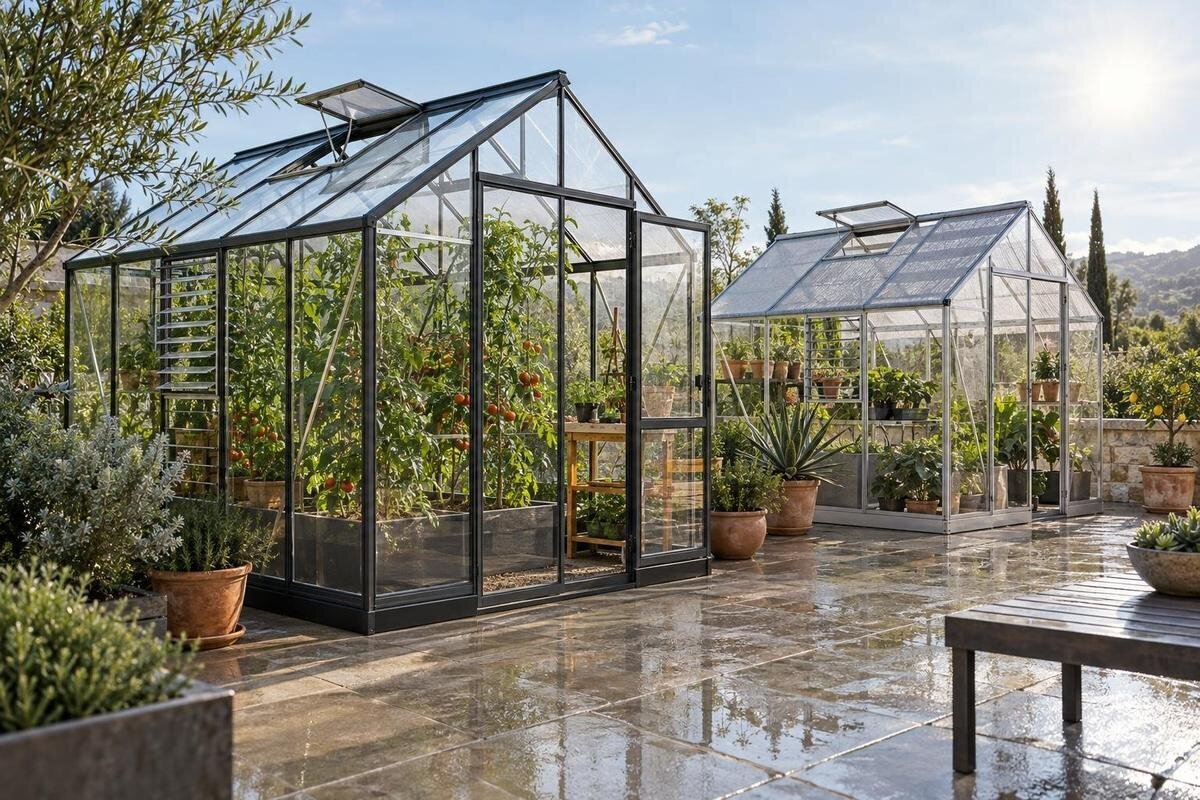
Greenhouse buying guide
When you buy a greenhouse for a hot climate, ventilation and shading deserve as much attention as floor space, access and the frame. A greenhouse can become warmer than the surrounding garden in strong sun, so a large footprint or attractive shape is not a heat-management plan. Compare how air can move through the growing area, whether vents are practical to control, and how shading can be adjusted to suit your crops and the season. Then check those features against the sun, wind and planting conditions at your site. Ventilation and shade can limit heat build-up, but they cannot make a naturally ventilated structure cooler than the outdoor air it draws in.

01
What ventilation and shading can realistically achieve
Treat heat management as a balance rather than a promise of cool air. Sunlight passing through a greenhouse covering warms surfaces inside, and a closed or poorly ventilated structure can become hotter than the surrounding air. Openings exchange interior air with outdoor air; shading reduces the solar energy reaching the growing space. These measures can limit heat build-up, but their effect depends on the site, the openings and the weather. Natural ventilation cannot reliably keep the interior cooler than the air entering it, and shade can reduce useful light along with excess sun. Neither a product name nor an overall floor-area figure tells you how well a particular design will manage those conditions.
Before comparing listings, define the result you need: protection from short hot spells, a workable space for warm-season crops, or growing conditions that remain suitable through persistently high daytime and night-time temperatures. Note the site’s sun exposure and the temperatures your plants can tolerate, rather than relying on the broad phrase hot climate. A greenhouse that is comfortable during a breezy afternoon may behave differently during still weather or a warm night. Also be realistic about attendance: manual vents only help when someone can operate them. If your plan requires interior air to be cooler than outdoors, allow for the possibility that a naturally ventilated greenhouse is not sufficient.
Plan an air path through the greenhouse
Look for an identifiable route for air, not simply a statement that the greenhouse has vents. A low opening can admit air while a higher opening lets warmer air escape; openings on more than one side can also support cross-flow when the wind and site allow it. Ask where each vent sits in relation to the door, roof, walls and growing area, and whether openings can be used together. When considering a classic greenhouse listing, use its drawings and written specifications to assess that route; the listing label itself does not establish the vent arrangement. Compare the actual opening positions rather than counting the word vent in a description.
Check the clear opening dimensions as well as the number of vents, because a small vent and a large vent do not provide the same opening area. A technical drawing should also show whether the openings are at useful heights and whether plants, staging or shelves will block the air path once the greenhouse is in use. Doors can contribute to air exchange, but they are not a dependable substitute for planned vents if they need to stay shut for security, weather or access. Think through the full interior with mature plants in place: dense foliage or a deep bench can interrupt the route you thought you were buying.
02
Choose vent controls you can use reliably
Ventilation must be practical to use on the days it matters. Compare manual handles, the height of roof vents, opening limits and the route to each control. If using a ladder or reaching across a bed would be necessary, a generously sized vent may still be awkward to operate. Ask whether automatic openers are included, optional or unavailable, and which vents they operate; do not infer this from a photograph. A temperature-responsive opener can reduce the need for repeated adjustments, but it still needs to be compatible with the chosen vent and maintained according to its instructions. Consider whether you can check that an opening has moved as intended.
A lean-to greenhouse needs a site-specific check: the adjoining wall can alter the sun pattern and may limit openings on that side. Inspect the plan and elevations for a complete route for air rather than assuming the doorway will ventilate every area. The lean-to greenhouse listing can be compared on those points, but its category name does not show how its vents are positioned. Think about access to controls once the greenhouse is fitted beside the building, and whether the wall or another nearby structure could obstruct airflow outside as well as inside.
Choose shading for your plants and routine
Shading can be attached outside the greenhouse, fitted inside, or applied as a fixed treatment to the covering; each approach affects light and heat differently. External shading intercepts sunlight before it reaches the covering, while an internal screen shades plants after sunlight has entered the enclosure. Ask what kind of shading a product supports, where it sits, whether it is adjustable and whether the necessary fixtures are included. A screen described as compatible in general may not fit every model or roof arrangement. The limited-edition greenhouse listing is one design to compare; confirm whether shading is included and whether the proposed system fits the exact configuration.
Choose the level and timing of shade around your crop plan. A screen that suits a plant during the brightest weeks may deprive light-loving crops of useful sun at other times, particularly if it cannot be opened or removed. Adjustable or seasonal shading gives you more control, but only if you can reach it, operate it and secure it in the way the supplier specifies. Think about whether different growing areas will need different exposure, rather than assuming one fixed shade level will suit everything. Ask for any stated shading coverage or light information and compare it with the requirements of the plants you intend to grow.

03
Check the covering and shade compatibility
Do not use a product photograph or a general covering description as a substitute for light information. Confirm what covering is specified for the exact version you plan to order, then look for any published information about light transmission or diffusion. A clear-looking panel, a diffusing material and a tinted surface may create different light environments, but photographs cannot establish which one is supplied or how it will affect a particular crop. Check that the proposed screen or external shading system is compatible with that covering and the greenhouse frame. Where the listing is unclear, ask for the precise covering and accessory details before deciding.
Roof and footprint shapes also affect how you plan shade, but they do not prove that a design controls heat better. Assess the T-shaped orangery greenhouse listing from its plan and elevations: check whether your intended shade reaches the different growing areas, and whether each section still has a usable air route. An irregular layout may call for more careful placement of beds, screens and vents than a single open rectangle, while the actual design determines what is possible. Compare a drawing with the location where the structure will stand, rather than choosing by the shape name or assuming that one screen will cover every roof section.
Assess sun and shade at the planned site
Assess the actual site at the times of year and day when you expect to use the greenhouse. The sun’s path changes the balance between morning, midday and late-afternoon exposure; trees, fences, buildings and boundary walls can add moving shade or block a potential airflow route. Note where direct sun falls and whether the proposed position receives the exposure your crops need, then check that vents will not open directly into an obstruction. Avoid relying on a universal compass rule: the right placement depends on the surrounding garden, the structure’s openings and the intended crops. If possible, observe the proposed spot at more than one time of day before committing to its position.
Think just as carefully about shade cast onto the greenhouse as shade provided for it. A neighbouring tree may shade the roof at one time and leave it fully exposed later; walls can create a different pattern from an open boundary. Tree shade also changes as branches and foliage move or seasons turn, so do not base the plan on a single moment. Compare the pyramid greenhouse listing’s footprint and elevations with the real site: a different roof form can meet surrounding shade in a different way, but the model name does not predict temperatures. Leave enough operating space for doors, vents and any compatible external screen.
04
Match the dimensions to growing space and airflow
Measure the area the greenhouse will occupy, then consider the usable space inside it. External dimensions do not show the clearance beside the walls, the width of a central aisle or the room needed to open a door and reach vents. Sketch the plants, pots, staging and work area you expect to use, allowing for crops at mature size rather than only seedlings. Leave a route between vents and growing beds so air is not immediately blocked by tightly packed foliage or stored equipment. A bigger footprint can add room for working, but it does not by itself guarantee better heat management; opening layout and shade still matter.
Storage deserves its own calculation. A greenhouse described as having built-in storage may place useful supplies close at hand, but the label cannot show how much growing floor or circulation space remains. Compare the greenhouse listing with built-in storage with a floor plan or internal measurements, and check exactly what storage arrangement is included. Decide whether tools, compost and pots belong inside or would reduce planting room and obstruct vents. If storage occupies a corner or wall, confirm that it will not block a screen, a control handle or a route needed to move between the door and plants. Size the greenhouse around both cultivation and everyday use.
Keep frame and base details separate from heat control
Frame and base details matter for fit, assembly and the overall specification, but they are not measures of ventilation or shading. A description that highlights a frame material, base or decorative finish does not tell you the size of the vent openings, the covering’s light characteristics or whether a shading accessory is available. Keep these questions separate when comparing products: establish the construction and footprint you need, then verify the features that directly affect heat management. If a base or frame design affects how an accessory can be attached, ask for confirmation for that exact configuration rather than assuming a generic screen will fit.
The Prestige greenhouse with a metallic base is a useful example of why descriptions should be read for what they identify: the base wording does not establish vent performance or a shade system. Request the opening schedule, control details, covering specification and accessory compatibility for the exact version you intend to order. If the product page gives only a name or image, use it to identify the design, not to fill in missing technical information. This avoids comparing one greenhouse’s documented features with another’s appearance, and makes it easier to see whether an important ventilation or shading detail remains unanswered.

05
Compare the product details before ordering
Create a like-for-like comparison from published dimensions and drawings rather than relying on headline size. Record the outside footprint and useful interior space, door position, location and clear dimensions of vents, and whether they can be controlled together. Note the covering specified, any available light information, and what shade screen, attachment or opener is included versus sold separately. If a detail is absent, mark it as unknown instead of assuming that an accessory shown in a photograph is part of the order. This helps prevent a visually attractive model from seeming better equipped when its actual ventilation or shading information has not been supplied.
Use an orangery greenhouse listing as one row in that comparison, just as you would any other shape: the name alone cannot answer the technical questions. Before ordering, confirm the exact configuration, quantities of optional accessories and compatibility between them in the supplier’s written product information. Check delivery access to the chosen location, space for assembly and any installation conditions that need a qualified professional; these practical issues can affect which size and layout is workable. Review the retailer’s ordering terms rather than assuming what is included or how optional parts are handled. If you expect to add shade later, confirm the relevant fixings and supported system before purchasing the greenhouse.
Set priorities around your climate and routine
Use your plants and daily routine to rank the trade-offs. If hot spells are brief and you can respond in person, accessible openings and adjustable shading may be central. If heat remains high for long periods, give more weight to clear specifications, cross-flow potential and the limits of natural ventilation; do not assume extra floor area will make the interior cooler. If no one can attend at the hottest time, investigate automatic controls and exactly which vents they operate, then consider what happens if conditions change beyond their range. Judge each option against the actual growing requirement, not a general claim that a greenhouse is suitable for warm weather.
Before committing, make a shortlist only of designs whose opening routes, controls, shading compatibility and usable dimensions can be established. Compare their plans with the site, and keep plant light requirements alongside heat management rather than treating shade as a free benefit. A different shape or an appealing name may still suit your needs, but the available specifications have to support that conclusion. If your intended conditions require sustained cooling below outdoor temperatures, factor in the separate climate-control system and professional advice that would involve. Passive vents and shading alone should not be expected to provide it.
Frequently asked questions
Can greenhouse ventilation keep the air cooler than outside?
Usually not by itself. Natural vents exchange warm interior air for outdoor air, so when the outside air is hot, that limits how cool ventilation alone can make the greenhouse. Shading can reduce solar heat gain, but if your plants need sustained cooling below outdoor temperatures, consider whether separate climate-control equipment is required.
Are roof vents enough in hot weather?
Not necessarily. Their usefulness depends on their size and position, the route available for incoming air and any obstructions. A high vent needs air to enter through another opening; a door may contribute, but it is not always a practical substitute for planned openings. Compare the complete airflow path rather than counting vents.
Should greenhouse shading be external or internal?
External shading intercepts sunlight before it reaches the greenhouse covering, while an internal screen shades plants after sunlight has entered. They are different approaches, not interchangeable labels. Check which system fits the exact greenhouse, whether it is included, and whether you can adjust it to suit your plants and the season.
Are automatic vent openers worth buying?
They may help if you cannot regularly open and close vents yourself, but check which vents they operate and whether they are included or sold separately. Confirm compatibility with the chosen design and consider how you will check that the openings are working as intended.
Will a larger greenhouse stay cooler?
Not automatically. A larger footprint may give you more room to work, but it does not establish how much air can move through the greenhouse or how much sun reaches the plants. Compare vent positions, shading options and the internal layout as well as the overall dimensions.
A successful hot-weather purchase balances usable room for your crops with openings that can exchange air, controls you can manage and shading that can be adapted without reducing light below what plants need. Site exposure and night temperatures set the limits, while drawings and written specifications show what each design actually offers. Choose on those details rather than apparent size or style. If the conditions you want exceed what ventilation and shading can achieve, recognise that before buying rather than expecting a greenhouse to change the outdoor climate.
