
Buying a Greenhouse for a School or Community Garden
Greenhouse buying guide
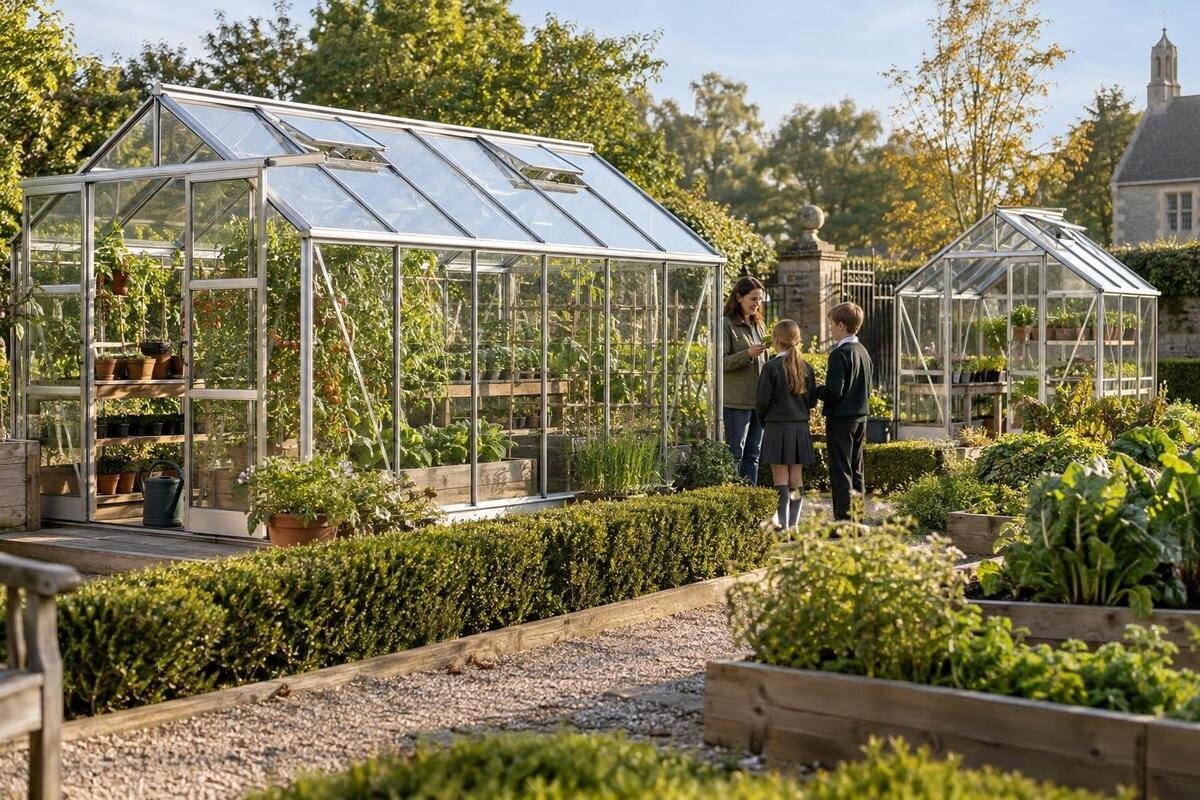
Buying a greenhouse for a school or community garden is a decision about shared routines as much as growing space. The right choice needs to fit the site, planned crops, number and age range of users, and the time available to care for it. Before comparing shapes or materials, agree who will use it, what they expect to grow and who will look after it during lessons, volunteer sessions and breaks. A written brief makes product pages and quotations easier to compare, and helps the group avoid paying for a structure that is awkward to operate or too small for its purpose.
Agree on the greenhouse's purpose and users
First agree the job the greenhouse must do. A primary-school project may need a place for short, supervised activities and seasonal learning; a community plot may need reliable access for several volunteer groups and a shared harvest. Those are different working patterns, even when the crop list overlaps. Decide whether the main purpose is raising plants, extending the growing season, teaching practical skills, protecting a small number of crops, or providing a place for demonstrations. A greenhouse cannot be planned around every possible future activity at once. Rank the first two or three uses, then mark which are essential and which are optional. That order will guide size, layout and the features worth paying attention to.
Name the people who will make day-to-day decisions, not just those who approve the purchase. Who opens and closes the structure, waters plants, checks crop labels, puts equipment away and passes information to the next group? At a school, decide how a teacher or site lead will supervise pupils; in a community garden, agree how responsibility transfers between members. Unclear ownership can leave a carefully chosen growing space unused or poorly maintained. When browsing, use an aluminium classic greenhouse as one reference point on a comparison sheet, then check the actual listing details against your stated tasks; its name alone does not establish fit, capacity or operating features.
Plan crops and learning activities
Write down the plants and learning activities, rather than using 'more growing space' as the brief. List crops by purpose and season, the approximate quantities you hope to raise, and the jobs people will do around them: sowing, potting on, routine care, observation or harvesting. This helps show whether the space needs to support repeated work at a bench, temporary trays, taller plants, or a mixture at different times. Keep the list realistic for the people who will care for it. In a school, include periods when pupils are away; in a community project, allow for gaps between volunteer sessions. The greenhouse should support a manageable programme, not create daily jobs the group has not agreed to cover.
Separate plants that genuinely need a protected environment from those that can remain in beds or containers outdoors. A simple crop calendar helps show when growing areas would be busiest and whether several activities need the same space at once. Include how the harvest or plants will leave the greenhouse so work does not end at the doorway. Flexibility can help if plans change, but only when the group can manage it. When reading a listing such as an aluminium limited-edition greenhouse, compare any stated dimensions and included items with the crop calendar; the product title alone cannot tell you whether the programme will fit.
Check the site before comparing models
Visit the proposed spot at different times rather than judging it from one bright afternoon. Note which parts are shaded by buildings, fences or trees during the school or volunteer day, and remember that shade patterns change over the year. Check whether people can reach the site from the entrance, water point and tool store without crossing areas that are closed or difficult to supervise. Identify gates, paths, neighbouring activity and places where materials or deliveries may need to pass. The question is not simply whether the greenhouse fits on a patch of ground: its position also affects how easy it is to use, observe and maintain as part of the wider garden.
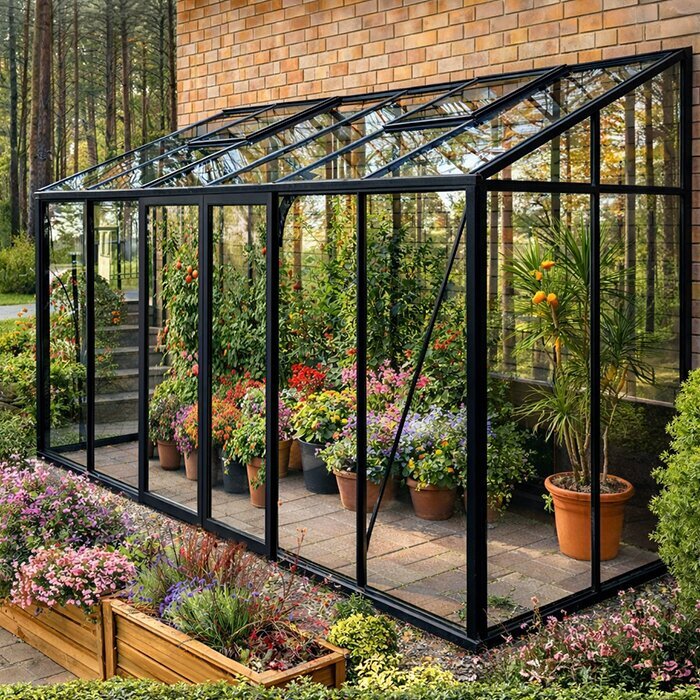
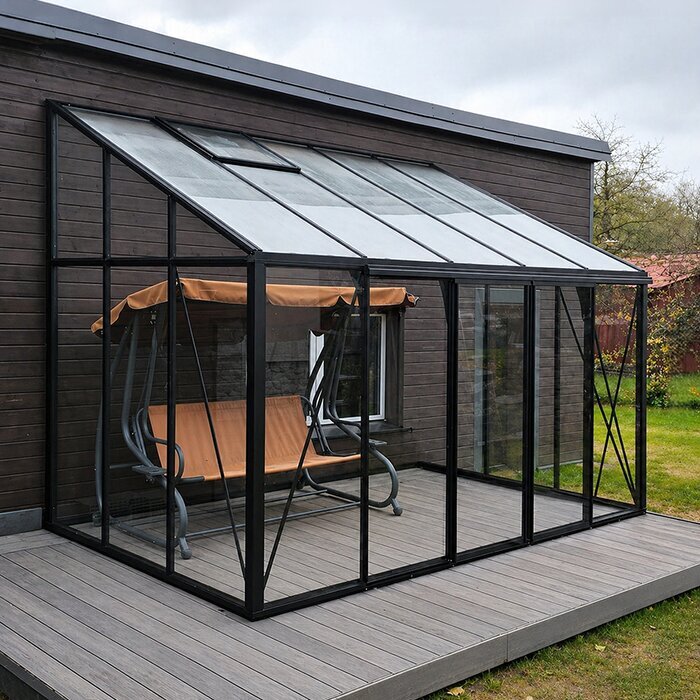
Measure the clear area available, including space outside the frame for moving around it, opening doors and doing routine work. Note uneven ground, slopes, drainage concerns, tree roots and nearby structures, but do not assume a standard solution from a sketch. Ask the supplier what site conditions and supporting base the selected model requires, and involve a qualified professional if the site needs assessment. Confirm with the people responsible for the garden that the proposed position and route for work are acceptable. If a lean-to greenhouse is among the options, confirm its specified siting and support requirements with the supplier; the category name alone cannot establish whether the proposed location works.
Size the interior around group work
Do not choose a size from the outside footprint alone. A greenhouse needs room for plants, people and the tasks in between, and a group may need a different arrangement from a single gardener. Sketch where beds, pots or benches would go, then draw the route from the entrance to the furthest working area. Add space for someone to stop and explain a task without blocking others, and for a tray or watering can to be carried through. Consider the largest group likely to use the space at one time, not the average number on a quiet visit. If a class will work in smaller rotating groups, plan the schedule alongside the layout instead of assuming everyone can work inside together.
Make a simple full-size test outside with string, chalk or movable markers to show the footprint and door area; this can reveal pinch points before money is committed. For the interior, compare the dimensions the seller gives with your sketch and ask what is included in the measurement, since external size does not tell you the usable space beside frames and fittings. Leave room for growth and circulation without buying more space than the team can manage. If a T-shaped garden orangery is on the shortlist, check its stated plan and dimensions against the same layout drawing as any other shape; a name or image cannot show how well it accommodates your group.
Compare frame and glazing care
Frame and glazing deserve separate questions. For the frame, compare the material named in the product details—aluminium, timber or another option—with the finish and care it requires, the availability of replacement components, and the supplier's guidance on cleaning and repairs. Ask what routine work is realistic for the group: a school caretaker may have limited time, while a community group may have volunteers with different skills. Do not treat a material label as a maintenance plan. Record what would need attention and who could do it. Where a feature or replacement part is unclear, seek a written answer for the exact model before comparing it with another option.
For glazing, confirm the precise panel material and construction in the listing, then compare what the supplier says about visibility, impact resistance, cleaning, replacement and safe handling. If options include glass or plastic glazing, check the details for the exact panel rather than assuming the broad category settles those questions. A label or photograph is not enough to judge how a panel fits a setting where pupils or volunteers move equipment. Ask what happens if a panel is damaged and whether compatible replacement parts can be ordered; do not assume pieces are interchangeable across models. A Prestige greenhouse with metallic base listing may be included in that exercise, but its title is not evidence about the rest of its construction or suitability for a school.
Plan ventilation, access and supervision
Ventilation is part of the operating plan, not just a line on a specification sheet. Ask which openings and controls are supplied, how they are operated, and what attention the manufacturer expects during changing weather. Then decide who will check conditions and operate the vents where necessary, and make sure the task is covered when the usual person is absent. Young users may touch moving parts, while community users may arrive at different times; agree boundaries and supervision before the greenhouse becomes a regular work area. Do not assume that a stated vent count, on its own, guarantees suitable conditions for the crops or routine.
Match access to the way sessions will run. A school may need an adult to see what is happening and give instructions without leaving the group; a shared plot may need users to enter and leave without interrupting someone at work. Check the opening arrangement and space for people to pass against that routine, using the supplier's plan where available. A pyramid greenhouse can be assessed alongside other layouts, but do not infer its usable access or growing area from its outline in a photograph. If your setting has specific supervision or safeguarding procedures, involve the responsible person rather than guessing from a product image.
Make shared upkeep and storage workable
Shared growing depends on continuity. Before buying, draw up a weekly or seasonal care rota that covers watering, plant checks, tidying, recording and putting tools away; include school holidays, half-term breaks, community closures and volunteer handovers. Decide how users will know which beds or trays belong to a project and where they should leave notes for the next person. Simple labels and a shared log can prevent missed jobs and make the greenhouse more useful for teaching. Keep the plan proportionate: if no one can reliably take on frequent care, choose a growing programme and layout that match the time the group has, rather than assuming enthusiasm will fill every gap.
Storage is a separate purchasing question. List what needs to stay near the greenhouse, what should be kept securely elsewhere and what would be unsafe or inconvenient to leave out. Check the actual storage dimensions, access, fittings and any stated exclusions for the model; a product name is not evidence that it will hold the group's tools or replace a locked store. A listing for an aluminium greenhouse with built-in storage can prompt those questions, but count the space only after confirming what the listing includes and whether it supports the group's routine. Also establish who controls keys, tools and consumables, especially where young people use the site.
Compare shapes against the garden plan
Shape matters because it changes how the structure sits in the plot and how people move around it. A narrow location, a central teaching area or a route around adjacent beds may call for different footprints, but only a measured plan can show whether each one works. Compare footprint, interior arrangement, doors, ventilation, shaded areas and clearances for each candidate on the same drawing. Consider whether the outline leaves useful outdoor growing space and whether it makes a blind corner that complicates group supervision. For a school, discuss the plan with staff who run the sessions; for a community garden, test it with people who volunteer at different times.
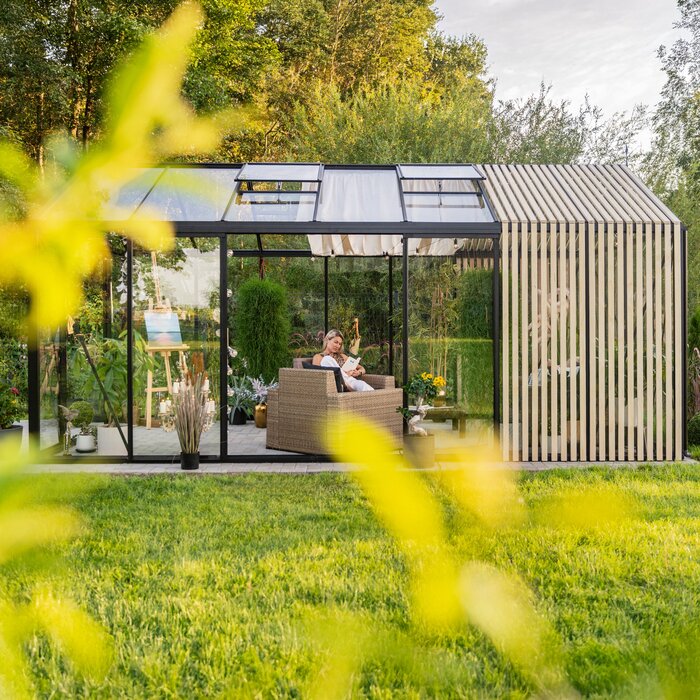
Terms such as orangery can suggest a particular look, but a name does not tell you the usable layout or growing conditions. Read the specification and ask for measurements if they are not clear. Compare a Bloomcabin orangery with the same garden plan used for the other options; verify its dimensions and layout from the listing or by asking the seller. Do not assume that the term orangery means it offers more usable space or a particular growing environment. What matters is whether its documented footprint, internal use and care responsibilities match the group's agreed purpose.
Confirm the full order and delivery scope
Compare the complete purchase requirement, not just the price displayed for a greenhouse. Check the exact model, dimensions, frame and glazing details, included components, any separately required base, preparation or assembly, delivery arrangements and what the order excludes. Use written quotations or product information based on the same specification so the group can compare like with like. If a quotation mentions optional items, decide whether each is required for the agreed growing plan or can be sourced later. Ask how replacements or support are handled, and read the seller's current terms for payment, warranty, returns and any service commitments; do not assume a general category description settles those points.
Delivery matters on a shared site: confirm the access route, who will receive the order, where it can be placed safely, and whether the responsible people can be present at the proposed time. Check for gates, steps, narrow paths, booked access windows or periods when the garden is closed. Agree who will check the contents against the order and report missing or damaged items. If the supplier's instructions call for groundworks, fitting or an assessment beyond the group's experience, confirm who is responsible and speak to a suitable professional before ordering. This is about clarifying scope, not guessing at installation requirements.
Use a written shortlist to choose
Use a short scorecard to make the final comparison clear. Rate each candidate against the brief: priority growing tasks, usable area, site fit, ease of supervision, ventilation and operation, cleaning and parts, likely maintenance, and total purchase scope. Agree which points are non-negotiable and which can be traded, and write down why. A group may disagree about a striking shape or extra feature; a shared scorecard brings the discussion back to whether that feature helps the planned sessions enough to justify the space, cost or care it brings. Keep the evidence beside each score, with unanswered questions clearly marked instead of silently treated as yes.
Before placing an order, have the person who will manage the greenhouse read the final specification and confirm that it matches the approved plan. Check model identity, measurements, glazing and frame details, included parts, site access and ongoing care arrangements; settle outstanding questions with the seller or a qualified professional where needed. Keep a copy of the order information and assign ownership of routine checks, keys and replacement decisions. If the group cannot agree on maintenance or supervision, pause the purchase and revise the growing plan or shortlist. A more modest project that people can run reliably is more useful than capacity the group cannot manage.
Frequently asked questions
How large should a school or community greenhouse be?
There is no universal size. Work from the crops, activities and number of people who will use the space at one time. Sketch the interior route, growing areas and any storage, then compare that plan with the listed dimensions. Allow for people to work without blocking one another, but avoid choosing more space than the group can maintain.
Is glass or plastic glazing better for a shared garden?
Neither is automatically the right choice. If options include glass or polycarbonate, check the exact panel material and compare the supplier's information on visibility, impact resistance, safe handling, cleaning and replacement parts. Consider how pupils or volunteers will use the space, and ask the seller about anything the product details leave unclear.
Where should we put a greenhouse on the plot?
Observe light and shade at different times of day and year, and consider how people will reach the greenhouse from the garden entrance, water point and tool store. Check supervision, maintenance and delivery routes too. There is no single position that suits every site, so use a measured plan and review the proposed location with the people responsible for the garden.
How can we keep a shared greenhouse cared for during school breaks?
Agree a rota with named people and a backup, and cover holidays, half-term breaks and gaps between volunteer sessions. Keep instructions and plant records where the next person can find them. If regular care cannot be guaranteed, choose a growing plan that matches the time the group can commit.
What should we confirm before placing an order?
Check the exact model, dimensions, frame and glazing details, included parts and any separately required base or other items. Confirm delivery access and who will receive the order, then read the seller's current terms for payment, returns and warranty. Make sure the people managing the greenhouse understand and accept the care it will need.
A greenhouse for a school or community garden is a shared working space: the strongest choice is one the group can use and care for under its real timetable. Match the shortlist to a measured site, a clear crop plan and a named maintenance rota. Then confirm the exact product details and order scope with the seller before committing. With those decisions agreed, the structure can support growing and learning without asking the garden team to manage more than it has planned.
