
Buying a Greenhouse for Seed Starting: Benches, Light & Temperature Control
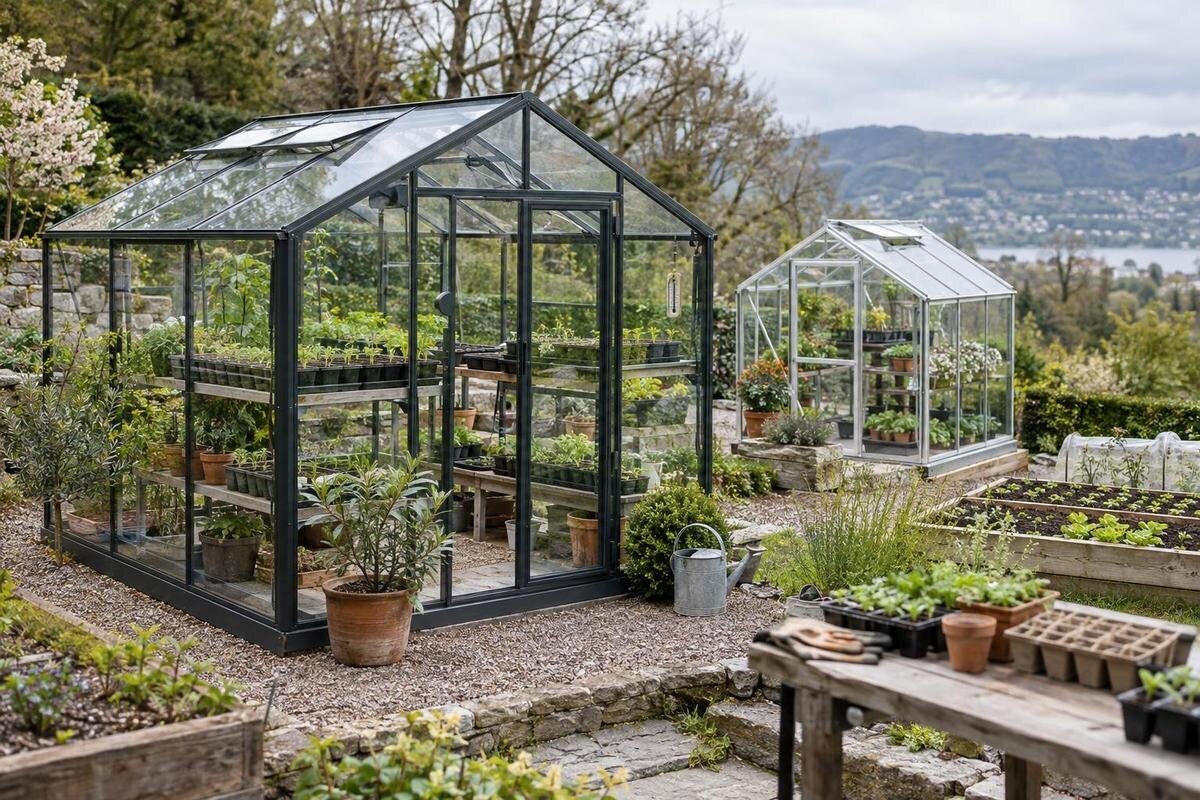
Greenhouse buying guide
Buying a greenhouse for seed starting is less about choosing the largest structure and more about balancing tray space, natural light and manageable temperatures. A roomy exterior can conceal awkward bench access, while a sunny position can bring rapid changes in warmth. Begin with the number of trays you expect to have at once, then judge the site and product details against the way you sow and tend seedlings. This makes it easier to compare like with like before ordering.

Size the greenhouse for your busiest sowing period
Begin with the peak, not the annual total. List the crops and sowing dates you expect to manage, then estimate how many trays will be in the greenhouse at the same time. Staggered batches may reuse space, while sowings made close together can overlap; count that overlap honestly. Include trays that will remain in place as later batches arrive, and seedlings you expect to keep growing after germination. If you plan to prick seedlings out into larger modules, allow for the change in footprint. The busiest few weeks, rather than the quietest month, set the capacity that matters for a buying decision.
Use the actual footprints of the trays you own or plan to buy to sketch a simple layout. Mark the greenhouse entrance, the route you need to carry trays through and any area you want for watering, labels or potting work. A stated floor area is not the same as continuous bench space: staging, shelves and access all affect what you can use. Leave some flexibility for a delayed batch or resowing instead of filling every centimetre on paper. Compare your plan with the published internal dimensions and drawings for each option; the aluminium classic greenhouse should be assessed from its listing, not its name.
Plan usable bench space and access
Think about how you will handle trays, not simply how many will fit. A workable layout leaves room to set a tray down, read its label, water it and put it back without repeatedly moving neighbouring containers. You may want separate areas for newly sown trays and seedlings at a later stage; make sure the arrangement works for the light and temperature conditions you intend to provide. If you use more than one level of staging, check that each shelf is reachable and has enough clearance for the trays and plants it will hold. Reserve a clear surface for filling modules if you do that work in the greenhouse.
Confirm whether benches or staging are included, offered as optional extras or sold separately. Product photographs do not establish what comes with the structure. Check the dimensions and arrangement in the product information, including any space taken by supports, and verify that the staging is compatible with the model. Consider how easily you can reach the back of a bench from the path, and whether trays can pass through the door without awkward turns. For the aluminium lean-to greenhouse, use the exact internal plan and bench details to judge usable space rather than assuming the name tells you what is included.
Assess natural light where trays will sit
Look at the proposed position at different times of day. A site that appears bright at midday may be shaded earlier or later by a wall, fence, neighbouring structure or tree. Consider seasonal changes too: the sun’s position changes during the year, and nearby trees may have foliage at some times but not others. There is no universal orientation that overrides these local factors. If you cannot observe the site through the seasons before buying, note what may cast shade and treat the amount of light as something to verify rather than guess.
Judge the light at the height of the planned benches, not only by how bright the roof looks. Frames, shelving and nearby obstructions can create shaded patches, so think about whether your trays will receive similar conditions across the growing area or whether you will need to move them. Check the manufacturer’s information for the exact glazing rather than relying on a product photograph. For the aluminium limited-edition greenhouse, as for any option, use the listing’s drawings and glazing details to assess what is known about light reaching your trays.
Check glazing and shading options
Glazing is a separate buying question from the frame. Find out what panels the exact model uses and whether the product information provides details such as light transmission or diffusion. Different coverings can affect how light enters a growing space, so do not assume that panels which look similar in photographs will perform alike. If published information is limited, ask the supplier what is specified before basing your choice on an expected light level. Compare the answer for each model on your shortlist, rather than applying a general assumption to every greenhouse.
Consider whether you might need shade during brighter periods and whether a compatible screen or other shading option is available. Shading reduces incoming light as well as exposure, so it is not a substitute for choosing a site that provides suitable natural light. If you plan to add grow lights, check how they could be accommodated and whether the proposed equipment is suitable for the structure; ask a qualified electrician about any fixed electrical work. If Garden Orangery T is on your shortlist, check the product information for glazing and compatible accessories instead of inferring them from its name.

Decide what temperature control you need
A greenhouse is not a temperature-controlled room. Sunlight can warm the enclosed air and surfaces, and conditions can change again as the sun fades or the weather shifts. The result depends on the structure, its glazing, ventilation and location, so do not buy on the assumption that an enclosed space will remain at one steady temperature. Think about the conditions at the bench where trays will sit, and how you will check them. A maximum-and-minimum thermometer or other suitable monitoring equipment can help you understand the range your greenhouse actually experiences.
Seeds differ in their germination requirements, so use the instructions for the varieties you plan to sow rather than choosing one temperature for everything. Germination and the later growth of seedlings may also call for different arrangements. If you need more controlled warmth, compare the greenhouse with the separate propagation equipment you intend to use and verify compatibility before buying. Find out what heating and control options are available for the exact structure. For Pyramid Greenhouse Bloomcabin Oasis, the model name alone does not describe temperature performance or control provision.
Compare ventilation with your daily routine
Look for clear information about the number, position and operation of vents, as well as doors that can be opened for access. Check the product drawings and ask how any optional vent or opener fits the model. A manual opening needs someone to operate it; an automatic opener, if available and compatible, may reduce that task but does not tell you what conditions are being reached inside. Make sure you can reach and use the controls without blocking the route between benches. Treat ventilation as part of temperature management, not as a detail to decide after the greenhouse has been installed.
Consider how often you can check the greenhouse during the busiest sowing weeks and what you would do if conditions changed while you were away. The answer may affect whether you need additional controls, rather than simply a larger structure. Also consider how any storage arrangement could affect access to the vents and benches. If the aluminium greenhouse with built-in storage is a contender, ask for the internal plan so you can judge how the stated storage affects usable growing space and access.
Measure the site and check installation needs
Measure the area available for the greenhouse, allowing for its external footprint as well as the space needed to open the door and carry trays in and out. Check the proposed position against paths, boundaries, walls and other fixed features. Then compare the exterior measurements with the internal dimensions: the space taken by the structure will not all become growing area. If access is tight, consider the route for bringing materials or large components to the site, not just whether the finished greenhouse fits in the garden.
Read the manufacturer’s requirements for the base and site preparation before choosing a model. Do not infer from a product name whether a base is included, what it is compatible with or what work the site needs. For Bloomcabin Prestige greenhouse with metallic base, use the exact listing to confirm what is supplied and what preparation is required. If the ground, foundation or fixing requirements need assessment, ask a suitably qualified professional rather than improvising. Checking these points early can prevent a greenhouse that suits the trays on paper from proving impractical for its intended position.
Read the product details before ordering
Make a simple list of what you need from the order: the greenhouse, its glazing, doors, vents, base if required, and the staging or shelves you plan to use. Check which items are included and which are optional. Look for the exact model’s dimensions, drawings and assembly information; do not treat accessories shown in photographs as part of the package unless the listing says so. If a detail that affects your layout is missing, such as bench compatibility or vent provision, ask for clarification before placing the order rather than building your plan around an assumption.
Check the ordering information for delivery conditions, access requirements and any assembly service you may need. Confirm that the intended position is reachable for delivery and that the chosen accessories match the greenhouse model. If you expect to add staging, shading or a vent opener later, verify compatibility now; a future add-on is useful only if it can be used with the structure you buy. For Bloomcabin Orangery, as with any shortlisted greenhouse, compare the product drawing and included-items list with your site and tray plan before ordering.

Compare the complete growing setup
Compare the likely cost of the complete setup, not only the greenhouse itself. Depending on your plan, the total may also need to account for staging, a thermometer, shading, ventilation accessories, propagation equipment, lighting or installation. Not every buyer will need every item, and some may already be available, so list only what your sowing plan genuinely calls for. An itemised comparison helps reveal whether a lower headline price depends on buying essential extras separately. Keep delivery or assembly costs in view as well, using the terms supplied for each particular order rather than assuming they are the same.
Put the shortlisted models side by side against the same questions: usable bench area, light information, ventilation, temperature-management options, site requirements and included accessories. Mark firm requirements separately from preferences. A model that fails a site-fit or access requirement can be ruled out even if it looks attractive; a missing specification should remain unknown until confirmed, not be treated as a positive. This approach keeps the comparison focused on evidence that matters for raising seedlings and makes it easier to explain why one option fits your plans better than another. It also creates a record you can revisit if your sowing plans change next season, rather than starting the comparison again from scratch.
Choose by the conditions you can manage
Your routine is part of the buying decision. Consider when you normally sow, how often you can visit the greenhouse and whether you can respond to changes in light or temperature during busy periods. If you expect to check it only occasionally, do not assume that a larger greenhouse or a single automatic feature will manage every condition for you. The product information should make clear what controls are supplied, what may be added and what still needs your attention. Choose a layout that makes routine tasks straightforward, so access to one tray does not depend on moving several others.
It is reasonable to consider uses beyond seed starting, but only allow for future plans that are realistic for your garden and budget. More space may provide room for additional trays, yet it also takes up more of the site and may call for more staging or equipment. Compare that trade-off with the actual peak workload you have mapped. A suitable purchase is not necessarily the largest or most elaborate greenhouse; it is the one that meets your essential requirements without creating a layout or management routine you cannot use.
Frequently asked questions
Do I need a greenhouse to start seeds?
Not necessarily. For a small number of trays, an indoor propagator or a bright indoor space may be enough. A greenhouse can provide more working room, but it will not automatically give every seed the temperature or light it needs. Compare the space and equipment you would use either way.
How much bench space do I need for seed trays?
Count the trays likely to be in use at the same time, including batches that overlap and seedlings you will keep after germination. Lay their actual footprints onto a simple plan, then leave room for a path and handling trays. The total outside floor area is not the same as usable staging.
Should a greenhouse face a particular direction for seedlings?
There is no single direction that suits every site. Nearby walls, fences and trees, as well as shade at different times of day and year, affect the light reaching your benches. Observe the proposed position and compare what you see with the greenhouse’s published glazing information.
Will a greenhouse keep seeds warm?
A greenhouse is not a temperature-controlled room. Conditions can change with sunlight and the weather, so do not assume the air will stay within the range a particular seed needs. Follow the seed packet’s guidance and check what heating and control options are compatible with the structure.
What should I check before ordering?
Confirm the internal dimensions, glazing details, vents, bench or staging options, base requirements and what is included in the order. Also check accessory compatibility, delivery conditions and any assembly arrangements. Use the information for the exact model, rather than relying on photographs or a product name.
Use your tray plan and actual site as the deciding evidence. A candidate should provide enough usable growing surface at the peak, make it possible to reach and tend each batch, and give you a credible way to manage light, ventilation and temperature. Compare what is documented with what remains an assumption; if a detail such as staging compatibility or vent provision is unclear, resolve it before paying rather than building your plan around a guess. The result is a greenhouse chosen for the seedlings you will raise and the routine you can sustain.
