
Buying a greenhouse on Black Friday for next spring: a planning guide
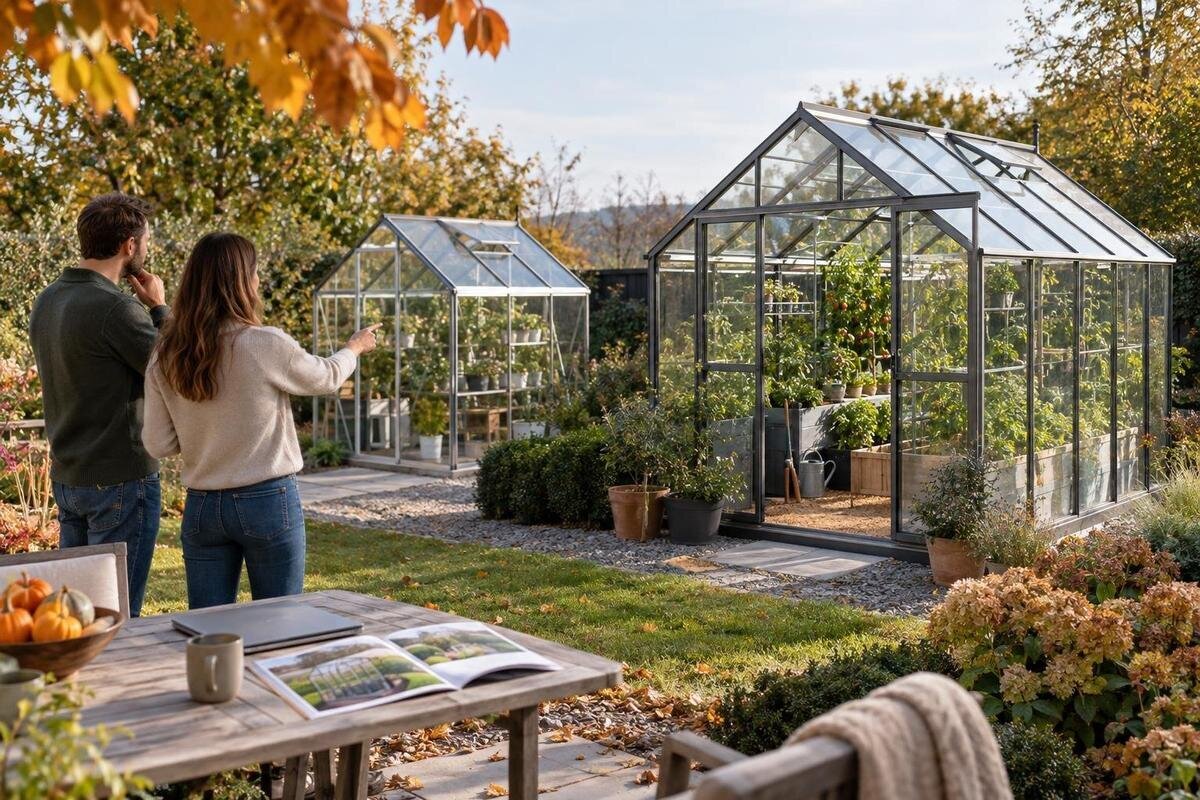
Greenhouse buying guide
If you plan to buy a greenhouse on Black Friday for next spring, the useful work begins before the shopping event: decide what you will grow, test a possible location on the ground and note which product details matter. Then a live offer, if one appears, can be judged against a clear brief instead of setting your priorities for you. This guide takes you from growing plans and measurements to model comparisons, ordering checks and preparation for spring use. It does not assume that a discount, particular delivery date or feature will be available.

Begin with the crops and tasks you have in mind
Write down what you expect to grow next spring before comparing greenhouse styles. Separate plants you want to raise from seed, crops that need shelter during part of their growth, and plants you intend to keep under cover; each may call for different floor area, height or access. Note approximate quantities and whether you expect to grow everything at once or in succession. Seed trays, taller crops and pots that remain in place for months place different demands on the interior. This does not need to be a detailed planting calendar. It is a brief for choosing a structure. If your growing list changes over the year, identify the likely change now, so your comparison reflects a realistic season rather than one appealing crop.
Describe the jobs you want to do inside as well as the plants. Sketch where you might work, stand trays, water, pot up or keep tools, then draw a route from the door to each growing area. Allow for equipment you already own: note its dimensions and check whether your intended layout can accommodate it, rather than assuming accessories are included. Separate essential functions from convenient extras. A bench, staging shelf or storage area can affect the space available for growing, so name the task each feature needs to solve. These practical criteria will help you compare listings consistently when Black Friday arrives, instead of letting an attractive design or seasonal label set your priorities.
Measure the footprint and the access around it
Measure the available plot rather than estimating from a photograph or lawn plan. Mark the proposed outer footprint with tape, string or a scaled sketch, and include any projections shown in the product drawing. Record nearby walls, fences, paths, trees, drains and garden furniture that could limit the space. On each shortlisted page, compare the stated external width and length with the area you have marked; check the widest points rather than assuming the shape is rectangular. A page labelled classic greenhouse listing can be one candidate, but its name and image do not establish dimensions. Treat the written specification and drawing as evidence of fit, and ask if either is missing.
Measure height and access too. Check the stated overall height, internal headroom where available, door width and door-opening clearance. A footprint that fits on paper may still leave an awkward entrance or obstruct a path when the door is open. Trace the route from the delivery point to the site, noting gates, narrow turns, steps and changes in level; confirm with the retailer whether that route works for its delivery arrangement. Mark any clearance you will need to reach the outside for routine care. Keep the manufacturer's information about base dimensions separate from your own site measurements, so you can identify questions that need an answer before ordering.
Check light, drainage and the surroundings
Observe the proposed position at different times of day and consider how its light will change between early spring and summer. Nearby buildings, fences and evergreen trees can cast persistent shade; deciduous trees may create a different pattern when in leaf. Compare what you observe with the light requirements of the crops you listed, rather than assuming the patch that looks sunniest at midday will be best throughout the season. Notes or photographs from the same points can help reveal a shadow that a single visit misses. If you cannot check the position over time, treat the uncertainty as something to resolve before choosing a fixed location.
Look at the ground after rain and note any places where water collects, as well as exposure to strong gusts and the practical route for carrying water and plants. Do not infer that the ground is suitable for a base from a level-looking lawn; follow the model's instructions or consult an appropriate professional if preparation requirements are unclear. Consider walls and trees for their effect on shade and access, not as a guarantee of shelter. If you are considering a lean-to, confirm how that exact design is intended to meet a wall and what clearances it needs. A lean-to greenhouse listing should be judged by its stated requirements and your actual site, not by the category name alone.
Compare greenhouse shapes with the garden layout
Shape affects how a greenhouse sits in the garden and how you can arrange the interior, so compare plans rather than choosing by product photograph. Draw each outline on your site sketch, including side projections, then mark the door and the routes you need to keep clear. Where a design has more than one section, check whether the stated dimensions are external or internal and how the sections connect. Consider whether existing paths, beds or access to a shed will remain usable. A structure can fit within the available space yet make the garden awkward to move around if its entrance faces a narrow route or a growing area is difficult to reach.
For a distinctive outline, verify the plan view and the dimensions of every part before comparing it with a simple rectangle. The title T-shaped orangery greenhouse listing gives a design label, not a scaled layout or a promise about usable corners. Check where the entrance is shown, whether a projection changes the maximum width, and how an intended bench or planting row would fit inside. If the drawing is unclear, request the missing information instead of guessing from a gallery image. Apply the same test to any unusual shape: the useful questions are whether the full footprint fits and whether your planned route and working areas still make sense.

Translate growing plans into working dimensions
Turn your crop list into a usable interior plan. Add the width of a path, the space needed to reach plants, and the depth of any shelves or benches to the growing area you want. Compare the result with internal measurements, not only the greenhouse's external footprint. Check door width, eaves and ridge height if plant height or carrying trays through the entrance matters. A headline size may not answer these questions, so look for a drawing with clear internal dimensions. If a measurement affects your layout but is not published, treat it as an open question and seek confirmation rather than making an assumption from the outside appearance.
A design described as a pyramid greenhouse listing should be checked in the same way: use the published plan and internal dimensions to see how much of the floor can serve your intended arrangement. Do not equate a tall-looking profile with more useful growing room, or a large external figure with convenient access. Compare the working layout, including places to turn and reach, with the crops and tasks you wrote down. If you are choosing between sizes, identify the activity that needs the extra width or height. That makes a larger footprint a reasoned choice, while also showing when additional space would take away from another garden use.
Read frame and glazing specifications separately
Treat the frame, glazing and base as separate parts of the specification. Check the stated frame material, the glazing type, which components are included, and whether a base is part of the order or must be sourced separately. A model title may mention a material without describing every component, so read the product details rather than extrapolating from the name. A model titled aluminium limited-edition greenhouse is an identity label, not a substitute for those details. If the page omits a fact that affects your decision, ask the retailer to confirm it before ordering. This gives you a like-for-like basis for comparing options without relying on appearance.
If you are comparing glazing options, look for the exact panel material and any stated thickness or treatment; do not assume a bright photograph shows which panel type is used. Check the supplier's information on cleaning, panel replacement and fitting, and note whether compatible accessories are included or separate. There is no single material choice that can be made from a greenhouse photograph alone: your comparison should reflect the crops, setting and maintenance you expect. Use published facts for the particular models you are considering. A broad description such as clear or durable is not a measurable specification unless the relevant detail is provided.
Check ventilation, access and storage details
Everyday operation depends on details that are easy to miss in a gallery image. Check the listed door position and dimensions, how vents are opened, which openings are included, and whether you can reach them from the positions you plan to use. Compare those details with your crop list and preferred routine, without assuming a particular ventilation performance. If the product information describes optional equipment, distinguish it from the greenhouse itself. A door or opening may be awkward beside a wall, fence or shelf, so mark its clearance on your site sketch. If a feature matters to your plants, make sure the product information actually describes it.
Storage needs a separate check because it can compete with growing and working space. A product title that mentions a greenhouse with built-in storage does not tell you its capacity, layout, contents or how much interior space it occupies. Look for actual dimensions and a list of included parts, then compare them with the tools and supplies you expect to keep nearby. Decide whether storage should be inside the greenhouse or elsewhere in the garden; the choice affects usable floor space, but a title alone cannot resolve it. If shelves or fittings are optional, include them in your plan as separate items and verify compatibility before assuming they will fit.
Prepare a shortlist before Black Friday
Before Black Friday, make a short list of models that meet your essential requirements and record why each is on it. Note the dimensions, frame and glazing information, door and ventilation details, base requirements, included components and any unanswered questions. When you revisit a page, compare the live specification and current price with your notes; an older screenshot may no longer represent the current listing. Do not treat a seasonal banner, model name or crossed-out figure as proof that the greenhouse fits your needs or offers value. An offer may or may not be available, so decide in advance what information you need before a purchase makes sense.
Work back from when you hope to use the greenhouse, allowing for delivery, site preparation and assembly arrangements without inventing a lead time. Check the delivery window and any stated dispatch information on the live order page; ask if timing matters and the details are unclear. Read whether a delivery date can be selected, where the order is left, and what happens if the site is not accessible. Save those terms alongside your shortlist, then avoid planning sowing or planting around an unconfirmed arrival date. You can compare the Prestige greenhouse listing with other candidates in the same way: judge the stated details and order information, not the word Prestige.

Confirm the order and delivery arrangements
Before paying, match the exact model and any selected options to your notes. Check the stated contents, any base or fixing components, vents, shelves, doors, glazing and accessories; mark each item as included, optional or not described. Do not assume a photograph shows everything in the package. Review the current delivery, returns and cancellation conditions, and find out how to contact the seller if information is missing or the wrong variant appears. An Bloomcabin Orangery listing deserves the same item-by-item review as any other candidate; the model name cannot tell you which extras or base components are part of the order.
Check the practical handover as carefully as the product description. Confirm whether the stated delivery arrangement works with your access route, whether there is a suitable place to receive and store the components, and whether assembly is included or must be arranged separately. Do not assume a delivery service will carry a greenhouse through gates or across a garden unless the terms say so. If base requirements, site conditions or assembly arrangements are unclear, use the manufacturer's guidance and seek a qualified professional where the work calls for an assessment. If you rent or share the garden, agree the proposed placement with the person responsible for the space before committing.
Plan the time between delivery and spring use
Once you have ordered, keep the product specification, order confirmation, delivery terms and assembly instructions together. When the greenhouse arrives, compare the delivered model and components with the details you chose, following the supplier's stated process if anything is missing or different. Prepare the site only in line with the instructions for that model; do not transfer measurements or base assumptions from another greenhouse on your shortlist. If you are relying on a professional for ground preparation or assembly, arrange that help around confirmed dates rather than an estimated Black Friday delivery. Keeping a record makes it easier to resolve questions and ties your preparations to the exact product you bought.
Before spring use, revisit your crop plan against the finished internal layout. Confirm where trays, pots and equipment will go, and check that doors and openings remain reachable after you arrange any shelves. Use crop-specific growing guidance to plan sowing and ventilation; a greenhouse by itself does not guarantee suitable conditions for every plant or date. If your intended use depends on particular equipment, verify compatibility and follow that equipment's instructions, using a qualified professional for any installation that requires one. Keep the first-season plan flexible so you can respond if delivery or preparation takes longer than expected.
Frequently asked questions
Is Black Friday too early to buy a greenhouse for spring?
Not necessarily. The timing depends on the supplier's stated delivery arrangements, your ability to prepare or store the greenhouse, and when you want to use it. Check delivery information before ordering and avoid planning spring work around an unconfirmed arrival date.
How should I measure the space for a greenhouse?
Mark the full external footprint, including projections, then note nearby obstacles, the door-opening area and the route you need to reach the greenhouse. Compare your plan with the model's published external and internal dimensions; there is no useful universal clearance that replaces the product's own requirements.
Can I choose a greenhouse by frame material alone?
No. Check the frame, glazing and base details separately, along with dimensions, openings and what is included. A material mentioned in a model name does not describe every component, and a product photograph is not a reliable specification.
Should I wait for a Black Friday offer before making a shortlist?
You can prepare a shortlist in advance. Record the features and dimensions that matter, then compare them with the live product information and terms if an offer appears. Black Friday does not guarantee a discount or make an unsuitable greenhouse a better fit.
What should I confirm before placing an order?
Check the exact model and options, stated dimensions, frame and glazing details, included and optional parts, base requirements, delivery arrangements and assembly information. If something essential is missing or unclear, ask the retailer or manufacturer before ordering.
A greenhouse bought ahead of spring is a good fit when it reflects a growing plan, fits the measured garden and can be received and prepared on realistic terms. Use Black Friday to compare a considered shortlist, not to decide what you need. That way, the structure you choose is tied to actual crops and routines, and spring planning can begin with fewer unanswered questions.
