
Buying a Wooden Greenhouse: Material Choices and Maintenance
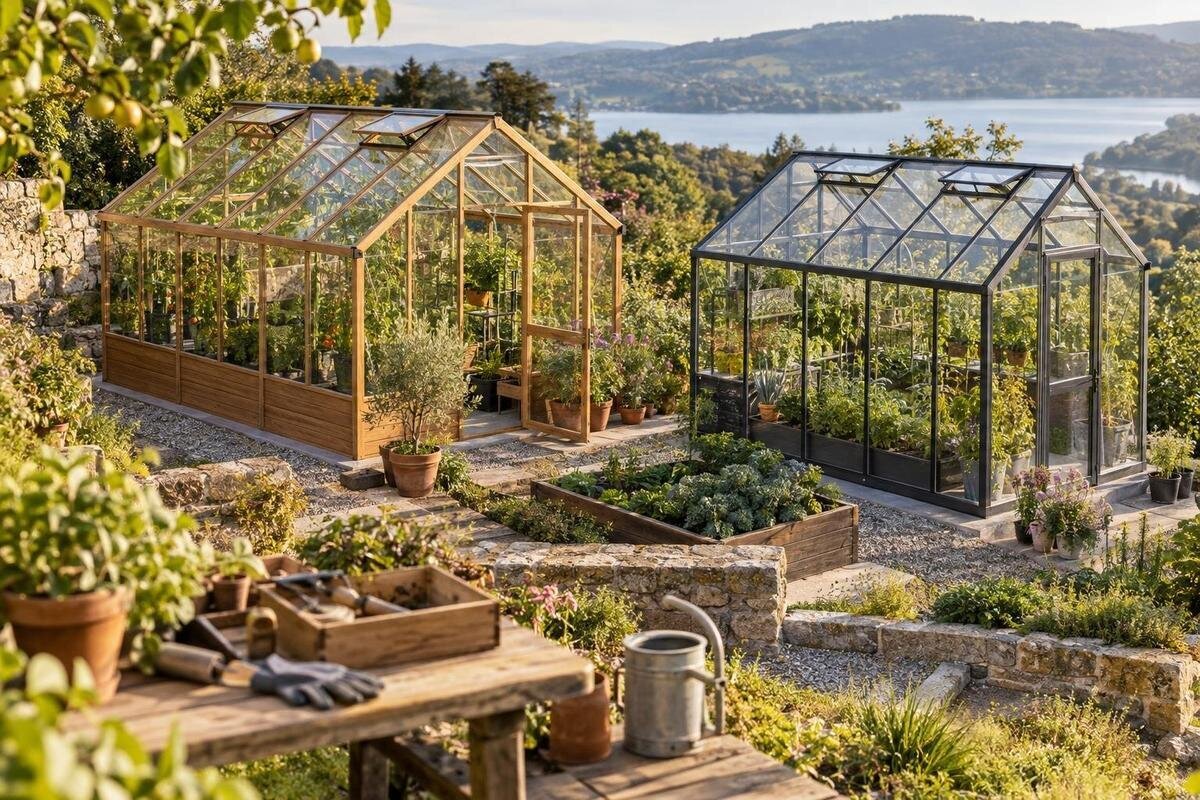
Greenhouse buying guide
Buying a wooden greenhouse calls for more than choosing a timber look. The word ‘wooden’ does not tell you which species is used, whether every frame component is timber, what treatment or finish has been applied, or how much routine care is expected. Those details affect whether a model fits the garden and the time you can give it. Compare the written material specification alongside the footprint, growing plan, base requirements and assembly arrangements. This guide focuses on timber choices and upkeep, while covering the other greenhouse details that can change a buying decision.

What a ‘wooden greenhouse’ specification should cover
Treat ‘wooden greenhouse’ as a broad category, not a complete specification. A listing should identify the timber species used for the main frame and say whether the doors, trims, base and other exposed parts use the same material. It should distinguish untreated timber from preservative-treated timber and from a factory-applied surface finish. These are separate pieces of information: a coating on visible faces does not, by itself, explain the treatment of every component. Ask whether the description covers the structure, door and any base, and whether different parts use different grades. If the product information groups everything under ‘wood’, request an itemised description before comparing it with another model.
Check which items come with the greenhouse and which are separate: a timber base, shelving, glazing, seals, fixings and any initial treatment product can each be specified differently. Look for construction or care information tied to the exact model, rather than relying on a photograph, colour name or broad range description. For contrast, the limited-edition aluminium greenhouse is identified by a material in its name; that wording is a label, not a complete assembly or maintenance specification. Use the same standard for a timber option: check the parts list, written scope and instructions, and ask for missing details before judging it against another model.
Compare timber species, treatment and finish
Species is the first comparison, but the label needs to be precise. Ask for the recognised species name, not just a broad term such as hardwood, softwood or a colour description. You may see labels such as cedar, pine, spruce or redwood; ask what species each name refers to in the actual components. Different timbers vary in appearance, grain, natural durability, movement and response to finishes. The species helps identify what is offered, but does not replace a grade or treatment specification. Ask whether the main frame members are solid timber or engineered or modified products, and whether the doors, base, trims or other exposed parts use different materials.
Compare treatment and finish as separate questions. Is a preservative treatment applied, and which parts receive it? Is the timber supplied unfinished, stained, painted or otherwise coated? Does the supplier explain how to maintain that exact finish, including which care products are compatible and whether any surfaces need particular attention? Avoid choosing solely on a statement such as ‘treated’ or ‘weather-resistant’ if it does not explain the scope and upkeep. If aluminium is also on your shortlist, the classic aluminium greenhouse is a separately named option to compare; use its published specification rather than assuming its title establishes the care requirements. Compare documented upkeep, not material labels in isolation.
Assess exposure and access in your garden
Visit the proposed site at different times of day and, if possible, after rain. Note where water lands from nearby roofs, where irrigation may splash, whether leaves or soil gather against the lower frame, and which sides remain shaded. Persistent damp or dirt may make cleaning and inspection more important, while direct sun can affect exposed finishes. The point is not to predict a fixed maintenance interval, but to understand the conditions around your particular greenhouse. Mark nearby shrubs, fences and paths as well: they can make the outside of a frame awkward to reach even when the footprint appears to fit.
Think about how you will reach timber surfaces for routine checks and any recoating, including the side nearest a boundary. An open, windy position raises different questions from a sheltered corner, so ask the supplier what site conditions and anchoring arrangement the model is intended for. Use a qualified installer if the base or fixing requirements are unclear; do not try to resolve uncertainty from a general product description. Keep the model’s maintenance instructions with your site notes so you can compare its recommendations with the exposure you have recorded. The access you leave around the greenhouse matters too: it affects whether routine care is practical once plants and garden equipment are in place.
Size the greenhouse around your growing plan
Begin with the available footprint, then work out the internal growing space from the actual plan. Allow for the way you intend to use the greenhouse: pots, benches, trays, tall plants, tools and enough room to pass through with what you need. A quoted external width is not necessarily the clear width between benches, and framing or roof shape can affect where a standing or climbing plant will fit. Draw the door’s opening area and the route through the greenhouse on a plan. This can show whether a model that looks roomy on paper would leave a cramped path once the growing layout is in place.
Measure the site, the route from the delivery point and any gate or doorway that larger components must pass through. Check clearance from walls, hedges and fences for access and care, not just whether the greenhouse fits on paper. If an attached layout is under consideration, use the aluminium lean-to greenhouse as a separate point of comparison, then verify its drawings and stated installation requirements; the product name alone cannot confirm a fit beside your wall. For any layout, compare external dimensions with the usable interior, and decide where doors and vents can be reached without disrupting beds or benches.

Check the base and lower timber
Give the lower timber and water management particular attention. Ask what the frame is designed to sit on, whether any timber is intended to be in direct contact with soil, and how the model’s instructions address moisture at the base. Lower edges may be harder to inspect than the upper frame, so access, clearance and the surrounding surface are worth discussing before purchase. Do not assume that a wooden greenhouse can be placed on any surface just because it is sold for garden use. The supplier’s base details should match the site you are preparing; if the instructions are unclear, ask before making changes to the ground.
Clarify whether a base is included, optional or supplied separately, and which dimensions, fixing points and ground preparation the supplier specifies. A product name such as the Bloomcabin Prestige greenhouse with metallic base shows why frame and base descriptions should be read separately; that label does not establish the base’s construction, installation or suitability for your ground. Confirm the written specification and seek competent installation advice if a base or anchoring detail needs assessing, rather than guessing from a photograph. Include any additional base work in your budget before comparing headline prices.
Plan for routine timber maintenance
Plan for routine checks rather than treating the frame as a one-off purchase. Inspect exposed surfaces, joints, corners and lower edges for wear, trapped debris, persistent damp or damage, and clean the greenhouse according to the product instructions. The exact timing of any treatment or recoating depends on the species, treatment, finish and exposure, so a universal interval is not useful for every wooden greenhouse. Ask for care instructions for the exact model, including how to clean it, when to inspect it and what signs mean a finish needs attention. A clear care guide is part of the product information, not a task for the buyer to invent.
Ask what has already been applied at delivery and whether the treatment covers all faces, cut ends and joints; do not assume a finished exterior means every timber surface has the same coating. Find out which products are compatible, how a surface should be prepared and what to do if it becomes scratched or a timber edge is exposed. Follow the supplier’s written guidance and the care-product label rather than mixing finishes on the assumption that they will work together. If the seller offers warranty terms, read any maintenance conditions and keep the instructions with your order details.
Compare the complete greenhouse specification
Timber is only one part of a greenhouse’s specification. Compare the glazing material, how panels are retained, the number and position of opening vents, door arrangement, seals and hardware, and whether replacement components can be ordered. These details affect how you will use and look after the greenhouse, but they should not be inferred from a product image or a general range label. Ask for itemised information and a plan for the exact model. When comparing two greenhouses, place the same questions beside each listing so that a longer description is not mistaken for a more complete specification.
Test the details against your growing routine. Seedlings, climbing crops and plants kept under cover at different times of year may call for different internal arrangements; decide what you intend to grow and how you will reach it before choosing a frame. Check whether benches, staging or ventilation controls are included, optional or simply not shown. A model name such as Garden Orangery T does not tell you how its glazing, openings or fittings are specified, just as ‘wooden greenhouse’ does not identify every timber component. Use the supplied plans and written parts list to compare complete offers.
Check assembly, delivery and included parts
Find out whether the greenhouse arrives as a kit, partly assembled or in another form, and which work you are expected to arrange. Read the model-specific assembly information before ordering; it should help you understand what is included and what tools, helpers or specialist assistance may be needed. Do not assume that a word such as ‘ready’ describes the finished state. Check whether glazing, fasteners, base pieces or shelves are part of the quoted package or sold separately, and understand how to report a missing or damaged part. These questions help you compare the complete order rather than just the frame material.
Review the drawings for panel sizes, overall shape and working clearances, and check that the delivery route can accommodate the supplied components. A name such as the Bloomcabin Oasis pyramid greenhouse identifies a model and a form, but the name alone cannot tell you its internal dimensions, kit contents or assembly method; apply the same care to an attractive timber design. Before ordering, check the delivery arrangements, assembly responsibilities, return terms and the seller’s contact process in the information shown for that product. Do not rely on assumed lead times or illustrations to answer those questions.

Compare purchase cost with ongoing upkeep
Compare like with like rather than ranking products by the timber label or headline price alone. Put the same items into a cost check: the greenhouse, specified base, any site preparation, delivery, assembly help, initial treatment if needed and routine care materials. Include replacement parts or finishing work only where the supplier has provided information; do not invent a future cost for an unknown. A purchase figure is difficult to compare if one listing does not say what is included. Ask for an itemised total and record any exclusions, so that apparent differences between packages are not simply differences in what each one covers.
Your space plan can also change what a package is worth. If tool storage is part of your brief, the aluminium greenhouse with built-in storage is a separate named option to inspect; its title alone does not show how the space is arranged, so use the product information rather than guessing at growing capacity. For a wooden greenhouse, price only the shelves, benches, timber base or storage that are actually listed as included, and check whether extra fittings are intended for that model. The aim is to compare similar packages, not assume that a particular material or format is automatically better value.
Make your shortlist from confirmed details
Build a short comparison table with the species and grade, parts made from each timber, treatment and finish, care instructions, site suitability, base requirements, dimensions, glazing, ventilation, inclusions, assembly and total cost. Mark each answer as confirmed, unclear or not supplied; do not fill a gap by reading into a photograph or model name. Pay particular attention to questions that could be awkward or costly to resolve later, such as a footprint that blocks access or a finish whose care you cannot manage. A supplier’s written response should relate to the exact model, not just make a general statement about wooden greenhouses.
If another greenhouse format is also on your shortlist, Bloomcabin Orangery is a separate listing to assess on its own product details, not a proxy for a wooden frame’s upkeep. Your final choice need not be the one with the most features: it should fit the measured site, suit the plants you plan to grow and come with maintenance instructions you are prepared to follow. If an important point, such as timber identity, treatment or base arrangement, remains unanswered, pause the comparison until you have enough information to judge the purchase fairly.
Frequently asked questions
Which timber is best for a wooden greenhouse?
There is no single best choice for every site. Compare the exact species and grade, how the parts are treated or finished, and the supplier’s maintenance guidance. A familiar species name alone cannot establish the construction or care requirements of a particular greenhouse.
How often will I need to treat a timber greenhouse?
Use the model-specific care instructions rather than a generic annual rule. The timing depends on the timber, treatment, finish and exposure. Ask what is applied before delivery, which surfaces need attention and what signs should prompt cleaning or refinishing.
Does pressure-treated timber mean maintenance-free?
No. Treatment describes one part of the timber specification; it does not replace the supplier’s instructions for inspection, cleaning or any compatible finish. Confirm which parts are treated and what care is required, especially around joints and lower edges.
How do I choose the right greenhouse size?
Measure the site and compare the external dimensions with the clear space shown on the plan. Allow for benches, plant height, access paths, doors, the delivery route and room to reach the outside for maintenance. Decide on the layout before ordering.
Can a wooden greenhouse sit directly on soil or paving?
Do not assume that either surface is suitable. Ask the supplier for the exact base and ground-preparation requirements for the model, including how the lower timber is intended to be positioned. If site or anchoring details are unclear, seek advice from a qualified installer.
Before you commit, be able to describe the frame in specific terms: what timber is used where, how it has been treated and what care its supplier recommends. Match that specification with the measured site, the way you intend to grow and the base and assembly details. If important answers remain unclear, the models are not yet easy to compare. A good purchase is not simply the timber with the most appealing name; it is the complete greenhouse whose requirements fit your garden and the maintenance you are willing to do.
