
Buying a Large Greenhouse on Black Friday: Budget Beyond the Frame
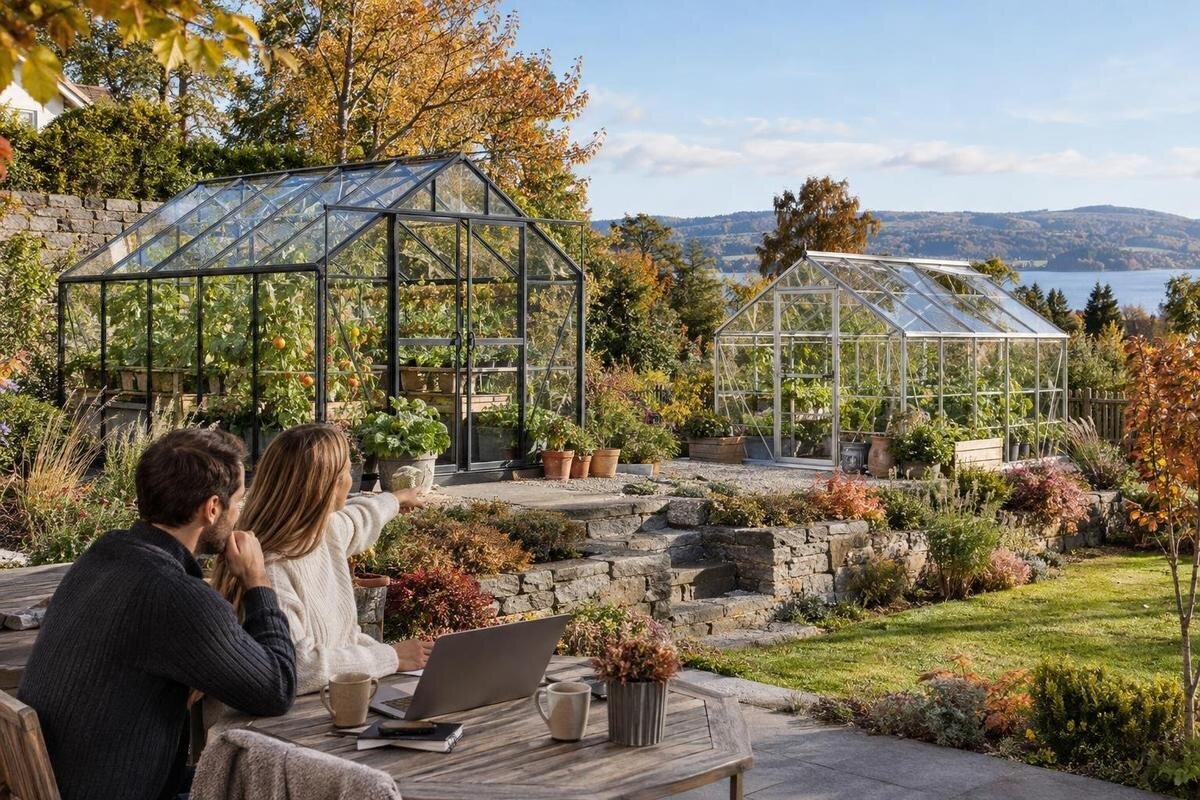
Black Friday greenhouse buying guide
Buying a large greenhouse around Black Friday can look like a simple comparison of frame prices, but the frame is only one part of the project. A suitable base, site preparation, delivery and assembly can each add costs, and a product listing may not include every component you expect. This guide shows how to calculate a realistic total before comparing offers. No particular promotion or saving is assumed: use the event as a chance to compare current terms, not as a reason to commit before the practical costs are clear.

Set a ceiling for the complete project
Before opening product pages, decide what the complete greenhouse project can cost without stretching the rest of your garden budget. Include the structure, base or foundation work, clearance and ground preparation, delivery, assembly, and any components or extras not included in the package. Keep optional furnishings and later operating costs in separate lines so they do not obscure the minimum spend needed to get the greenhouse installed and ready for its planned use. Distinguish costs that must be met before installation from choices you could make later. This total ceiling makes it easier to rule out a tempting headline price that leaves too little for essential work. Make a simple worksheet with the advertised greenhouse price in one column and every associated cost in another. Give each line a status such as confirmed, estimated or unknown, and record where the figure came from. This exposes which parts of the budget are dependable and which need further enquiry before you compare offers.
Also decide what you mean by large in practical terms. The label alone does not tell you the usable growing area, footprint, height or space needed around the structure. Use only dimensions and package details actually stated, and compare products that fit the same growing plan. On a classic greenhouse listing, for example, record only details you can verify rather than inferring them from its name or photograph. Include room for access and movement when working out what area you need. A greenhouse that fits the budget but not the plot—or offers more space than you can use—may be poor value.
Compare Black Friday offers by what they include
At Black Friday, compare the full price for the exact option selected, not a percentage or crossed-out figure in isolation. If an event price is displayed, check which size or configuration it applies to, what components are included, and whether delivery or assembly is included, charged separately or arranged elsewhere. Do not assume that a base, covering, fittings or other parts shown in a photograph form part of the order. Add any separate charges that are stated before comparing offers. If an amount is not available, mark it as unknown instead of entering zero.
Keep a short record of each candidate’s model name, stated dimensions, listed contents, product price and offer conditions. A label such as limited edition on a limited-edition greenhouse listing does not by itself establish the size, package contents or saving. Check the detail for the exact version you are considering and carry only verified information into your comparison. This helps prevent a low price for a different configuration from being set against a higher price that includes something extra. It also makes unclear package details easier to spot before you decide.
Budget for a base that suits the chosen greenhouse
Treat the base as its own budget line until you have confirmed what the exact greenhouse requires and what, if anything, its price includes. Check the product instructions or ask the supplier what support and dimensions are specified for that model; do not choose a base solely because it is inexpensive or familiar. Your estimate may need to distinguish materials from preparation and installation labour. If a contractor is pricing the work, ask what the quote covers and what assumptions it makes about the ground and access. Give the contractor the exact product dimensions and stated base requirements, rather than asking for a generic greenhouse-base price. That makes it easier to compare quotations that cover the same area, preparation and finish.
Names and pictures are not enough to settle this point. Even a Prestige greenhouse listing needs clear written information about any base component, its scope and any further base work required. A component stated as supplied does not automatically mean the site is prepared or installation is included. For sloping, unstable or otherwise uncertain ground, ask the supplier or a suitably qualified local professional for site-specific guidance before committing to a base cost. That helps keep an unpriced site condition from becoming an afterthought.
Cost the work needed to prepare the site
Site preparation is separate from the base itself. Walk the proposed area and list work that may be needed before a base can be fitted: clearing vegetation, removing an old structure, moving stored items, disposing of waste or arranging an appropriate working surface. If equipment, waste collection or paid labour may be needed, get an estimate rather than folding a guess into the greenhouse price. The amount depends on the site and agreed scope, so a quote should say what will be removed, what will be left and who handles the waste. Take dated photographs and basic measurements when requesting estimates, then note any assumptions made by the person quoting. This gives you a clearer basis for comparing prices and reduces the risk that a necessary task has simply been omitted from the scope.
Check the intended location against the product’s stated footprint, and consider the route for bringing parts to it and the space people need to work during assembly. A product name cannot establish the clearance required; inspect the actual details for a Garden Orangery T listing rather than estimating from the words alone. Slopes, drainage concerns or uncertain buried services may change the preparation plan. Where these are relevant, ask a qualified professional to assess the site. Price known work now and keep unresolved work visibly provisional.

Include delivery in the total
Ask for the delivery cost for the exact greenhouse and destination you are considering, and note whether the quoted amount includes unloading or only transport to a specified point. Check any stated access conditions, delivery area, surcharges and arrangements for handling a large consignment. Terms can vary between products or orders, so do not copy a delivery figure from one candidate to another. If the amount is not shown before checkout, ask how it will be confirmed and include it in your comparison before deciding what the total will be. Also check whether someone needs to be present and whether the delivery point can be agreed in advance. These practical details can affect any labour you arrange after arrival, even where the transport charge itself is clear.
Consider the access route as a cost question, not just a convenience. Steps, a narrow entrance, a long carry or limited room for a vehicle may affect the delivery or assembly arrangements available; confirm the actual conditions rather than assuming extra help is included. If your shortlist includes a lean-to greenhouse listing alongside other designs, record delivery terms for each product separately instead of using one quote as a guide to the rest. Avoid double-counting: separate the seller’s delivery charge from any independently arranged labour or equipment needed after arrival.
Price assembly as a separate service
Assembly can be a substantial part of the budget, so decide early whether you will arrange it yourself or pay an installer. Self-assembly still has a cost in time, suitable tools, help and the capacity to follow the product instructions; it is not automatically a zero-cost option. If you want a professional, request a written quote for the exact model and check whether the work covers the whole greenhouse or only a defined stage. Never assume assembly is included simply because the product is sold as a kit. When seeking quotes, supply the proposed location, base status and delivery arrangement as well as the model details. An installer cannot sensibly price access, carrying or readiness of the site if those facts have not been described.
Ask the installer to list exclusions, which might include base construction, site preparation, delivery, moving parts from the drop-off point or waste removal. Confirm how changes to the agreed scope would be priced, and make sure the quote relates to the chosen greenhouse rather than a generic estimate. The page for a pyramid greenhouse listing can identify an option to investigate, but its name cannot establish assembly time or cost. Put a confirmed installation quote beside the product price and leave uncertain extras visible.
Check what the greenhouse package includes
Read the package contents before treating the product price as the cost of a usable greenhouse. Check whether the exact listing describes the frame, covering, doors, vents, fixings and base-related parts you expect, and note which items are optional or sold separately. Product images may show a completed setup without proving what the order includes. If a detail is missing, ask for clarification rather than assuming it is included. This matters when comparing different configurations or when an offer refers to a package whose contents are not obvious. Save or print the stated contents and offer terms for each shortlisted version. During a sale, this is a practical way to make sure that a later comparison refers to the same package rather than a similar-looking option.
Separate necessary components for your intended use from upgrades that can wait. Shelving, staging, irrigation, shade or powered equipment may be useful for some growing plans, but they should not be added automatically to make a promotional package appear better value. A label such as built-in-storage greenhouse listing is a prompt to inspect the written package details, not a basis for assuming what storage is supplied or included. Enter each optional item as its own line, and add it to the purchase total only when you have decided you want it and confirmed its price.
Allow for future running and maintenance costs
Think beyond the amount needed to order and assemble the greenhouse. Your plans may involve recurring costs for water, replacement materials or energy if you choose to add powered equipment such as heating or lighting. These are not automatically required for every growing plan, and they should not be confused with the initial purchase price. Decide which costs are genuinely part of your intended setup, then keep one-off installation costs separate from ongoing estimates so you can see what the first season and later years may involve. If you are not yet sure how you will use the space, write down a modest initial setup and a later upgrade list. This avoids making an immediate purchase decision depend on optional equipment whose purpose and cost have not been settled.
Do not infer future running costs from a product’s category or name. If an orangery greenhouse listing is on your shortlist, use information actually provided for that product and separately price any equipment you intend to add. For electrical work or other specialist services, budget for a qualified professional where needed rather than assuming a DIY cost. Estimates can remain broad while your plans are undecided; mark optional operating costs separately instead of treating them as included or as part of a Black Friday saving.

Compare totals, not just headline prices
Put every candidate into one simple comparison: greenhouse price, required parts, base, preparation, delivery, assembly and any selected extras. Add the confirmed one-off amounts to see the cost of getting the greenhouse in place. Show optional furnishings and potential operating expenses separately; including every possibility in one headline total can make alternatives look more expensive than they are, while excluding likely essentials can make the reverse mistake. Use the same categories for every option and write ‘to confirm’ beside missing figures rather than entering a zero.
Give estimates a confidence note: confirmed amount, supplier estimate or unknown pending a site visit. If ground work, delivery handling or installation is still uncertain, allow a reserve that reflects the uncertainty, based on actual quotes and the work being considered; there is no reliable universal percentage for every site. Check that quoted figures cover comparable tasks and the same product configuration. A lower total is meaningful only when its exclusions are understood. This table is more useful than ranking candidates by their promotional price alone. Keep the date of each price and quotation with the table, particularly during a time-limited sale. If an offer changes, you can update one line without losing sight of the other costs. Do not combine an old estimate for site work with a new product configuration unless you have checked that the estimate still applies.
Decide whether to order or wait for firm costs
Before ordering, review the entries that could change the final figure: exact model and option, included package contents, base requirements, site-work estimate, delivery terms and assembly scope. Confirm that the amounts refer to the same greenhouse and destination, and check the displayed offer conditions and when separate charges will be confirmed. Keep a record of the information used in your comparison. If the order page or quotation leaves a cost unresolved, ask for clarification before treating the Black Friday price as the project total.
Pause if the main cost drivers are still guesses, especially if you do not yet know what the site needs or whether your delivery and assembly arrangements are workable. You can keep a preferred greenhouse on your shortlist while getting an estimate for the base or preparation; there is no need to turn an uncertain figure into a purchase decision. If a promotion is available but its terms or full cost are unclear, compare it only after those details are settled. If you decide to wait, retain the product details, quotations and notes that informed the comparison so that you can revisit them consistently. The aim is an option that fits both the garden and the complete budget.
Frequently asked questions
Which extra costs should I include in my greenhouse budget?
List the greenhouse price, any required base, site clearance and preparation, delivery, assembly, and components not included in the package. Add optional extras only if you want them. Keep potential running costs separate, and mark unconfirmed figures as unknown rather than treating them as zero.
Does a Black Friday greenhouse offer include the base?
It may or may not. Do not infer this from a product name or photograph. Check the offer details for the exact greenhouse and confirm whether a base component is included, whether it needs separate installation, and whether further site work is required.
How can I compare greenhouse assembly costs?
Ask for an itemised quote for the exact greenhouse. Check what assembly covers and whether the price excludes delivery, base work, site preparation or waste removal. If assembling it yourself, allow for your time, tools and any help you need; do not assume assembly is included.
Should I include optional equipment in the comparison?
Include only the extras you have decided you want, and price them separately from the greenhouse. Check the package details rather than assuming an item shown in a photograph is included. This makes it easier to compare the basic project cost without overlooking the cost of chosen additions.
What if site preparation costs are still uncertain?
Keep the figure provisional and seek a site-specific estimate for the work involved. Do not treat a headline event price as the total while important ground or access costs are unknown. You can compare shortlisted greenhouses once those estimates are clearer.
A large greenhouse is a more considered Black Friday purchase when its full project cost still fits after the known extras are added. Compare the same product details, price the base and site work, confirm delivery and assembly, and keep optional running costs separate. If important figures remain guesswork, treat the apparent deal as provisional until they are clearer. The better choice is the one whose complete cost and practical requirements you understand, not simply the one with the most striking event price.
