
Buying Your First Greenhouse: A Step-by-Step Decision Guide
Greenhouse buying guide
Buying your first greenhouse is easier when the growing plan comes before the model. A structure that suits a few seed trays may feel cramped if you later want to grow plants to maturity, while a larger one can occupy valuable garden space without making daily work easier. Treat the choice as a series of connected decisions: what you want to grow, how much usable room you need, where it can sit, and which construction and features fit your routine. Then compare product details rather than relying on photographs or names.

Decide what you want to grow
Write down the jobs you expect the greenhouse to do over an ordinary growing year. Starting seedlings, raising plants to maturity and sheltering potted plants all use space differently. Seed trays and staging need horizontal surfaces as well as access; crops grown on the floor require planting room and a clear route; potted plants should be reachable without moving everything around. If you want several uses, rank them and note which will happen at the same time. A greenhouse arranged for one task may need a different layout from one expected to hold benches, pots and growing beds together.
Be realistic about when you expect to use the space and how much control you want over its conditions. A greenhouse offers shelter, but it does not guarantee a fixed temperature or a particular growing season. If you plan to overwinter plants, think about which plants you have in mind and what conditions they need; if heating is part of the plan, treat it as a separate planning and installation decision. Seek appropriate qualified advice rather than assuming that any heating equipment can simply be added later. This helps keep your greenhouse choice in line with what you actually intend to grow.
Size the space for plants and movement
Sketch the interior arrangement before settling on an external size. Allow for a working route, benches or staging, planting beds, pots and room to turn or reach the back. The outside footprint and usable growing area are not the same: frame members, door position and a bench can all reduce clear floor space. A narrow greenhouse may fit the plot yet leave little room to work, while a wider option is only useful if the path through it stays clear. Think about the layout you will use day to day, rather than judging capacity from the overall shape alone.
Include height and the habits of the plants on your list. Tall crops, hanging items and shelves all need space above the floor, while containers and staging can take up room at different levels. A name such as Bloomcabin Orangery does not tell you how much usable space a particular model provides. Where plans or measurements are supplied, compare them with the trays, pots and growing areas you expect to have. A simple drawing can help show whether the door, benches and planting area compete for the same space.
Choose a site with enough light and practical access
Light changes across the garden during the day and between seasons. Before choosing a position, notice how nearby trees, walls, fences and buildings cast shade, and consider whether that pattern will change as foliage grows. Many plants need good light, but their requirements vary, so use the crops on your list as a guide rather than assuming one compass direction suits every greenhouse. A spot that looks bright in summer may receive different light in another season. These observations can help you rule out positions that are shaded for much of the time.
Consider how the greenhouse will fit into your normal garden routine. A clear route to the door makes it easier to carry trays, pots and tools, while convenient access to a water source can make regular care simpler. Check the manufacturer’s guidance for the proposed site and any ground preparation it calls for. If you are unsure about the ground or what preparation is suitable, ask a qualified professional. Also think about nearby paths, outdoor seating and the space needed to maintain the garden around the greenhouse, so the new structure does not make other regular tasks awkward.
Freestanding or lean-to: which layout suits the garden?
A freestanding greenhouse has its own position in the garden, so consider how much room it leaves around the structure and how you will reach its door. A lean-to sits alongside a wall, making that wall and the space beside it part of the decision. It may suit a different garden layout, but the wall’s aspect, openings and nearby features can affect whether the position works. Compare the available light and access as well as the area each style occupies; the cheapest or most convenient-looking footprint is not necessarily the easiest to use.
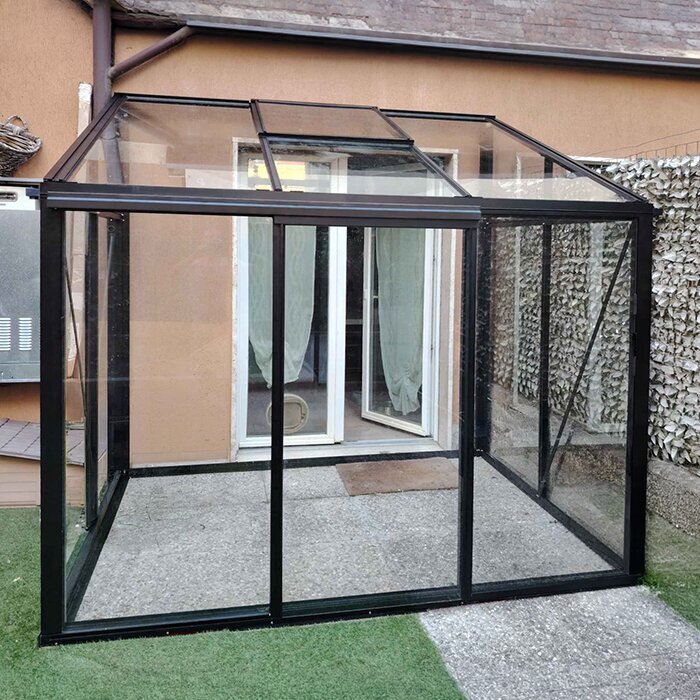
If you are considering an aluminium lean-to greenhouse, treat the product name as a description of its style, not proof that every wall is suitable. Look at how the manufacturer’s guidance says the structure should meet a wall, and consider windows, doors, gutters or other features that could affect access. Think about how you will reach the wall and greenhouse for routine care. If the wall, fixings or site requirements are unclear, ask a qualified installer before you decide. Do not rely on the photograph alone to judge how a specific model fits your garden.

Match the greenhouse shape to your internal layout
The outline of a greenhouse affects more than its appearance. Before choosing an unusual footprint, sketch where the door, benches and plants would go, then follow the route you would take carrying a tray or watering plants. A change in shape can create corners, junctions or separate areas that are useful for arranging different tasks, but they can also make it harder to place long benches or move between plants. Consider how you will use every part of the floor, including the space near the entrance, instead of treating the overall footprint as one continuous growing area.
With a T-shaped option such as a T-shaped garden orangery, look closely at the plan to see how the central junction and any projecting areas could work with your intended arrangement. A shape might make it possible to separate activities on paper, but the actual dimensions and door position determine whether those areas are practical. Compare the usable interior, not just the outline shown in a product image. If your priority is a straightforward route from entrance to planting area, check that the shape supports it before letting a distinctive design settle the decision.
Check headroom as well as floor area
Two greenhouses with similar floor areas can feel quite different to work in if their roof profiles and internal heights differ. Think about whether you will stand inside, reach over plants, hang items or grow varieties that need vertical room. Headroom near the centre is only part of the picture: the height at the sides can affect where benches, shelves and taller plants fit. Use the stated dimensions and any available drawings to work out how the shape affects the space you can actually use, rather than relying on a view of the greenhouse from outside.
A name such as a pyramid greenhouse is a reminder to consider roof form alongside floor size. Sloping or angled sides can change the usable height towards the edges, so check where a person can stand and where a bench or shelf could sit. Do not infer those details from the product name or overall appearance. Compare the manufacturer’s dimensions and layout information for each model on your shortlist. If the available information does not make the internal arrangement clear, ask the seller for clarification before deciding whether the space will suit your plants and working habits.
Compare frame materials and their upkeep
Frame material affects appearance, maintenance and the details you need to check in a product’s instructions. Aluminium is one common option, while timber and other metals may also be available in the wider market. Timber may need protective treatment, depending on the product and its care guidance; metal frames still need appropriate attention to their finish and fixings. Avoid assuming that a material name tells you how a particular frame is made or maintained. Consider whether the care routine fits your preferences, and look at how the frame components are described in the model’s information.
An aluminium classic greenhouse is one material-led model name to compare, but the name alone does not explain the frame’s finish, connections or care requirements. Read the supplied product details and manufacturer’s guidance for those points, and compare like with like if you are looking at more than one material. Also consider replacement parts and whether you understand the assembly information before choosing. The aim is not to find a universally best material; it is to choose a frame whose appearance and upkeep fit the site and the time you want to spend looking after it.
Choose glazing for visibility and handling
Glazing affects the greenhouse’s appearance and how clearly you can see inside it. Glass is often chosen when a clear view matters, while polycarbonate products vary in their construction and degree of translucency. Compare the specific glazing offered rather than assuming every panel under one material name is alike. Think about how the greenhouse will be used in your garden, including nearby activity and how panels will be handled during assembly and care. If you have concerns about breakage or safety, review the manufacturer’s information for the exact glazing option rather than guessing from a photograph.
A label such as an aluminium limited-edition greenhouse does not tell you which glazing is supplied or how it is specified. Check the details for the model you are considering, including any information about panel type, care and replacement. Make sure the comparison is between equivalent packages: one listing may describe a frame while another makes more detail about its glazing clear. If that information is missing or ambiguous, ask for it before deciding. This is more useful than choosing on a broad label or assuming that a distinctive model name guarantees a particular panel or finish.
Plan ventilation, doors and storage
Openings and access features affect how the greenhouse works in everyday use. Consider the number and position of doors, how you will move plants through them, and whether the ventilation arrangements suit the way you plan to grow. Check which vents are included and whether any accessories are listed separately; do not assume that an opener or staging shown in a photograph comes with the structure. Think about how you will reach the plants at the far end and whether the route will stay clear as containers and supplies accumulate. These details are easier to consider before choosing a layout than after filling it.
If keeping supplies close by matters, a greenhouse with built-in storage is a configuration to compare. The title alone does not explain how much space is allocated to storage or how it relates to the main growing area. Look for details about its position and size, and consider whether it would hold the items you actually want nearby. Check that the storage and any shelves or staging you need are included in the package you are comparing. That way, you can judge the trade-off between keeping tools and pots inside and preserving room for plants.
Compare the complete project, not only the structure
Set a realistic spending limit for the whole project before narrowing down models. Alongside the greenhouse itself, consider whether you may need a base, additional ventilation, staging, storage, site preparation or help with assembly. These items may be included, optional or separate, depending on the product; no single package should be assumed to cover them all. Decide which features you need from the outset and which could be added later, then compare the total scope of each option. This helps prevent a low headline price from distracting you from parts of the project that matter to your plans.
A name such as Bloomcabin Prestige greenhouse with a metallic base is a prompt to check what the particular package actually includes, not a substitute for its product information. Confirm whether the base and any other named components are supplied, and read the instructions about the site and preparation they require. If those requirements are unclear, ask the seller or a qualified professional rather than making assumptions about installation. Finally, compare your shortlist against the growing plan, usable space, maintenance and full project budget. A model that meets your essential needs is a better basis for a first purchase than one chosen for a single feature.
Frequently asked questions
How large should my first greenhouse be?
There is no single ideal size. Base your choice on the plants you want to grow, the space needed for benches or beds, and a route you can use comfortably. Consider headroom as well as floor area, and avoid paying for space that will be difficult to access or maintain.
Is a freestanding or lean-to greenhouse better for a first purchase?
It depends on the garden and the site. A freestanding greenhouse needs its own position and footprint; a lean-to makes the adjoining wall part of the decision. Compare light, access, the wall’s openings and the manufacturer’s siting guidance before choosing.
Which frame material should I choose?
Compare the frame’s appearance, maintenance requirements, construction details and care instructions rather than relying on a material name alone. Timber may need protective treatment, while metal frames still need appropriate care. Check the guidance for the particular greenhouse you are considering.
What should I consider when choosing greenhouse glazing?
Think about visibility, light, handling and the garden’s everyday use. Glass and polycarbonate panels can differ in appearance and construction, and product descriptions vary. Confirm the glazing supplied with the greenhouse and review its care and safety information.
Do I need to buy a base, ventilation or staging separately?
That depends on the greenhouse and the package offered. Check which parts and accessories are included, which are optional, and what the installation guidance says about the base and site preparation. Do not assume that items shown in a product photograph are supplied.
The right first greenhouse is not necessarily the largest or most elaborate. It is the one whose size, layout, site and construction match the plants you intend to grow and the way you will use the space. A clear growing plan makes it easier to compare models, distinguish essential features from optional ones and account for the whole project. When the dimensions, materials and included parts support that plan, you can choose with a clearer idea of how the greenhouse will work in your garden.
