
A Greenhouse for Cacti and Succulents
Greenhouse guide for cacti and succulents
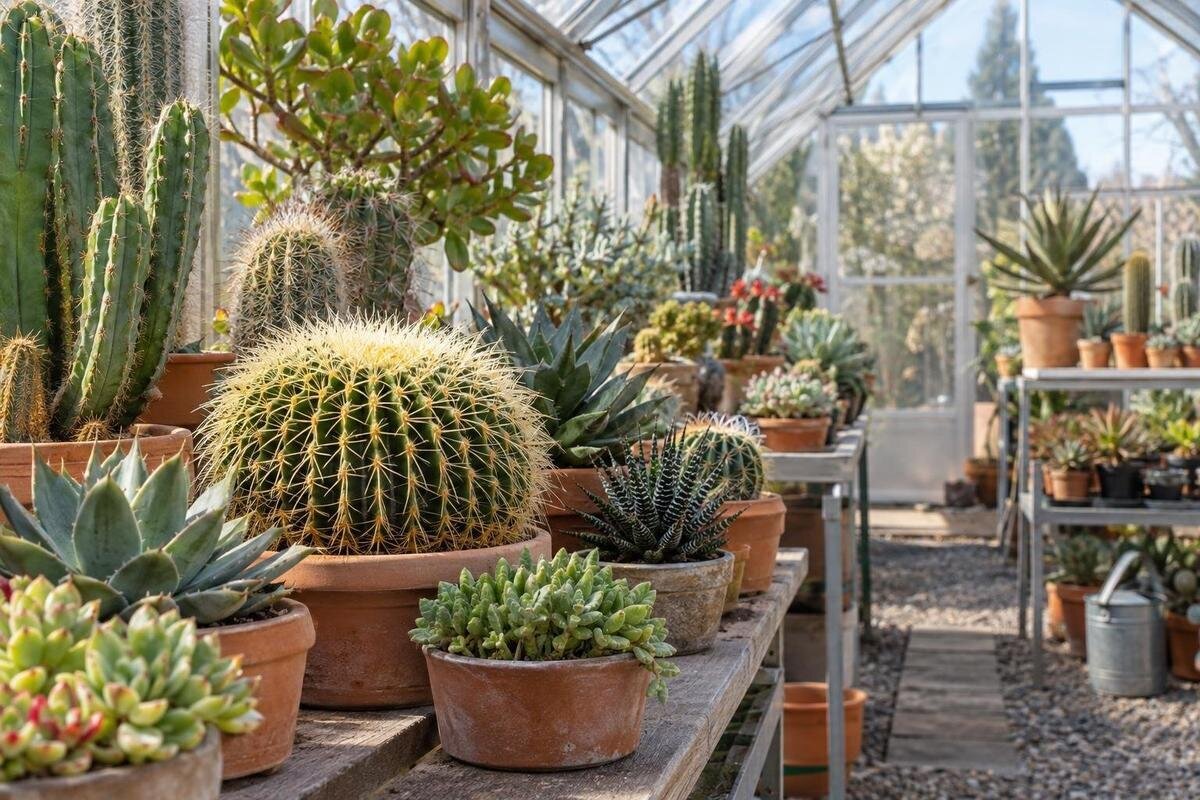
Growing cacti and succulents under glass is not simply a matter of providing as much heat and sun as possible. A greenhouse can keep direct rain off pots and give you a space in which to manage light, ventilation and seasonal care, but an unheated structure may still become cold in winter, while a sunny spell can raise temperatures quickly. The collection itself sets the requirements: a sun-loving desert cactus and a forest cactus such as Schlumbergera do not automatically share one watering, light or temperature routine. Plan around named plants, their cold tolerance, the site’s exposure and how easily you can reach every pot. The aim is a manageable growing environment, not one universal climate for every succulent.
What a greenhouse changes for cacti and succulents
A greenhouse is useful chiefly as a place to exclude direct rain, shelter pots from prolonged wet weather and give the collection a space you can manage. It does not create one stable climate. In the UK, an unheated greenhouse may still become cold enough to damage tender plants during a cold spell; on a bright day it can warm quickly. Dry air, warmth and intense light are separate conditions, not a package guaranteed by glass. Decide whether your main need is rain cover, additional growing room, winter shelter for named plants or a place to keep a larger collection accessible. That purpose will shape the type and size you compare.
Make an inventory before comparing structures: count pots, note tall or spreading plants, and allow space for benches, an aisle and occasional work. The Lean-To Greenhouse is listed in sizes from 40 to 154 ft², a range to compare against that plan. A lean-to position may give convenient access from a building, but the wall can block light or alter airflow, so assess the actual site at different times of day. Floor area and structure type do not tell you how bright or frost-free the plant area will be. Treat rain cover, light, ventilation and winter minimums as separate questions.
Group plants by their growing requirements
‘Succulent’ is a broad horticultural term, not a single set of growing instructions; cacti are succulents, but many succulents are not cacti. Record botanical names and group plants by their actual requirements. The Royal Horticultural Society (RHS) advises that most cacti and succulents enjoy sunny conditions, but identifies rainforest cacti as important exceptions. Christmas cactus (Schlumbergera) and orchid cacti (Epiphyllum) prefer partial shade and more regular watering than many dryland types. These named examples are useful when planning separate growing areas: a bright bench for sun-loving plants and a position with filtered light for forest cacti. They are starting points, not fixed rules for every species or cultivar.
Once plants are identified, note their preferred light, growth cycle and winter tolerance. Create groups for plants with similar needs rather than treating every pot labelled cactus or succulent alike. The Limited Edition aluminium greenhouse range lists sizes from 40.6 to 302 ft²; use that as a footprint comparison only. Check how much bench area remains after allowing for an aisle, temporary staging and access to vents. Keep botanical labels with plants, especially when several look alike, and make a note of any care requirements you still need to establish.
Assess light through the year
Check the proposed site at more than one time of day and in more than one season. In the UK, a south-facing position often receives the strongest direct sun, but nearby trees, buildings, fences and the greenhouse’s own frame can create shade. Winter days are shorter and the sun is lower; a position that looks bright in summer may offer little usable light when plants are overwintering. Note where direct sun falls, how long it lasts and which shelves are shaded. Do not assume that all-day exposure is necessary for every plant, or that a bright exterior view guarantees good light at pot level.
Plants moved from a house, shop or shaded staging area into stronger greenhouse sun can scorch if the change is sudden. Acclimatise them in stages, beginning in bright filtered light and increasing exposure only while leaves and stems remain sound. Bleaching or dry patches after a move are reasons to reassess exposure, although appearance alone cannot establish the cause of damage. Compare new growth with earlier photographs and note any changes after moving a plant. Removable shade can moderate a particularly bright spell, but permanent heavy shading may deprive sun-demanding plants. The Classic aluminium greenhouse is listed in sizes from 40.6 to 302.3 ft²; that range indicates footprint options, not the light level at a particular site. Check exact glazing details and surrounding shade.
Plan space for pots, benches and access
Plan the inside from a scaled drawing rather than assuming the full footprint is planting space. Mark the door opening, a route you can walk with a tray, bench depth, pot overhang and an area for temporary staging. Include headroom for columnar plants and a safe position for spiny specimens, so routine watering does not require reaching across them. Tall pots on a lower shelf may shade smaller plants behind them; account for the sun direction before assigning levels. Leave enough room to lift a pot for inspection or repotting without moving an entire row.
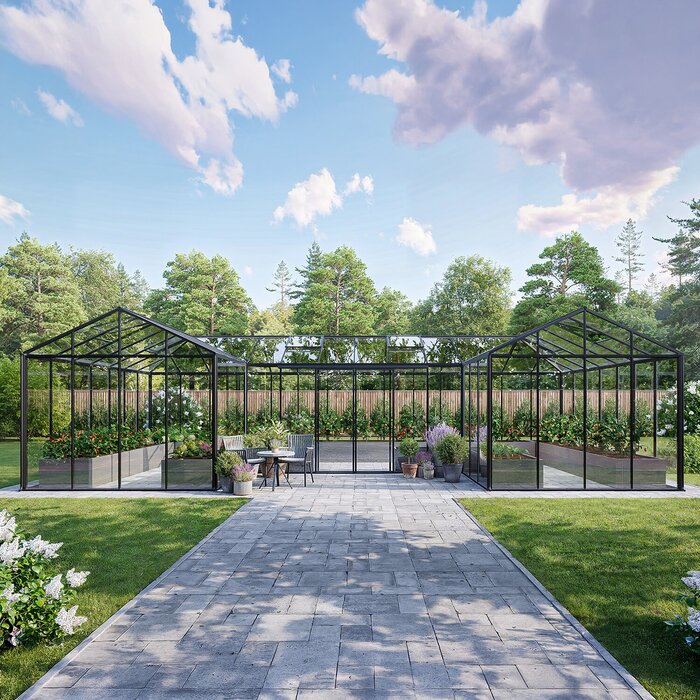
Crowded benches make it harder to inspect pests, keep pots apart and maintain even airflow. Leave working gaps between groups with different light or winter needs, and keep routes to doors and vents clear. The T-shaped orangery greenhouse is one named layout to compare with a rectangular footprint, but its title does not show how much uninterrupted bench or aisle space a selected size provides. Use the dimensioned plan to check the junction, door position and headroom rather than judging from the outline alone. A good layout is one you can maintain without brushing fragile leaves or spines every time you pass.

Use ventilation to manage heat and damp
Ventilation for cacti and succulents has to deal with both excess heat and moist air. On a bright day, a closed greenhouse can warm rapidly; after watering or a run of damp weather, stagnant air can slow the drying of pots and surfaces. Air needs a path through the growing area, not merely an opening blocked by a tall shelf or tightly packed collection. Openings at different levels can support air exchange, but their number, position and operation vary by greenhouse, so assess the actual specification and the site around it. The aim is regular air movement without assuming that an open door alone will provide suitable conditions in every weather.
Use a maximum–minimum thermometer near the plants and pay attention to the warmest and coldest parts of the space; a single central reading may miss a shelf against a wall or a corner behind benches. Check for persistent condensation and slow-drying surfaces as prompts to review ventilation, spacing and watering, rather than treating either as a diagnosis on its own. A fan can move air around, but circulation is not the same as exchanging air with outdoors. The Prestige greenhouse with metallic base is listed in sizes from 40.6 to 302 ft²; that range does not establish its vent provision. For any model, confirm the openings in the exact configuration and whether you can reach and operate them.
Match watering to growth and drainage
Start with drainage. Use pots with clear drainage holes and a growing medium suited to the plant and pot size; a greenhouse does not make a dense or waterlogged mix safe. Do not leave pots standing in water after irrigation, and avoid deciding to water just because the air feels dry. The surface can dry before the lower root zone, so consider the pot’s weight and the condition of the medium rather than using a fixed calendar. A small pot, a large container, a cool bench and a hot sunny shelf can all dry at different rates, even under the same roof.
Water according to the plant’s growth cycle, current light and temperature, not the label cactus alone. Many dryland species use less water in cool, dim conditions, but some succulents grow or flower at different times, and Schlumbergera does not follow the same routine as a resting desert cactus. When a plant is actively growing, many dryland types are better watered thoroughly and then allowed to dry appropriately than given frequent small splashes; species and medium still matter. If a pot stays wet longer than expected, first review temperature, drainage, airflow and root condition instead of adding more water.
Set winter conditions by species
Decide the winter plan from reliable guidance for each named plant. An unheated greenhouse is a shelter from direct rain, not a guarantee against frost. The RHS recommends cool winter rest conditions, with nights around 8–10°C, for most indoor cacti and succulents; this is a cultivation recommendation, not a universal minimum survival temperature. It also distinguishes winter-flowering Schlumbergera, which needs warmth and regular watering, from plants undergoing a dry winter rest. Echeverias generally need protection from frost and excessive winter wet, whereas various Sempervivum can grow outdoors in suitable, well-drained conditions. These contrasts show why one greenhouse setting may not suit the entire collection. Check species or cultivar guidance before assigning a winter position, and consider protection from wet conditions as well as cold.
Use a minimum–maximum thermometer close to the collection, especially at the coldest likely bench or floor position, and record the lows during winter weather. Decide in advance which plants will stay in the greenhouse, which will be moved to a more suitable protected place and whether any need a controlled heat source. If maintaining a specific minimum requires equipment, treat that as a separate system choice and have the equipment and its installation assessed by an appropriate professional. The aluminium greenhouse with built-in storage is listed in sizes from 59.4 to 302 ft²; if storage matters, check the selected plan for its allocated area. The word storage does not establish insulation or a frost-free place for plants.
Arrange benches around light and care
Use the bench plan to separate plants that need different care routines. Once you have mapped the light, assign each group a clearly labelled area rather than interspersing plants simply because their pots fit together. Separate trays can help you move a group when its seasonal requirements change, but empty any collected water after watering. Position plants that currently need watering where you can reach them without splashing neighbouring pots that are being kept dry. Keep labels readable from the aisle, and reserve a few spaces within each group for plants returning from repotting or a temporary change of position.
For a larger collection, give each bench or group a simple identifier and use it in your care records. This makes it easier to record a watering date, a change in shade or a temperature reading without relying on memory. Store empty pots and tools separately from occupied growing surfaces so that routine jobs do not displace plants into unsuitable positions. The Spacious Greenhouse is listed from 506 to 753 ft², but those figures alone do not define the bench plan or light distribution. When comparing a large structure, consider how you will organise and monitor the collection as well as how many pots it might accommodate.

Label plants and inspect them regularly
Keep a durable label with each plant’s botanical name, or the best identification you have, and note where it came from, when you acquired it and any known minimum-temperature or seasonal-care advice. A photograph at the start of a season helps you spot changes in shape, colour or damage later. Records are particularly helpful when plants stop growing, change colour in winter or are moved between a greenhouse and a sheltered room; without a name, it is easy to apply one plant’s care routine to another that looks similar.
Inspect plants as you water and when new plants arrive. Mealybugs can hide around cactus areoles or between leaves, scale insects can sit on stems and leaf undersides, and root pests may not be visible until a pot is checked. Keep newcomers apart while you inspect them, remove dead leaves and spilled mix, and clean reused pots before returning them to the collection. If a plant declines, compare recent light, watering, temperature and pest observations; changing several conditions at once makes it harder to identify what went wrong. These checks help keep a dry growing area manageable, but they are not a substitute for identifying a pest correctly.
Compare greenhouse specifications with your collection
Compare greenhouse options against your plant list and site, not an assumed label such as cactus house. Check the selected size, headroom, door access, vent locations and how the glazing and frame affect light; confirm which features belong to the exact configuration rather than another version in the range. The Pyramid-type greenhouse is listed from 60 to 203 sq ft, a footprint reference rather than evidence about its ventilation or growing conditions. For any model, use the product drawings and specifications to see how much clear bench space remains after access routes, and seek professional advice if the proposed base or site conditions need assessment.
Then decide what success means for this collection. If you mainly want to protect rain-sensitive pots, a rain-sheltered, well-ventilated space may be the priority; if you plan to keep frost-sensitive plants through winter, you also need a realistic temperature plan or a place to move them. Do not buy on the promise of warmth, light or automatic dryness: the site, openings, seasonal management and plants all contribute. A smaller area with clear access and appropriate zones can be easier to care for than a much larger crowded house. Match the structure to the care you can reliably provide, not only to the maximum number of pots it will hold.
Frequently asked questions
Can all cacti and succulents share one greenhouse?
Not necessarily. Plants can have very different light, watering and winter requirements. A desert cactus and an epiphytic Schlumbergera, for example, do not need the same routine. Identify plants as accurately as possible and group those with similar needs.
Will an unheated greenhouse prevent frost damage?
No. A greenhouse can shelter plants from direct rain, but an unheated structure can still become cold enough to harm frost-sensitive succulents. Record winter lows near the plants and decide how to protect each species.
Do cacti need direct sun all day?
No. Most cacti and succulents enjoy strong light, but rainforest cacti such as Schlumbergera and Epiphyllum prefer partial shade. Acclimatise plants gradually to stronger sun, and reassess their position if bleaching or dry patches appear after a move.
Should every succulent be kept completely dry in winter?
No. Many dryland plants use less water in cool, dim conditions, but growth cycles differ. A resting cactus and a forest cactus such as Schlumbergera should not automatically follow the same winter watering routine.
Is a greenhouse necessary for a succulent collection?
Not for every plant. Hardy Sempervivum and some other succulents can grow outdoors in suitable conditions, while a greenhouse may help with rain-sensitive or frost-tender potted plants. Choose one to meet a specific need.
An effective greenhouse for cacti and succulents begins with knowing which plants are in the collection. Match the site’s light to their needs, let air move, give roots reliable drainage and treat winter cold as a species-specific question. A greenhouse can make rain control and daily observation easier, but glass alone cannot supply the same light, temperature or watering conditions to every plant. Once you have grouped the collection and allowed room to reach each pot, greenhouse size and layout become easier to judge—and the setup is more likely to remain manageable through bright spells and winter weather.
