
Choosing the Right Depth for Greenhouse Beds
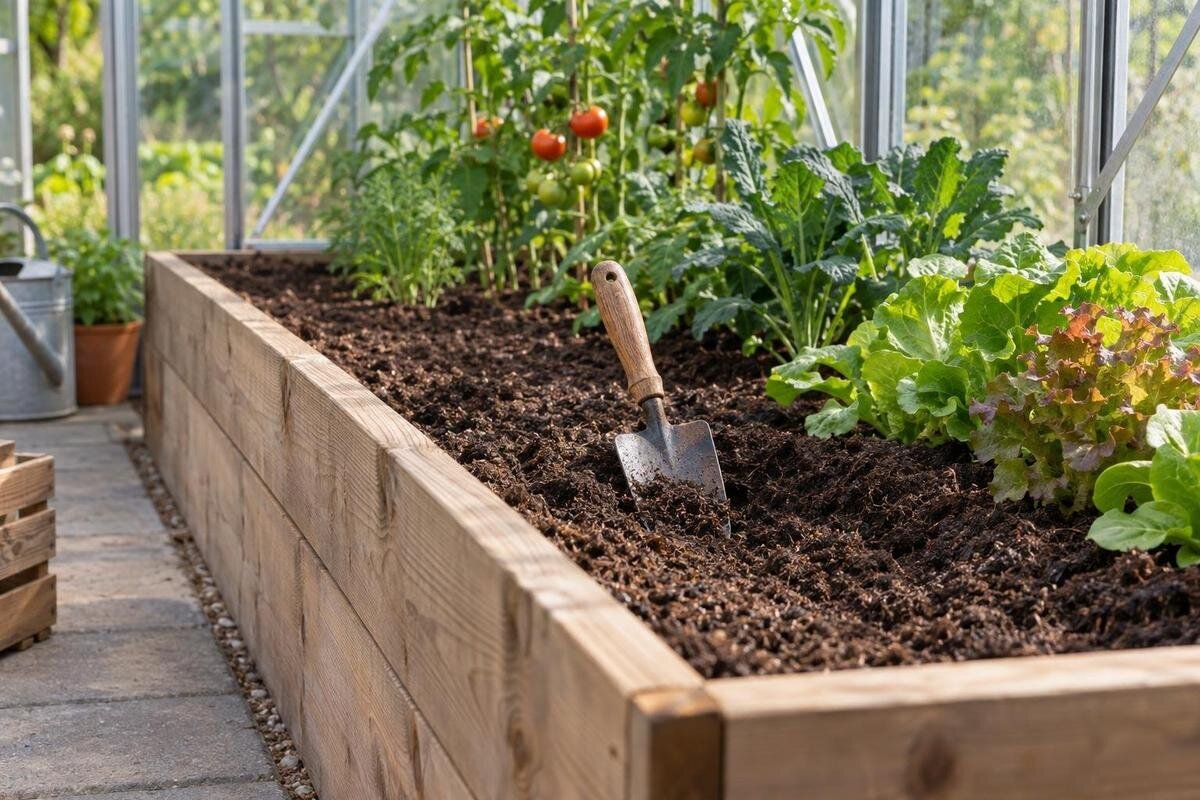
Greenhouse growing
The right depth for a greenhouse bed is the depth of usable, well-drained growing medium available to the roots, not simply the height of its sides. A shallow bed that is open to suitable soil can draw on ground below; the same frame on paving has to supply the whole root zone. Crop, variety, drainage, bed width and access all affect the choice. This guide compares practical depth ranges and shows how to calculate the amount of growing medium before filling. Treat the figures as planning ranges rather than fixed prescriptions: roots may explore further in favourable soil, while a compacted or waterlogged layer can make nominal depth unusable.

Usable soil depth in open and contained beds
Before setting the sides, decide whether the bed will improve existing soil, sit above it with an open base, or be fully contained. In an open-bottom bed, roots can move from the added layer into suitable ground below, so the frame may simply retain a shallow top layer. Over paving, an impermeable liner, compacted construction material or a persistently wet layer, the filled medium is the whole usable root zone. Measure from the settled soil surface to the first barrier or unsuitable layer; the empty frame’s height can overstate what plants can reach. Do not count the space above the fill as soil depth.
Check below the proposed bed before ordering a large volume. A spade test can reveal rubble, stones, a hard compacted layer or ground that remains wet; any of these can limit roots even when the sides are tall. If the subsoil is uncertain, treat the bed as contained until its suitability is established rather than assuming roots will pass through. When reviewing the Limited Edition aluminium greenhouse range, check the dimensioned plan for the selected size and mark where its door and any fixed supports fall. Compare these positions with your proposed beds to identify places where access could be restricted.
Match the depth to the crop’s roots
Use horticultural guidance that matches both the crop and the growing arrangement. The RHS gives 30 cm as sufficient for salad leaves in raised beds. Its separate advice on growing vegetables in containers recommends aiming for at least 45 cm in both depth and width, noting that smaller containers need more frequent watering and feeding. Neither figure describes a plant’s maximum rooting depth, and the container recommendation is not a crop-specific minimum. For a bed isolated from the ground, it provides a useful comparison; for an open bed, assess the suitable soil underneath as well.
Depth is only one part of root room. Tomatoes and cucumbers also need space to spread, while plant spacing affects how quickly neighbouring roots compete for water and nutrients. A deeper bed is not a reason to crowd extra plants into the same width. Consider each crop’s mature size, whether its variety is compact or vigorous, and how you will water it. In a mixed bed, either size the whole area for the crop with the greatest requirement or reserve a deeper section for it.
When a shallow greenhouse bed is enough
A relatively shallow raised bed can be appropriate for salad leaves: RHS guidance gives 30 cm as sufficient for this crop group. Where the base is open to suitable garden soil, the frame may retain only part of the total root zone, so frame height and available rooting depth need not be the same. Do not extend the salad-leaf figure automatically to every herb or root crop; check the chosen crop and variety before allocating space. A lower frame can reduce the amount of imported growing medium needed, but it still needs enough width for plant spacing and access for sowing, weeding and harvesting.
A shallow profile holds less moisture in reserve. Under greenhouse cover, warmth and active growth can dry a small volume quickly, so check below the surface and expect to monitor it more closely than a deeper bed; depth alone cannot set a watering interval. If the bed is isolated on a hard floor, it may restrict larger plants or long-rooted crops. If you are considering the T-Shaped Orangery Greenhouse, sketch shallow beds as distinct planting areas rather than filling every available corner. Keep a route for carrying harvested crops out without brushing against neighbouring plants or having to put baskets down on the growing surface.
Bed depth for fruiting and root crops
For tomatoes and peppers in a bed isolated from the ground, consider the RHS’s general vegetable-container recommendation of at least 45 cm in both depth and width when comparing possible layouts. Its container advice includes these crops, but does not establish a separate minimum bed depth for each one. Cucumbers and other fruiting crops should likewise be planned using guidance for the chosen crop and growing method, rather than assuming they all need identical profiles. Where an open bed gives roots access to suitable garden soil, assess that soil as part of the root zone instead of treating the frame’s fill depth as the whole growing space.
For carrots, parsnips and other crops harvested below the surface, compare the variety’s expected root length with the clear depth to the first obstruction. Short-rooted carrots may suit a shallower profile than long-rooted varieties; stones, dense layers or a false bottom can stop roots or cause them to fork. Leave some loose medium beneath the expected root length rather than ending the bed exactly at the root tip. When planning long rows in a Pyramid-type greenhouse, use measured internal space to check that both beds and paths will fit.

How drainage affects usable bed depth
Depth and drainage are related, but they are not interchangeable. A taller bed contains more medium and may hold more water, yet it does not create an outlet at the base. If water moves slowly through the bed or pools above a sealed floor, the lower root zone can remain saturated even when the surface looks dry. An open bed above suitable, freely draining soil may shed excess water well; an unnecessarily deep fill still costs more and does not compensate for a poor growing profile.
Consider both how quickly water enters the medium and where it can go once it reaches the bottom. RHS raised-bed guidance recommends free-draining ground and stresses the need for drainage outlets when beds stand on a hard surface. Gravel alone does not establish that water has somewhere to escape, and any non-growing layer reduces the depth you can count as usable medium. Observe the site after ordinary watering, or after rain before the greenhouse is installed, and resolve persistent pooling before filling. If the floor or underlying ground has no clear drainage route, ask an appropriate installer or horticultural professional to assess the arrangement.
Allow for paths and usable greenhouse space
Plan bed width and access alongside depth. A bed you can reach from both sides can be wider than one against a wall or greenhouse boundary, where every task must be done from the path. There is no single width that suits every gardener: mark the bed edge on the floor, stand where the path will be and check whether you can comfortably reach the middle without stepping on the soil. Allow for the path itself, a door opening, tools or a wheelbarrow, and room to harvest or tie in plants.
Use internal rather than external greenhouse measurements when drawing the layout; frames, doors, supports and fixed storage reduce the area available for beds. If considering an aluminium greenhouse with built-in storage, account for the storage area in the floor plan instead of assigning all the space to planting. Confirm its position for the selected option, and keep routes to entrances and vents clear. Consider the mature canopy and any plant supports above the bed too: a generous root zone is of little use if plants obstruct access or greenhouse openings.
Calculate soil volume from the bed’s internal dimensions
Multiply the bed’s internal length by its internal width and the intended fill depth, with every measurement in metres. The result is cubic metres; multiply that by 1,000 to get litres. A bed measuring 1.2 m × 0.6 m and filled to 0.25 m needs 0.18 m³, or 180 litres. A 2 m × 0.75 m bed filled to 0.30 m needs 0.45 m³, or 450 litres. Use the planned settled soil depth, not the full height of the empty sides.
A 3 m × 1 m bed filled to 0.45 m holds 1.35 m³, or 1,350 litres. Two beds measuring 2 m × 0.75 m × 0.30 m need 900 litres altogether. For an L-shaped bed, divide it into rectangles, calculate each part and add the results without counting overlaps twice. If a bag states 40 litres, 450 ÷ 40 equals 11.25 bag-volumes, so 12 whole bags is the arithmetic minimum before any top-up. Growing medium may settle, so check its stated volume and condition rather than applying a universal allowance. Even for the Bloomcabin Prestige Greenhouse, total greenhouse floor area is not soil volume: calculate each bed separately.
How bed depth changes moisture management
A deeper profile can buffer short dry spells because it contains more medium, but it does not guarantee fewer waterings. The result depends on how the medium holds water, the crop’s size and root spread, drainage and conditions inside the greenhouse. Water may pass through a coarse mix quickly or remain in a poorly drained lower layer; the same nominal depth behaves differently in those situations. Choose depth for root space first, then adjust watering to the crop and the medium rather than setting an interval from depth alone.
After planting, check moisture where active roots are growing, not just at the surface. A finger or narrow trowel can show whether the upper layer is dry while the lower profile remains moist; take care not to damage roots. If you plan a hose or watering line, mark its route and make sure each bed is reachable without blocking paths. When comparing the Spacious Greenhouse model, consider access to the far end of each proposed bed. You should be able to check moisture and water the full planting area without stepping into the growing medium or dragging a hose across crops.

Check the bed and floor before filling
Contained beds place pressure on their sides, and a deeper bed holds more material. Wet growing medium is heavier than it looks when dry, so check that the bed construction is intended for the planned depth and use, and that the greenhouse floor or base can support the arrangement. This matters particularly where beds sit on paving, a raised platform or another surface whose capacity is uncertain. Do not estimate a safe load from dimensions alone; use the bed maker’s guidance and ask the supplier or a qualified installer if support conditions are unclear.
Think about filling before assembly or planting makes access awkward. Measure the entrance and route for bags or a bulk delivery, decide where surplus medium can go, and leave room to work around the bed. Settling may lower the surface after watering, so check the settled depth before deciding whether a top-up is needed; avoid filling to the rim if soil could spill onto paths. For a Classic aluminium greenhouse, compare the selected model’s installation documentation with your proposed bed arrangement. Check any restrictions on placing or fixing beds beside the frame, as well as the bed maker’s requirements for supporting the filled structure.
Give different crops different bed depths
Beds in one greenhouse do not all have to share a depth. You might keep a shallow section for salad leaves and herbs, with a separate deeper strip for tomatoes or a crop with long roots, provided each has suitable drainage and access. This avoids filling every bed to the deepest requirement and lets you group crops with broadly similar watering needs. Keep the boundaries between profiles clear; when topping up or renewing one section, record its settled depth and fill volume so it is not accidentally overfilled.
Before ordering, draw the greenhouse’s internal outline and mark paths and fixed items, then write the intended crops beside each bed. For every section, note the surface-to-barrier depth, any suitable soil beneath, the required clear root space and where excess water can go. Choose a settled fill depth to meet that need without unnecessary height, calculate each volume separately, and check the bed, floor and delivery route. If comparing the Lean-To Greenhouse, use the exact selected model’s measurements as the drawing base rather than inferring usable width from its name.
Frequently asked questions
Is 30 cm deep enough for tomatoes in a greenhouse?
The supplied horticultural guidance does not establish 30 cm as a tomato-specific minimum. For vegetables in containers, including tomatoes, the RHS recommends aiming for at least 45 cm in both depth and width; smaller containers require more frequent watering and feeding. An open-bottom bed may provide additional root space in suitable soil below. Assess the whole usable profile, variety and spacing rather than relying on frame height alone.
Can I use a shallow bed over existing greenhouse soil?
Yes, if the soil underneath is accessible, suitable and not compacted or persistently wet. The added layer can then form part of a deeper root zone. Check below the proposed bed before filling; if the base is paving or an impermeable liner, count only the medium inside the bed and choose crops to suit that depth.
Does gravel under a raised bed improve drainage?
Gravel is not a substitute for a route through which excess water can leave the bed. RHS guidance stresses free-draining ground, or drainage outlets for beds on hard surfaces. Any gravel layer also takes up space that cannot be counted as growing medium. Check the complete drainage arrangement before filling; if water pools at the base, have the cause assessed rather than assuming gravel will resolve it.
How do I calculate the amount of soil for a greenhouse bed?
Multiply the bed’s internal length by its internal width and the intended fill depth, with all measurements in metres. Multiply the result in cubic metres by 1,000 to get litres. For example, 2 m × 0.75 m × 0.30 m is 0.45 m³, or 450 litres. Check the growing medium’s stated volume and whether it is sold loose or compressed.
Do deeper greenhouse beds need watering less often?
Not necessarily. Extra depth gives roots more medium to explore, but watering frequency also depends on the growing medium, crop size, drainage and greenhouse conditions. A deep bed can still dry quickly, or remain wet at the bottom. Check moisture where the active roots are growing, and assess beds of different depths separately.
Choose bed depth from the root space each crop can actually use, then check drainage and access. The RHS’s 30 cm guidance for salad leaves in raised beds and its general 45 cm depth-and-width recommendation for vegetable containers offer useful reference points, but they describe different arrangements. Where a bed is open to suitable ground, include that soil in your assessment rather than filling automatically. Measuring each bed’s internal dimensions and calculating litres before ordering helps you provide the intended root zone without buying growing medium for space the plants cannot use.
