
How to Disinfect a Greenhouse After a Serious Plant Disease Outbreak
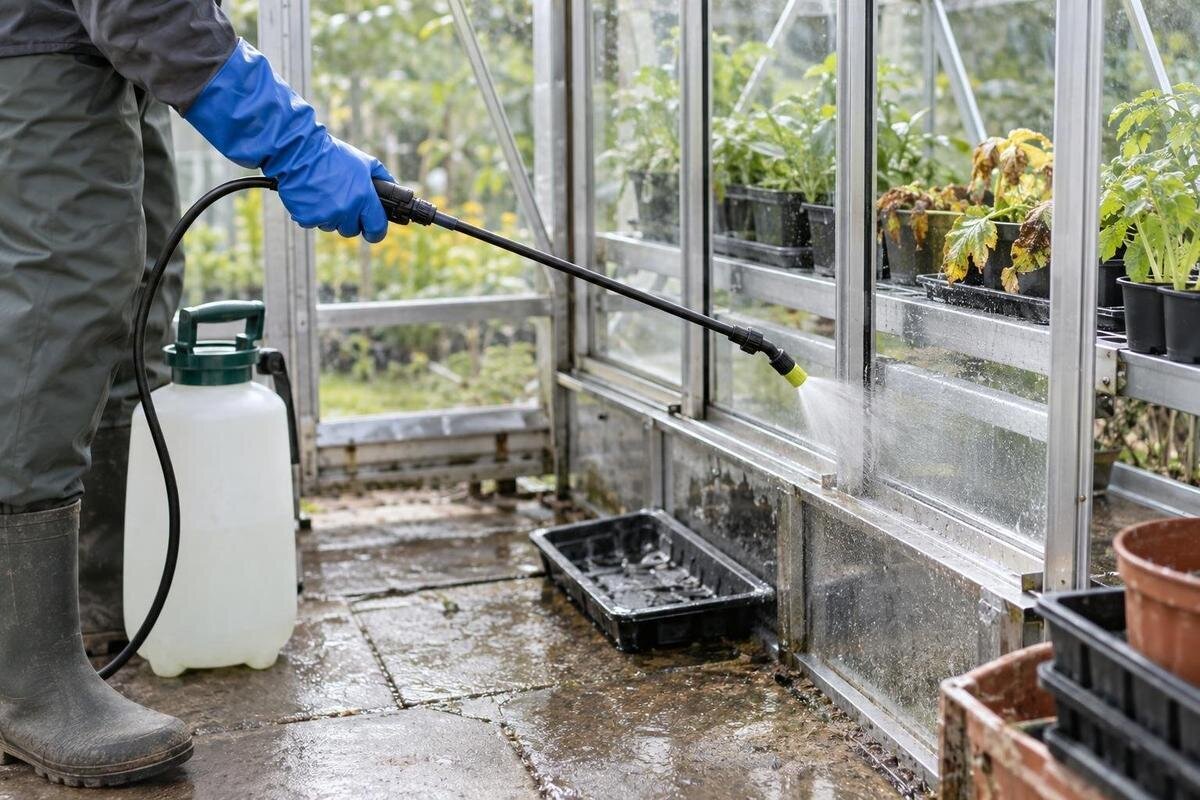
Greenhouse disease hygiene
A serious greenhouse disease outbreak needs more than a wash-down. The useful sequence is to identify the likely pathogen, contain movement, remove contaminated material, clean away organic debris, then apply only a treatment supported for that pathogen and the specific surfaces or equipment. Soil, irrigation systems, glazing and frames do not share one universal disinfection method. The guidance below explains how to plan a considered recovery and when a plant-health adviser, manufacturer or installer should be involved.

01
Identify the disease before choosing a treatment
Before choosing a disinfectant, establish what is likely to have caused the symptoms. Wilting, leaf spots, mosaic patterns and root decline can result from different pathogens, pests or non-infectious stress; appearance alone rarely identifies the cause reliably. Record which crops and varieties are affected, when symptoms appeared, where they began, recent watering or handling changes, and how quickly the problem spread. Photograph whole plants and close-up symptoms, noting whether new or older growth is affected. If a diagnostic service requests a sample, ask how to collect and package it first. Keep suspect samples and notes away from healthy plants.
For a serious, unusual or rapidly spreading problem, seek diagnosis rather than selecting a disinfectant by symptom. UK growers can consult current Royal Horticultural Society disease advice, a plant diagnostic laboratory or a qualified horticultural adviser. If a regulated or reportable organism might be involved, check relevant official plant-health guidance before transporting or destroying material. When reading guidance, check that it concerns the affected crop and distinguishes a suspected infection from a confirmed diagnosis. Keep the publication date and any laboratory findings with your notes. Viruses, fungi, bacteria and soil- or water-associated pathogens may persist in different places and require different controls. The possible reservoir matters too: plant debris, roots, water or tools may each need attention. Advice for one organism is not a universal greenhouse recipe.
Contain the affected area
While diagnosis is under way, stop ordinary movement from the affected area into healthy crops. Work in clean zones first and the suspect zone last; mark affected benches or rows and keep unnecessary traffic out. Use dedicated tools and containers where possible, and avoid brushing, shaking or carrying wet plants through clean space. Hands, footwear, carts, splashes and shared watering equipment can move contaminated soil or sap. Keep waste on a defined route, and avoid carrying wash water or drainage back across clean areas. Containment limits further spread while you plan the right treatment; it does not replace diagnosis or cleaning.
If the outbreak has exposed a circulation or separation problem, sketch the routes used to bring in plants, tend crops and remove waste. Mark doorways, narrow passages and places where a trolley or watering can must pass an affected bench. For a later replacement enquiry, the T-shaped orangery greenhouse is one catalogue format to discuss using that sketch. Request a measured plan showing entrances and usable internal space, then compare it with the routes you need. Separation may depend on how benches are arranged and work is scheduled, rather than on the outline of the building. Do not move or alter the present frame as an improvised response; follow its manual and involve an appropriate installer for structural work.
02
Remove affected plants and debris carefully
Once plant-health advice allows it, remove affected plants, fallen leaves, dead roots, weeds and loose growing media without shaking them over clean benches. Keep suspect waste covered or bagged as advised, and avoid carrying open trays through unaffected crops. Separate items that may be cleaned and reused from material that cannot be treated reliably. Do not put suspect plants or compost on a home compost heap unless pathogen-specific guidance says that process is suitable. Disposal can depend on the organism, so do not assume that moving material off site or putting it in a particular waste stream is appropriate.
Remove used ties, labels, stakes, pots and trays from the work area too; dirt left beneath them can defeat the next cleaning stage. Keep old growing media out of reusable clean stock, particularly where root or soil symptoms occurred, and ask whether it needs controlled disposal or can be treated by an advised process. Record which items came from affected beds so their origin remains clear after removal. If the cleared space prompts a separate replacement enquiry, compare the Pyramid-type greenhouse with a drawing of your proposed beds and access routes. Include space to lift and carry containers without dragging them across adjoining crops. Ask for exact internal dimensions and door details before deciding whether the arrangement is practical.
Clean before disinfecting
After plants, pots and loose debris are out, wash surfaces before applying any disinfectant. Remove soil and plant residues from staging, benches, floor edges, door handles, frame joints, pot rims and the undersides of equipment. Use a detergent and tools that the greenhouse and equipment makers permit; work methodically with clean cloths or brushes, changing them between dirty and cleaner zones. Avoid blasting debris with a pressure washer or spraying it towards other areas: droplets can spread contamination and force soil into joints. Plan where wash water will go before starting, keeping it away from clean crops and stored irrigation water. Ask the adviser about containment and disposal where disease-specific precautions apply.
Cleaning and disinfection do different jobs. Washing lifts organic matter that can shield microorganisms or interfere with a treatment; it does not prove that the pathogen has been inactivated. Rinse off detergent residue where the product instructions require it, and do not apply disinfectant over visible soil. Follow the label for surface preparation and contact time; a surface is not safe simply because it looks clean or smells of cleaner. For owners of a Limited Edition aluminium greenhouse, an enquiry about cleaning should identify the exact version and include photographs of the surfaces concerned. Ask for the applicable care manual and guidance on joints, drainage channels and removable fittings. This helps establish which areas you can clean in place and which require professional access.

03
Choose a treatment for the pathogen and surface
Choose a treatment only when current horticultural advice and its product label support the intended pathogen, surface and setting. Check which organism or group it is intended to control, whether the label covers empty greenhouse surfaces or the particular equipment, and the instructions for preparation, dilution, wet contact time, temperature limits, rinsing and re-entry. Use the stated protective equipment and ventilation measures. Keep a copy of the directions beside the work plan so nobody guesses a stronger mixture or shortens the contact time. Different surfaces may need different approaches, and some products have restrictions around crops or water.
A plant-protection product is not automatically a disinfectant for benches, and a surface cleaner is not automatically effective against a particular pathogen. Never combine products or use a method outside its instructions to compensate for uncertainty. If no treatment is supported for the organism or compatible with the material, ask the manufacturer and a horticultural adviser how to proceed. Keep these two questions separate: whether the treatment controls the pathogen, and whether the component tolerates it. That assessment may justify replacing a particular item rather than the whole structure. An owner of a Prestige greenhouse with a metallic base can use the model identity when requesting component information, adding the treatment label and the exact part concerned so the supplier can address a specific compatibility question.
Give tools and irrigation equipment their own plan
Handle portable equipment as its own hygiene zone. Scrape off soil or sap, wash reusable hand tools, scissors, scoops, dibbers, trays, pots, labels and watering cans, then use a suitable disinfecting method if the product and equipment maker support it. Follow any specified contact time on the parts that touch plants or growing media, including handles and rims where relevant. Keep treated items on a clean surface until ready for use, and do not return a clean tool to a contaminated bucket. Wooden, cracked or deeply scored objects may not become reliably clean; ask whether to retire them rather than assume a quick soak is enough.
Irrigation systems need separate instructions: tanks, filters, pumps, hoses, drippers and capillary mats can hold sediment or biofilm, and a surface disinfectant may be unsuitable for a water circuit. Do not pour a greenhouse surface product into a reservoir or pipe unless its label permits that use and the equipment maker agrees. Record the equipment model and ask which parts can be accessed, cleaned or replaced. For storage, distinguish unused supplies, treated tools and items awaiting cleaning; they should not all return to the same shelf during the recovery work. If replacement is already being considered, examine the aluminium greenhouse with built-in storage against those needs. Request the storage layout and access details, including whether tools can be retrieved without crossing the crop area.
04
Check compatibility with glazing, frames and fittings
Greenhouses combine materials that can respond differently to cleaners. Glass, polycarbonate and flexible glazing are not interchangeable; aluminium profiles, painted metal, timber, coatings, sealants and rubber gaskets also need consideration. A chemical that leaves one part visibly unchanged may dull a finish, mark a panel or affect another component. Check the greenhouse manual and the glazing or component maker's care instructions for the exact material, rather than relying on a general description of the frame. If a product has not been cleared for a particular surface, ask before use instead of applying a strong mixture across the structure.
A small, inconspicuous test can reveal an immediate cosmetic reaction, but it cannot prove pathogen control or long-term compatibility. Avoid abrasive pads, blades and unapproved solvents, and keep liquids off electrical fittings; follow equipment-maker guidance and use a qualified installer for glazing removal or structural work. For an existing Classic aluminium greenhouse, send the supplier the model details, purchase records if available, and photographs identifying the glazing, frame finish and seals in question. Ask whether different components have separate care instructions. Keep any written compatibility response with the treatment plan, especially if a replacement pane or seal differs from the original. This gives future cleaning work a reliable reference rather than leaving the next person to repeat an uncertain test.
Treat soil and porous materials separately
Growing media, in-ground soil and porous objects need a different answer from a washable bench. A surface disinfectant cannot be assumed to reach a pathogen throughout soil or compost, and timber, fabric mats, foam liners, rope and rough concrete may retain moisture or debris where a wipe cannot reach. If roots, drainage or water were implicated, ask a plant-health adviser what can be salvaged, what must be removed and how waste should be handled. Do not improvise soil treatments with chemicals, heat or fumigants; a method intended for one pathogen or professional setting may be unsuitable elsewhere.
Where a bed is in the ground, there is no universal greenhouse-wide soil disinfection routine. The appropriate response can depend on the organism, crop and site; use advice that names those factors rather than assuming a surface product or a fixed waiting period will solve it. Record the extent of affected beds and any connection through drainage or shared watering. If a larger replacement is being considered, compare the spacious greenhouse range with a measured drawing that distinguishes permanent beds, removable containers and work areas. Ask how much usable space remains once those areas and access routes are included. Extra floor area may make separation easier to organise, but the recovery plan still needs to address the identified source and route of infection.

05
Prepare a controlled restart
Do not reintroduce plants simply because benches look clean. Complete cleaning and any label-directed treatment, rinsing, drying and ventilation, and observe all stated restrictions before re-entry. Return only items that have been assessed and treated; keep clean tools apart from anything still awaiting attention. If diagnosis calls for other actions, such as continued removal of particular hosts or attention to a water source, follow that advice before the next crop enters. A fixed waiting period cannot be given for every organism, chemical or growing medium, so use the relevant instructions rather than a general rule.
Record what you did: treatment name, label directions used, date, areas and equipment cleaned, items removed and any unresolved points. Where instructions specify dilution or contact time, record what was actually used rather than simply writing 'disinfected'. Mark unfinished areas so another person does not mistake them for ready-to-use space. Note the source of incoming plants and inspect them before they join existing crops; keep them separate if the diagnosis or adviser recommends observation. Retain a simple planting plan so any returning symptoms can be related to a crop, batch or location. A restart is a new hygiene cycle, not proof that the greenhouse is sterile. Monitor new growth, and if similar symptoms return, seek a fresh diagnosis rather than repeating the same chemical by guesswork.
Decide whether parts need repair or replacement
Cleaning can reveal cracked glazing, damaged seals, deteriorated benches or surfaces that cannot be treated by a supported method. Record the greenhouse model and consult its manual before deciding whether a component is replaceable. When contacting a supplier, provide exact spare-part identifiers where available, along with clear photographs and measurements; a visually similar part may not fit. Do not cut, drill or alter profiles to create cleaning access. For glazing or structural work, ask a qualified installer to review the repair rather than attempting unsafe removal or an unsupported modification.
A disease episode alone does not mean the whole greenhouse must be replaced. First establish whether advice supports a hygiene plan for the existing structure and whether affected parts can be replaced. Compare the proposed repair with the areas that need treatment: replacing one damaged seal will not resolve an untreated bed or contaminated water supply. If a manufacturer and installer assessment supports full replacement, the Lean-to greenhouse is one model page for a separate enquiry. Include the adjoining wall and the junction with the greenhouse in that discussion, asking who supplies care guidance for each surface and how accessible they will be. Assess the proposed structure against the diagnosed problem, the site and the documented maintenance requirements, rather than treating replacement as disinfection in itself.
Frequently asked questions
Why can't I use one disinfectant for every plant disease?
Different pathogens can persist in plant debris, on tools, in roots, in growing media or in water. A product suitable for a cleaned bench may not be suitable for another surface or effective against the organism involved. Identify the likely pathogen and follow advice that covers both the target and the place it may be surviving.
Should I disinfect before washing the greenhouse?
Usually, remove debris and soil and wash first. Organic matter can shield microorganisms or interfere with a treatment. Then follow the product instructions for preparing the surface, applying the treatment and rinsing, if required. A clean-looking surface is not proof that the pathogen has been inactivated.
Can I use a household bleach solution?
Do not rely on a generic recipe. The right treatment depends on the pathogen, the product instructions and the materials being treated; an unsuitable solution can also damage greenhouse components. Use only a method supported for the intended purpose, follow its label and never mix cleaning products.
Can a surface disinfectant treat greenhouse soil?
Do not assume it can. A product for hard surfaces may not reach a pathogen throughout soil or compost, and applying it there may be inappropriate. Ask for advice specific to the suspected organism and growing medium, including what should be removed and how it should be handled.
How long should I wait before planting again?
There is no single waiting period for every pathogen or treatment. Follow the product's re-entry and drying instructions, along with any plant-health advice about the organism and growing medium. Do not use the absence of visible symptoms or a cleaner smell as proof that the greenhouse is ready.
A sound recovery plan deals with the suspected pathogen and the places it may persist, using methods that suit each material and item of equipment. Keep a record of the work, and treat any returning symptoms as a reason to seek diagnosis rather than to guess at a stronger product. The aim is a well-planned restart, not a claim that an ordinary greenhouse has been made sterile.
