
Drip Lines or Soaker Hoses for Greenhouse Beds?
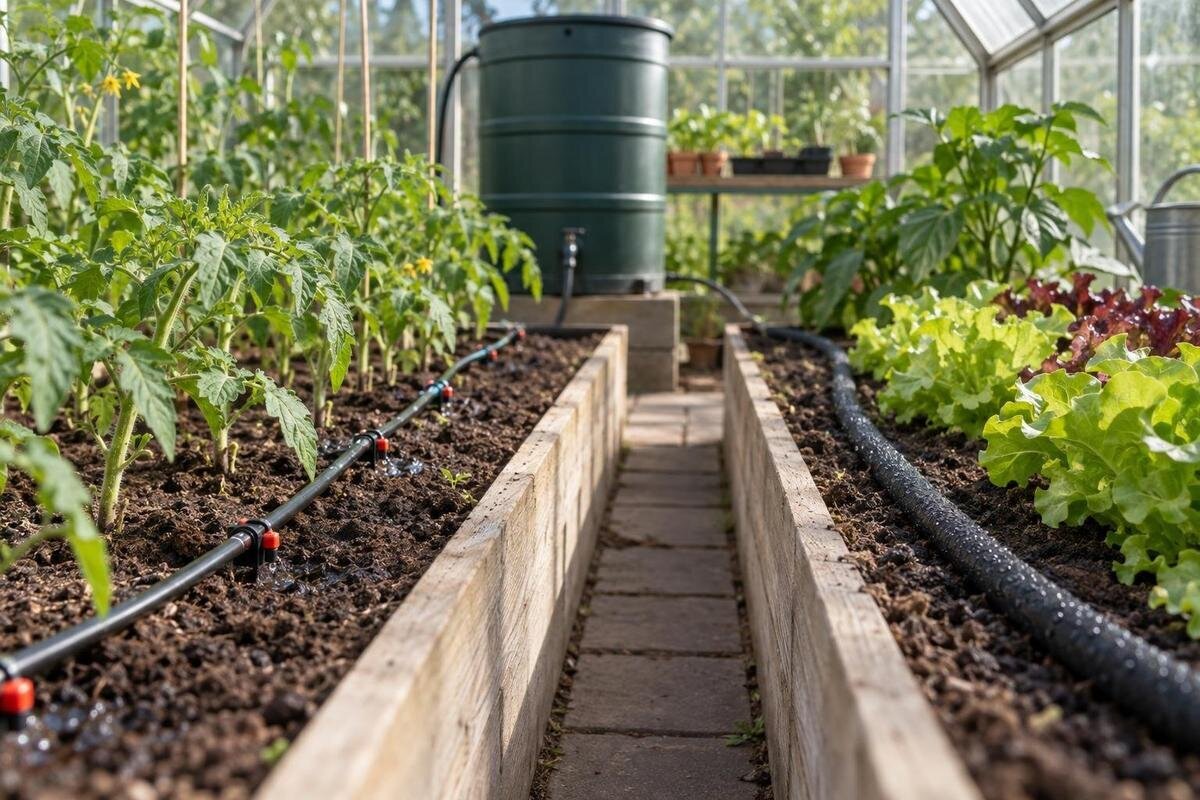
Greenhouse watering
Choosing between a drip line and a soaker hose is less about which label sounds more water-efficient and more about how your greenhouse beds are planted, how long the runs are, and how consistently water reaches the root zone. A drip line releases water through outlets at intervals; a soaker hose seeps along its length. Either can suit a bed, but neither guarantees an even result without suitable pressure, compatible filtration and a check of the actual soil wetting. This guide compares how they deliver water, what product specifications to read and how to spot a poor pattern before settling on a routine.

How drip lines and soaker hoses deliver water
Drip line can describe different products, so confirm whether you are looking at tubing with built-in emitters, plain tubing intended for separate outlets or another format. With a common built-in-emitter line, water leaves at defined points and moves into nearby soil. Outlet spacing and stated flow per outlet help show whether its pattern can match your crop row. A soaker hose seeps through openings or a porous wall along much of its length, rather than delivering water only from distinct, labelled outlets. The names alone do not tell you operating pressure, maximum run length, connector type or filtration requirements, so check the product information before comparing systems.
On the bed, a drip outlet gives you a specific delivery point to inspect; the damp area around it then spreads through the soil. A soaker hose has no separate outlet for each plant, and the width of its wetting pattern depends on the hose design, pressure, placement and soil. That along-the-line delivery can suit a continuous row, while separated planting stations may be easier to map to defined outlets. These are tendencies, not guarantees. Neither system promises even moisture just from its name: check the soil at several points beneath the surface and see whether the root areas are being reached.
Match outlet spacing to the planting row
Start with the crop row rather than the hose packaging. Note approximate plant positions and compare them with the specified emitter spacing and flow; do not assume that one outlet pattern will suit every crop. When outlets sit farther apart than plants, water has to spread through the soil to reach each root area, and that spread varies with soil texture and bed condition. When outlets are closer together, wet zones may overlap. That is not automatically a problem, but it changes the volume delivered along the row. Separate emitters can allow a different layout only if the tubing and fittings are designed for them. Check spacing and flow in the product specification, not from a photograph alone.
Allow for changes in planting, too. A regularly spaced row is simpler to map than a bed replanted with crops at different distances. For successive crops, consider whether the line can be repositioned without straining its connections and whether its outlet spacing will still suit the new row. Sketch bed lengths, plant positions, connections and accessible ends before ordering. If you are considering a Prestige greenhouse, use the dimensions of your chosen version to draw the proposed beds and paths. Measure the irrigation route, including turns and the connection to the supply, rather than choosing a line by total greenhouse floor area.
Where a soaker hose fits a greenhouse bed
A soaker hose is worth considering where plants follow a continuous row or a long, fairly consistent strip. It does not require you to align a discrete outlet with every plant, and water can seep at multiple points along its route. That does not mean the entire strip receives the same amount: delivery may depend on the hose's construction, pressure, length, bends and how it lies against the bed. Follow the maker's permitted run length and layout; do not assume that a hose can be extended or linked indefinitely. If planting points are widely spaced, the hose may also wet soil between plants without improving delivery where it matters.
Position the hose along the intended root zone, following the manufacturer's directions about placement and burial; do not cover or bury it unless the instructions allow it. Soil contact, mulch and bed preparation can change how water spreads, so assess moisture below the surface rather than judging by a darker strip on top. When planning beds for a lean-to greenhouse, include the supply connection and the route to each row on your drawing. Where rows are separated by a path, use a suitable non-seeping connection if the system permits one, rather than leaving an active length of soaker hose across the walkway. Check that turns do not kink the hose.
Pressure and run length affect distribution
Uniform watering depends partly on the pressure available while the line is running. Friction and the total flow demanded by connected outlets can reduce pressure towards the far end; changes in height can matter as well. Some drip lines use emitters designed to compensate within a stated range, while others do not, and soaker hoses vary in their response along a run. Check the exact product's operating-pressure range, maximum length and recommended regulator or other components. Do not use a generic figure from another hose as a substitute: two products called drip line may have different outlet flow and pressure limits.
Consider the whole circuit: water source, filter, any regulator, connecting pipe, branches and the number of lines operating at once. A line that performs well by itself may distribute differently when extra branches are open, because the source has to supply their combined flow. If you are comparing greenhouse sizes, including the Bloomcabin Orangery, translate the proposed bed plan into individual irrigation runs before selecting equipment. More growing space need not mean one longer line; the permitted layout depends on the watering system. Compare the planned runs with the manufacturer's pressure and flow guidance, and ask the irrigation supplier how to check the supply under normal operating conditions.

Filtration for greenhouse irrigation water
Both systems need water clean enough for their design. Drip emitters can have small passages, making suspended grit or debris a possible cause of partial or complete blockage. Soaker hoses are not automatically immune: particles or deposits may affect their pores, and one model's instructions may require a filter even if another's do not. Use the filtration type and rating specified for the chosen product, including any inlet filter supplied or required by the system. There is no single filter rating for every line. An unnecessarily restrictive filter can affect available flow or require more attention, so check that the filter suits the equipment rather than choosing one by appearance.
The water source influences what may reach the line. A tank collecting rainwater can carry leaves, sediment or organic debris unless collection and storage are kept clean; a mains supply can also contain particles from source or plumbing conditions. A screen can catch solids of a suitable size, but it will not remove dissolved substances. If the maker lists water-quality limits, follow them; do not improvise chemical cleaning or assume a filter solves every kind of deposit. During routine checks, inspect the filter before blaming the line and clean or replace it only as instructed. If blockages keep returning, identify the cause before deciding on a treatment.
Test the wetting pattern in the bed
Test the installed length, not just a short sample beside the tap. Run the system under its normal operating conditions and inspect points at the beginning, middle and far end of each bed run. With drip line, check that each outlet is delivering and compare the pattern from line to line. With a soaker hose, assess soil moisture beside the hose at several points; use a trowel or another suitable method to check below the surface and at the depth where roots are growing. Surface darkening alone can exaggerate coverage, while a dry-looking surface may conceal moisture lower down. Keep the source and number of open lines consistent if you want to compare results.
Allow enough running time for the wetting pattern to develop, following the maker's guidance rather than relying on a universal number of minutes. Look for consistently dry zones, unexpected pooling, leaks at fittings and marked differences between near and far ends. For new beds in a Classic greenhouse, carry out this test after preparing the soil and positioning the lines, before relying on them for regular watering. Make one adjustment at a time, such as changing the line position or correcting a connection, and retest so you can tell what improved the result. Record where you checked moisture and how long the system ran; this gives you a useful comparison when planting or conditions change.
Keep irrigation lines clear of paths and obstacles
A suitable watering system can still be awkward if it blocks movement through the greenhouse. Mark feeder tubing, branches and outlet runs on a sketch alongside paths, doors, staging, tools and temporary trays you move through the beds. Keep connectors accessible for inspection, and avoid placing exposed tubing where it will routinely be stepped on, snagged by a fork or crushed by pots. If a route must cross a path, check whether the product instructions allow a suitable way to protect it; do not bury or cover tubing by default. Leave room to reach shut-off points and filters without having to lift or disturb the whole line.
Include fixed storage in the sketch instead of treating it as leftover space. If you are considering a greenhouse with built-in storage, consult the plan for your chosen version and mark the storage access alongside the beds. Keep filters and removable connections out of places where stored tools or supplies would obstruct them. Measure the route around obstacles and each branch to a bed, allowing for the bends permitted by the tubing manufacturer. A walk-through with the line temporarily laid out can reveal snags and pinch points before fitting. Label branches where their destinations are not obvious, so you can isolate or inspect a row without tracing every pipe through the greenhouse.
Cleaning and maintaining each system
Build an inspection routine around changes in performance rather than waiting for a crop to show stress. Look for damaged tubing, loose joints, leaks, crushed sections and outlets that have stopped or changed flow. Drip line makes individual outlet checks easier to locate; with a soaker hose, check along the whole run for abnormal dry patches or leaks. Compare what you find with the wetting pattern recorded at setup. A change may come from a blocked filter, a kink, a connection problem, altered source pressure or a damaged line, so inspect the system methodically rather than replacing parts at random.
Flush only where the product design allows it, using the sequence and cleaning method stated by the manufacturer. Some lines have an end that can be opened; others may need a different procedure. Do not use acids, disinfectants, compressed air or high pressure unless the instructions expressly permit them. If you are equipping a Limited Edition greenhouse, keep the irrigation instructions with your greenhouse records, but follow each manufacturer's guidance for its own equipment. Store, drain or leave the lines in place according to their seasonal instructions, especially where freezing is possible. After reconnecting a stored system, inspect the joints and repeat the wetting test before resuming the previous watering routine.

Specifications to check before buying
Before comparing apparent simplicity or price, list the details that determine whether a line will work in your bed: emitter spacing or seepage design, flow information, operating pressure, maximum permitted length, connector size, filter specification and whether a regulator is required. Confirm that accessories are designed to fit the chosen system rather than assuming that tubing with similar dimensions will connect. Check what the kit includes and what must be purchased separately; do not infer this from a photograph. If product information does not state a limit you need, ask the manufacturer or supplier before committing to a layout.
Read performance and maintenance documents before checkout, not after a mismatch appears. When ordering a structure such as the T-Shaped Orangery Greenhouse, prepare a separate irrigation list based on the beds you intend to install. Include the feeder pipe, bed lines, connectors, filter and any required pressure control, then check that the proposed components can work together. The greenhouse purchase does not establish which irrigation accessories are included or compatible; verify those details in the relevant product information. Ask the irrigation supplier about any missing pressure, flow or fitting specifications, and retain the answers with the instructions so that replacement parts can be matched accurately later.
Choosing between the two for your beds
Choose drip line when its specified outlets can be matched to plant spacing, the pressure and filtration requirements are clear, and you want to trace delivery point by point. Consider a soaker hose where planting follows a continuous row and its stated pressure, run length and maintenance suit the layout. If plant spacing varies, do not expect one fixed pattern to fit every position: check how the water spreads in the soil and whether the intended root areas are reached. You can combine line types only if each component can operate as specified from the supply and you can maintain both arrangements.
For a practical comparison, draw each proposed system on the same bed plan. If you are planning a Pyramid greenhouse, use the dimensions of the version you are considering and your intended planting positions, rather than estimating irrigation needs from the exterior appearance. Compare where each option delivers water, how easily it can be moved for replanting and which parts need inspection or replacement. Where both seem suitable, a trial in a representative bed can reveal differences that specifications alone cannot settle. Base the final choice on coverage at root depth and manageable upkeep, rather than assuming that either a drip line or a soaker hose is always more efficient.
Frequently asked questions
Which waters more evenly, a drip line or a soaker hose?
Neither does so automatically. A drip line has defined outlets, while a soaker hose releases water along its route. Pressure, run length, product design, soil and placement all affect the result. Test the full length in the bed to see whether the root areas are receiving moisture consistently.
Does a soaker hose need a filter?
Check the instructions for the exact hose and any connected components. Some products specify filtration; others may have different requirements. Do not assume that a soaker hose can handle debris simply because it has no individual drip emitters, and do not choose a filter rating without checking the manufacturer's guidance.
How can I check whether water reaches the whole bed?
Run the system in its normal configuration, then check soil moisture near the start, middle and end of each run. Use a trowel or another suitable method to look below the surface, rather than judging only by how dark the topsoil appears. Compare the pattern at the depth where the roots are growing.
Can I use a drip line of any length?
No. Maximum run length depends on the product's design, operating pressure, outlet flow and layout. Follow the manufacturer's limit and test the far end under normal operating conditions. A length that works with one line may not work with another, even if both are described as drip lines.
Can I connect a drip line and a soaker hose to the same supply?
Only if the supply and components can meet the requirements of both products. Their pressure, flow and filtration needs may differ. Check the specifications for each and ask the irrigation supplier if compatibility is unclear; do not assume that similar-looking connectors or tubing mean the systems will perform as intended.
Neither method is inherently the better choice for greenhouse beds. The deciding evidence is the match between the outlet or seepage pattern and the planting, together with a tested result under the line's permitted pressure and length. Drip line gives defined points to inspect; soaker hose spreads delivery along a route. Read the maker's limits, keep the layout accessible and check moisture from one end of each run to the other. A baseline test and a simple maintenance routine make it easier to spot when the pattern changes and whether the chosen system still serves the beds.
