
Electric or Fuel-Burning Greenhouse Heating: What to Compare
Greenhouse heating guide
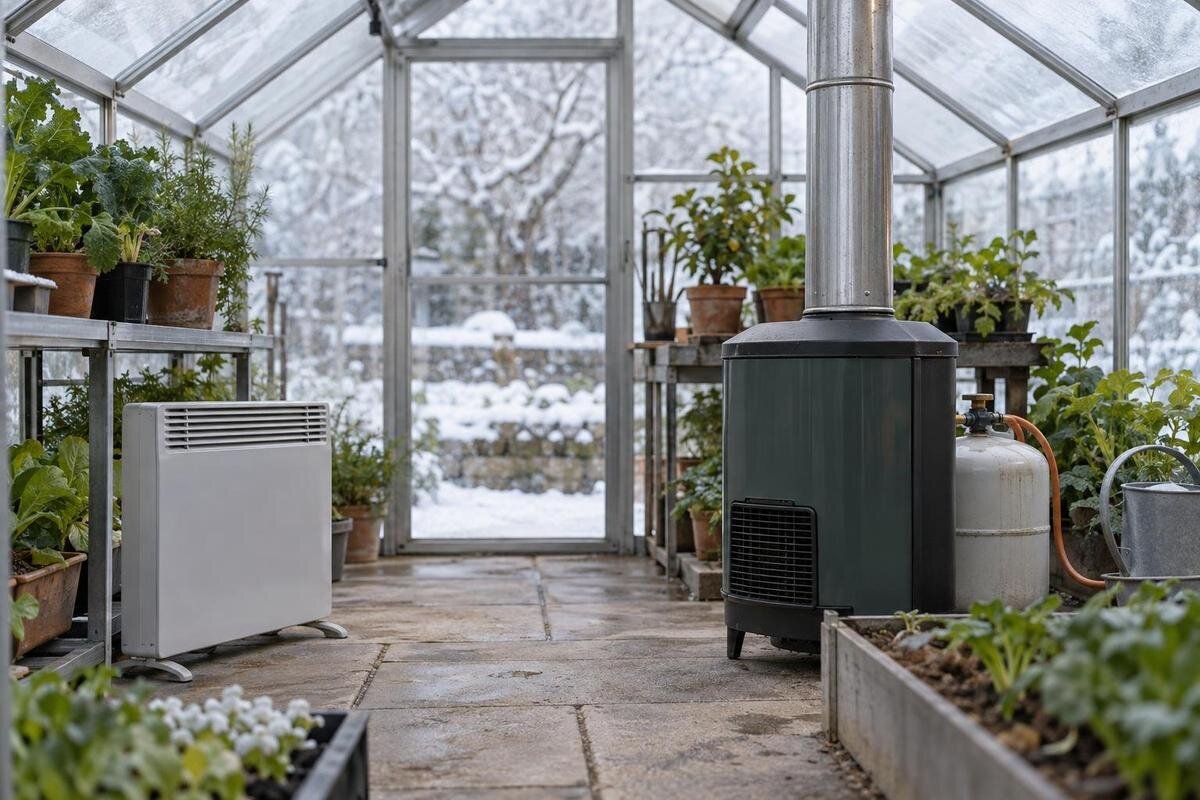
Choosing between electric and fuel-burning greenhouse heating involves more than comparing a unit price. The technologies place different demands on the growing space: an electric resistance heater has no combustion at the point of use, while a fuel-burning appliance introduces exhaust, ventilation and fuel-handling questions. Details depend on the exact model and whether combustion products are discharged inside or through a flue. Greenhouse layout, electrical capacity, moisture management and access for servicing matter too. Compare the heater’s own instructions with the actual structure; neither energy source guarantees a particular temperature, humidity level or running cost.

What to compare before buying 1
How electric and fuel-burning heaters differ
An electric resistance heater turns electricity into heat without burning fuel in the greenhouse, so it produces no combustion exhaust or combustion-generated water vapour at the point of use. That is useful when comparing what enters the growing space, but it does not make every electric unit suitable there. Watering, condensation and persistently humid air can affect the appliance and its connections. Check the specific heater’s approved operating environment, electrical demand and control method; the word electric or a general outdoor-use claim is not enough to establish suitability.
Fuel-burning is not a single appliance design. Paraffin and gas heaters differ in fuel, combustion arrangement, controls and whether exhaust is flued. Some also use electricity for ignition, fans or controls, so a fuel supply does not necessarily mean independence from mains power. Record those distinctions when comparing models: two heaters described simply as gas-powered may place different demands on the greenhouse. The Classic aluminium greenhouse range lists floor-area options from 40.6 to 302.3 sq ft. Use the dimensions of your chosen configuration when discussing a heater with its supplier; the catalogue area range establishes enclosure scale, not heat loss or appliance compatibility.
Ventilation and flue requirements
Ventilation has two purposes that should not be confused. Greenhouse air exchange helps manage plant conditions and moisture, while a fuel-burning appliance has specific requirements for combustion air and exhaust. The RHS warns that gas and paraffin heating produces combustion products that require greenhouse ventilation, with a resulting loss of warmth. The exhaust arrangement also matters: an unflued heater releases combustion products into the greenhouse, whereas a flued design routes exhaust outside. Neither arrangement removes the need to follow the appliance’s prescribed installation conditions. A roof vent or open door cannot be assumed to meet them. Check the manual for the permitted setting, ventilation requirements and clearances before deciding where an appliance can go.
Opening vents can take warmed air out, so ventilation and heat input interact. Airing affects energy use, while shutting vents to retain warmth may conflict with appliance instructions or leave moisture and exhaust in the space. Separate openings needed for the appliance from those used to manage growing conditions; neither should be treated as an optional source of draughts without checking its purpose. For a Lean-To Greenhouse, include the adjoining building in the discussion with the installer. Ask how doors, windows and other nearby openings affect the proposed arrangement. This is a question about the actual site and appliance documentation, not a benefit or restriction that can be inferred from the greenhouse’s name.
What to compare before buying 2
Combustion moisture and greenhouse humidity
Burning common fuels such as paraffin or gas produces water vapour as well as carbon dioxide. In a flueless heater, those products enter the greenhouse directly; the quantity depends on the fuel and appliance use, so there is no single moisture figure to apply to every model. Extra water vapour can contribute to condensation when it meets colder glazing or framing. Look for recurring droplets, wet surfaces and damp corners as well as recording humidity: a reading taken in the middle of the greenhouse may miss the coldest surface. Moisture can also come from watering and plant transpiration, so a wet greenhouse does not prove that the heater is the only cause.
An electric heater does not add combustion moisture, but it does not remove water already present. When air warms, relative humidity can fall even though its water-vapour content has not changed; a lower reading after switching on does not prove that moisture has left. Record temperature alongside humidity, noting watering, vent opening and heater operation, so that readings have a useful context. Compare similar times and conditions rather than attributing every change to the energy source. Ventilation exchanges indoor and outdoor air, but its effect on moisture depends on both, and it also loses heat. When considering the limited-edition aluminium greenhouse range, ask which ventilation options are documented for your chosen configuration. Floor area alone cannot show how effectively moisture can be managed during heating.
Exhaust emissions and greenhouse air
Electric resistance heating has no local combustion exhaust, but that is not the same as zero emissions across electricity generation. Fuel-burning heaters release combustion products into the air or through a flue, depending on their design. RHS greenhouse-heating guidance identifies carbon monoxide among the products of gas and paraffin heating and stresses the need for ventilation. Carbon monoxide cannot be assessed by smell, so the absence of noticeable fumes is not a safety test. This makes the documented exhaust arrangement, appliance condition and correct fuel important parts of the comparison. Choose only equipment whose documentation covers the intended enclosure, and follow its inspection and servicing instructions.
A flue changes where exhaust is discharged; it does not make combustion products disappear. Keep two questions separate: what enters the greenhouse air, and what emissions arise from supplying and using the energy. An electric resistance heater avoids on-site combustion, but a wider environmental comparison needs evidence about the electricity supply and fuel, not just the appliance label. For a T-Shaped Orangery Greenhouse, give the installer the plan of the intended configuration when discussing exhaust arrangements and service access. A product photograph cannot establish either. Any proposed flue route needs assessment against the heater instructions and the greenhouse construction; the catalogue model name is not evidence that such a route is available or approved.

What to compare before buying 3
Electrical supply, fuel storage and installation
An electric model’s label and manual should state its electrical input, supply requirements, permitted location and controls. The RHS recommends a professionally installed electrical connection for greenhouse heating. A qualified electrician can assess whether the existing circuit and protective arrangements can support the chosen appliance alongside other loads, and whether the proposed connections suit the conditions. Check the heater, thermostat or controller, plugs and cables as a system: a weather-resistant heater does not automatically make every accessory or connection suitable for a humid greenhouse. Avoid improvised wiring, and do not assume an extension arrangement is acceptable unless the manufacturer and electrician confirm it.
With fuel heating, compare the named fuel, how it is supplied, where containers or pipework may be located as specified by the manufacturer, and what inspection or servicing is needed. The proposed installation may also need a flue, maintenance access, suitable clearances and specified ventilation. For a Pyramid-type greenhouse, prepare a plan showing the intended growing layout, doorways and access routes, together with the confirmed dimensions of the chosen configuration. This gives a competent heating professional useful information for assessing the exact appliance and site. Include space occupied by pots, staging and stored equipment: an apparently empty area on a catalogue plan may not remain available during everyday use.
Thermostats and heat distribution
Controls affect how well either option follows the chosen target and how much attention it needs. Compare whether a thermostat is supplied, whether the heater can use an external sensor, how the manufacturer says to position it, and what happens after a power interruption or depleted fuel supply. A sensor close to the heater, in a sunlit patch or beside a frequently opened door can record a local condition rather than the air around the plants. Use only controls expressly compatible with the heater, and compare readings in representative growing areas rather than relying on a display beside a heat outlet.
A fan can mix warm air, but circulation is not ventilation: it does not remove water vapour or combustion products from an unflued appliance. Compare the control functions separately from the method of moving heat. A thermostat display, a separate temperature reading and a power-failure alert provide different information; establish which functions the equipment actually includes rather than assuming they come together. With a greenhouse with built-in storage, use the actual plan to define the intended heated area. Ask whether the storage section and growing space share air and whether doors between them will usually be open or closed. That operating pattern matters when assessing sensor readings and heat distribution, without establishing any thermal performance from the product name.
What to compare before buying 4
Greenhouse construction and heat loss
The enclosure changes how much heat each system must supply and how often it runs. Compare the actual footprint and internal height, glazing or cladding specification, doors and vents, gaps, exposure and any wall shared with another building. These details affect heat loss and air exchange; a heater’s rated output cannot be interpreted without them. This is not a calculation of required power: exact sizing is a separate task, and simplified estimates can miss wind, opening habits and construction details. For an electric-versus-fuel comparison, the practical point is that neither source removes the greenhouse’s underlying heat loss.
Compare both heating options against the same enclosure specification. Otherwise, an apparent difference between fuels may actually reflect different assumptions about glazing, gaps or ventilation. If insulation or draught-reduction measures are proposed, ask which are compatible with the greenhouse and whether they change any appliance-related requirements. Keep required ventilation distinct from unintended air leakage. For the Prestige Greenhouse with Metallic Base, request the details of the configuration you intend to buy, including its glazing and documented ventilation options. A base description is not a heat-loss figure. Record which enclosure details are confirmed and which remain assumptions, so that a heater supplier can explain the basis of a recommendation rather than treating the greenhouse’s material or appearance as a performance rating.
Costs, fuel availability and maintenance
Running cost depends on the heater’s input and efficiency, operating time, the greenhouse’s heat demand and the price of each energy source. Compare documented consumption at a comparable useful heat output, using your own electricity tariff or current fuel price. Electricity may be priced per kilowatt-hour while fuel is sold by volume or mass; those purchase units are not directly interchangeable. Ask for a comparison that explains how the fuel’s energy content and the appliance’s documented performance have been accounted for. Distinguish energy input from heat output on each specification sheet, and check whether stated consumption represents maximum operation or another test condition. A fuel burner may cost more or less in a particular setup, so there is no universal winner. Keep detailed running-cost calculations separate from this equipment comparison.
Convenience and continuity matter alongside energy prices. Consider fuel availability, replenishment, storage under the appliance instructions, servicing and relevant delivery or maintenance costs. For electrically controlled fuel models, include their electrical needs too. Think about what happens during your usual absences: who can notice a stopped heater, whether the controls report a fault, and how readily supplies or repairs can be arranged. Do not assume an automatic restart or remote warning unless it is documented. The Spacious Greenhouse range lists floor areas from 506 to 753 sq ft. That identifies its catalogue scale, not its running cost or the frequency of refuelling. Compare the operating demands of the shortlisted heaters for the exact enclosure rather than estimating them from floor area alone.

What to compare before buying 5
Documents to check for the exact heater
Before choosing, collect the technical sheet and full operating manual for the exact heater, not just a retailer’s summary. Confirm its fuel or electrical input, rated heat output, control requirements, intended place of use, operating environment, ventilation, exhaust or flue arrangements, clearances and maintenance. For an electric unit, check the documented suitability of the appliance and its controls for damp conditions. For a fuel unit, identify whether it is flued or flueless and where combustion products go. If a specification is missing, ask the manufacturer or seller for it; do not fill gaps with assumptions based on another model.
Give a qualified electrician or heating professional the greenhouse drawings and the exact appliance documents, then ask for a site-specific assessment. Separate an explicit approval for the intended environment from a broad description such as outdoor use. Where a seller’s summary and the manual appear inconsistent, ask the manufacturer to clarify the point in writing rather than choosing the more convenient interpretation. Keep a short record of unresolved questions, who is answering them and which model the answer covers. This makes competing quotations easier to compare and helps prevent advice about one heater being applied to another. Resolve any dependence on unverified openings, improvised connections or an unapproved place of use before buying.
Choosing between the options for your greenhouse
Electric heating may be simpler to assess when you have an appropriately rated supply, a heater explicitly suitable for the greenhouse environment and a way to manage its controls without combustion exhaust in the growing space. It still brings electrical installation, moisture exposure, circuit capacity and running-cost questions. Fuel-burning heating may be considered where the exact appliance is approved for that setting and its fuel, air supply, exhaust, clearances and servicing can all be accommodated. A flued design and a flueless design must not be treated as interchangeable.
Rule out any option whose instructions cannot be followed in the actual greenhouse; only then compare supply, maintenance and everyday operation. If both meet the documented installation conditions, weigh them using evidence about the appliance and enclosure rather than broad claims that electric is always cleaner or fuel is always cheaper. Keep humidity and ventilation in the comparison throughout: an electric heater avoids combustion moisture at the point of use, while a fuel-burning model may add it, but neither removes moisture produced by plants or watering.
Frequently asked questions
Does an electric greenhouse heater dry the air?
It does not remove water from the greenhouse or add moisture through combustion. As air warms, its relative humidity can fall even if the amount of water vapour stays the same. Watering, damp compost and plant transpiration still contribute moisture.
Can I use a flueless gas or paraffin heater in a greenhouse?
Only consider a specific model if its manufacturer approves it for that setting and you can meet its ventilation and operating requirements. A flueless heater releases combustion products, including water vapour, into the greenhouse. An outdoor-use label alone is not proof of suitability.
Does a flue mean no ventilation is needed?
No. A flue routes exhaust as designed, but the appliance may still have requirements for combustion air and clearances. Greenhouse air exchange also matters for managing moisture and plant conditions. Follow the exact heater instructions rather than assuming a vent or open door is sufficient.
Is an outdoor-rated electric heater automatically suitable for a greenhouse?
Not necessarily. Verify that the heater, controls and electrical connections are suitable for the greenhouse’s damp conditions and intended use. Ask a qualified electrician to assess the supply and installation; do not assume that an outdoor-use description covers every part of the system.
Which type costs less to run?
Neither type is always cheaper. Compare documented energy input and efficiency with your current electricity tariff or fuel price, likely operating time and the greenhouse’s heat loss. Include relevant servicing and fuel-handling costs, and do not treat a maximum output rating as a typical-use cost.
The decisive comparison is the complete installation, not the fuel label. An electric heater keeps combustion products out of the greenhouse but must be suitable for damp conditions and supported by the electrical installation. A fuel-burning model brings exhaust, air supply, combustion moisture and fuel handling into the decision. Once the manufacturer’s documentation and site-specific professional advice show that an option can be used as intended, compare its everyday operation and energy supply. That grounds the choice in the greenhouse you actually have.
