
Frost Protection or a Warm Greenhouse: Set Your Winter Target
Greenhouse heating and winter energy
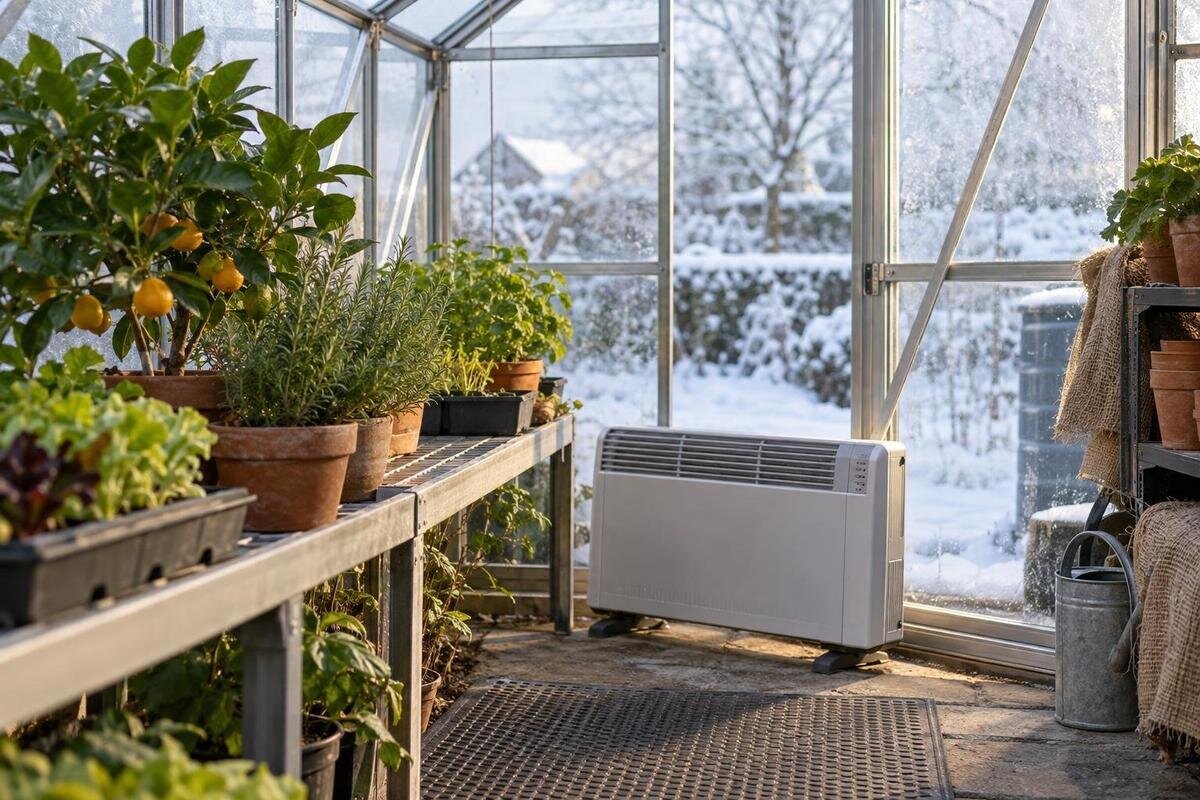
Frost protection and a warm greenhouse are two different winter targets. A heater set only to keep chosen plants above their survival minimum is not automatically suitable for active growth; a growth target needs plant-specific day and night conditions and can use substantially more energy. Neither target has one universal thermostat setting. Plant requirements, the greenhouse envelope, outdoor cold, sensor position and equipment control all affect the result. Decide what must happen to the plants first, then check whether the greenhouse and documented heater performance can support it. This guide explains the practical difference without promising a temperature or running cost.
01
What frost protection can and cannot do
Frost protection is a survival brief: keep the plants you have chosen from dropping below a tolerable minimum during the coldest part of winter. It does not promise that they will grow, flower or remain undamaged. A dormant plant may tolerate cooler conditions than it could while making soft new growth; a tender plant beside it may need more protection. Check guidance for the exact species and, where relevant, cultivar. Confirm whether a figure describes a brief minimum, an acceptable winter range or a preferred growing temperature. These are different instructions, not interchangeable versions of ‘keep it warm’. If the guidance is unclear, seek knowledgeable horticultural advice before fixing a target.
Even a greenhouse that avoids frost at one thermometer can have colder points near pots, glazing, doors and the edges of the growing space. Container roots have different exposure from plants rooted in a bed, and a prolonged cold spell is not the same test as one brief dip. A sensor records conditions where it sits, not the temperature of every leaf, root ball or potting medium. For a survival-only plan, identify the least tolerant plants and the locations where they are likely to face the lowest readings. Treat ‘frost-free’ as a goal that still needs monitoring, not a guarantee supplied by the greenhouse structure.
Conditions for active winter growth
A warm winter greenhouse has another purpose: maintaining conditions that allow named plants to continue active growth, rather than merely remain alive. Use growing guidance for the crop or plant, including suitable night-time and daytime conditions where these are given. A thermostat setting often describes only the lower limit it will try to maintain; it does not describe every daytime temperature or guarantee uniform conditions. Define what growth means in practice, such as continued foliage growth, winter harvesting or propagation. These aims may involve different plants and timings. ‘Warm’ is not a technical setpoint until you say which plants and which stage of growth it is meant to support.
Heat is only one part of that plan. Winter light, ventilation, watering and a plant’s seasonal cycle all affect whether added warmth produces useful growth. If light is insufficient for the plants, raising the temperature may increase heating demand without delivering the result you expect. Some plants may also need a resting period rather than active cultivation. Confirm that the species should be grown through winter before choosing a warmer target. If you have no defined crop or growth objective, a high setpoint can turn a vague wish for a warm greenhouse into avoidable running time.
02
Turn plant requirements into a greenhouse setpoint
Make a short record for each group you intend to keep: its minimum acceptable winter temperature, its active-growth range if relevant, whether the guidance refers to day or night, and how long a brief dip may be tolerated. Note whether a plant is dormant, newly moved or producing tender growth. Record where the information came from, as advice can differ in what it means by a minimum. If it gives a range rather than a clear survival limit, do not assume the bottom of a growth range is safe for overwintering. Resolving that distinction first avoids false precision when you compare heater controls.
Then define the scope: every plant in the greenhouse, a priority group, or a small collection of especially vulnerable pots. This affects the area that needs protection and where you should monitor conditions. The listed lean-to greenhouse range runs from 40 to 154 ft². Map your collection onto the dimensions of the selected version, allowing for mature foliage, pots, access and the places where plants will actually sit. A collection that fits on paper may still be awkward to inspect or move when crowded together. State whether your target applies throughout the greenhouse or to a defined group, and identify any plants that will need a different overwintering location.
Greenhouse size and layout change the heating task
Heat demand depends on the difference between the indoor target and outdoor conditions, as well as on how readily the chosen structure loses heat. Relevant details include the area and height to be heated, the extent and type of glazing, gaps around openings, exposure and how doors or vents are used. Footprint alone is not enough to predict heat loss: structures with similar floor areas can have different enclosing surfaces and leakage. Daytime warmth does not establish what the greenhouse can maintain overnight. For a realistic comparison, base assumptions on the exact candidate and a suitably cold local condition, not on a mild afternoon or a typical monthly average.
Check the particular model’s documented construction, glazing and any compatible insulation options. The listed limited-edition greenhouse range spans 40.6 to 302 ft², so choose the configuration before requesting a heat-loss assessment. Provide its dimensions, site exposure and intended winter target, and ask which assumptions the assessment uses for glazing and air leakage. This makes comparisons between proposed heating arrangements more meaningful. Under otherwise similar conditions, a lower survival target generally means a smaller temperature difference to maintain than a warmer growth target, but the saving cannot be quantified without an estimate. Keep the assumptions with the result so that a later change in size, glazing or target can be assessed.
03
Match the control strategy to the winter target
For frost protection, the controller needs to respond before the vulnerable plants pass their chosen minimum, allowing for temperature variation and the accuracy of the sensor. For active growth, it needs to support a higher, plant-specific range through cold periods and changing conditions. Check documented heater output and control information against the target and the assumptions for the greenhouse. A thermostat setting alone cannot prove that an appliance has enough capacity. Heater sizing is a separate calculation: the setpoint defines what the equipment must achieve, while the structure and weather determine how hard it has to work.
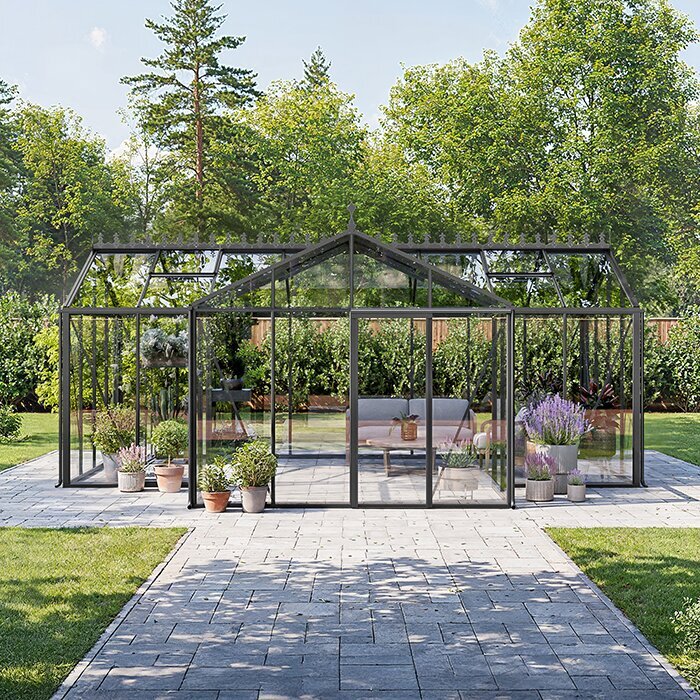
Read the heater instructions for thermostat limits, sensor requirements and control behaviour. Check whether the control has an adjustable temperature range and how far conditions may vary around the selected setting before the heater responds. A sensor affected by direct heat, sunshine or shelter may not represent conditions at vulnerable plants. When considering a T-shaped orangery greenhouse, mark the proposed plant positions and monitoring points on the selected floor plan. This helps you judge whether the control reading will represent the area you intend to protect. Follow manufacturer guidance and seek a qualified professional where an assessment is needed. Retaining heat must not override ventilation requirements or safe operation.
Insulation and ventilation affect the balance
Suitable insulation can reduce heat loss and the work required to hold either target, but there is no universal percentage saving. Results depend on the material, its coverage and fit, and the greenhouse itself. An added layer can also change how much light reaches plants and how condensation or access is managed. Check documented performance and compatibility for the specific glazing and frame, and consider how the altered light conditions fit the growing plan. Include the insulation you will actually use in any heating estimate. A description such as ‘winter-ready’ is not enough to set a temperature or calculate running costs.
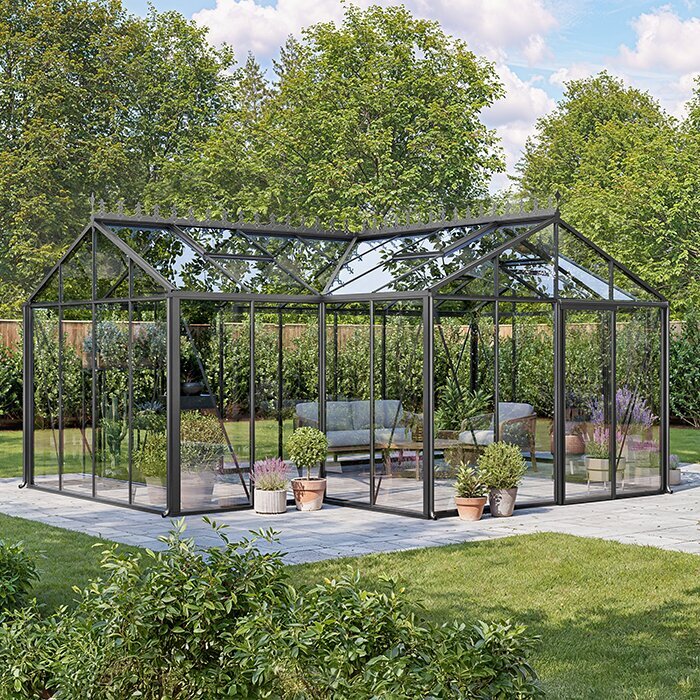
Ventilation remains part of greenhouse management when heating is in use. Openings used to manage excess daytime warmth or moisture also affect heating demand, so include that practice in your estimate. For a pyramid-type greenhouse, ask for details of compatible insulation and its fixing method before planning a retrofit. Check whether the proposed covering leaves vents, door operation and maintenance access usable; these practical details matter as much as the area covered. Plan how you will inspect plants and manage condensation once the covering is fitted. The aim is to retain useful heat while preserving the light, access and ventilation needed for your chosen winter use.
04
Estimate running costs from actual use
Estimate energy use from the appliance’s documented consumption and the hours it is expected to run, then apply the relevant unit rate on your tariff. For a thermostatically controlled electric heater, its documented electrical input multiplied by actual full-power running hours gives an estimate in kilowatt-hours; multiply that by the applicable price per kilowatt-hour to estimate energy cost. If the unit cycles or changes output, use expected on-time or measured consumption rather than assuming continuous full-power operation. For other equipment, use its documented fuel consumption and the relevant fuel price. State the assumptions: heat output alone is not a bill.
Compare frost-protection and active-growth scenarios using the same weather, greenhouse and tariff assumptions, changing the target rather than several variables at once. Include likely cold-night duration, ventilation practice, insulation and door use, and label the result as an estimate rather than a promised cost. If considering an aluminium greenhouse with built-in storage, confirm from the specific documentation whether that space shares heated air before counting it as part of the heated area. The product name alone does not show whether it is a separate or insulated zone. Tariff rates and actual use can make similar winter plans cost very different amounts.
Monitor temperatures where the plants are kept
Monitoring should answer the question you need to manage. For survival, watch the lowest readings near plants with the least tolerance; for active growth, record whether the relevant area stays within the required range, including overnight. Place a thermometer or probe at representative plant level, away from direct sunshine or the heater’s immediate output, and follow the appliance maker’s instructions for any control sensor. A minimum-and-maximum record or data log can reveal an overnight fall that a daytime visit misses. If the heater display is your only feedback, an independent thermometer gives you a useful comparison.
Check instrument accuracy and compare readings at more than one point during a cold spell before relying on one sensor for a whole greenhouse. The Prestige greenhouse range is listed from 40.6 to 302 ft²; choose monitoring positions to suit the footprint and planting arrangement of your selected version. Keep a simple record linking each reading to its location, the outdoor conditions and whether the heater was operating. That will help distinguish a recurring cold spot from an isolated reading. Set any warning threshold early enough to act before the plant-specific limit is crossed, allowing for sensor accuracy and temperature variation. Decide what you will do if an alarm sounds, power fails or a heater stops.
05
Mixed plant collections may need separate temperature zones
A mixed collection makes one setpoint difficult. If most plants need only frost protection but a few need warmer growing conditions, a high whole-greenhouse target can heat the full space for the sake of a small group. A low target may instead leave that group short of the warmth it needs. Group plants by their actual winter requirements, then consider whether a separate protected space or a different overwintering location is more practical. A warmer greenhouse is not automatically safer: warmth may be unsuitable for dormant plants, and one reading cannot describe every plant’s local conditions.
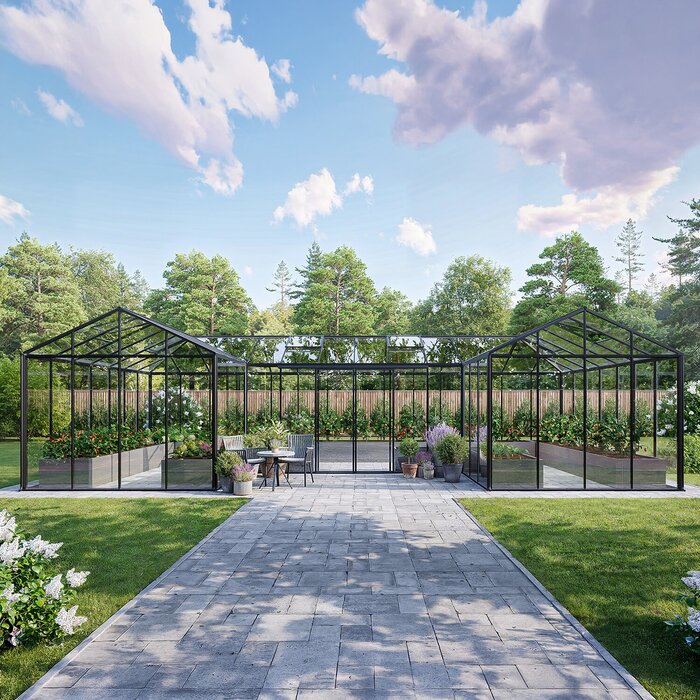
A larger floor area can provide room to group plants, but it does not itself create separate climates. The spacious greenhouse range is listed at 506 to 753 ft². Before choosing additional space for a mixed collection, decide whether the groups need genuinely different temperatures or simply separate positions for access and care. Moving pots to opposite ends is not a substitute for independently controlled conditions. If a proposed design includes separated areas, verify their construction and how air and heat are controlled. Otherwise, group plants whose requirements suit the conditions you can maintain. A smaller enclosure may offer another option, but assess its documented suitability, available light, ventilation and access before relying on it for vulnerable plants.
Put the winter target into a buying specification
Turn the decision into a short purchase brief. Name the plants, state whether the goal is survival or active growth, record the required minimum or range, and say where that condition must be met. Add the cold-weather assumptions for your site, the greenhouse’s dimensions and documented envelope, the monitoring point, and whether all or only part of the space is included. Only then compare heater specifications and controls against the task. If the plant target or heat-loss information is unclear, do not treat advertised heater output as a guarantee; ask the manufacturer or a qualified professional what evidence is needed for that configuration.
For the Classic aluminium greenhouse range, ask for information on the exact size and configuration you intend to order. Keep the selected dimensions, glazing details and any documented ventilation or insulation options together with the heating proposal. Check that both sets of information describe the same version: a later change to the greenhouse should trigger a review of the heating assumptions. Distinguish what is included in the purchase from equipment or coverings you would need to obtain separately, without assuming that an option is available. Your final comparison should show how each proposed arrangement addresses the plant target, how you will monitor the result and which uncertainties remain in the energy estimate.
Frequently asked questions
Can an unheated greenhouse keep plants frost-free?
Not reliably. Conditions depend on the greenhouse, its location and the length of a cold spell. Measure temperatures where vulnerable plants are kept rather than assuming the structure guarantees frost protection.
Is a frost-protection setting enough for winter growth?
Not necessarily. A setting intended to keep plants alive may be below the range they need for active growth. Check the requirements for the plants and the growth you want to maintain.
What temperature should I set for winter?
There is no universal setting. Use plant-specific guidance to identify either the minimum for survival or the range for active growth, then allow for sensor accuracy and differences around the greenhouse.
Will one thermostat protect every plant in the greenhouse?
One reading cannot confirm conditions everywhere. Check temperatures near the plants with the least tolerance, and compare readings in more than one location during cold weather.
Does a warmer target always cost more to run?
All else being equal, holding a higher indoor temperature in the same weather generally requires more heat. The actual cost depends on heat loss, operating time, heater consumption and your energy tariff.
Choose the warmer route only when continuing growth is a genuine aim for identified plants, and set its range from suitable plant guidance. If the requirement is simply to protect dormant or vulnerable plants, a survival-based minimum is a different, narrower brief. In either case, a useful winter target is one you can measure where the plants are kept, relate to the greenhouse and heater documentation, and cost from stated assumptions—not a vague promise that the space will stay warm.
