
Glass Greenhouse or Polytunnel: Which Suits Your Garden?
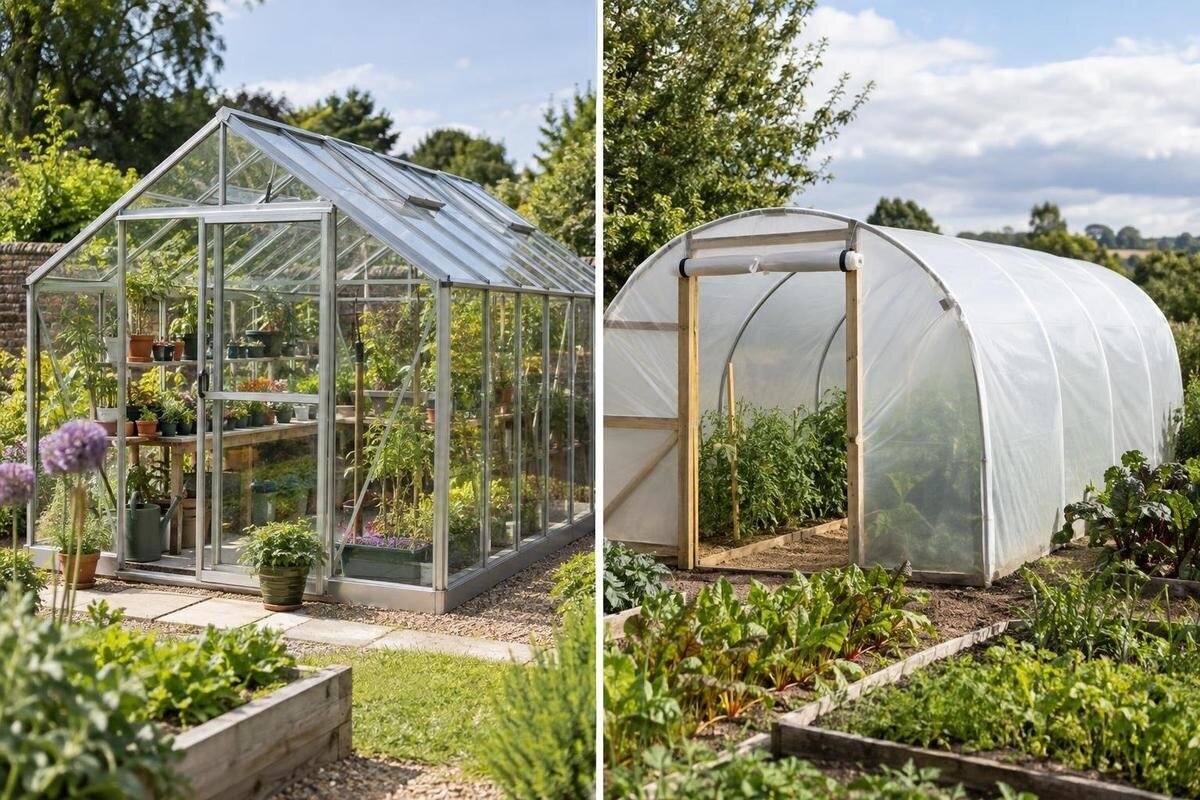
Greenhouse comparison guide
A glass greenhouse and a polytunnel can both provide protected growing space, but their different covers bring different design and maintenance questions. Rigid panes and a flexible sheet do not, on their own, decide which structure will be warmer, last longer or cost less. Those outcomes depend on the chosen specification, your site and how you use the enclosure. A useful comparison starts with the growing routine you want, then checks how each option fits the plot, handles ventilation and can be maintained or repaired over time.

How glass and polytunnel covers differ
A glass greenhouse uses rigid panes set into a supporting frame; a polytunnel uses a flexible cover stretched over a frame. One presents a series of fixed panels, while the other relies on a sheet whose fit and condition matter. That difference affects what you inspect, how you deal with damage and what you ask about when the covering needs attention. It does not mean every glass greenhouse is immovable or every polytunnel is temporary. Frame design, fixings, cover specification and assembly vary, so the category name is a useful first distinction rather than a complete description of the product.
The covering also affects how the enclosure looks from inside and outside. Clear glass generally gives a view through individual panes, interrupted by the frame; the view through a polytunnel depends on the film's clarity and surface condition. Neither description tells you how much useful light reaches the plants, so compare the actual covering specifications rather than judging from photographs. Appearance may matter if the structure is prominent: a panelled greenhouse can look like a defined garden building, while a tunnel often has a simpler, more utilitarian outline. Consider whether you want to see the planting from nearby paths or prefer a less transparent enclosure, alongside your practical growing needs.
How long should the structure stay in place?
Begin with the footprint you expect to keep and how certain you are about the plan. A greenhouse may become a fixed part of a garden layout, but its materials do not prove that it can be moved; equally, a flexible cover does not mean a polytunnel frame is temporary or easy to dismantle. The base, fixings and assembly method are specific to the model. If relocation or removal matters, ask whether that exact design is intended to be taken down and rebuilt, which parts could be reused and whether the work needs a qualified installer. Do not base the decision on the words glass or tunnel alone.
Consider what keeping the structure in place will mean for the ground beneath it. Permanent beds, paved paths and movable staging create different levels of commitment, regardless of the covering. A propagation space might later need room for tall plants, while a layout of planted rows may be awkward to convert into a potting area. Sketch that possible change before choosing the footprint. If you expect to grow in the ground, plan access for adding compost and clearing crops; if you expect to use containers, consider where they will go when the enclosure needs cleaning. Long-term usefulness depends as much on these arrangements as on whether the cover is glass or film.
Climate control depends on the whole design
Separate summer heat management from protection during colder weather. Both enclosures can warm up in sunshine, but neither covering alone guarantees frost-free conditions overnight. For early sowing or overwintering tender plants, decide what protection your crops require and whether the chosen structure can support it. In summer, the practical question is how readily warm air can escape and whether shading is needed. These are different demands, so a structure that works well for summer tomatoes may not meet your winter plans without additional equipment. Compare the whole design and your likely daily routine, including how conditions will be managed when you are away.
Check the position and operation of vents and doors, and whether you can reach them easily during routine work. Ask what is included in the selected version and which options, if any, can be added; do not assume that different sizes in one range have identical openings. The Classic greenhouse range is listed from 40.6 to 302.3 ft², so compare ventilation details for the footprint you intend to buy rather than treating a model name or size span as a climate specification. Make the equivalent check for a polytunnel. If you plan to use powered heating or fans, confirm compatibility with the exact structure and have electrical work assessed by a qualified professional.
Check the garden site and access
Visit the proposed site at the times that matter for your crops and note when buildings, fences or trees cast shade. Seasonal changes in nearby planting can alter the light reaching the enclosure, while an exposed position may make fixing and access more important. Check whether you can bring water and tools to the entrance without crossing a route you need to keep clear. Consider where rainwater runs and whether the ground is suitable for the chosen model. Those observations help you compare both structures without assuming that a tunnel or greenhouse needs a particular compass direction.
Measure the actual footprint, then allow space for opening the door, walking around the outside and carrying materials in. A nominal area is not a plan: shape and entrance position affect how a structure sits beside paths, walls and planting. The Lean-To Greenhouse listing gives a 40–154 ft² range; compare the dimensions of a selected version with your measured site, because the range alone cannot show door clearance or room to work. Do the same for a polytunnel. On exposed sites, or where the ground and fixing method are uncertain, ask a qualified installer to review the exact structure rather than guessing from its cover.

Measure usable growing space
Separate the structure's footprint from the area you can actually cultivate. Allow for the route between the entrance and plants, the reach needed to tend beds, and any bench, staging or trays you expect to use. Include the full height of mature plants and the space needed to reach them, not just the area occupied by seedlings at purchase. Decide whether you want open soil, containers or both, as each changes the layout. If you will move watering cans, compost or harvests through the enclosure, test that route on a sketch. An aisle that looks generous on paper can become awkward once doors, containers and foliage are in place.
Shape changes how that working area is arranged. For the T-Shaped Orangery Greenhouse, use the exact plan to see where paths and planting zones would sit, rather than assuming every corner adds useful bed space. A long growing run in a polytunnel may suit repeated rows, but curved sides can affect where taller crops or benches fit; check the actual profile. Sketch benches, beds, paths and doors for each option at the same scale. Include room to turn with a tray or watering can and to reach the back of a bench. That comparison shows whether the structure provides useful working room, not only an attractive headline area.
Compare everyday maintenance
Every enclosure needs routine care, but the points to watch differ. With glass, include checks for cracked panes, dirt and damaged fittings; with a polytunnel, check the cover for tears or signs of rubbing against the frame. Inspect the frame and openings in either case, and remove leaves or debris as the maker recommends. Follow care instructions for the actual glazing or cover: a cleaning method suitable for one surface may not suit another. Neither type should be bought on the assumption that it needs no attention. The work depends on the design, its setting and how often you use the space.
Think about where routine supplies will go and how to stop them blocking the route through the structure. If integrated storage is part of your plan, the greenhouse with built-in storage listing identifies that feature and gives a 59.4–302 ft² range. The name does not show how storage is arranged in each version, so check the exact drawing and decide whether it reduces uninterrupted growing or bench space. Consider cleaning access as well as storage: a structure tucked behind dense planting, or filled so that vents and doorways are hard to reach, will be less convenient to inspect and look after.
Plan for cover and panel replacement
Replacement is not identical for the two cover types. A polytunnel sheet must suit the frame's dimensions and the intended fixing system; a glass greenhouse uses rigid glazing panels, so a replacement needs to match the opening and the way the panel is retained. The damage, repair method and scope of replacement differ between models. Do not assume that an off-the-shelf sheet or pane will fit because its advertised size looks close. Ask the manufacturer or supplier which measurements and product references you will need before ordering.
Ask about the practical replacement process as well as the part itself. Can a damaged panel be replaced individually, and does changing a tunnel cover require clearing the beds or removing supports? Who supplies the correct item, and who is expected to fit it? When enquiring about the Limited Edition greenhouse, retain the selected size, configuration and component references with the supplier's replacement guidance. Keep equivalent records for a polytunnel's film and fixing system. Consider how the work could interrupt growing and whether there is room to handle replacement materials safely. These questions help you plan for repairs without making an unsupported prediction about service life.
Compare light transmission and shading
The useful comparison is between the specified glass and film, not simply between two material names. Coverings can differ in clarity, light diffusion and surface treatments, so ask what is supplied with each proposal and what information is available about light transmission. Diffused light and a clear view are not the same thing: a covering may scatter light without giving the same visibility as clear glazing. Think about the crops beneath it, including seedlings on staging and taller plants that could shade lower planting. Frame members, shelves and the plants themselves also influence where light reaches, so assess the complete layout rather than the covering in isolation.
For the Prestige Greenhouse with Metallic Base, ask which glazing is included in the selected configuration and how any proposed shading would fit. Make the equivalent enquiry about the film and shading arrangements for a polytunnel. Establish whether shade can be adjusted or removed as the season changes, and whether it would obstruct vents, doors or access for cleaning. Do not assume that a visibly darker covering offers the right balance for your crops. Compare the supplied information with the light available on your plot, especially if nearby trees or buildings already reduce it. This helps avoid choosing additional shade that solves a summer problem but unnecessarily restricts light at other times.

Calculate the full cost of ownership
Look beyond the initial structure when comparing costs. The full picture may include preparing the site, the base or fixing requirements, assembly, any additions needed for your intended routine, regular care and future replacement covers or panes. The time you can give to cleaning and checks also matters to your decision, even though it is not shown in a product price. There is no universal rule that one cover type costs less to own. The specification, size, installation and replacement arrangements all affect the comparison, so avoid deciding on a material label alone.
Request itemised quotations so that included fittings, installation and optional equipment are visible. If the Pyramid Greenhouse is on your shortlist, work out how much planting and bench space its selected layout provides before comparing its cost with a tunnel. Dividing the purchase price by the advertised area alone can conceal differences in useful space. Record replacement-cover or pane prices separately from the initial quotation, and do not multiply them by an assumed replacement frequency unless the supplier provides a sound basis for doing so. Where a cost is unknown, identify it as an unanswered question rather than treating it as zero. This gives you a more honest comparison of the two proposals.
Check the exact specification before choosing
Make a like-for-like list for the selected greenhouse and polytunnel: overall dimensions, usable space, cover specification, frame, openings, access, base or fixing requirements and the route for replacing damaged parts. Check what is included and what would need to be added for your planned use. For a greenhouse, confirm the details of the actual glazing and vents; for a polytunnel, check the cover and how it attaches to its frame. Product names and broad category descriptions do not answer these questions. Use the supplier's information for the specific configuration, and seek qualified help where the site or installation needs professional assessment.
The Spacious Greenhouse listing gives a 506–753 ft² range, making the amount of space you actually need an important final question. A larger enclosure can accommodate more growing activity, but it also leaves you with more planting, watering and cleaning to organise. Draw up a realistic crop plan rather than choosing capacity solely for possible future use. Compare it with a polytunnel proposal that meets the same needs, then identify which compromises you would accept: appearance, layout, cover care or the work involved in replacement. The strongest choice is a complete proposal that suits both your garden and the amount of growing you can sustain.
Frequently asked questions
Does a glass greenhouse stay warmer than a polytunnel?
Not simply because of the cover. Conditions depend on the whole design, including the size and position of openings, the structure's size, shade and its surroundings. Compare the specifications of the models you are considering rather than treating glass or film as a promise of a particular temperature.
Is a polytunnel only a temporary structure?
No. A flexible cover does not, by itself, make a polytunnel temporary or easy to move. The frame, fixing method and assembly determine what is involved in taking it down or relocating it. Ask about the intended installation and future replacement parts for the exact model.
Which is easier to maintain?
There is no universal answer. A glass greenhouse needs checks for its panes and fittings; a polytunnel needs checks for its cover and frame. Both need cleaning and inspection, and the work depends on the model, its setting and how often you use it. Follow the maker's care guidance.
Which option costs less over time?
You cannot tell from the cover material alone. Compare costs for equivalent usable growing space, including the structure, site preparation, assembly, any additions and possible replacement panes or covers. Ask for figures for the exact versions you would buy; a headline price does not show the full cost of ownership.
Can I heat either type of structure?
Heating may be possible, but neither type guarantees suitable conditions for a particular crop. Check that any planned equipment is compatible with the exact structure and consider how ventilation will be managed. Have a qualified professional assess electrical work rather than improvising an installation.
The right choice is the one whose layout, ventilation routine and replacement needs you can realistically manage in your garden. If either option works on paper but blocks an access route, depends on attention you cannot give or leaves future repairs uncertain, it may not suit your plans. Let the practical demands of the specific structure, rather than a claim of universal superiority, settle the comparison.
