
Glass Roof with Polycarbonate Sides: Can Materials Be Mixed?
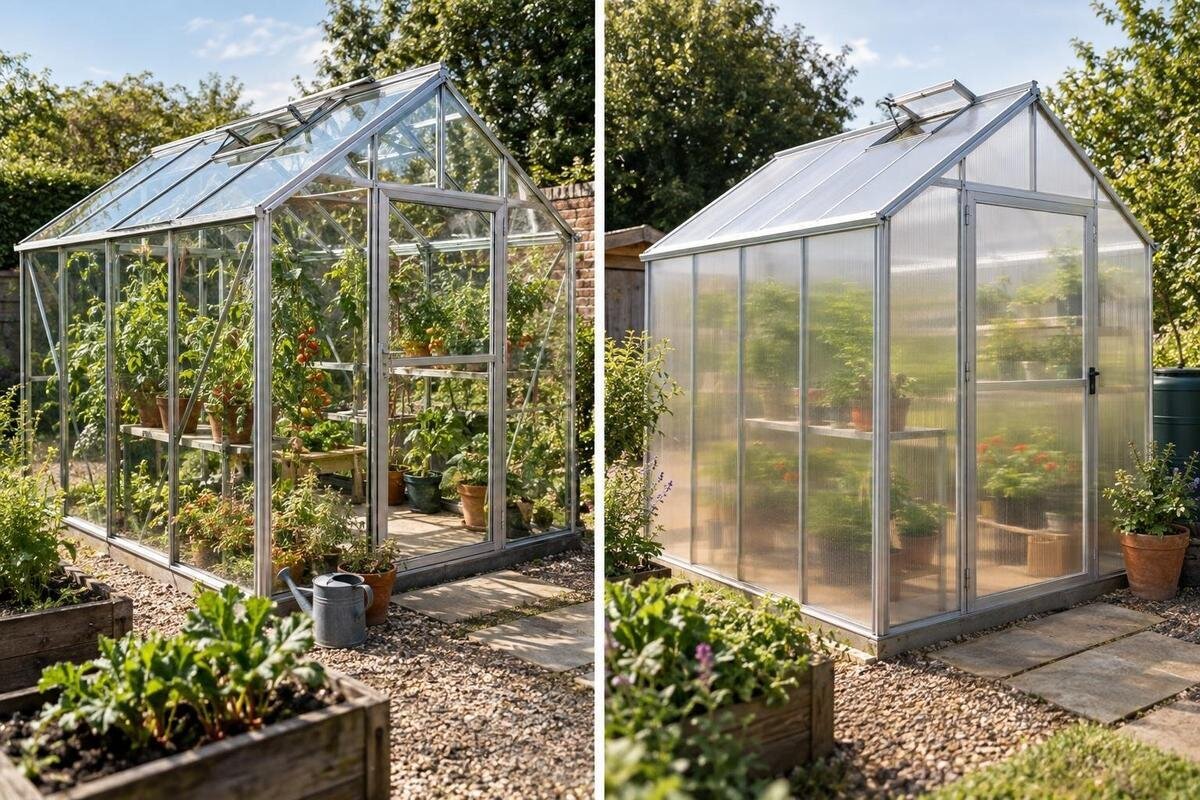
Greenhouse glazing guide
A glass roof with polycarbonate sides is possible, but only as a combination the greenhouse manufacturer has designed and documented for that model and size. It is not safe to assume that two materials can be mixed just because both are used in greenhouse glazing, or because replacement sheets seem to fit. The frame, panel edges, fixings, seals and joints must suit the exact products. This guide explains what to confirm in the specification, how the combination can affect light and internal conditions, and why an unapproved retrofit is different from an offered option.

Before you order 1
What mixed glazing means
Here, mixed glazing means that one greenhouse uses more than one glazing material in a defined arrangement, such as glass in the roof and polycarbonate in the side walls. It is not simply a matter of buying two kinds of sheet. The glazing works with the frame profiles, panel dimensions, edge supports, retainers, seals and the places where panels meet doors, vents, corners or the ridge. Those interfaces form one system. The phrase glass roof with polycarbonate sides does not, by itself, say what type of glass or polycarbonate is used, how far each material extends, or whether the complete combination has been specified for that greenhouse.
For a sound comparison, separate three questions: what material is used, where it is installed, and whether the manufacturer approves that arrangement for a named model and size. A photograph that seems to show clear roofing and darker sides cannot confirm those details; lighting and reflections can change how panels appear. Nor does a general label such as glass greenhouse tell you whether doors, vents or other openings use the same material as the main walls. Look for a drawing or specification that marks each area, and check that it relates to the version you are considering rather than a similar-looking product.
Why the frame must suit both materials
The frame and glazing are designed together, rather than chosen as two independent materials. Glass and polycarbonate products can differ in thickness, edge shape, stiffness, weight and the movement they need to accommodate. Panels must fit the intended channels and be held at the correct points without being forced. A roof panel also meets different joints from a wall panel: the ridge, eaves and openings may each have their own details. If a substitute sheet does not match them, it may not sit or remain retained as intended, and the joint may not shed water as the design requires.
When reviewing the Classic aluminium greenhouse, establish whether the manufacturer offers the proposed combination before comparing its details. A useful drawing should distinguish the roof and wall glazing and show which frame components belong to each. Ask whether choosing different wall panels changes the glazing bars, retaining parts or seals included in the order. This is particularly useful where two options look alike from outside but use different panel thicknesses or edge details. You do not need to design the joints yourself: you need confirmation that the supplied components form the intended system. Check that the drawing identifies the selected size and version, and distinguish standard glazing from optional choices. If the listing, quotation and technical documents disagree, ask the supplier to reconcile them so the order describes one complete configuration rather than an assortment of apparently compatible parts.
Before you order 2
Light through glass roofs and polycarbonate walls
The roof and side panels face different directions, so changing materials can alter more than overall brightness. A roof receives much of its light from above, while the walls contribute light from the sides; glass and polycarbonate options can also differ in transmission, diffusion, tint and surface reflections. The result depends on the exact products, panel area, frame bars and garden surroundings, including shade from trees or buildings. A clear-looking roof does not guarantee an evenly lit growing space, and the word polycarbonate alone does not say how much or what quality of light reaches the plants.
For a model on your shortlist, such as the Prestige greenhouse, compare light information only after establishing which glazing options are available. Ask whether published transmission figures describe the selected panel thickness and finish, and whether diffusion is described separately. Transmission concerns how much light passes through; diffusion concerns how it is spread. Neither figure alone tells you how every growing position will be lit. Think about a bench beside a wall, plants in the centre and taller plants that may shade those behind them. Side-panel characteristics may matter differently in each position. Also consider whether an unobstructed view through the walls is important to you: visibility and useful growing light are related but are not the same requirement. Where samples are available, use them to assess appearance, not as a substitute for panel specifications or an assessment of garden shade.
Thermal performance and condensation
The material name alone cannot tell you how a greenhouse will retain heat. A solid polycarbonate sheet and a multiwall panel are different constructions, just as one type of glass may differ from another. Thickness, air spaces, seals, frame details and ventilation all affect the behaviour of the finished greenhouse. If performance figures are available, check what they describe: an individual panel or the assembled greenhouse. A figure for one glazing product should not be treated as a measurement for a complete structure with different materials in different positions.
Condensation depends on moisture, ventilation and the temperature of interior surfaces; changing one glazing area does not make it disappear. Different roof and wall panels may have different surface conditions, so ask how the proposed arrangement handles moisture and whether its care guidance covers both materials. When investigating the Limited Edition greenhouse with built-in storage, distinguish your growing requirements from any assumptions about the product name. For unheated seasonal growing, insulation may carry a different weight in your decision than it would if you planned to maintain a particular winter temperature. If heating is part of your plan, seek configuration-specific information rather than using a wall-panel figure to predict energy use for the whole greenhouse. Record ventilation arrangements alongside the glazing comparison, too: an option with different openings is not a direct test of the effect of changing panel materials.

Before you order 3
Seals, joints and rainwater paths
Where two glazing types meet, the joint needs to suit both panel edges and the frame. Check how the roof panels finish at the eaves, how the wall panels are retained, and how corners, vents and doors are treated. Those details affect whether panels sit correctly and how water is directed away from the structure. The specification should identify the relevant retaining parts and seals, rather than leaving you to assume that one set of fittings works with every panel type. A neat appearance in a photograph is not proof that the joints use the correct components.
Ask which seals and retainers belong to the approved combination and whether their details vary at openings and corners. On a shortlist that includes the lean-to greenhouse, distinguish the junction with the adjacent building from joints within the greenhouse itself. A glass roof and polycarbonate walls do not, by themselves, explain either connection. Request the relevant manufacturer details and have any building connection assessed by a suitably qualified installer where necessary. Do not substitute sealants or improvised fixings because they appear to close a gap; compatibility and the intended water path are design questions. For multiwall panels, ask whether the supplied system includes specific edge treatments and care instructions. This is a question about the finished product, not an invitation to select tapes or fittings yourself. Knowing which components are supplied also helps you compare quotations that otherwise describe the same glazing mix.
Wind, snow and structural suitability
The roof and walls have different exposures, and the two glazing materials may differ in weight and stiffness depending on the products selected. Changing the glazing can change how loads are transferred to the frame, so information for an all-glass or all-polycarbonate version should not automatically be applied to a mixed one. This matters particularly where a greenhouse faces strong winds or may experience snow loading. A material label, a similar model name or a photograph is not evidence that the complete structure has been assessed for the same conditions.
Ask whether the manufacturer’s suitability information covers the exact model, size and glazing combination you intend to install. If considering the T-shaped orangery greenhouse, identify the selected version rather than borrowing information from another greenhouse shape. Check whether any stated limits apply to the complete configuration and what assumptions accompany them, such as the specified base and anchoring. These are matters for the manufacturer or a suitably qualified structural professional to verify, not calculations to infer from panel weights. Explain relevant site conditions, including an exposed position or unusual support arrangements, so the response addresses the actual proposal. Also ask whether choosing mixed glazing changes any installation requirements compared with the standard option. Keep structural suitability separate from appearance and gardening preferences: a configuration may look right and offer appealing light characteristics without that establishing whether it is appropriate for your site.
Before you order 4
Can you change the glazing later?
Do not assume that a greenhouse supplied with glass can later take polycarbonate side panels, or that the reverse change is acceptable. A replacement has to match the approved panel size, thickness, edge details and retention system, as well as the design for that part of the frame. Changing material can also alter the light and thermal characteristics of the greenhouse. Before replacing a panel with a different material, check the original specification and ask the manufacturer whether that precise change is permitted for the model and size.
This is particularly important with a second-hand greenhouse, missing paperwork or separately sourced replacement panels. Start by identifying the existing structure and its original glazing arrangement. For example, the Pyramid-type greenhouse provides a model reference for enquiries, but a product name is not permission to change its panels. Photographs of the structure and any identification labels may help the manufacturer establish which version you own; they cannot prove compatibility on their own. Distinguish replacing a damaged panel to the original specification from converting a whole wall to another material. The latter needs explicit approval for the complete change, including any associated components. A competent greenhouse installer can help identify parts and assess the condition of the existing structure, but that assessment does not replace manufacturer approval for mixed glazing. Without that approval, do not proceed with the material conversion.
Comparing complete greenhouse specifications
Compare whole configurations on a like-for-like basis. Record the greenhouse model and size, then note the material used in the roof, side walls, doors and opening panels. Include the type of glass and the construction of the polycarbonate, where those details are specified. Check whether the glazing is included as standard or is an option, and whether the drawing covers the same shape and openings as the version you are comparing. This gives you a clearer comparison than a short product label or a general statement that a model is available in glass or polycarbonate.
When comparing the spacious orangery greenhouse with another shortlisted model, make a separate entry for each offered configuration rather than combining options into one description. Mark missing information as unknown: an unspecified panel type should not be treated as equivalent to a documented one. Keep size, shape and openings separate from glazing differences, since each can affect the practical comparison. Check whether performance figures use the same units and describe the same thing, such as panel performance rather than whole-structure performance. If one quotation includes different doors, vents or glazing components, record those differences before comparing the overall offer. You may find that an approved all-glass or all-polycarbonate option answers your priorities more clearly than a poorly documented mix. The purpose of the comparison is to choose between complete, available configurations, not to assemble a preferred specification from unrelated listings.

Before you order 5
What to confirm before ordering
Ask for the exact model name, size and version, then request a diagram or schedule that labels the glazing in the roof, sides, doors and vents. Confirm the types of glass and polycarbonate, including panel construction and thickness where stated, and ask whether the mixed arrangement is supplied or explicitly approved for that version. Check which parts are included in the quoted configuration and whether any photographed features are optional. If performance or load information matters to your decision, ask whether it applies to the complete mixed-glazing greenhouse rather than to a different option or a panel on its own.
For an enquiry about the Limited Edition greenhouse, ask the supplier to tie the answer to the selected size and options in the written quotation. Keep that answer with the order details and any panel map. The paperwork should make clear whether mixed glazing is a standard option, a separately approved configuration or unavailable for your selection. Check that the description covers doors and vents as well as the main roof and walls; otherwise, two parties may understand the word sides differently. If a quotation is revised, ensure the glazing description and associated components are updated together rather than relying on an earlier discussion. A written record also helps when checking the supplied parts against the order and identifying replacements later. If the supplier cannot confirm the arrangement, choose a documented alternative rather than ordering on the assumption that the details can be resolved during assembly.
Cleaning and replacement planning
A greenhouse with two glazing materials may need different care for different surfaces. Cleaning products and methods suitable for one panel type should not automatically be assumed suitable for the other. Follow the manufacturer’s guidance for each specified material, and ask if the instructions do not clearly cover the mixed arrangement. This is also a useful point to clarify whether any coatings or surface treatments are included, because the material name alone does not describe every feature of a panel. Avoid relying on generic advice that does not identify the products fitted to your greenhouse.
Ask whether the two panel types can be identified separately in the parts schedule and how to specify the correct replacement if one is damaged. The answer should help you distinguish roof panels from side panels and identify any relevant panel type or fixing detail. Do not assume that a later replacement will be identical simply because it is described as glass or polycarbonate. Keeping the original model details and configuration documents makes future maintenance more straightforward and reduces the chance of ordering a panel that is the wrong type for its position.
Frequently asked questions
Can any glass-roof greenhouse take polycarbonate sides?
No. The combination must be specified or explicitly approved for the exact greenhouse model and size. Similar-looking panels are not enough: their thickness, edges and fixing method may differ from those the frame is designed to use.
Will a glass roof with polycarbonate sides make the greenhouse warmer?
Not necessarily. The result depends on the glass and polycarbonate products, panel construction, seals, frame and ventilation. Ask for performance information that applies to the complete mixed-glazing configuration, rather than drawing a conclusion from the material names alone.
Will a glass roof provide enough light if the sides are polycarbonate?
There is no general answer. Light reaching plants depends on the transmission and finish of the actual panels, their area and orientation, and shade around the greenhouse. Compare product information for the specified materials if figures are available.
Can I use off-the-shelf polycarbonate sheets to replace glass side panels?
Only if the manufacturer confirms that the exact sheets and fixings are suitable for that model. Matching the approximate panel size does not establish that the edges, thickness, retention or seals are compatible.
What should the specification confirm before I order?
It should identify the model and size, mark which areas use glass and which use polycarbonate, describe the panel types, and confirm that the complete combination is approved. Ask for a drawing or panel schedule if the listing does not show these details.
A glass roof with polycarbonate sides can be a valid choice when the complete arrangement is specified or explicitly approved for the greenhouse you plan to buy. Treat it as a model-specific configuration, not a DIY combination of two materials. Compare the panel schedule, relevant performance information and the details for the exact size and version; if those details are unclear, ask for confirmation before ordering. That gives you a sound basis for deciding whether the mixed glazing suits your priorities and for maintaining the greenhouse later.
