
Can a Greenhouse Help Your Household Grow More Food?
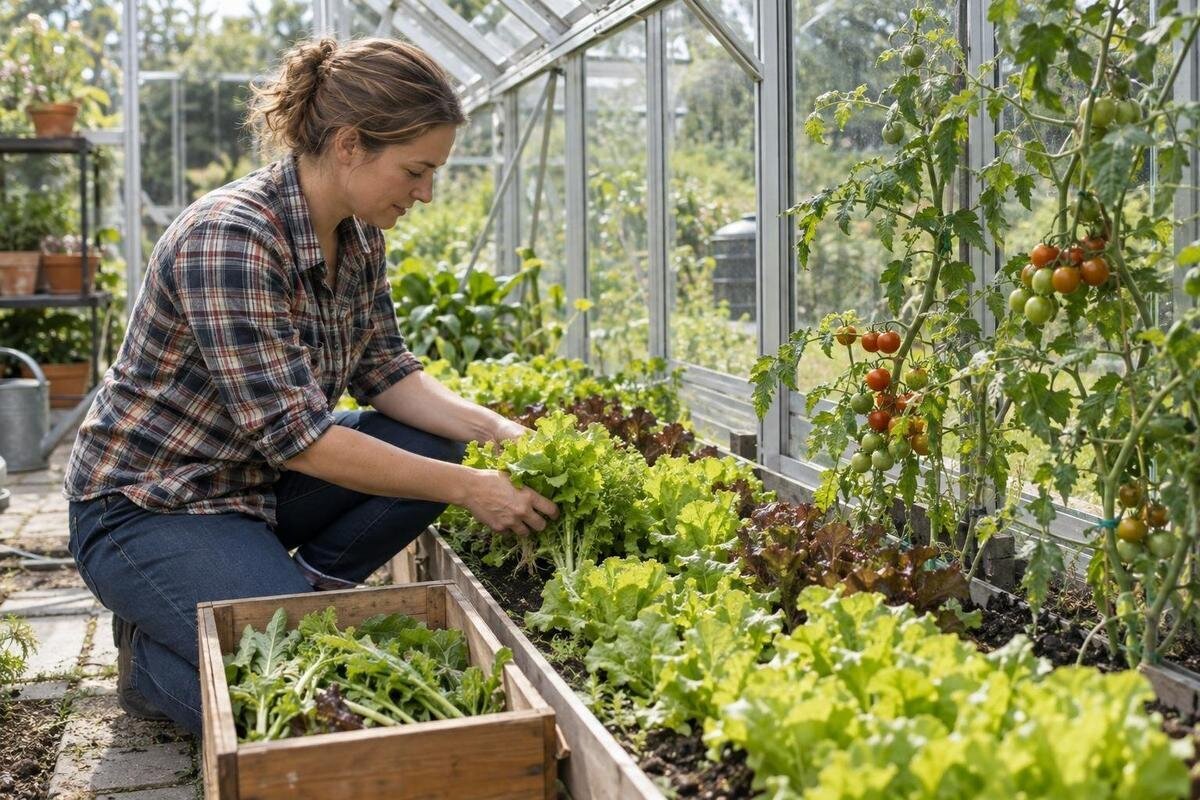
Growing more food at home
A greenhouse can help a household grow more of its own food when its crop plan starts with the meals people already eat and the time someone can give to growing. The most dependable goal is usually a defined share of fresh produce for part of the year, not complete self-sufficiency. What it contributes depends on usable planting space, crop choice, local light and temperature, regular care, and whether the harvest is actually eaten. A food diary and task log give a more credible estimate than greenhouse area alone.

What a greenhouse can contribute to household meals
A greenhouse provides a sheltered growing space, which may make earlier starts or a longer picking window possible for some crops. The result still depends on light, temperature, ventilation, crop choice and care; cover does not remove every pest, disease or weather risk. The Bloomcabin Prestige Greenhouse listing, for example, spans 40.6 to 302 ft². Those are catalogue area options, not a measure of usable growing beds or food output. Before comparing sizes, decide whether you mainly want to raise young plants for outdoor beds, harvest crops under cover, or do both. These uses place different demands on the space, and plants raised in the greenhouse may contribute to meals only after growing elsewhere.
For most households, a realistic gain is repeated access to a few fresh ingredients, not independence from shops. A greenhouse does not automatically supply staple foods or every fruit and vegetable, and a crop can be abundant when no one wants to eat it. Define the contribution in kitchen terms: portions of leaves at lunch, herbs used in regular dishes, or tomatoes that replace a purchase. If the household rarely uses a crop, its weight is not a meal saved. You may also value freshness, variety or enjoyment; those are valid benefits, but keep them distinct from an estimate of how much purchased food is replaced. Count greenhouse produce alongside food from outdoor beds and shops.
Measure what your household already eats
Before selecting varieties, keep a short food diary for two to four weeks. Record the produce that actually goes into meals, how often you use it, how much you buy or collect, and what remains uneaten. Use practical units such as packs, bunches, handfuls, portions or weights rather than converting every ingredient into calories. Note whether an item is eaten raw, cooked or preserved, and who in the household wants it. A receipt records purchasing, not consumption, so mark leftovers and substitutes too. If your habits change markedly through the year, repeat the diary later or add a seasonal note; one fortnight may not represent a full year’s demand.
Sort the list by repeat use, not by how attractive a crop looks in a seed catalogue. For each candidate, note household demand, preferred form, when you want it, likely growing conditions and whether homegrown food would replace a regular purchase. Then identify the few crops that meet several of those tests. A crop chosen simply because it is easy to find as seed may take space without solving a meal problem. Check preferences with everyone who will eat the harvest, and name who will sow, water and pick. Include whether you can use a crop immediately or preserve it; that affects how much you can manage. The grower’s preference and the household’s actual menu may differ.
Turn meal demand into a manageable crop plan
Turn the diary into portions you could reasonably supply, rather than a guessed harvest weight. Choose a few main crops and write down when you want them and what would count as a useful contribution. For illustration only, suppose your diary shows salad at two lunches each week and you aim to grow leaves for one lunch each week over a chosen 20-week period. The target is 20 lunch portions; it is not a prediction that a particular greenhouse will produce them. Weather, light, sowing gaps, pests and missed jobs affect the result. Record the usable harvest and adjust the target after the season. Set separate targets for herbs or tomatoes instead of adding unlike crops into one impressive total.
Build a simple crop calendar around those targets. Include sowing or planting windows, the expected harvest period, repeat sowings where suitable, and a fallback if one crop fails or peaks at the wrong time. Think in meal uses rather than a long wish-list: one crop might supply a familiar dish, while another fills a different gap. The Spacious Greenhouse listing spans 506 to 753 ft². If you are considering that range, account for the growing space your planned crops would occupy through the season, including periods when seedlings and mature plants overlap. Empty space need not be filled with extra crops merely because it is available; each addition should have a purpose in the kitchen and someone able to care for it.
How much of the greenhouse can be planted?
The stated area of a greenhouse is not the same as the space you can plant. Draw the layout and mark the door, access route, benches, potting surface, water containers and equipment that need to remain reachable. Then identify where you can actually water and pick plants without stepping over beds or moving stored items. A route may use space that could otherwise hold containers, but it can make regular care practical. Decide whether you will grow in beds, containers or both, and check each crop’s spacing guidance before estimating how many plants fit. Leave room for plants to spread as they grow, not only for seedlings on planting day.
Compare your measured sketch with the exact greenhouse option rather than treating a product range as one size. The Classic greenhouse listing gives areas from 40.6 to 302.3 ft². Check the dimensions and door position for the selected option, then draw the beds or containers at their intended size. Consider how the layout will work at harvest time: can you reach ripe fruit at the back, carry a full picking basket through the door and remove a spent plant without disturbing its neighbours? A layout that accommodates many small pots in spring may become awkward once plants mature. Count the planting space only after allowing for these routine jobs.

Match crop choices to the site and the kitchen
Choose crops for both eating habits and growing conditions, not just from a generic list of greenhouse favourites. Tomatoes, cucumbers and peppers are common protected-crop choices, but their success depends on suitable warmth, light, ventilation and regular attention. Herbs and salad leaves can provide repeated small harvests, provided the household uses them and conditions suit them. Shade, air movement, nearby structures and access to water can all affect a plan. Read crop-specific sowing and care guidance, and avoid assigning most of the area to one crop until you know the household wants that quantity. If crops need different conditions or have conflicting harvest times, do not crowd them together simply to save space.
Check the intended site as well as the product format. The Lean-To Greenhouse listing gives options from 40 to 154 ft², but its stated area does not establish that a particular position has suitable light, access or room for the beds you plan. Measure the proposed space, note nearby obstructions and think about how you will reach plants and ventilate the greenhouse. Ask for a dimensioned plan if the catalogue information does not make the selected option clear. The point is not that one format suits everyone: the crop plan needs to match the real conditions and the working area available.
Plan for seasonal gaps in harvests
Make a calendar showing when your household wants each crop, when local conditions may support it, and where gaps remain. A greenhouse may shift the timing of some crops, but an unheated structure does not guarantee warm growing conditions through winter. Day length and temperature can limit growth, and the actual site matters too. Mark months as likely harvest, limited harvest or no planned harvest, using crop-specific guidance as a starting point and your own results to revise it. Add any food already coming from outdoor beds or shops, so the calendar reveals a gap rather than duplicating a period when you have plenty. This prevents a strong summer harvest being mistaken for a year-round supply.
Use the calendar to identify when a growing space will become free for another crop. A bed occupied by a long-season crop cannot also be counted for a second planting during the same weeks. Allow for clearing plants, preparing the space and any overlap with seedlings waiting to move in. When considering the Limited Edition greenhouse listing, take this sequence into account alongside the dimensions of the selected option. More area can accommodate more planting space, but it does not by itself create suitable conditions for a longer season. Keep a month-by-month harvest record to see whether your plan fills an early or late gap, or mainly adds produce when you already have plenty.
Estimate the time needed in busy weeks
List the work from sowing to serving: preparing pots or beds, sowing, potting on, watering, checking ventilation, tying or pruning where needed, watching for pests, harvesting and clearing spent plants. Some tasks cluster at establishment or peak growth; others recur while crops are producing. A yearly average can hide the busiest spells, when a missed watering or harvest may matter. Frequency depends on the crop, weather and setup, so avoid relying on a fixed minutes-per-square-foot rule. Ask each grower which tasks they can reliably do and what can be dropped in a busy week. Also consider who will cover the routine when the usual grower is away.
Track actual work for several weeks during an active spell and again when the greenhouse is quieter. Record the date, task, minutes, who did it and any job postponed; include carrying water, washing containers and dealing with the harvest, not just planting. The point is to reveal peak demands and weak points, not to produce an idealised average. When comparing a layout such as the T-Shaped Orangery Greenhouse, use a dimensioned plan to trace your likely route between the entrance, water supply, plants and work surface. Think about which items you would carry and where you would put them down. If several people share jobs, record who actually does them rather than assuming everyone is available.
Make sure harvests can be used and stored
Harvest matters when it reaches the table or a storage method you are willing and able to use. Plan picking quantities around normal meals, and note separately what is eaten fresh, cooked, frozen, shared or discarded. A glut can be less useful than a smaller steady supply if it arrives all at once and no one has time to process it. Preservation takes extra time, containers and suitable storage, so do not count a theoretical surplus as food unless you know you will prepare and use it. If a crop has a short picking window, decide who can use it that week before giving it a large share of the growing space. Keep harvesting and washing in the task log.
Separate equipment storage from harvested-food storage in your plan. The greenhouse listed with built-in storage has storage in its catalogue description, but you will need the details of the selected option to establish its size, arrangement and intended use. Decide which tools, pots and trays need to be close to the growing area, and which can stay elsewhere. Do not assume this storage provides suitable conditions for harvested food. In the kitchen, consider where produce will go between picking and preparation, and whether there is room for any surplus you intend to preserve. Growing more than you can handle at that stage may increase waste rather than the household’s food supply.

Record the food you actually grow and eat
After a growing season, review each crop against its original target. A useful log records the date and amount harvested, whether it was eaten, stored, shared or wasted, which meals it supplied, and whether equivalent produce was still bought. Add planting area and time spent if you want to compare effort as well as food. Keep crops separate: a high weight of one ingredient does not mean it replaced the same amount of another. Include failed sowings and weeks with no harvest; leaving them out would make the estimate too optimistic. Record the edible amount you used, rather than treating everything picked as food contributed.
Use the records to distinguish a shortage of growing space from other reasons a target was missed. If plants produced well but you could not use the harvest, adding more plants is unlikely to help. If a sowing failed or care was interrupted, address that before expanding. When considering the Pyramid-type greenhouse listing, which spans 60 sq ft to 203 sq ft, identify the option you are assessing and work out what you would actually plant in the additional space. Your log can inform that choice, but it is a household result, not a universal yield rate. Repeat the record in another season before treating an unusually good spell as normal.
Choose a contribution worth the time
A greenhouse is more likely to be worthwhile when it supports an existing food habit, fits the plot and has someone available to do the work during busy weeks. Set a threshold before buying: the portions or meals you hope to supply, the part of the year that matters, and the time you are willing to give. Your first target need not cover the whole shopping list. If the plan depends on crops nobody likes, conditions the structure cannot provide, or constant attention the household cannot manage, reduce the target or change the crop list rather than relying on motivation to appear later.
Put the measured site, usable growing area, crop calendar and task log beside one another before choosing a size. Ask what assumptions are still untested: access, light, the selected option’s dimensions, storage and who will care for plants when the usual grower is away. If you have not grown under cover before, a manageable first crop plan can test your assumptions before you expand the list. The question is not whether a greenhouse can feed a household in general; it is whether the food it can realistically add is worth this household’s time and space.
Frequently asked questions
Can a greenhouse make our household self-sufficient?
Not by itself. It can contribute useful amounts of selected fresh produce, but self-sufficiency involves a much wider range of foods, growing seasons, storage and time. Set a specific target, such as supplying some salad leaves for part of the year, rather than expecting one greenhouse to replace the household food shop.
Can I estimate a harvest from the greenhouse area?
Not reliably from area alone. The usable planting space, crop choices, conditions and care all affect what you harvest. Start with the portions your household wants, then record actual edible harvests and compare them with meals served and produce still bought.
Which crops are worth growing under cover?
Prioritise crops your household eats often and that suit the site. Tomatoes, cucumbers, peppers, herbs and salad leaves are possible choices, but they do not suit every setup or household. Check crop-specific growing guidance and avoid growing more than you can use.
Can an unheated greenhouse fill winter food gaps?
It cannot guarantee a winter harvest. An unheated greenhouse still experiences low temperatures, and short days can limit growth. Map the months when you want each crop, check its requirements and use your own harvest records to see whether the greenhouse fills a gap.
How much time should I allow for greenhouse growing?
There is no fixed allowance that applies to every crop and setup. Sowing, watering, ventilation, harvesting and clearing plants can take time at different points in the year. Log the jobs and minutes during a busy spell as well as a quieter one, and plan around who can do them.
The clearest answer comes from a season’s records: what the household wanted, what the greenhouse supplied, what was wasted and how much work it took. A plan centred on a few regularly used crops can make a real contribution even if most food still comes from shops or outdoor beds. If your diary, site sketch and task log point to a manageable target, a greenhouse may suit your household. If they do not, adjust the crop list and area before deciding.
