
Why Are My Greenhouse Peppers Dropping Flowers?
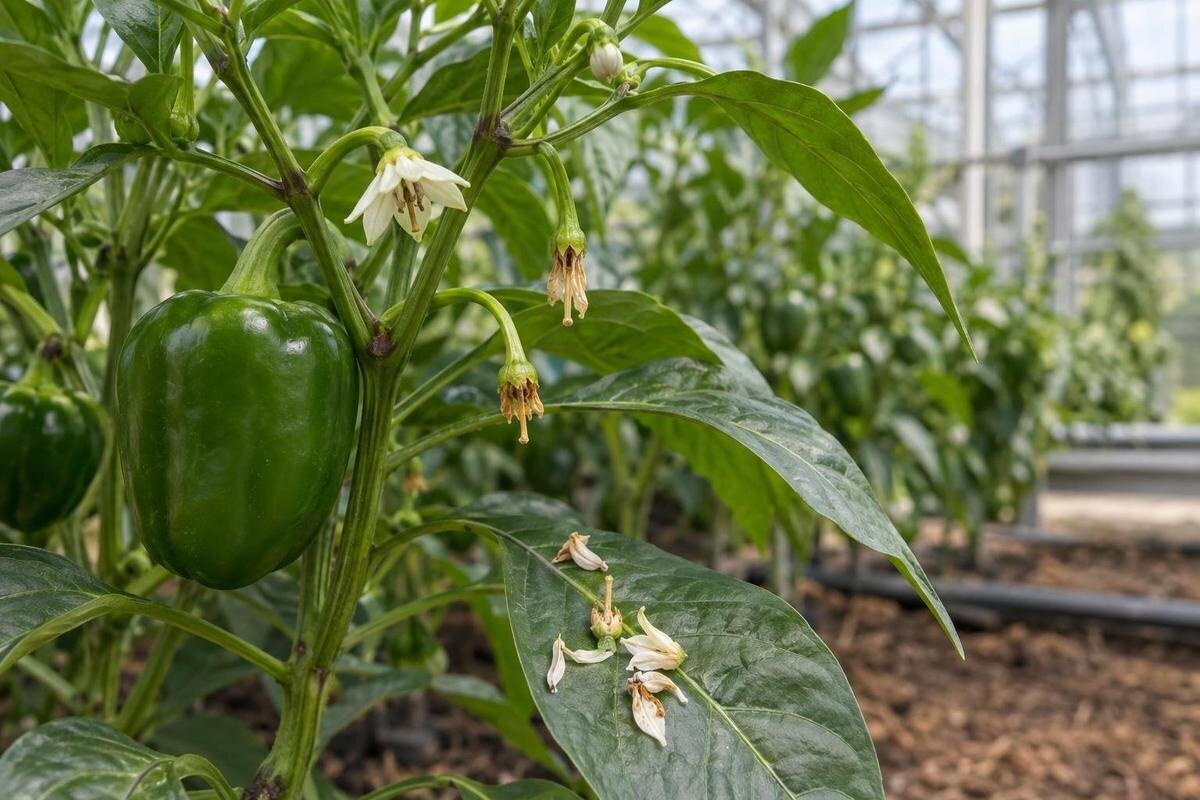
Greenhouse growing
Flowers falling from greenhouse peppers do not point to one fault. First check whether the whole flower has fallen or only its petals have dropped while a tiny fruit is swelling. Then compare the timing with greenhouse temperatures, root-zone moisture, recent potting and the plant’s stage of growth. Excessive heat and dry compost are recognised problems, but a fallen flower alone cannot identify the cause. Look for a pattern before changing the way you grow the crop. An isolated loss is less informative than a cluster on one plant or in one part of the greenhouse.

Greenhouse checks 1
Normal petal fall or failed fruit set?
A pepper blossom has petals around a small green ovary at its base. As fruit begins to develop, the petals commonly shrivel and fall while the ovary remains attached and enlarges; this is fruit set, not blossom drop. If the whole flower falls and no developing pepper remains, it has failed to set. Check a few newly opened flowers closely before changing anything: it is easy to mistake normal petal fall for a lost crop. The distinction matters more than how many petals lie underneath the plant. Take a close-up photograph of a flower and its base so you can compare its development over the following days.
One isolated flower is not enough to establish a serious problem. Look across the plant and compare several plants. Are flowers dropping only at the sunniest end, only on recently moved peppers, or across the whole crop? Note whether new leaves look normal, buds continue to form and any small fruits are swelling. Check whether affected plants share a pot size or watering routine, and compare plants at similar stages before assuming one cause applies everywhere. Include healthy plants in your observations: a plant setting fruit nearby provides a useful comparison for light, moisture and growth. Count lost flowers separately from flowers whose petals have fallen but whose green bases are still growing.
Check the greenhouse’s daytime heat
Excessive heat is a recognised reason for reduced pepper fruiting under cover. The Royal Horticultural Society’s sweet pepper guide notes that temperatures above 30°C can reduce fruiting and recommends greenhouse ventilation and summer shading. Treat this as a useful warning level, not a temperature at which every flower will inevitably fall. A plant may still look green and vigorous, so appearance alone cannot establish whether the growing conditions are suitable. On sunny days, conditions inside can differ substantially from the outdoor forecast. Flowers lost around a hot spell provide a clue, not proof of the cause. An evening inspection can miss a midday peak that has already passed, even when the greenhouse feels comfortable by then.
Use a maximum/minimum thermometer at flower height, shielded from direct sun, and note readings over several days, including the daytime maximum and overnight minimum. Compare positions: a thermometer by the door may not represent a sunny wall or densely planted corner. Record whether vents were open and when; these notes help separate an actual heat problem from guesswork. For a wall-side growing area, the lean-to greenhouse page is a catalogue reference when comparing space and access to openings. Use only dimensions and opening details actually published. Keep the thermometer in a consistent position, clear of hot surfaces, so changes in its readings reflect conditions rather than a change of measuring location.
Greenhouse checks 2
Check overnight temperatures
Do not judge pepper conditions from midday warmth alone. The RHS advises that sweet peppers can cope with a minimum night temperature of 12°C but grow better above 15°C. These figures describe growing conditions; they do not prove why an individual blossom fell. Repeatedly low overnight readings are nevertheless worth addressing when growth and fruit development are poor. Plants closest to glazing or an exposed entrance may experience different conditions from those in the centre, so note where blossoms are falling instead of relying on a sensor elsewhere. Record more than one night before reading too much into a brief cold snap. Include the overnight minimum and the plant’s position, rather than simply describing the night as chilly.
Keep overnight observations separate from the daytime heat record. During bright weather, ventilation can limit overheating; on a cold evening, the same opening pattern may not be appropriate. Review how quickly temperatures fall after sunset and whether plants near an entrance experience different conditions from those further inside. If planning a replacement structure, inspect the Limited Edition aluminium greenhouse listing for published details of openings and their operation. Consider how you would reach and adjust them with the crop in place, rather than judging climate control from the model name. The useful comparison is between your recorded conditions and the features you can verify, not between an outside forecast and the greenhouse's appearance.
Look at moisture around the roots
Irregular moisture can upset flower retention even when the greenhouse air seems suitable. A root ball that dries hard and then receives a large watering undergoes a sharp change; roots kept saturated can be short of air and function poorly. Containers dry at different rates depending on their size, position and the plant, while a bed surface can look dry when deeper soil is still moist. Check moisture a little below the surface in the actual root zone rather than using the top centimetre as the only guide. A wilted plant is a warning to inspect, not a reliable instruction to water immediately. A pot nearest glass or in direct sun may need checking sooner than a shaded one.
Look for a pattern in your watering record: do flowers start falling after hot afternoons, missed checks or repeated soaking? Check that containers drain freely and water reaches the root ball, rather than running down a gap at the sides. Compare moisture before and after watering; runoff alone does not show that dry compost has been wetted throughout. Return to a routine suited to the medium and weather instead of repeatedly correcting one wet or wilted reading. When planning access around containers, check any published measurements on the T-shaped orangery greenhouse page against the space your pots and paths require. Allow room to inspect each root zone without moving or damaging neighbouring plants.

Greenhouse checks 3
Humidity and ventilation around flowers
Humidity deserves attention alongside temperature, but it should not become an automatic explanation for flower drop. RHS guidance says that sweet peppers like high humidity and suggests damping down the greenhouse floor in warm weather to add moisture to the air. That is different from repeatedly wetting the flowers or soaking their compost. If you use this approach, keep access safe and avoid leaving water where it creates a slipping hazard. Check root-zone moisture separately: moist air does not replace the steady supply of water that roots need. Equally, visible droplets on glazing do not tell you whether flowers have set fruit. Follow the green bases of several blooms and look for continued enlargement.
Inspect the space around mature plants as well as the greenhouse openings. Tall shoots, overlapping leaves and stored equipment can make vents difficult to reach or operate, so check access with the crop at its present size. Use temperature readings to decide whether your ventilation routine is limiting heat, rather than assuming that a humid greenhouse must always be kept closed. Record any change in shading or vent use so its effect can be assessed later. When comparing greenhouse openings, consult any details supplied on the pyramid-type greenhouse listing and consider whether your planned crop would obstruct them. Shape alone does not establish how effectively air will move among mature plants or how easy the openings will be to reach.
Allow for plant stage and existing fruit
Recent planting or a move is useful background, but it does not establish why flowers have fallen. Record when a pepper entered its final pot or bed, whether its light exposure changed and how you have watered it since. Assess the plant’s development directly: are new leaves expanding, stems growing and fresh buds appearing, or has growth stalled? A small plant with few leaves should not be compared solely by flower count with a larger plant already carrying fruit. After potting, check moisture in both the original root ball and the surrounding compost; a damp surface can conceal differences below it. Avoid repeatedly moving the plant while you observe, since each new position changes the conditions you are trying to understand.
Existing fruit also matters when assessing progress. RHS guidance notes that leaving sweet peppers on the plant to ripen fully can hinder further fruit development, while regular harvesting encourages further fruiting. This does not mean that every dropped flower was caused by crop load. Record whether established fruits are swelling or changing colour, and harvest at the stage appropriate to the variety and your intended use. Distinguish a plant developing its current crop from one with neither growing fruit nor healthy new growth. If your growing area must accommodate storage, check the greenhouse with built-in storage listing for any published layout and planting-space details. Account for storage access separately from crop space: the outside footprint is not necessarily the area available for pots or beds.
Greenhouse checks 4
Assess light and canopy density
Low light does not usually explain one blossom on its own, but it can limit flowering and fruit development over time. In a crowded canopy, leaves may shade lower flowers and shoots, and tightly packed pots can make uneven growth harder to notice. Check whether the loss is concentrated on shaded branches or whether plants have stretched growth and few new buds. Compare the light reaching the crop through the day, not just the brightness at the greenhouse door. These clues make poor light or crowding plausible, not certain; shade from outside can change as the sun moves. A row receiving morning light may still be shaded later in the day.
Keep enough space to inspect and water plants evenly, and avoid pruning healthy leaves simply because a flower has fallen; leaves support growth. Look for pots crowded together, overlapping foliage and taller neighbouring crops that shade peppers as they develop. Moving a container to relieve crowding may be more appropriate than stripping leaves, provided its new position offers suitable conditions. For row-spacing plans, compare any published dimensions on the Prestige greenhouse page with the width of your beds, mature plants and access paths. A larger footprint does not guarantee good light throughout. Include nearby trees, fences and buildings in your assessment, as well as shading created by the crop itself.
Check feeding and look for other symptoms
Do not reach for extra fertiliser on the basis of flower drop alone. RHS guidance recommends feeding container-grown sweet peppers with a high-potassium liquid fertiliser once flowering begins, while plants in enriched soil may not need regular feeding. Follow the chosen product’s instructions rather than increasing the dose to compensate for lost blossoms. Check what compost or feed has already been used and whether roots are dry, waterlogged or crowded before adding anything. Pale or distorted leaves and poor growth warrant a broader assessment, but none identifies a particular deficiency by itself. Extra feed cannot replace suitable temperature and moisture conditions. Keep a record of the product, dilution and application dates so you can review the routine without guessing.
Look closely at growing tips, leaf undersides and flowers for insects, fine stippling, webbing, sticky deposits, spots or distorted growth. These signs warrant investigation, but a dropped flower alone is not a pest diagnosis. Photograph the whole plant and affected details, and compare them with an unaffected plant of the same variety where possible. If damage is spreading or growth is deteriorating, ask a knowledgeable horticultural adviser or plant clinic to identify the cause before using a control product. For a larger growing layout, compare published dimensions on the spacious greenhouse listing with the access needed to examine every row. Leave room to reach leaf undersides without brushing repeatedly through neighbouring plants.

Greenhouse checks 5
Use a simple record to test the likely cause
Build a short, consistent record rather than relying on memory. Note which flowers fall, whether the whole flower drops or only petals, the date, plant position, recent maximum and minimum temperatures, watering and vent positions. Photograph comparable flowers from the same angle and record when their green bases begin to swell. A cluster at one end suggests a local difference in heat, light or watering; a crop-wide pattern after a cold or hot spell suggests a shared exposure. Neither proves a single cause. Include dates of potting and feeding, and distinguish when a flower opened from when you found it on the soil, since these may be several days apart.
Where conditions permit, change one factor at a time and watch subsequent flowers rather than expecting fallen blossoms to recover. Do not leave a plant severely dry or overheated simply to preserve a comparison. If readings show repeated heat peaks, review ventilation at the relevant time; if root-zone checks show drying between visits, adjust watering. Keep feeding unchanged unless there is separate evidence to reassess it. If repeated access problems are prompting a layout review, compare the Classic aluminium greenhouse page's published specifications with your intended beds, paths and vent access. Record both the adjustment and its date so that any improvement can be considered alongside changes in weather and plant development.
Know when to wait and when to seek help
If a few flowers drop, leaves and shoots remain healthy, and new blossoms continue to set fruit, observation is usually more useful than several drastic corrections. A plant need not retain every flower, particularly while it establishes or after a short spell of stress. Judge progress by new growth and fruit development, not by whether an old blossom has fallen. Allow newly opened flowers time to develop before deciding that recovery has failed. A photograph taken at the same interval each time can reveal swelling that is difficult to notice from day to day. Where several plants are available, compare one that is setting fruit with one that is still losing flowers.
Seek a closer diagnosis if most flowers continue to fall over successive blooms, the plant stops growing, wilts despite suitable root-zone moisture, or develops clear pest or leaf symptoms. Share dated photographs and notes on temperature, watering, transplanting and feeding; this gives an adviser more to work with than the label ‘blossom drop’. Include the pepper variety, growing medium, container size and whether other plants show matching symptoms. A whole-plant photograph helps show growth and crop load, while close-ups show the affected flowers and leaves. Persistent loss is a reason to investigate the combined evidence, rather than treating extra fertiliser or a different greenhouse as a cure.
Frequently asked questions
How can I tell if a pepper flower has set fruit?
The petals may wither and fall while the small green ovary stays attached and begins to swell into a pepper. Petal fall alone does not establish that fruit has set: look for continued enlargement. If the whole flower falls with no developing fruit remaining, it has failed to set. Check several flowers before drawing conclusions.
What temperatures should I check for greenhouse peppers?
Check both the daytime maximum and overnight minimum beside the crop. RHS guidance says sweet peppers can cope with nights at 12°C but grow better above 15°C; temperatures above 30°C can reduce fruiting. These are growing guidelines, not proof of the cause of a particular fallen flower.
Can a hot greenhouse make pepper flowers fall?
Yes, excessive greenhouse heat can reduce pepper fruiting. RHS guidance identifies temperatures above 30°C as a concern. Confirm conditions with readings beside the flowers and note the timing; an outside forecast or one midday check cannot show the full pattern inside the crop.
Should I add fertiliser when flowers drop?
Not on that evidence alone. Review the growing medium, feeding history and root-zone moisture first. Container-grown sweet peppers generally need feeding once flowering starts, whereas plants in enriched soil may not need regular feed. Follow the fertiliser label; extra feed will not correct excessive heat or dry compost.
Is it normal for a young pepper plant to lose flowers?
A few lost flowers do not by themselves establish a problem. Check whether the young plant is producing healthy leaves and whether later flowers leave swelling fruit. Record recent potting, temperature and moisture conditions rather than assuming youth explains the loss. Persistent widespread drop or deteriorating growth warrants a closer assessment.
Pepper flowers can fall for several overlapping reasons, and normal petal fall is easy to misread. Distinguish a fallen blossom from a fruit beginning to swell, then match the pattern to recorded temperatures, root moisture, plant stage and flower condition. A careful record across several flowering periods is more useful than a quick change to feed or greenhouse routine.
