
Pet-Safe Greenhouse Planning: Access, Plants and Equipment
Pet-aware greenhouse planning
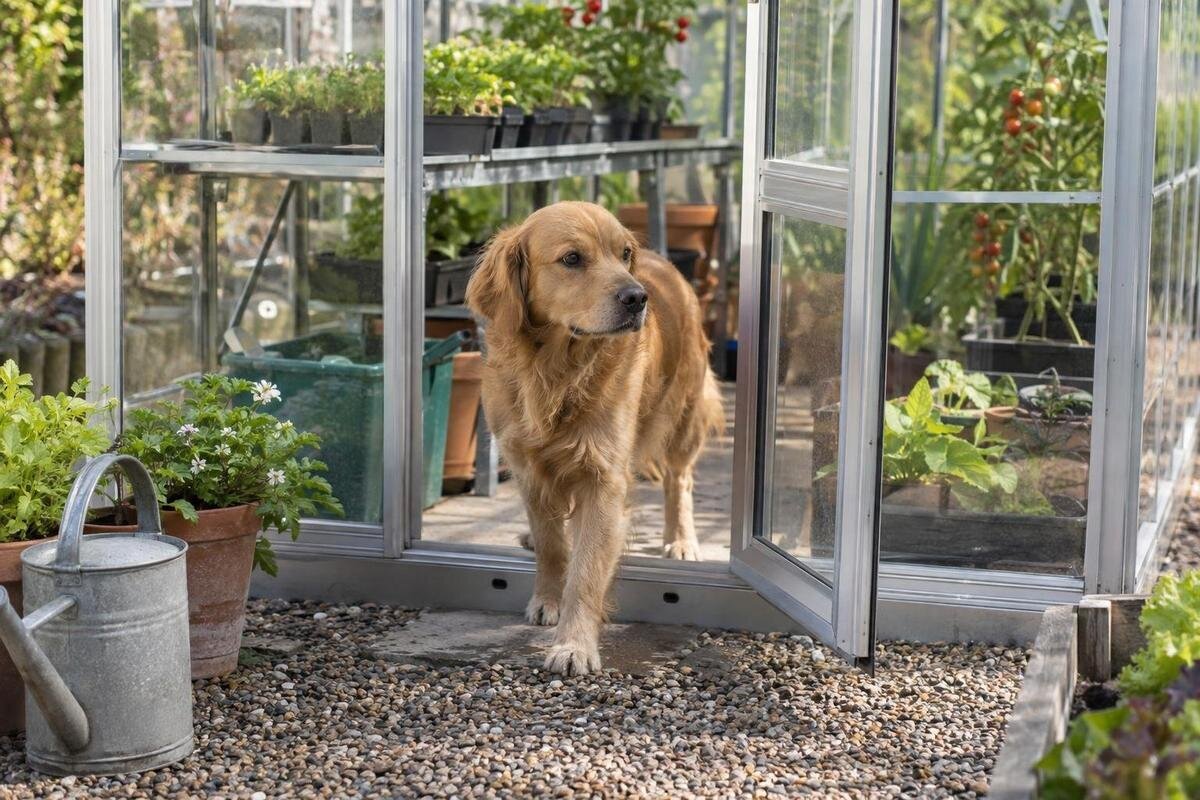
Planning a greenhouse around pets is mainly a matter of controlling access, checking plants properly and keeping tools and growing products out of reach. A frame or product name cannot promise that a structure is pet-proof. Decide whether animals will be excluded or admitted only under supervision, then test the route, doorway, chosen layout, storage and daily routine against the animals in your household. For plant choices, rely on exact identification and veterinary guidance rather than a generic “pet-safe” label.

Set clear rules for pet access
Before choosing benches or plants, define what “access” means at your home. A pet might be excluded altogether, allowed in only with an adult present, or kept to a separate area; these arrangements need different boundaries. Base the rule on the animals who actually live with you: their size, mobility, ability to climb or push a door, and habits around pots, loose objects and food. Consider whether they follow people through openings or investigate work surfaces. Do not assume a pet will remain outside simply because it usually does. If the plan is exclusion, treat the greenhouse as a controlled space and build that rule into the way it is opened, used and closed.
Make the rule workable for everyone who waters, harvests or brings supplies through. Decide who controls the door, where the pet waits during a delivery, and what a visitor or child should do; a boundary that depends on one person’s memory is fragile. A rough plan can help estimate how much separation is possible: the Classic aluminium greenhouse listing gives a size range of 40.6 to 302.3 sq ft. That range is useful for comparing footprints, but it does not describe latches, glazing, gaps or any pet-proof feature. Treat those as separate questions for the selected version.
Choose a site with a manageable route
Walk the route a pet can take from the house, garden or side gate to the greenhouse before choosing a position. Note whether the entrance is visible from the place you tend plants, whether people routinely carry trays through it, and whether an animal could follow unnoticed. A route crossing a patio door, feeding area or busy path may need a separate gate or a change to household routines. Check the approach from more than one direction, including the route used when carrying compost or watering equipment. The aim is to spot the predictable moments when a door is open and decide how the animal is kept apart then.
An aluminium lean-to greenhouse is listed in sizes from 40 to 154 sq ft, but the term describes a form, not a particular entrance arrangement. Ask for the plan of the chosen configuration and mark the approach path, human entry, nearby doors and any space available for a separate barrier. Check whether the person carrying a watering can or plant tray can still control access. If the route is hard to supervise, plan a pet-free interval for greenhouse tasks instead of assuming that placing the structure near the house makes access safer.
Check the door, threshold and gaps
Test the door as a moving boundary, not just an opening of a stated width. Ask how it opens, whether it can be secured when you are working, what hardware is supplied, and how the gap around the closed door is described. Compare those details with the smallest animal that could get through and the largest or most persistent one likely to push it. Include the sill and floor joint: a pet may slip under a gap or be unsettled by a raised threshold, depending on its size and mobility. Consider whether the door can be managed while your hands are full. Do not rely on a loose prop or an unattended open door as an access-control plan.
Ask for a dimensioned drawing showing the door opening, threshold and joint between the base and floor, and confirm any latch or lock details with the supplier. The Prestige greenhouse with a metallic base listing does not specify the threshold height, gaps at the edges or position of the handle. Check these details for the version you intend to buy. If a barrier or threshold alteration is being considered, ask the greenhouse supplier and a qualified installer whether it is compatible with the chosen configuration. Also check the glazing specification and maintenance requirements rather than treating the frame or base as evidence of impact resistance.
Separate growing and working areas
Draw the inside before ordering benches, shelves or pots. Mark the space needed to open the door, central route, work surface, plant beds, tool drop-off and any area that remains off-limits to a pet. Keep the plan realistic: trays and watering equipment need temporary space, and a person should not have to move sharp tools or garden products simply to pass through. If a pet is permitted under supervision, identify where the person can stand and see it; if pets are excluded, show the physical boundary or closed storage that supports that rule. A clear circulation route also makes it easier to notice when something has been left where it should not be.
Use the chosen model’s drawing and dimensions rather than a stock photograph. The Pyramid greenhouse listing spans 60 to 203 sq ft, so choose a specific size before allocating space to growing and working areas. Mark both permanent fittings and temporary items, such as a tray waiting to be planted. For supervised visits, consider what an animal could reach from the aisle, including objects beneath benches and pots near shelf edges. A high shelf alone is not a reliable boundary for an animal that climbs. Allow a clear place to set down supplies so that you can close the door without balancing a tray or leaving tools within reach.

Verify each plant for your pet’s species
Plant advice has to match the animal, not just the garden. Start with the plant’s full botanical name, because common names can refer to different plants; record the species and, where available, the cultivar, and whether you mean seeds, bulbs, leaves or another part. Use a reliable horticultural reference such as the Royal Horticultural Society (RHS) to help identify the plant, then seek animal-specific toxicity advice from your veterinary practice or a veterinary poison-information service. A general plant entry or retailer description is not, by itself, a veterinary assessment.
Check sources written for the species you keep. Advice for dogs cannot automatically be applied to cats, rabbits, guinea pigs, birds or reptiles, and a general “pet-friendly” description may not identify which animals or plant parts it covers. Keep a written list of plants, including names and where they are placed, and check new purchases before bringing them into the greenhouse. If you think an animal has chewed an unknown plant, contact a veterinary professional for case-specific advice and provide the plant label or a clear identification; do not judge an actual exposure from a general list alone.
Control seeds, cuttings and plant waste
Seeds, bulbs, cuttings and fresh seedlings deserve their own access plan. Small pots and labels are easy to knock over, and the contents may be difficult to identify once a packet has been opened. Keep propagation trays on a stable surface outside any pet route, label them clearly, and return packets and spare bulbs to closed containers after use. Do not assume a seed, young plant or cutting is harmless because a mature plant is familiar; check the exact item before deciding whether it can be left within reach. The simplest rule is to keep unverified material physically inaccessible until you have checked it.
Plan for waste as well as growing stock. Fallen leaves, pulled seedlings, trimming debris and used plant labels can end up on the floor during routine work, so give a closed waste container a defined place and remove loose material before a pet enters. Include the route used to carry that container to your outdoor waste or compost area: separation needs to continue while the door is open for removal. When considering the aluminium Limited Edition greenhouse, listed from 40.6 to 302 sq ft, allocate a waste-container position beside the working area without narrowing the aisle. Also mark where potting mix and water trays will stand, checking whether your animal could reach, tip or disturb them.
Secure tools and garden products
Put equipment away according to its instructions rather than leaving a convenient pile beside the bench. Secateurs, knives, wire, ties and broken pots can create handling or access problems; fertilisers, pesticides, weed-control products, slug-control products and cleaners need to be managed in line with their labels. Keep items in their original, labelled packaging, separate them from food and pet supplies, and do not decant them into drink or food containers. Choose a storage location an animal cannot reach or open, and return items to it after each job. If a label gives specific storage requirements, follow those instead of assuming an ordinary greenhouse shelf is suitable.
An advertised greenhouse with built-in storage may simplify the layout, but “built-in” does not establish that the compartment locks, is separate from the growing area or suits a particular product. Ask for the storage drawing, door and lock details, location, and any stated limits; then compare them with the labels on the products you intend to keep. If secure storage is not described, plan an appropriate separate cabinet or another controlled store, and ask the supplier or manufacturer about compatibility rather than modifying the structure yourself. Store sharp or hazardous equipment in its proper place even when the greenhouse is closed.
Account for heat, glazing and powered equipment
Temperature and glazing need to be part of the pet-exclusion plan. A greenhouse can become very warm in sunshine, so do not use it as a place to leave an animal while you work elsewhere; an open vent should not be treated as proof that conditions are suitable. Check how windows and vents operate, whether an animal could reach or escape through them, and how doors behave when they are open for ventilation. Ask the supplier what glazing is used and what care or replacement guidance applies. If you are considering a secondary barrier near glass, make sure it does not obstruct ventilation, access or the intended use.
Powered equipment needs its own check. Heaters, fans, lights, propagators, pumps and watering controls can have accessible leads, moving parts or hot surfaces, depending on the product. Follow each manufacturer’s instructions, keep equipment inaccessible where required, and inspect it for damage before use; do not improvise protection that could affect ventilation or operation. For a mains-powered device or any change to a fixed electrical installation, ask a suitably qualified professional to advise on safe placement and installation. Decide how pet access will be controlled before equipment is switched on, not after a cable has been routed.
Check circulation and visibility in the floor plan
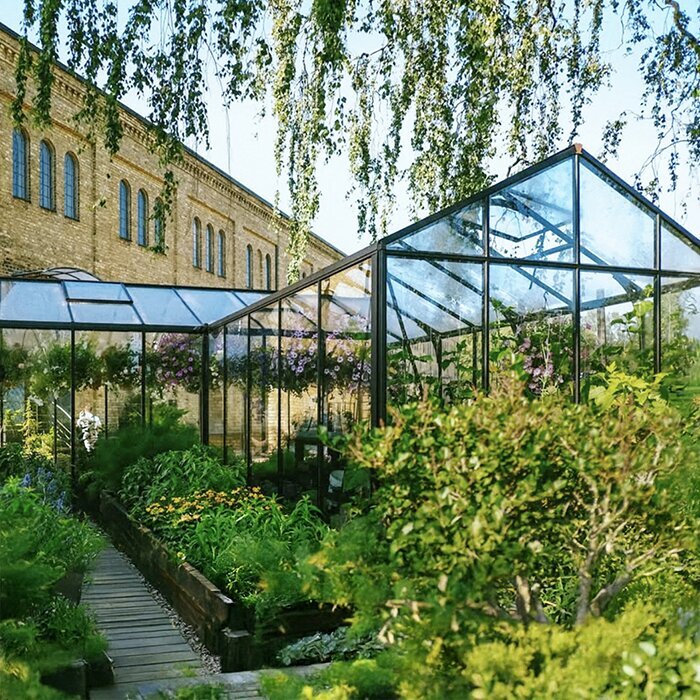
Shape affects how you organise circulation, but a product title is not a floor plan. With a T-shaped orangery greenhouse, ask for the drawing of the selected configuration and mark the junction between its sections, the doors, work surfaces and storage. Check whether all areas can be seen from a usual working position and whether a person carrying a tray can move without squeezing past equipment. Do not assume that a T-shaped outline supplies separate rooms or a pet barrier; confirm the actual internal layout and any partitions directly.
Test the plan on paper before you commit. Use the stated dimensions for the selected version, sketch bench depths and the door’s usable opening, then trace your ordinary jobs: carrying a compost bag, watering, removing prunings and putting tools away. Notice pinch points and blind corners, especially behind tall plants or beneath work surfaces. Consider whether you would have to leave a supervised animal out of sight to fetch supplies from another part of the greenhouse. If so, change the arrangement or keep pets elsewhere during that task. Mark unresolved dimensions and sightlines on the drawing so that your questions to the supplier are specific.
Build pet checks into the daily routine
Make the routine specific enough to survive a busy day. Before opening the greenhouse, decide where pets will be and keep them apart while the door is uncontrolled; while working, return tools and products as each task ends rather than leaving everything out until the final tidy. At closing, remove loose plant waste, check that windows and doors are in their intended position, and make sure no animal has been shut inside. Share the same steps with household members, visitors or anyone who helps in the garden. Revisit the plan when a new pet, plant, product or piece of equipment is introduced.
Size can change how easily you maintain those checks. The Large orangery is listed from 506 to 753 sq ft, so consider how you would inspect the whole selected layout at closing time. Include areas behind benches, beneath shelves and around dense planting rather than checking only the central aisle. For a larger layout, follow the same route each time so that less visible corners are not overlooked. Keep a brief record of recurring problems, such as tools left out or a door opened during deliveries, and adjust the routine accordingly. Choose a configuration that fits both your growing work and the checks you can reliably maintain.
Frequently asked questions
Can I let my pet into the greenhouse?
Only if you have decided that supervised access is appropriate for that animal and can manage the door, plants and equipment during the visit. If you want pets excluded, use a consistent physical boundary and household routine rather than relying on a door being left ajar.
How can I check whether a greenhouse plant is toxic to my pet?
Identify the plant by its botanical name, then seek advice for your animal’s species from a veterinary practice or veterinary poison-information service. General gardening descriptions and lists for a different species are not a substitute for that advice.
Does built-in greenhouse storage keep products away from pets?
Not necessarily. The name does not confirm whether a compartment locks, where it is positioned or whether it suits the products you plan to store. Check the selected layout and storage details, and follow each product label.
Is an open vent enough to make a greenhouse safe for a pet in warm weather?
No. Greenhouses can become very warm in sunshine, and an open vent is not proof that conditions are suitable. Do not use the greenhouse as a place to leave a pet while you work elsewhere.
What should I ask about before choosing a greenhouse?
Request the plan for the exact configuration and check door positions, thresholds, gaps, glazing, vents and any storage details. Ask the supplier or a qualified professional about anything unclear, especially if you plan to add a barrier or powered equipment.
A pet-aware greenhouse plan brings together boundaries, verified plant information, secure storage and an everyday routine that everyone can follow. Check the actual drawing for the selected greenhouse rather than assuming a name or footprint answers questions about doors, glazing or storage. With access rules set before planting and changes reviewed as your collection and equipment grow, the greenhouse can remain practical to use without treating pets’ safety as an afterthought.
