
Growing Ranunculus in a Greenhouse: A UK Guide
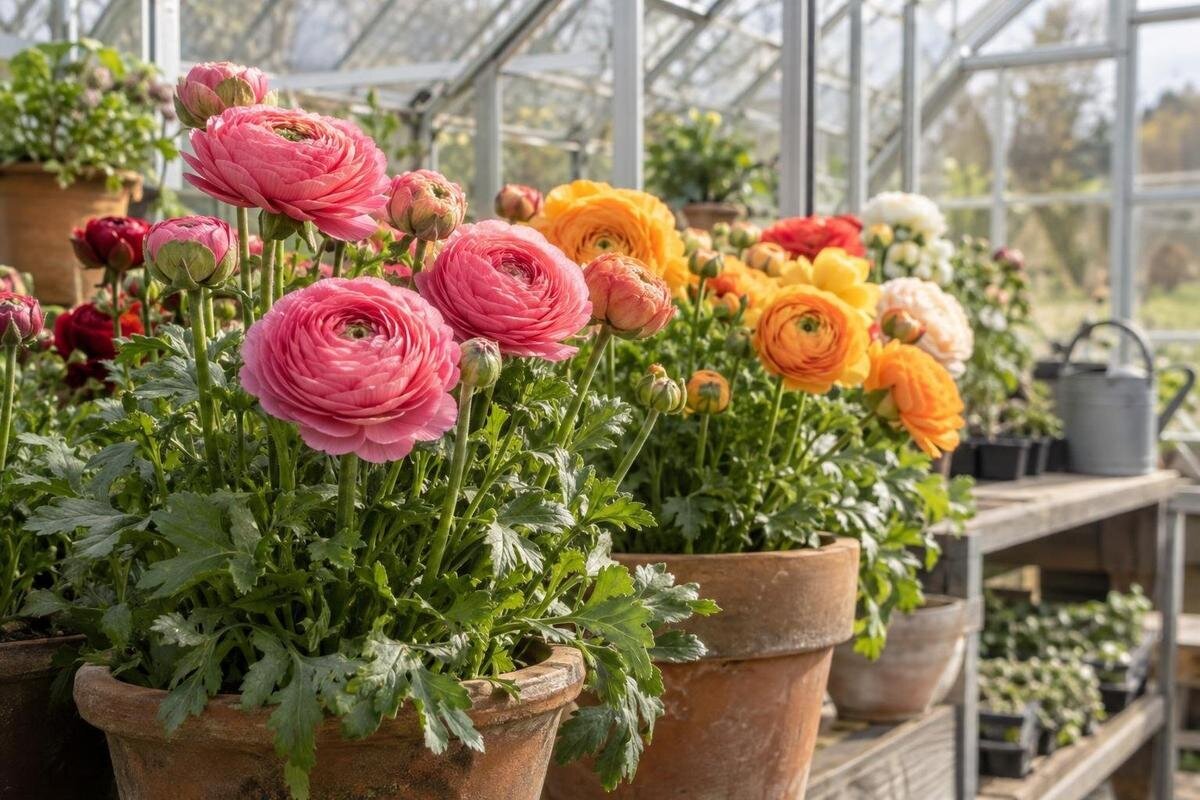
FLOWER-GROWING GUIDE
Ranunculus can provide a valuable spring cut-flower crop under glass, but success depends on timing, drainage and fresh air more than on heating. The claw-shaped corms need to start growing in cool conditions; winter sunshine can still warm a greenhouse quickly, while damp compost can prevent them establishing well. This UK guide explains when to plant, how to prepare corms and beds, and how to manage light, watering and ventilation so the crop can flower without being pushed into excess heat or persistent damp.

Why ranunculus suit a cool greenhouse
Most ranunculus grown under glass are Persian buttercups (Ranunculus asiaticus), raised from dry, claw-shaped tubers commonly sold as corms. This guide uses the familiar buying term, corms. They are cool-season flowers: foliage establishes in cooler weather, and buds develop as spring light strengthens. A greenhouse can shelter a bed from persistent rain and make watering easier to manage, which is useful when flowers are grown for cutting. The cover may bring flowering forward compared with an exposed plot, but it cannot guarantee a date. Cultivar, planting time, light and the temperatures the plants experience all affect when the first stems are ready.
Think of the greenhouse as a protective growing space, not a heated summer room. On a bright day, air under glazing can warm quickly even when the garden feels cool, while temperatures may fall sharply overnight. That variation makes it useful to observe conditions rather than assume the house stays mild. Ranunculus usually flower in a spring window; prolonged warmth can shorten the useful crop, and summer dormancy is a normal part of their cycle. The aim is to manage rain, airflow and timing around a cool-season plant, not to keep it growing continuously.
When to plant ranunculus corms in the UK
For a spring display or early cut flowers, autumn planting gives the crop time to establish under cover. The RHS recommends planting Persian buttercups in containers from September to December, then growing them in a cool greenhouse or cold frame. Spring planting is another option, using planting material available at that time and following the supplier’s instructions for the cultivar. It generally means a later start than an autumn batch. These are seasonal guides, not fixed flowering dates. A cold spell, a mild winter, the cultivar and the amount of available light can all shift the result.
Plan backwards from the period when you hope to cut flowers, allowing several months rather than expecting blooms within a few weeks. Check the supplier’s guidance for the cultivar, then record the planting date, first shoots and first flowers so you can adjust next season. To extend the picking window, try dividing a small batch between two planting dates a few weeks apart. Do not put corms into cold, waterlogged soil just to meet a calendar date. If the greenhouse is prone to hard frost, wait for milder conditions or protect young growth appropriately.
Choosing and preparing ranunculus corms
Choose corms that are firm and intact, without soft patches, visible mould or serious damage. Their naturally dry, wrinkled appearance is not by itself a reason to reject them. Keep different cultivars or batches labelled, and store unplanted corms in the cool, dry, ventilated conditions stated by the supplier. Avoid leaving them in a damp packet or sealed container. If you need a separate place for tools and labels, the limited-edition greenhouse with built-in storage is one layout to compare; do not assume its storage compartment provides the conditions dormant corms need.
Follow the supplier’s soaking instructions for your batch; recommendations can differ. The RHS growing guide advises soaking Persian buttercup tubers for a day before planting. Use clean water and a clean container, then drain the corms and plant them in prepared compost rather than leaving them sitting in water afterwards. Keep cultivar labels with each batch throughout preparation. Soaking is a preparation step, not a test of whether every corm will grow: inspect them again before planting and discard any that are mushy or smell unpleasant. Preparing only the quantity you have space to plant avoids having hydrated corms waiting while you finish a bed or find suitable pots.
Preparing beds and containers
Ranunculus need soil or compost that holds some moisture but drains freely. In a greenhouse bed, remove old plant debris and loosen compacted ground when it is not wet. If the soil needs organic matter, mix in mature compost rather than fresh manure. Do not plant where water regularly pools after watering. If drainage is poor, consider a raised bed or containers rather than trying to keep corms in permanently wet ground. A bed that is easy to weed and reach from both sides is also simpler to inspect for rotting leaves and spent flowers.
Containers are useful for a small crop or where you want to move plants to a brighter position. Use pots with drainage holes and a good-quality, free-draining container compost; empty any saucers rather than letting pots stand in water. Containers can dry out faster than a bed, so check them more often once foliage is growing. For larger plans, include the bed, a working path and room to reach each row when comparing greenhouse sizes. The Prestige greenhouse is listed in options from 40.6 to 302 ft²; check the specific dimensions and layout rather than assuming the area will all be usable growing space.

Planting depth and spacing
Set each corm with its claw-like points facing down and its crown uppermost. Cover it with about 5 cm (2 in) of soil or compost, firming the surface gently without pressing it into a hard crust. Water lightly to settle the medium. If a corm has broken points, plant it with the crown facing upwards as best you can; do not force damaged pieces into the soil. Mark each row with the cultivar and planting date, since young shoots can be easy to mistake for weeds and different batches may flower at different times.
For a home bed, leave roughly 10–15 cm (4–6 in) between corms, with extra room for larger varieties or where you want easy access for picking. Avoid packing plants tightly to fit in more; crowded foliage is harder to inspect and stays damp for longer. Measure the growing area from the inside and include a route for watering and harvesting. If you are comparing a wall-adjacent layout, the Lean-To Greenhouse is listed in sizes from 40 to 154 ft². Check the actual dimensions, light exposure and access on the site plan before deciding how many rows will fit.
Light and temperature under glass
Ranunculus are cool-season plants, not tropical crops needing a consistently warm greenhouse. The RHS gives a useful reference for Persian buttercups: growing below 15°C produces compact plants and delays flowering until April under the conditions described in its guide. It also notes that established plants can tolerate temperatures down to 0°C; that is not a promise that newly planted corms or young shoots will withstand freezing conditions. Use a minimum–maximum thermometer near the foliage to check overnight lows and daytime peaks. Follow any cultivar-specific guidance from the supplier, and protect young growth from hard frost. Open vents on sunny days when conditions permit, because a cool outdoor forecast does not rule out overheating under glass.
The RHS recommends bright light for Persian buttercups grown under cover. Avoid persistent shade from shelving, nearby buildings or other crops, and keep the glazing clean. Observe where shadows fall across the bed at different times of day rather than judging the position from a single sunny visit. Short winter days can slow growth, so adding warmth is not a substitute for a well-lit position. Ventilation helps you retain that light without relying on heavy shading to control heat. The limited-edition greenhouse range is listed in sizes from 40.6 to 302 ft². When planning a bed within that space, consider its position relative to the glazing, surrounding shade and any benches that could block daylight.
Watering and feeding ranunculus
After planting, water enough to settle the soil, then avoid keeping it continuously wet while corms are establishing. Once foliage is actively growing, aim for even moisture: do not let the root zone dry out completely, but allow the surface to begin drying between waterings. Check the bed or pot before watering rather than following a fixed daily schedule; cool, cloudy weather and warm sunshine create different needs. Water near the soil rather than over the leaves, and make sure excess water can drain away. A cold, wet root zone is more likely to cause trouble than a brief pause between waterings.
Work mature compost into the bed before planting if it needs improvement. Once leaves are established, a balanced fertiliser can be used at the rate on its label; avoid repeated heavy feeding, especially with a high-nitrogen product. Too much feeding will not correct poor light or waterlogged roots. Containers may need feeding during active growth, but follow the product directions and do not apply fertiliser to dry compost. Water access is part of greenhouse planning too: the aluminium Classic Greenhouse is listed in options from 40.6 to 302.3 ft². Use the actual plan to consider beds, paths and your chosen watering method; a listed area does not tell you where a water point will be.
Ventilation and disease prevention
Still, humid air and foliage that stays wet encourage problems such as grey mould. Condensation on the greenhouse, damp leaves and fallen petals left beneath plants are signs to improve the routine. Ventilate when the weather permits, particularly on mild, bright days, and avoid watering late in the day if leaves are likely to remain wet overnight. Do not keep the house sealed simply to retain warmth: ranunculus need fresh air as well as cool conditions. Balance ventilation with frost protection, and check the crop itself because conditions at plant level can differ from those near the door.
Inspect leaves, flowers and corms regularly. Grey-brown patches or fuzzy grey growth can indicate grey mould; remove affected material promptly and clear away old petals and leaves. Keep plants spaced so you can reach them, use clean tools and avoid reusing growing medium from a crop that has rotted. The Spacious Greenhouse listing covers options from 506 to 753 ft², but a larger floor area does not guarantee a well-spaced crop or particular ventilation. Use the actual layout to plan beds and paths. If symptoms keep spreading or are unclear, seek a reliable diagnosis before applying a treatment.

Harvesting and caring for corms after flowering
For cut flowers, the RHS advises harvesting Persian buttercup stems before the flowers are fully open. Look for buds beginning to open rather than relying on colour alone, and follow any harvesting guidance supplied for your cultivar. Cut a few stems at first and observe how they open in the vase; this helps you judge the useful stage for your own crop. Use clean, sharp secateurs and place stems in a clean container of water soon after harvesting. Arrange beds so you can reach flowers without brushing against neighbouring foliage, especially when leaves are wet. The T-shaped orangery greenhouse is one named format to compare when sketching a route for cutting and carrying stems; use its dimensions to work out where beds and harvesting access could go.
After flowering, remove spent blooms but leave healthy foliage in place. The leaves continue to support the corms, so do not cut them back while they are still green. As foliage yellows naturally and growth slows, reduce watering and let the plants complete their seasonal cycle. The RHS recommends growing Persian buttercups as annuals and replacing them each year. Saving corms is therefore better treated as a small trial than as a dependable source of next year’s cut flowers. If you try it, lift them after the foliage has died back, dry them in an airy place and store them cool and dry according to the supplier’s advice. Label saved batches separately so you can compare their performance with fresh planting material.
Planning greenhouse space for ranunculus
Ranunculus do not need unusual headroom, but they do need enough floor space for beds or pots, access for watering and room to pick flowers. Decide whether you want a few containers or a dedicated cut-flower patch before comparing structures. Include the width of paths and the space needed to work at the bed edge, not just the number of corms that can be planted. Light, ventilation and drainage matter more to this crop than a tall growing area. Check how the greenhouse will sit in its surroundings, including shade from buildings or trees and the route you will use to reach it.
Compare exact dimensions and the ventilation details of each configuration rather than drawing conclusions from a model name or overall area. A floor plan can show whether a bed is accessible and whether rows can be spaced for airflow; product information is needed to confirm the details of a particular greenhouse. The Pyramid-type greenhouse is listed in sizes from 60 to 203 ft², which offers an area reference, not a guarantee of usable bed shape or crop conditions. Choose a layout only after checking it against the site and the way you intend to grow and harvest.
Frequently asked questions
Can ranunculus grow in an unheated UK greenhouse?
Yes. A cool, unheated greenhouse can suit ranunculus, provided the corms are planted at an appropriate time and the growing medium drains well. Glass does not guarantee frost protection: use a thermometer and protect young growth from hard frost when necessary.
How long should I soak ranunculus corms?
Follow the supplier’s instructions for your batch. The RHS recommends soaking Persian buttercup tubers for a day before planting. Use clean water, drain them afterwards and plant in prepared, free-draining compost; do not leave hydrated corms waiting in standing water.
How deep should I plant ranunculus corms?
Set each corm with its claw-like points facing down and cover it with about 5 cm (2 in) of soil or compost. Leave roughly 10–15 cm (4–6 in) between corms, allowing more room for larger varieties or easier access.
Why are my ranunculus leaves turning yellow?
Yellowing after flowering can be the plant’s normal move towards dormancy. If it happens while the crop is actively growing, check for waterlogged compost, damaged roots, disease or frost. Look at the whole plant and its growing conditions rather than treating yellow leaves as a diagnosis on their own.
Can I keep ranunculus corms for next season?
You can try, but the RHS recommends growing Persian buttercups as annuals and replacing them each year. For a saving trial, let the foliage die back naturally, then lift and dry the corms in an airy place. Store them cool and dry according to the supplier’s guidance, and keep saved batches labelled so you can assess next season’s flowering.
Growing ranunculus under glass is a seasonal project: start with sound corms, give them a cool and bright growing period, and keep their roots moist without leaving them saturated. A small trial row is a useful way to learn how a particular cultivar responds to your greenhouse before planting a larger batch. Record planting and flowering dates, and let the foliage die back naturally after cutting. Those observations help refine the timing and care for the next crop.
