
Root Barriers for Greenhouse Beds Beside Established Planting
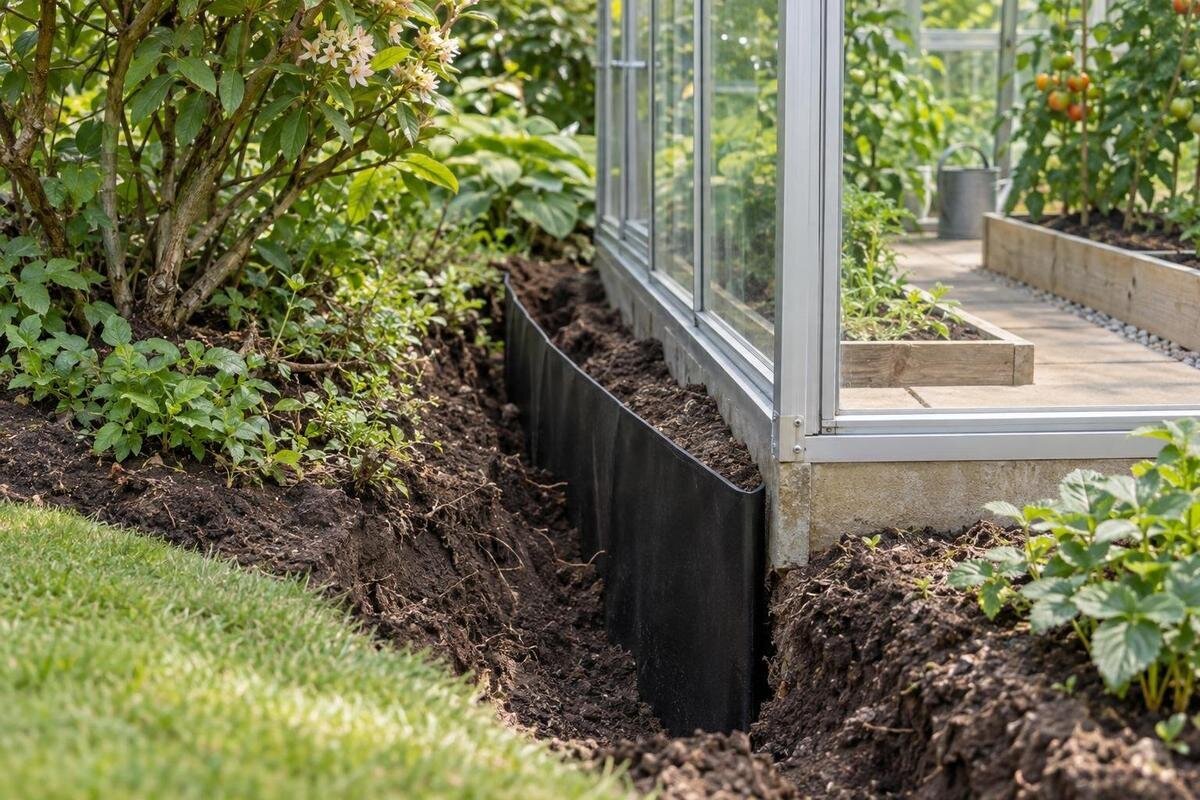
Greenhouse beds
Putting a greenhouse beside an established tree, hedge or shrub border can make good use of a garden, but the planting does not end at the visible edge. Roots may enter beds that remain open to the ground; a trench intended to stop them can, in turn, damage roots important to the neighbouring plant. Ordinary bed edging is not necessarily a root barrier. A sound plan starts by identifying the likely route, mapping the greenhouse and growing beds, and deciding whether separation is safe—or whether another layout is better.

01
Why roots can reach greenhouse beds
Tree and shrub roots do not stop at the visible edge of a crown, hedge or border. Their spread and depth vary with species, age, soil structure, available moisture and past disturbance, so the planting you can see gives only a rough guide to what lies below. Fine roots can occupy cultivated ground beyond the obvious planting line. Regularly watered greenhouse soil may also support roots from neighbouring plants, although this does not mean a plant deliberately targets the greenhouse. The frame and glazing cover the growing area; they do not, by themselves, seal the soil underneath. A bed open to the ground remains connected to its surroundings.
Where a bed is open to the ground, roots may approach from the side or below. That can create competition for water and growing space, but root presence alone is not proof of a crop problem: some roots may belong to greenhouse plants or weeds, and poor growth has several other possible causes. The neighbouring plant matters too. An established tree or shrub depends on its root system, and cutting, compacting or abruptly changing soil around it may cause harm. Consider crop performance and the protection of nearby planting together, rather than treating every root in a bed as something to remove. A barrier may redirect growth, not make roots disappear.
Map the planting, bed and greenhouse together
Use a measured sketch before ordering or digging. Mark the centres of trees and shrubs, the hedge line, canopy edge, visible roots, existing ground levels and any known buried services. The canopy can be a useful clue, but it is not a reliable boundary for roots. Add the greenhouse’s outside outline and support footprint, then mark beds, paths, storage, water points and working access around each bed. Measurements matter at the edges: a frame, bed, path and access route can occupy different ground. If the greenhouse is already in place, note what could still change, especially bed lines and the space needed to reach plants without disturbing neighbouring planting.
Compare a particular greenhouse size and configuration, rather than relying on a product-family name or total area alone. The Limited Edition greenhouse range is listed from 40.6 to 302 sq ft; that span shows why the selected model matters, but it cannot tell you how a specific footprint sits beside a particular tree. Ask for the dimensions of the complete structure and its support base, then put them on the site plan. Include access and bed layout, not only enclosed floor area. Mark which measurements are confirmed and which are estimates. This can reveal whether moving a bed or reconsidering the greenhouse position would avoid excavation altogether.
02
Use crop symptoms as clues, not proof of root intrusion
Do not diagnose root intrusion from one symptom. Wilting, uneven growth or a bed that dries quickly can also reflect inconsistent watering, drainage, planting dates or the needs of a particular crop. Note which plants are affected, when the change began and whether it is concentrated on the side facing the established planting. Check whether watering reaches both sides of the bed and whether conditions differ consistently, rather than changing soil or installing a barrier after one poor spell. Compare neighbouring crops and the same bed over time. Photographs taken from the same points can help show whether a problem is repeated or temporary. A pattern may make root competition more plausible, but it does not identify the source.
Inspect only places already exposed, such as the soil surface, an open bed edge or a patch disturbed during ordinary work; do not make an exploratory trench beside a tree. Roots could belong to a tree, shrub, weed or greenhouse crop. Record their location on the same plan as the affected plants, and seek identification if that changes your decision. For a layout such as the T-shaped orangery greenhouse, distinguish each growing area in your notes rather than recording one result for the whole greenhouse. This helps you compare separate beds, watering zones and crop positions. Keep observations separate from conclusions: finding roots beside a struggling crop is useful evidence, but does not establish their source or prove that they caused the problem.
Protect important roots before any excavation
Roots near a bed may be fine roots, but their importance cannot be judged reliably by sight alone. Root systems contribute to water uptake and anchorage; severing major roots or disturbing soil around them can affect the health or stability of established planting. The risk varies with species, size, condition and ground conditions, so there is no universal safe distance or simple root diameter that makes a cut acceptable. The greenhouse boundary does not change that assessment. If a proposed barrier needs excavation near established planting, pause before digging and arrange an on-site assessment, particularly where the tree or shrub is mature or important to keep.
An arborist can assess the specific tree or shrub and advise whether the barrier line is appropriate, whether another route is preferable, and whether any investigation can be carried out safely. Share the measured plan, photographs and details of proposed groundworks rather than asking for advice on a rough position. If you are considering a Pyramid-type greenhouse, include the proposed structure, bed boundaries and construction access in that assessment. The work area matters as well as the finished layout: materials may need storing and workers need a route to the site. Ask who will oversee work near roots and what should trigger a pause. Agree those arrangements before excavation begins, rather than leaving decisions to whoever first encounters a root.

03
Choose a boundary that suits the growing method
Garden edging is usually intended to hold soil in place, not to exclude roots. Do not assume timber, brick, metal edging or a layer of ordinary landscape fabric is a root barrier unless its maker specifies that use. An open-bottom raised bed remains connected to the ground, so roots may still enter from below. A contained system may provide greater separation, but its base changes how water drains and how roots can develop. The right boundary depends on whether the bed is permanent, how it is watered and what growing medium it uses. Decide what you need the boundary to do before choosing a material.
Include the whole interior arrangement in your plan, not just the growing area. If storage is part of your greenhouse layout, mark it separately from the beds; a greenhouse with built-in storage is one example of why non-growing space matters when you work out bed edges and access. Then check that the proposed boundary works with the bed construction, irrigation and drainage, rather than obstructing them. A bed edge should not be treated as part of the greenhouse support system or as a substitute for its design. If a boundary might meet or affect the greenhouse base, ask the installer to assess that relationship.
Decide whether a root barrier is justified
A barrier is worth considering when there is credible evidence of roots entering a bed, the bed needs to stay in that position, and an appropriate professional considers a safe route possible. It is not a default response to a tree being nearby or to plants having a poor season. First consider whether a modest change to bed position, watering or growing method would solve the practical problem with less disturbance. If the source of the roots is uncertain, identify it before choosing a barrier. A physical boundary installed without a clear reason can add excavation and maintenance without addressing the cause of poor growth.
Compare the practical consequences of a barrier with those of changing the growing system. Ask what excavation it requires, who will assess and carry out the work, which parts remain accessible afterwards, and how any failure would be investigated. Include the greenhouse base in that discussion. If the Bloomcabin Prestige Greenhouse is on your shortlist, request the base details for your chosen configuration so the proposed bed boundary can be considered alongside it. Do not assume that the base provides underground root exclusion. A useful decision records both the reason for choosing a barrier and the alternatives rejected; this makes it easier to reconsider the plan if the root assessment or installation requirements reveal a problem.
04
Verify the barrier material and route
Choose material on declared suitability for root control, not on appearance or thickness alone. Check the manufacturer’s stated use, compatibility with soil contact and the growing arrangement, expected service life, joint or seam details, and any limits on installation. A weed-control membrane or general-purpose sheet is not automatically suitable for excluding woody roots. Ask how the material is intended to be joined and maintained, and whether it is compatible with the bed construction and irrigation. If the information does not clearly cover the intended use, seek written clarification or choose a different approach rather than assuming that a generic product will perform as needed.
The route, depth and ends of a barrier depend on the site; there is no universal dimension that makes it safe or effective beside every tree. Have an arborist assess the roots and agree the proposed route with the person responsible for the greenhouse base or groundworks. Ask how the design addresses roots passing around its ends or beneath it, and how it affects drainage on both sides. The Spacious Greenhouse is listed from 506 to 753 sq ft. For a layout of that scale, distinguish the perimeter boundary from individual bed boundaries: they may involve different lengths, junctions and maintenance access. Request a drawing showing those details, rather than accepting a material specification without an explanation of its proposed use.
Use layout changes when trenching is unsuitable
If excavation would put important roots at risk, consider changing the plan instead. Before a greenhouse is built, adjusting its position may avoid the most sensitive area; with an existing greenhouse, moving the beds or narrowing a bed may be more practical. Preserve workable access, suitable light and the ability to water plants consistently when testing alternatives. A container or a bed with a suitable intact base can separate growing medium from the ground, but an open-bottom arrangement does not. Check drainage and crop requirements for any contained system rather than assuming that every pot or raised bed provides the same separation.
Use a measured plan to test whether a different greenhouse size would allow beds to move away from sensitive ground. The Classic greenhouse range is listed from 40.6 to 302.3 sq ft; compare the selected dimensions with the space needed for your alternative growing system. If you replace ground beds with containers, calculate their usable growing volume from internal measurements, not the greenhouse floor area. For a rectangular container, internal length multiplied by width and filled depth gives its volume; allow for any space left below the rim. Compare that volume and depth with reliable guidance for the intended crop. This makes the trade-off explicit: avoiding excavation still requires enough growing medium, suitable drainage and room to tend the plants.

05
Check the chosen greenhouse layout against the bed plan
Check whether the proposed layout lets you maintain the bed boundary throughout the growing season. Mark where you will stand to inspect joints, clear accessible drainage outlets or replace a container, and consider how access changes once crops and their supports are in place. A gap that is reachable before planting may become difficult to use later. Keep routine work within the greenhouse or an agreed access area, rather than relying on stepping into the neighbouring border. Ask for internal dimensions where a frame or base reduces usable space. These checks turn the outline sketch into a working layout and can reveal a maintenance problem before beds are filled.
When evaluating a lean-to greenhouse, check access to both the front and rear edges of the proposed beds. If a bed sits against a wall, establish how its boundary and drainage will be inspected without removing the crop or dismantling permanent fittings. Show the installer where beds, containers and any barrier would meet the greenhouse support footprint; have an arborist assess ground disturbance near important roots separately. Record which components belong to the greenhouse and which belong to the growing system. This helps avoid a later repair to a bed edge inadvertently affecting the structure, or a greenhouse repair requiring unplanned disturbance of nearby roots.
Monitor the beds and neighbouring planting
After settling on a layout or installing a professionally assessed barrier, keep a simple record of how the bed and neighbouring plants are doing. Take dated photographs from consistent positions and note watering changes, crop growth and any roots visible during ordinary bed maintenance. Do not dig just to check whether the barrier is working. These records can help distinguish a new change from a condition that was present before the greenhouse beds were altered. They also give an arborist useful context if the tree or shrub appears to change after nearby work.
If roots appear again, record the location and date rather than deepening a trench or adding another barrier by guesswork. They may have reached the bed by a different route, or the original crop problem may have another cause. Compare the new observation with earlier photographs and the installation drawing, then arrange reassessment before disturbing more soil. Keep the barrier’s product information, joint details and maintenance requirements with the site plan. Note any later changes to bed depth, paths or irrigation as well. A clear record helps future gardeners and contractors understand the boundary without having to uncover it through avoidable digging.
Frequently asked questions
Can tree roots grow beneath a greenhouse?
Yes, if the greenhouse bed remains connected to the ground. A frame, glazing or ordinary edging does not automatically separate the soil below. Roots may enter from the sides or underneath, but their presence and source need checking rather than assuming the nearest tree is responsible.
Does a raised bed keep roots out?
An open-bottom raised bed is still connected to the ground, so it does not by itself exclude roots. A contained bed may create more separation, but its base and drainage need to suit the crops and growing medium. Check how the chosen system is designed to work.
Can I cut a root that I uncover?
Do not decide that a root is safe to cut just because it is in the way or looks small. Its importance depends on the plant and site, and visible size alone is not a reliable guide. Pause the work and ask an arborist to assess it.
Will a root barrier stop every root?
No barrier should be assumed to provide complete exclusion in every situation. Its performance depends on the product, its joints and installation, the soil and the route roots can take around it. A barrier may redirect roots, so plan it with the neighbouring planting in mind.
What if excavation beside the planting is not suitable?
Consider moving the greenhouse before it is built, changing the bed position, or using a suitably contained growing system. An open-bottom bed is not isolated from the ground. Check any container or base arrangement for appropriate drainage and growing space.
A root barrier is only one possible way to manage roots beside greenhouse beds, and it is not automatically the safest or most effective one. Map the complete layout, check whether roots are genuinely part of the problem, and protect established planting before considering excavation. Where a barrier is unsuitable, a revised bed position or contained growing system may provide a more workable boundary. The aim is a greenhouse layout that supports the crops without treating important neighbouring roots as an obstacle to remove.
