
Why Greenhouse Tomatoes Split and What to Check
Greenhouse crop advice
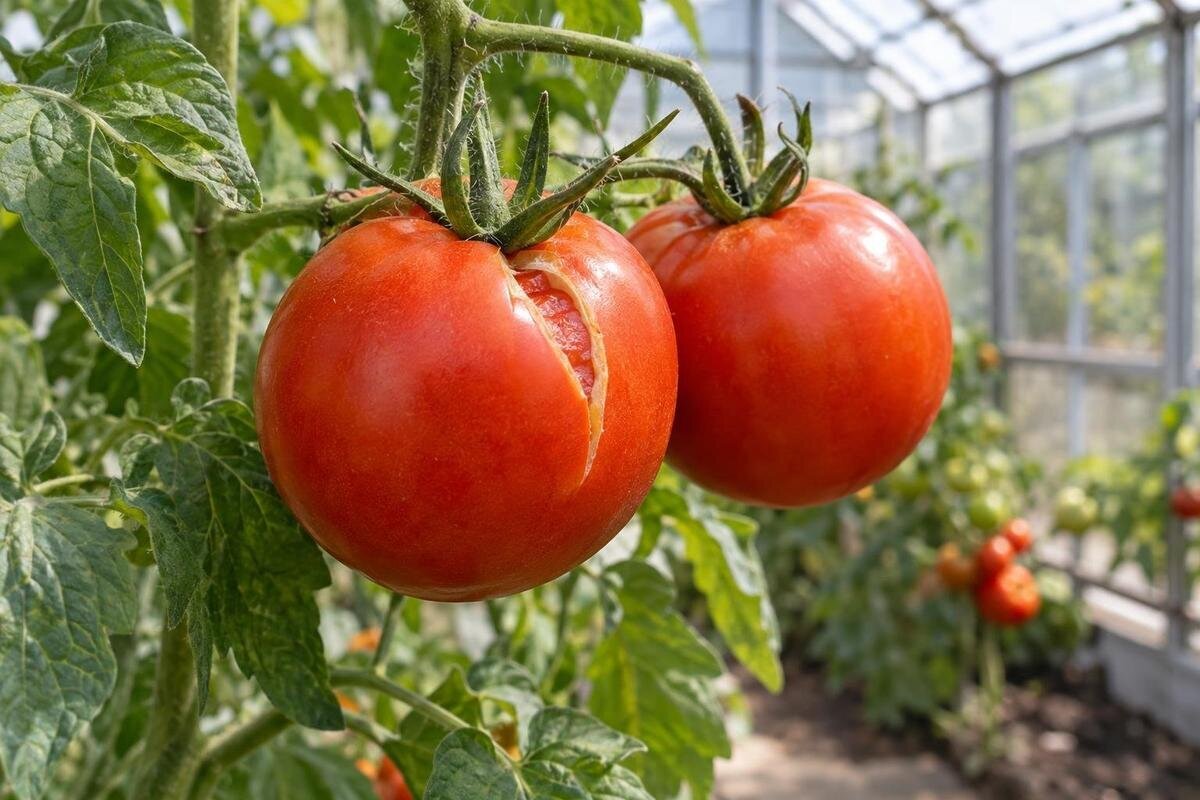
Tomato splitting is commonly associated with fluctuations in moisture around the roots. A greenhouse keeps rain off the crop, but it does not prevent changes in watering or growing conditions. Treat the crack as a clue rather than a complete diagnosis: check its shape, the fruit’s stage, root-zone moisture and recent conditions before changing your routine.

How changes in root moisture affect tomatoes
RHS guidance identifies fluctuating soil moisture as a cause of tomato splitting and cracking. A common pattern to investigate is a dry root zone followed by substantial watering. The greenhouse roof may keep rain off, but it does not keep soil or compost evenly moist. Warm conditions, restricted root space or a container that dries quickly can make the plant’s water supply change faster than expected. Reconstruct the period before the cracks appeared: was a watering missed, did the weather brighten, or was an unusually dry pot given a thorough soaking? The important clue is a change in moisture, rather than simply the amount of water used on the day you noticed the damage. An apparently normal watering can follow several days of unnoticed drying. Check whether the same sequence occurred around unaffected plants before deciding how much weight to give it.
Moisture fluctuation is a useful first lead, not an automatic diagnosis. Fruit stage, variety and growing conditions can all affect susceptibility, and several factors may act together. The house may also have warmer and cooler spots, while beds, pots and grow bags dry at different rates. If you are already considering a replacement, a Classic aluminium greenhouse is an enclosure to compare, not a remedy: assess the growing layout, access to water and ventilation against your needs rather than expecting the frame to keep root moisture steady.
What the direction of a crack can tell you
Look at where the crack runs, but do not treat its direction as a definitive diagnosis. Radial cracks usually extend from the stem end towards the blossom end; concentric cracks form curved rings around the shoulder. Some fruit show both patterns. A split may be deep and fresh, or it may have dried into a corky scar. These differences help show the crack’s shape and age, but neither pattern on its own proves whether watering, heat or variety was responsible. Inspect the stem end as well as the visible side of the fruit, because foliage can hide shoulder cracks. Photograph the whole tomato and then the damaged area, with enough light to show the edges. Include an unaffected fruit at a similar stage for comparison. Record the date and plant label so that photographs taken several days apart remain useful rather than becoming a collection of unidentifiable close-ups.
Note where the split began, how far it extends, whether it is open or scarred, and whether the fruit was green, turning colour or fully ripe. Mark the plant’s position and the truss, the branching cluster carrying fruit. For a future lean-to greenhouse, a site sketch can also show which plants would be beside the wall and which beside the outer glazing. Record nearby obstructions and the position of the entrance so that you can inspect both sides of the crop. A photograph preserves the damage, but a dated plan connects it with the growing position.
Comparing fruit at similar stages of ripeness
Record whether the affected tomatoes are small and green, full-sized but green, changing colour or fully ripe. These groups make a more useful comparison than counting every fruit on the plant together. If one plant carries mostly young fruit and another has a nearly ripe truss, their totals are not directly comparable. Note fruit size and variety as well, so that you can distinguish observations rather than treating every tomato as identical. Record the number of affected fruit alongside the number reaching a similar stage. One cracked tomato among many ripe fruit tells a different story from cracking in most of a small harvest. Keep the variety names with your notes for next season, but do not conclude from one harvest that a cultivar is necessarily prone to splitting. Differences in position, watering and fruit stage may still explain the pattern.
Compare affected fruit with sound fruit from the same plant and with the same variety elsewhere. If cracks appear mainly on the oldest truss, check when those fruit developed and what conditions they experienced. If fruit at several stages crack after a dry-to-wet change, investigate that shared moisture history. Do not leave plants short of water once fruit starts to colour. Deliberately withholding water can create the fluctuation you are trying to avoid. Pick ripe fruit promptly, but do not treat harvesting as a substitute for checking the root zone.
Checking moisture in the root zone
Check the growing medium around the roots, not just its dry-looking surface. In a bed, the top can dry while deeper soil remains moist. A pot or grow bag has a smaller volume and may dry more quickly throughout. Check several plants at a similar depth and at the same point in the watering cycle. A dry surface alone does not prove that the roots need another soaking, while a recently watered surface does not show whether moisture has reached the whole root area. Use a consistent checking point without repeatedly disturbing the roots. For movable containers, a comparison of their weight before and after watering can provide another clue, although plant growth and different container sizes limit comparisons. If you use a moisture meter, look for trends and confirm unexpected readings by inspecting the medium; a single reading from one spot cannot describe an entire bed or grow bag.
Look for contrasts: one pot that is drier than its neighbours, a corner of a bed that stays saturated, or water running down a narrow channel instead of spreading through the medium. Check drainage and whether containers receive similar amounts before changing the whole routine. If you are planning a different planting footprint, compare the intended beds and containers with the dimensions of a Limited Edition aluminium greenhouse. Total floor area does not establish whether every root zone will be easy to reach.

Keeping watering consistent through changing conditions
Keep moisture as even as the crop and growing medium allow. Water when the root area needs it, distributing water across the planted area rather than repeatedly giving a small splash to one point. The right interval changes with weather, plant size, fruit load and container volume, so a fixed calendar is less reliable than regular checks. After a dry spell, avoid letting plants cycle through wilting and a large catch-up watering. Return to a manageable routine and keep checking the medium. If very dry compost sheds water or water runs straight through a container, apply it slowly enough to assess whether the medium is actually being wetted. Check again afterwards rather than assuming that drainage proves the roots have received enough. The aim is to restore a dependable supply without leaving the container standing in water. Do not ration water to protect already split fruit at the expense of the rest of the plant.
Water near the base to direct it towards the roots and make it easier to see which plants receive less. With a hose, can or irrigation line, check that water reaches each plant and that emitters are not blocked. Where suitable, mulch can slow moisture loss from a bed, but it does not replace checks. If you are comparing an aluminium greenhouse with built-in storage, plan where the hose, watering can and maintenance tools would go. Keep the route to the crop clear and check whether equipment can be retrieved without moving containers or trailing a hose through foliage.
Heat and ventilation inside a greenhouse
Temperature can amplify a water problem. During a bright spell, warm greenhouse air and strong light can increase evaporation from the soil and demand from leaves; fruit growth may also accelerate. A cool, dull period can slow water use, so the previous watering routine may then leave a pot wetter than expected. These shifts do not prove that heat caused a particular crack. They help explain why a routine can stop matching the plant’s needs even when you have not changed it. Check the crop after a change in weather as well as at your usual watering time. A hot afternoon following several dull days is worth noting, especially if containers have begun to dry faster. Equally, do not assume that cooler weather means watering can stop altogether. Compare the temperature record with moisture checks before deciding whether the watering interval, rather than the volume alone, needs attention.
Record daytime peaks and overnight lows with a greenhouse thermometer near the crop and out of direct sunlight, then note when cracked fruit appears. Check that existing vents operate as intended and use them according to their instructions. Ventilation helps manage excess heat but does not replace steady root moisture. When comparing a Bloomcabin Prestige greenhouse, ask which openings are included in the chosen configuration, how they are operated and whether they remain accessible beside mature plants. Those details are more useful for planning heat management than judging ventilation from an exterior photograph.
Patterns by plant, row and position
The distribution of cracked fruit can be revealing. If splits cluster in one row, at one end or among plants in containers, compare that group with unaffected plants before making a broad change. Differences may come from watering reach, container size, root competition or local shade and heat. Check how much water each group actually receives and whether one bed dries or drains differently. A pattern by position is a lead to investigate, not proof that the greenhouse frame or layout is the cause. Separate position from variety wherever possible: if every plant at one end is the same cultivar, you cannot yet tell which factor matters more. Also check whether all the affected plants carry older fruit than their neighbours. Comparing like with like prevents a convenient explanation, such as a sunny corner, from distracting you from a difference in fruit stage or growing medium.
Draw a simple plan showing doors, beds, pots, water points and plants with split fruit. This can expose a missed pot or an irrigation line that serves only part of a row. For a T-shaped orangery greenhouse, mark the intended planting areas in each part of the plan and trace the watering route between them. Check that mature foliage would not block a turning point or hide containers beyond a junction. A clear route makes inspection more practical, while the crop records show whether any particular position needs closer attention.
Light, shade and the greenhouse site
Check where sunlight reaches the crop through the day, especially if nearby trees, fences or buildings cast changing shade. Plants in brighter spots may lose water faster, while reflected heat or limited air movement can make a local area warmer. Compare exposed fruit and leaves with those in more shaded parts rather than assuming every side of the house has the same conditions. Avoid suddenly stripping leaves to expose fruit: doing so changes the fruit’s exposure and can add another source of stress. Note whether cracks began after pruning, moving a container or removing temporary shading. These events belong in the record even when watering has stayed the same. If shading is already used, check when it covers the crop and whether the effect differs between beds. A brief observation at midday will miss shade that reaches the greenhouse only in the morning or late afternoon.
Use these observations to decide whether a local adjustment is relevant rather than changing several conditions at once. When assessing a pyramid-type greenhouse, compare the usable planting positions with the height and spread of the crop you intend to grow. Ask for the dimensions needed to plan tomato supports, nearby openings and any shading arrangement; do not derive them from the photograph. Space above a young plant can look generous but still need careful planning for a mature crop. Keep proposed planting positions on the site sketch so that light observations inform the layout.

Distinguishing cracks from other fruit damage
A split is a fissure in the skin, but not every blemish is a split. Look separately for holes, sunken patches, rough skin, mould and soft areas, and record whether these appeared before or after the crack. RHS guidance notes that cracks can allow fungi to enter tomato fruit, so later deterioration does not necessarily reveal the original cause. Inspect the whole fruit rather than identifying a problem from one dark patch. Note whether similar marks occur on uncracked tomatoes and whether leaves or stems are also affected. When signs overlap, a photograph alone may not settle the diagnosis; a horticultural adviser may need the wider plant history.
Pick ripe fruit promptly when a substantial crack appears, particularly if it is wet or widening, and remove badly damaged fruit rather than leaving it on the plant. Inspect the rest of the truss and nearby plants for fresh cracks, holes or rot. If you suspect disease, clean cutting tools between plants. Handle sound fruit separately from fruit that is leaking or rotting, and discard fruit with mould or soft rot. The skin will not close again, even if a small older split dries into a scar.
When repeated splitting calls for a wider review
A few cracks after a clear dry-to-wet swing call for a different response from repeated cracking across several trusses. If the pattern continues despite steadier moisture, review drainage, root health, container size, water distribution, heat and cultivar together. Wilting, stalled growth or persistently waterlogged medium alongside cracking suggests a broader root-zone problem, not simply a need to add more water. Keep dated notes on watering, temperature, variety, fruit stage and where splits occur; a short record is more useful than relying on memory. Judge any improvement from newly developing fruit, because old cracks remain visible after conditions improve. Record when you made an adjustment so that earlier damage is not counted as evidence that it failed. If the plant also declines or develops unfamiliar lesions, take clear photographs of leaves, stems, fruit and the growing medium for a horticultural adviser rather than presenting a close-up of the crack alone.
Change one manageable factor at a time and allow developing fruit to show whether the pattern has shifted. Avoid extra fertiliser or drastic irrigation changes on the strength of cracking alone. If a larger growing area is part of your plans, the Spacious Greenhouse is listed in sizes from 506 to 753 sq ft. Consider how beds would be grouped for inspection and watering, including whether different containers need separate attention. Expanding the crop also expands the area to monitor, so plan a routine that remains workable when plants are mature. Use the results from the current crop to identify which practical changes are worth carrying forward.
Frequently asked questions
Is uneven watering always the cause of split tomatoes?
No. Fluctuating soil moisture is a common cause, but changing temperatures and other growing conditions also deserve attention. Look at the watering history and compare affected and unaffected fruit at similar stages before deciding what to change. A crack alone does not prove that a watering was missed.
Will a split tomato heal?
The skin will not join back together. A small crack may dry into a scar, but the fruit can still deteriorate. Pick ripe fruit with a fresh split promptly and remove fruit that is mouldy, leaking or soft with rot.
Can greenhouse tomatoes split even when rain cannot reach them?
Yes. The roof excludes rainfall, but it does not keep the soil or compost evenly moist. Irrigation, warm conditions and the size of the root space can all affect how quickly moisture changes around the roots.
Should I stop watering when tomatoes start to colour?
No. An abrupt reduction can let the root zone dry, followed by another sharp change when watering resumes. Keep checking the growing medium and aim for a steady supply suited to the plants and conditions.
Will extra fertiliser stop tomatoes splitting?
Not necessarily. A crack is not proof of a nutrient deficiency, so extra fertiliser is not a reliable treatment. Check moisture and growing conditions first, and only adjust feeding if you have a separate reason to do so.
The most useful explanation usually comes from the timing and distribution of the cracks, considered alongside root-zone moisture and fruit stage. Keep the growing medium from swinging between very dry and heavily watered, but do not keep it saturated or stop watering as fruit colours. When splitting persists, compare affected and unaffected plants and review one condition at a time. That approach is more reliable than assuming every crack calls for extra water or fertiliser.
