
Growing Cape Gooseberries in a Greenhouse
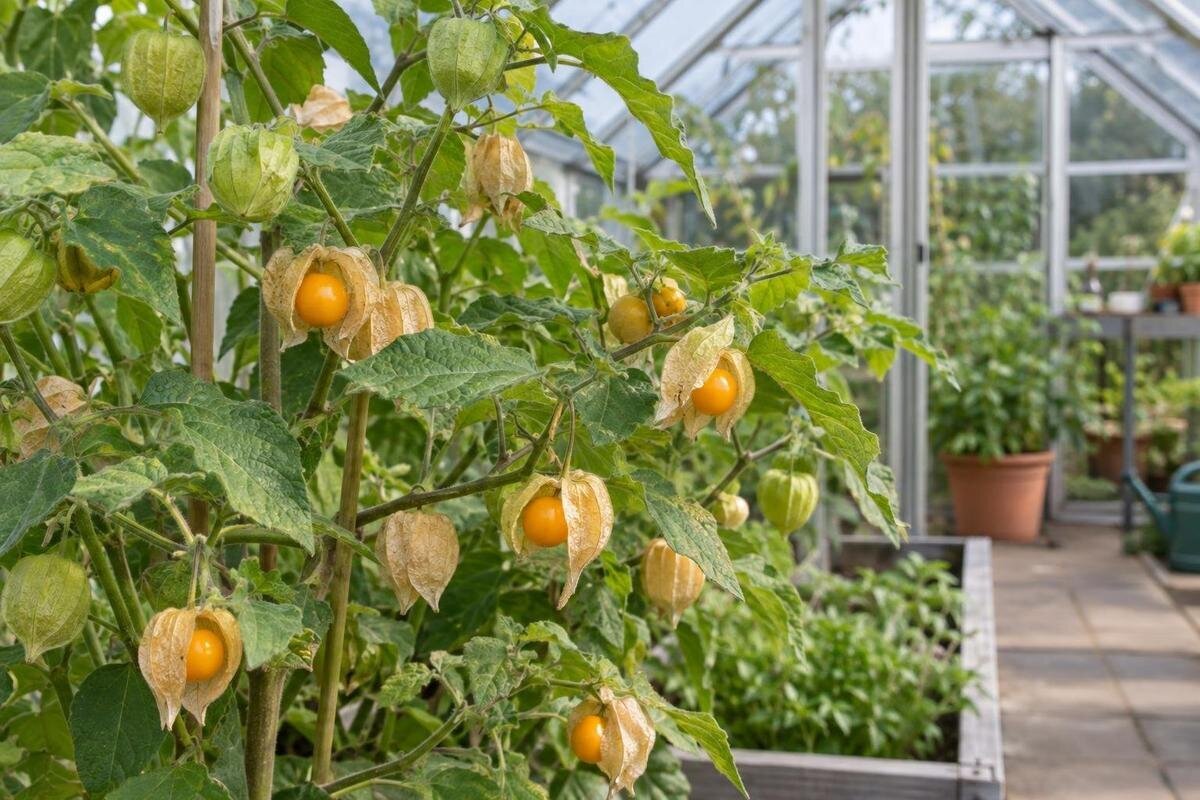
Cape gooseberry growing guide
Cape gooseberry (Physalis peruviana) is a rewarding but long-season greenhouse crop. In the UK, a sunny, sheltered growing space can help it flower and mature its golden berries, yet an unheated greenhouse does not promise warm nights or protection from every frost. The plant grows into a branching bush that needs support, room around its stems and time for fruit to ripen inside its papery husks. Good results depend on starting early and planning around the limits of your site.

Does a greenhouse provide enough warmth?
Cape gooseberry (Physalis peruviana, often sold as goldenberry) is a tender perennial in warm climates; in most UK gardens it is grown as an annual because frost can kill it. It needs a long, reasonably warm spell to flower and finish ripening its fruit, not just a few hot afternoons. A greenhouse can shelter it from wind and rain and warm up in sunshine, but an unheated structure cools overnight. Repeated cold slows growth and can leave late berries green as autumn approaches. Consider overnight conditions as well as daytime warmth when planning the crop.
An unheated greenhouse may produce a worthwhile harvest in a bright, mild season, but it cannot guarantee ripening or protect a tender plant from every frost. Check how much direct light reaches the chosen position through the day, including shade cast by nearby buildings, fences or trees. Ventilation matters too: glass can heat up quickly in sunshine even when nights remain cool. If comparing a Lean-To Greenhouse, treat its format as one siting factor, not evidence of warmth. Review the exact footprint and configuration; assess any supplementary heating separately, with appropriate professional advice.
Allow a long season from seed to ripe fruit
The time from sowing to ripe berries is the main scheduling challenge. Start seeds indoors in late winter or early spring, rather than waiting for warm weather, and follow the packet’s guidance for sowing depth and germination temperature. Keep compost evenly moist but never waterlogged, and give seedlings plenty of light once they emerge so stems stay sturdy. Germination can take longer than expected, so keep pots labelled and do not discard one too quickly. Sow only as many as you can house at maturity, since crowded seedlings can conceal weak growth.
Pot seedlings on individually once they are large enough to handle, then grow them in bright, warm conditions. Harden them off gradually if moving from indoors to a cooler greenhouse, allowing time for this transition in your sowing plan. Plant out only when frost risk has passed and nights are reliably mild. A late sowing can produce healthy foliage while fruit remains green as autumn cools. The Bloomcabin Prestige Greenhouse listing spans floor-area options from 40.6 to 302 ft²; when choosing a size, allow space for both seedlings and the mature crop. If sowing late, buying a young plant may give you a head start, but it cannot remove the limits of the growing season.
Plant out in a bright, permanent position
Choose seed or a young plant labelled Physalis peruviana; the word ‘physalis’ alone may refer to ornamental species that are not this crop. Grow it in a greenhouse border or a roomy container with drainage holes and fertile, free-draining growing medium. A border gives roots more soil volume, while a pot can be relocated if the plant later needs a brighter or more sheltered position. Either way, give it strong light and enough room for stems. One well-placed plant is easier to water and inspect than several crowded together.
Set a young plant at the depth it was growing in its pot, water it in and minimise root disturbance. A container needs a stable base and closer moisture checks than greenhouse-border soil, particularly during bright weather. Keep the door, main path and vents accessible so you can reach the plant without pushing through branches. The Classic greenhouse listing shows floor-area options from 40.6 to 302.3 ft²; use the plan for your chosen size to check clear planting space, not just the headline area. If you intend to move a pot seasonally, confirm that the route is wide enough before planting.
Leave room for the mature plant
Plan for a multi-stemmed bush rather than a compact plant that stays inside the outline of its pot. Given a long season, cape gooseberry can branch broadly, with stems that arch or lean as fruit adds weight. Leave a gap around the canopy for light, air, watering and inspection; a plant tucked behind a taller crop is harder to reach and may be shaded. Allow headroom and keep the door and vents usable. Mark the plant’s likely footprint before planting, while its position can still be changed without damaging roots.
Include the support frame, not just the root area, in your layout. If storage is part of the greenhouse plan, distinguish that zone from usable growing space. When considering a greenhouse with built-in storage, check how the selected configuration divides the available area between storage, planting and access. Leave room to tie branches from more than one side and reach fruit under leaves, rather than measuring only where the pot will stand. Avoid a stem crossing the main route or pressing against glazing, where rubbing can damage it and complicate access.

Support the stems before they become heavy
Put a firm stake, frame or cage in place when planting, before roots are established and stems begin to lean. A single stake can support the main stem, while a cage or simple framework helps contain several side branches; choose a system that fits the plant without blocking a route. Use soft, adjustable ties and fasten them loosely, adding support as growth extends. The aim is to stop heavy branches splitting or sprawling, not to train every shoot into a narrow column. Fruit adds weight as the season progresses, so review the support regularly.
Guide flexible stems into the support while they are young, rather than bending an older, woody branch back into position. Keep ties below flower clusters and away from the papery husks, which can be crushed by rubbing. Check the plant after watering and during spells of strong airflow, and loosen any tie that starts to constrict a stem. Remove dead or damaged growth, but avoid hard pruning without a clear reason, because branching shoots carry flowers and fruit. Keep the centre open enough to reach the berries and inspect the foliage.
Keep moisture steady and ventilate well
Keep the root zone evenly moist through active growth and fruiting, but do not leave roots standing in water. Water at the base and make sure a container drains freely. A pot generally needs closer checking than greenhouse-border soil, especially on sunny days, because it can dry faster. Check the growing medium rather than sticking to a rigid weekly timetable: plant size, weather, pot and soil all affect how quickly it dries. Avoid swings from completely dry to saturated, which can put the plant under unnecessary stress.
Once the plant is established, use a fertiliser intended for fruiting plants and follow its label; extra feed is not a substitute for warmth or light, and too much nitrogen can promote leaves at the expense of flowers. Ventilate during warm spells because a greenhouse can overheat quickly in sunshine. Check the exact door and vent arrangements before choosing a model; the Limited Edition greenhouse listing should be assessed from its product details, not its name. Inspect new growth and leaf undersides regularly for aphids or whitefly, while the bush is still easy to reach.
Pollination under cover
Cape gooseberry flowers are generally self-fertile, so a second plant is not normally needed just to set fruit. Pollen still has to move within each flower. Outdoors, insects and air movement help; inside a closed, still greenhouse, transfer may be less reliable. A plant can therefore look healthy and flower freely yet produce fewer berries than expected. Before adding more plants, check that the crop has enough warmth and light and that flowers are opening normally. Fruit set and fruit ripening are separate stages, so a flower that has been pollinated still needs time and suitable conditions.
Ventilate when conditions allow, giving insects a route to flowers and allowing gentle air movement through the greenhouse. If the air is still, tap flower-bearing stems lightly or use a small, clean, soft brush to move pollen between open flowers; avoid crushing petals or shaking a brittle branch. When comparing formats such as a Pyramid-type greenhouse, check the door and vent arrangements for the exact model alongside your planting layout. Leave yourself access to the flowering branches so you can inspect them and assist pollen transfer without having to reach through a crowded canopy.
Judge ripeness by the husk and berry
After pollination, each berry grows inside a papery calyx, commonly called the husk. A full-size fruit is not necessarily ripe: early berries and husks are green, and colour takes time to develop. As maturity approaches, the husk loses its green colour, turns pale straw and becomes dry and papery; the berry inside changes to a rich yellow or orange. Use both signs rather than size alone or a calendar date. Shade, sowing time and the season all influence when an individual plant reaches this stage.
Pick fruit when it is fully coloured and the husk is dry, or gather berries that have dropped onto a clean surface. Handle them gently and leave the husks on until you are ready to use them. Discard damaged or mouldy fruit, and do not eat green, immature berries or the leaves and stems. Look beneath the canopy regularly, since ripe fruit can be hidden by foliage or fall before you notice it. Frequent picking also helps you spot new fruit as it ripens and reduces the chance of berries being missed on a damp greenhouse floor.

Planning space for cape gooseberries alongside other crops
One cape gooseberry does not require a large greenhouse by itself, but its place in a mixed planting scheme needs thought. Map the benches, other crops and storage around its proposed position, allowing for the mature plants rather than the pots you bring in at the start of the season. A taller neighbour may shade it, while overlapping branches can make tying, pollination and harvesting awkward. Decide which space will remain available to the cape gooseberry throughout the growing season and which will be occupied by other plants. This makes the layout more useful than a simple count of how many pots fit on the floor.
Product ranges vary widely: the Spacious Greenhouse page lists floor-area options from 506 to 753 ft², far beyond what one cape gooseberry needs. Consider that range in relation to your complete growing plan rather than choosing it for this crop alone. Compare the published dimensions and layout with the space assigned to benches, beds, containers and routes. A larger footprint is useful only if the arrangement lets you reach and tend the plants you intend to grow. Allow for each crop at its mature size instead of treating the greenhouse’s total floor area as an uninterrupted bed.
Make a plan for the end of the season
Harvest may continue into autumn in a favourable year, but shorter days and cooler nights slow new growth and the ripening of fruit already set. Remove fully ripe berries as they appear, then judge the remaining fruit realistically against the weather. A greenhouse can extend the season without preventing frost; a cold forecast still matters even if daytime temperatures feel warm. Leaving green fruit on a healthy plant may help only while conditions remain suitable. Avoid late, heavy feeding in an attempt to force maturity when light and warmth are fading.
Cape gooseberry is tender, and many UK growers start fresh plants each spring rather than overwintering. Keeping one for another year is possible only if you have a bright, genuinely frost-free place; do not assume an unheated greenhouse provides it. A container is easier to relocate than a bed-grown plant, though it still needs light and careful watering. If a T-Shaped Orangery Greenhouse is part of your plan, use the layout to identify a winter position and a clear route for moving the large pot and its support. Assess the winter conditions separately from the layout. If heating is required, seek appropriate professional advice.
Frequently asked questions
Will cape gooseberries fruit in an unheated greenhouse?
They may crop in a sunny, mild season if started early, but an unheated greenhouse can still become cold overnight and does not guarantee ripe fruit before autumn. In a cool or shaded position, expect a less reliable harvest. A warm afternoon is not evidence that nights will stay suitable for this tender plant.
Do I need two cape gooseberry plants for pollination?
No. Physalis peruviana is generally self-fertile, so one plant can set fruit. Under cover, still air or limited insect access may reduce pollen transfer. Ventilate when conditions allow, or gently tap flower-bearing stems or brush open flowers. A second plant will not make up for insufficient warmth or light.
When should I sow cape gooseberry seeds in the UK?
Start indoors in late winter or early spring, following the seed packet for sowing depth and germination temperature. The crop takes time to grow and ripen, so a late sowing can leave fruit green at season’s end. Move seedlings to their final position only when they are sturdy and conditions are suitable for a tender plant.
How do I know when a cape gooseberry is ripe?
Look for both a dry, papery husk that has turned pale straw and a berry inside that is fully golden-yellow to orange. Size alone is not a reliable guide; green fruit is immature. Ripe berries may detach naturally, so check beneath the plant as well as among its leaves.
Can I overwinter a cape gooseberry in my greenhouse?
Only if you can provide a bright, genuinely frost-free place; an unheated greenhouse should not be assumed to stay frost-free. Cape gooseberry is tender and is commonly grown as an annual in the UK. A container is easier to move, but starting a new plant from seed may be simpler if you lack suitable winter space.
Treat cape gooseberry as a long-season project whose harvest depends on early sowing, steady support and enough warm days. In a sunny greenhouse it can reward you with fruit in papery husks, but cold nights may set the limit, especially in an unheated structure. Plan for one branching plant, follow the colour cues at harvest and decide before autumn whether you have a suitable place to overwinter it. That realistic approach is more useful than expecting every flower to become ripe fruit.
