
Growing Celery in a Greenhouse
Greenhouse growing guide
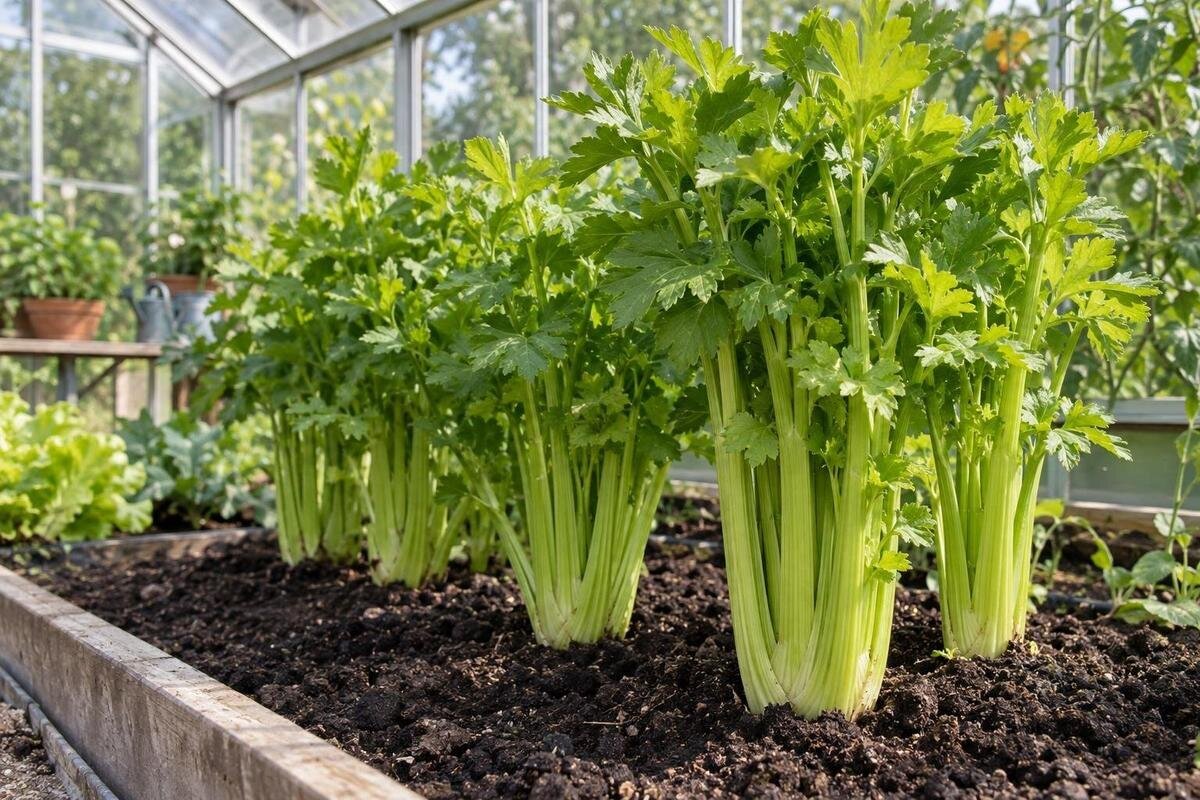
Celery is a long-season crop: it needs a steady supply of moisture and room to develop for months, so growing it under glass is a decision about space and routine rather than a shortcut to a quick harvest. In a UK greenhouse, shelter can help you manage watering and protect plants from wind and heavy rain, but glass does not create reliable warmth or prevent every cold spell. The crop may still be slow in an unheated structure. This guide follows celery from sowing to harvest, with particular attention to spacing, moisture, ventilation and whether protected growing earns its footprint.
What to check before choosing a greenhouse 1
Is a greenhouse worthwhile for celery?
Celery can be grown outdoors in a suitable UK garden, so a greenhouse is not a requirement. Under glass, you can manage watering more closely and shelter young plants from wind and heavy rain; that may help where the site is exposed or the soil dries quickly. Protection can also make shoulder-season growing more manageable, but it does not guarantee an earlier or longer harvest. An unheated greenhouse still follows outdoor temperatures, especially overnight, and glass can become hot in sunshine. Because the roof keeps much of the rain off, any sheltered bed depends on you to replace moisture consistently. Treat the structure as a way to manage exposure, not as a substitute for suitable growing conditions.
Before assigning floor space, compare celery with the crops you would otherwise grow there. It occupies its bed for months, with regular watering and access needed for weeding, blanching or picking; it can compete with tomatoes, cucumbers, seed trays and paths. A small outdoor trial can show whether your existing soil and routine are already adequate. The Classic greenhouse range is listed in sizes from 40.6 to 302.3 sq ft. Use the selected area only as a starting figure: allow for doors, benches, other crops and a working path before estimating the bed available to celery.
Choose a celery type and harvest plan
Choose the celery type before designing the bed. Self-blanching and green cultivars are usually planted in blocks so neighbouring plants shade their stems; they do not need earthing up. Traditional trench celery is planted in a trench and gradually earthed up to exclude light from the stalks, so it needs extra working space and repeat visits. The seed packet should identify the type and give its planting advice. For a first greenhouse crop, a self-blanching cultivar removes the soil-mounding task, although wrapping the plants at the outside of the block can improve blanching. Neither approach changes the need for regular moisture, fertile soil and ventilation. Plan the planting arrangement around the cultivar rather than assuming all celery belongs in a single row.
Decide whether you want a group of mature plants for a main autumn harvest or a few to pick from over time; that affects how many plants to raise and how long their bed will be occupied. Treat an early-maturing label as an estimate, not a promise, because light, temperature and sowing date affect development. Keep a note of sowing dates so you can adjust next year. Seedlings may also need temporary staging space before transplanting. If storage and growing area must share the greenhouse, the greenhouse with built-in storage is listed from 59.4 to 302 sq ft; check the selected layout to see how beds, storage and access fit together.
What to check before choosing a greenhouse 2
Time sowing and planting around the UK season
The RHS recommends sowing celery indoors between mid-March and early April. Use that as a UK starting point, then check the cultivar’s instructions and whether you can provide enough warmth; an unheated greenhouse may still be too cold. Sow thinly on the surface of moist, peat-free seed compost. The tiny seeds need light to germinate, so leave them uncovered or add only a very light dusting of sieved compost. Keep the surface moist but not sodden. The RHS advises at least 15°C for germination, which can take up to three weeks. Label the tray clearly and check it regularly rather than treating slow emergence as failure. A bright indoor growing space may be more suitable than cold greenhouse staging at this stage.
Once seedlings are large enough to handle, prick them out or pot them on so they are not left competing in a crowded tray. Grow them on in good light with careful watering; weak, stretched seedlings are harder to establish. Harden plants off gradually before planting into their final bed, and wait until local conditions are mild enough for continued growth. In many areas that means late spring, but the timing varies. An unheated greenhouse can reduce exposure to wind and rain, not guarantee frost protection. The Prestige greenhouse range is listed from 40.6 to 302 sq ft; include propagation space as well as the mature celery bed when comparing footprints.
Allow room for mature plants and working access
Celery needs a planting arrangement suited to its type, plus access for tending it. RHS guidance is to plant self-blanching and green celery in a block, about 23 cm apart in each direction, so neighbouring plants help shade the stems. For traditional trench celery, allow 30–45 cm between plants in a single row. Check the seed packet for any cultivar-specific variation. Draw the mature planting area before transplanting: a tray of small seedlings gives little indication of the space they will occupy later. Leave access beside the bed so you can water, inspect crowns and harvest without stepping on the soil. Trench types also need room for the soil used in earthing up; do not count that working space as another planting strip.
Containers are possible, but a small pot dries quickly and leaves little margin for a crop that must stay evenly moist for months. Choose a roomy container with enough compost volume for mature roots and a broad enough surface for the plant; site it where you can water and inspect it easily. A bed can hold moisture more evenly across several plants, provided excess water drains away. The Spacious Greenhouse range is listed from 506 to 753 sq ft, but a large total footprint does not replace a drawn planting plan. Measure the growing bed, access lanes, seedling bench and any non-growing areas separately.

What to check before choosing a greenhouse 3
Prepare fertile soil that retains moisture
Prepare the bed before transplanting, because a long-season celery crop is difficult to rescue from poor soil halfway through its growth. Celery needs fertile ground that retains moisture while allowing excess water to drain; very sandy soil may dry too quickly, while persistent waterlogging leaves roots short of air. Work in mature compost or other well-rotted organic matter to improve structure and water retention, and remove perennial weeds while the bed is accessible. Loosen the soil across the growing area rather than only at each planting hole, and avoid working it when wet. Use the bed’s previous crop and fertility to decide whether supplementary fertiliser is needed; follow its label instead of applying repeated heavy doses.
Check light and access at the exact bed position. Celery needs a bright place, but plants beneath benches or in deep shade may grow poorly; a sunny greenhouse can also heat rapidly, so ventilation remains important. A narrow strip that is hard to reach may be less useful than a slightly smaller, well-serviced bed. The Lean-To Greenhouse range is listed from 40 to 154 sq ft; that total does not reveal the length of uninterrupted planting space or the path beside it. Compare the chosen layout with a drawn bed and watering route before filling it. The soil surface you can actually plant matters more than the external footprint alone.
Keep the root zone consistently moist
Use the soil as your guide rather than following a rigid watering calendar. Greenhouse glazing keeps much of the rain off, so an outdoor bed that stays moist may dry under cover. Check the root zone below the surface: if it is beginning to dry, water thoroughly enough to wet the planted area rather than sprinkling just the top. Aim for consistently moist soil throughout growth, not standing water. An uneven supply can interrupt growth and reduce stem size or quality, while saturated soil creates a separate root problem. Check along the row, since one end may dry sooner than the other. Do not rely on yesterday’s watering schedule if the weather has changed.
Check more often during warm, sunny weather and with container-grown plants; neither a pot nor a prepared bed dries at a constant rate. Where practical, water in the morning and direct it onto the soil so leaves are not left wet overnight. A surface mulch can slow evaporation after the soil has warmed and plants are established, but keep it clear of the crown and still inspect beneath it. The limited-edition greenhouse range is listed from 40.6 to 302 sq ft; floor area alone does not tell you whether a bed is easy to reach from the door or water source, so map that access too.
What to check before choosing a greenhouse 4
Ventilate the greenhouse and manage temperature
Moist roots and moving air are compatible; do not keep a greenhouse shut simply because celery needs water. Open vents or doors when conditions allow, particularly on sunny days, and avoid packing leaves against other crops or the glass. Air movement helps foliage dry after watering and makes it easier to inspect plants. If the temperature climbs quickly, use the greenhouse’s intended ventilation and consider suitable temporary shade rather than leaving plants in still heat. In cool, windy weather, avoid abrupt exposure of tender plants; respond to conditions instead of leaving openings fixed all day. Lingering condensation on foliage is a reason to review airflow.
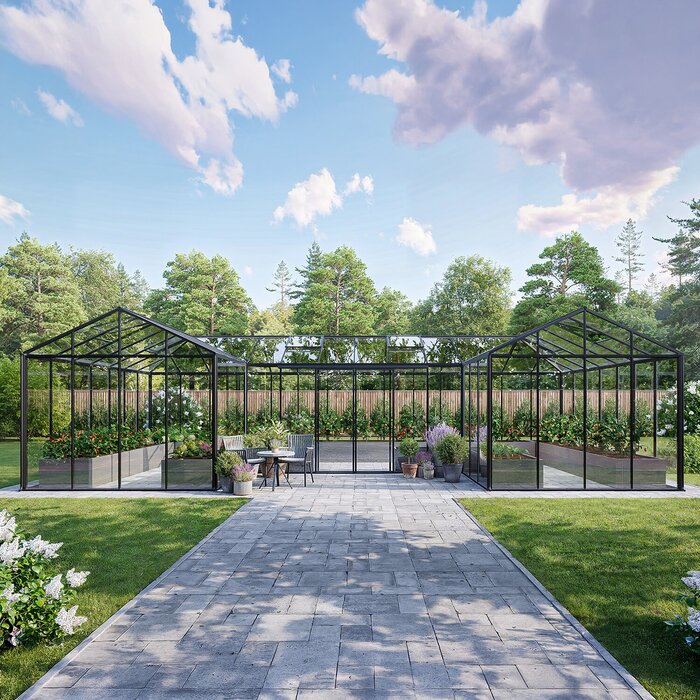
An unheated greenhouse may have warm days and cold nights, so watch forecasts and handle young plants cautiously. Prolonged cold while celery is young can contribute to premature flowering in susceptible plants, while heat stress can also stall growth; response varies with cultivar and conditions. Gradual hardening-off and timely planting reduce avoidable shocks, but do not remove weather risk. With a layout such as the T-shaped orangery greenhouse, check the selected model’s ventilation details and how air can move through each growing area; the outline alone does not establish vent capacity.
Keep plants healthy and blanch only when needed
Keep the bed weed-free while celery is small; shallow, careful weeding avoids disturbing roots and reduces competition for moisture. Inspect the crowns and undersides of leaves for slugs, aphids and signs of celery leaf-miner damage. Leaf-spot problems are more likely where foliage stays wet and the air is stagnant, so remove badly affected leaves, clear fallen debris and water at soil level. These habits reduce avoidable pressure but do not guarantee a pest- or disease-free crop. Use clean seed and, where possible, move the next celery-family crop to a different bed rather than repeating it in the same soil.
Match blanching to the type you have planted. For traditional trench celery, gradually draw soil around the stems to exclude light, keeping it out of the central growing point and away from the leaf blades. Follow the cultivar’s instructions for timing and method. Self-blanching and green celery do not need earthing up: their block arrangement provides shade between plants. The RHS also recommends wrapping the outside plants with newspaper for better blanching, since their exposed stems receive more light. This is a different task from piling soil around every plant. Leave enough access to reach the edges of the block without bending or breaking stalks, and avoid covering the leafy tops.

What to check before choosing a greenhouse 5
Harvest in stages and plan the next crop
Harvest timing varies with cultivar, sowing date and growing conditions; use the packet’s maturity guidance as an estimate, not a deadline. A spring-sown crop is often ready from late summer into autumn, but an unheated greenhouse does not promise a winter supply. Once plants have formed useful stalks, cut the whole plant close to the base or remove outer stems from a healthy plant and leave the centre to continue growing. Check that the heart remains healthy if you are picking stems in stages. Take only what you can use, handle stalks gently and harvest before severe cold damages plants still in the bed.
A greenhouse bed occupied for months belongs in the annual crop plan. Raise only as many plants as your household will use, or make a second small sowing for staggered readiness if there is room for both batches and their seedlings. Succession sowing is not a way to avoid planning: young plants need staging space before the first bed is free. After the final harvest, clear plant debris and avoid growing celery repeatedly in the same patch; rotating celery-family crops helps reduce the carry-over of some pests and diseases. Record sowing, watering and harvest dates to see whether protected space improved the crop.
Choose a greenhouse by its usable growing area
A celery crop alone may not justify buying a greenhouse if you can provide suitable outdoor soil and indoor seed-starting space. Consider what else the structure will accommodate during celery’s long growing season and after harvest. When comparing models, distinguish the advertised footprint from the internal bed area: bases, doorways, benches and storage can affect the layout you can use. Ask for dimensions of the selected version and check how its doors and vents operate, rather than treating a model name or shape as evidence of growing performance. A small number of well-tended plants is a better starting point than choosing the largest structure and filling it with a crop you have not grown before.
Product names and total-area ranges are useful for narrowing a comparison, but the selected version and site plan matter. The Pyramid-type greenhouse is listed from 60 to 203 sq ft; before choosing any version, check its published dimensions and ventilation details against the bed and access route you have drawn. A celery row that fits on paper may still be difficult to tend if a door, bench or storage area interrupts the route. Choose a layout that leaves room to work throughout the season, not simply a place to transplant small seedlings.
Frequently asked questions
Can celery grow in an unheated greenhouse?
Yes, if you time sowing and planting for conditions that let the crop keep growing. An unheated greenhouse can shelter plants from wind and rain, but it may still get cold at night and is not frost-proof. Start seedlings somewhere reliably mild if the greenhouse is too cold, and avoid rushing young plants into it.
How often should I water greenhouse celery?
There is no fixed schedule that suits every bed. Check the soil around the roots and water when it is beginning to dry, aiming for consistent moisture without leaving the soil waterlogged. Check more often in warm weather and for plants in containers, which can dry out faster.
How much space does celery need?
RHS guidance is about 23 cm between self-blanching or green celery plants in each direction, arranged in a block to help shade the stems. Traditional trench celery is planted in a single row, with 30–45 cm between plants. Follow any different cultivar instructions, and leave working access plus room for earthing up trench types.
Does greenhouse celery need blanching?
The method depends on the type. Traditional trench celery needs light excluded from its stems, usually by gradual earthing up; keep soil out of the central growing point. Self-blanching and green types do not need earthing up, but benefit from block planting. Wrapping the outside plants with newspaper can improve blanching. Follow the cultivar’s instructions.
When should I sow and harvest celery in the UK?
The RHS recommends sowing indoors between mid-March and early April, with warmth for germination and protection from cold while seedlings develop. Planting into an unheated greenhouse still depends on local conditions. Harvest when the cultivar has developed usable stalks, using its seed-packet guidance rather than a fixed date. Do not assume glass guarantees an earlier harvest or a winter supply.
Celery under glass makes sense when shelter and water control solve a real problem and you can keep the crop in a suitable, well-ventilated, consistently moist space for its full season. Start with a small sowing, choose a type whose blanching needs suit your layout, and measure the mature bed with working access included. In an unheated greenhouse, plan around local cold spells and summer heat rather than assuming glass extends the season by itself. If outdoor soil already stays moist and celery grows well there, reserve greenhouse space for crops that benefit more from protection.
