
Growing Cucamelons in a Greenhouse
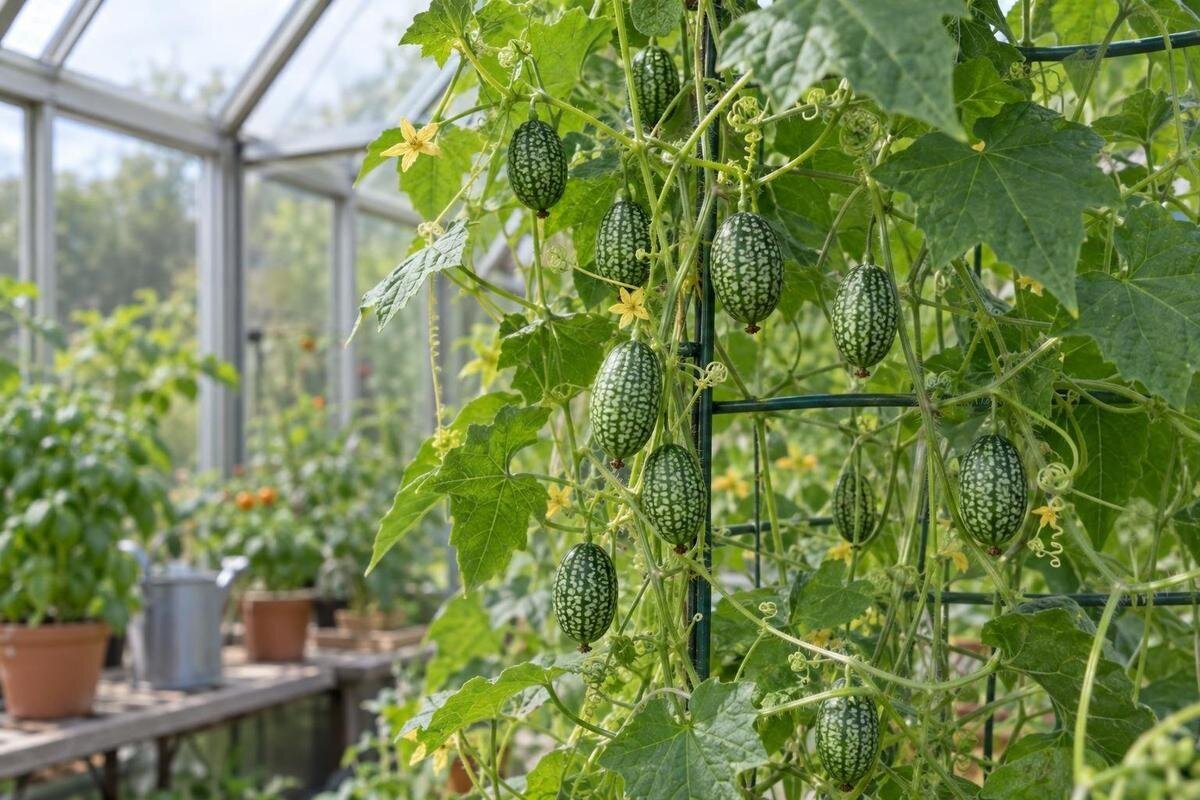
Greenhouse growing guide
Cucamelons (Melothria scabra), sometimes called mouse melons, are warm-season climbing plants that produce small, striped fruits. In a UK greenhouse, their vines can use vertical space and gain some protection from the weather, but glass alone does not provide reliable warmth through cold spring nights or autumn frosts. A productive crop depends on starting seed under warm conditions, placing the vine where it gets light and can be reached, and managing support, watering and access to the developing fruit. This guide sets out a practical route from sowing to the final harvest.

Warmth and season length
Cucamelons are tender, warm-season plants. Their vines can grow well in a UK summer once established, but seedlings and young transplants are easily checked by cold. A greenhouse warms in sunshine; an unheated structure can still become cold overnight and offers no dependable frost protection. Treat it as shelter, not as a guarantee of a tropical climate. For many growers, the practical approach is to raise seed indoors and move plants only when greenhouse nights are consistently mild. Direct sowing into cold, damp soil is less dependable because both germination and early growth need warmth. A slow start can cost useful growing time later in the season.
Choose the brightest available position; strong light supports healthy leafy growth and flowering. Glasshouses can also overheat quickly on sunny days, so plan to ventilate rather than leave the vine in a hot, stagnant corner. A min/max thermometer at plant height gives a better picture than judging conditions at midday: it shows what happens after dark as well. If night temperatures are still unsuitable, hold plants back instead of relying on one warm afternoon. Heating only to accommodate a small cucamelon crop may not be worthwhile; later sowing and summer growing can be more realistic if you do not otherwise need a heated greenhouse.
Allow room for a climbing vine
Although a seedling is small, a cucamelon can make long, spreading growth. Plan a vertical lane from its pot or planting point up to the support, then leave room to reach both sides of the foliage. Keep stems away from the main path, doors, vents and neighbouring plants; a vine that shades smaller crops or tangles around their supports is awkward to manage. Sketch the mature plant into your greenhouse plan so the trade-off is visible before anything is planted. The Spacious Greenhouse is listed in versions from 506 to 753 ft², a substantial range of footprints, but a large floor area still needs dividing into usable beds, paths and trellis space. A single vine can be directed along one route, yet its leaves and fruit still need access for regular picking.
Measure more than the floor. Check the selected greenhouse’s internal height at the proposed support, the distance between the plant and aisle, and any benching or staging that takes up space. A roof slope can reduce convenient growing area at the edges, while shelves or tall neighbouring crops may shade a vine even when the floor plan looks generous. Include the door opening and the route to water, then make sure the fruit will be within reach without stepping into a bed. This prevents a common planning mistake: allocating room for the pot but not for the mature canopy, access or the work of harvesting.
Choose a planting place you can reach
Choose between a greenhouse bed and a container according to the space available and your watering routine. In a bed, roots can spread through a larger volume of soil, which generally dries less quickly than a small pot. A container is useful when the beds are full or when you want to position the plant beside its support, but it should be substantial enough for a full season and have open drainage holes. Use a suitable growing compost and do not let the container stand in a saucer of water. Whichever you choose, avoid a position where water sits around the roots, and leave a little space between the vine and neighbouring foliage for airflow.
Put the stem close enough to the trellis for easy training, but not so close that the foliage will be pressed against a wall or glazing. Leave a hand’s reach around the plant for tying in, inspecting leaves and picking fruit, and check that the sunny position is not hidden behind a bench or taller crop. The Classic aluminium greenhouse range is listed from 40.6 to 302.3 ft²; compare the exact version you are considering, because total floor area alone does not show whether you can reach a bed along the far side. Mark the door, aisle, support and mature vine on a plan rather than judging from a product name.
Sow seeds indoors in spring
Sow indoors in spring, adjusting the timing to the warmth and light you can provide rather than treating the calendar as a rule. Put seed into individual small pots of seed compost, following the sowing depth on the seed packet. Water gently so the mix is evenly moist, not saturated. The RHS recommends keeping cucamelon seeds at 22–24°C until germination, then growing seedlings on at 18–21°C. A propagator can provide steady warmth, but check that it does not dry the compost. Keep pots labelled and follow the packet’s guidance on germination time rather than discarding slower pots as soon as the first seedlings appear.
Once seedlings emerge, move them into the brightest suitable place you have while keeping them warm. Poor light encourages thin, stretched growth that is harder to train later. If the propagator has a cover, ventilate it and remove the cover as growth develops so seedlings do not sit in stale, damp air. Water small pots carefully: they should not dry out completely, but waterlogged compost can damage young roots. Avoid sowing far ahead of the moment you can provide light and greenhouse space. A compact, sturdy seedling is easier to establish than a vine that has outgrown its pot indoors.

Move seedlings into the greenhouse gradually
Seedlings raised in a warm room need a gradual transition to greenhouse light and cooler air. Over several days, put them in the greenhouse for increasing periods, starting in a sheltered position and avoiding sudden exposure to intense midday sun or a cold night. If the forecast is unsettled, bring them back indoors rather than allowing a tender plant to be chilled. Plant out only when the risk of frost has passed and night conditions are mild enough for steady growth; use the forecast and actual greenhouse readings, not a fixed date. This acclimatisation reduces the shock of moving from a protected windowsill to full greenhouse conditions.
Set the plant into its bed or final container without disturbing the rootball unnecessarily, water it in, and arrange the support while the stem is still easy to guide. If you are comparing a Lean-To Greenhouse, its listed sizes run from 40 to 154 ft²; check the specific plan and the light, ventilation and clearances at your site before choosing where the vine will go. A nearby wall does not automatically make the spot warm or sunny: shade, orientation and cold nights still affect the crop. Keep the plant away from cold glass and leave room to open vents and reach the support.
Train cucamelons on a secure support
Install a secure support before the vine becomes tangled, choosing a height you can comfortably reach for training and picking. Strong netting, a trellis or vertical twine can work if it is properly secured. Cucamelon tendrils help the plant climb, but the supporting structure must carry the foliage and fruit as the vine develops. Do not assume a loose garden string attached to an unsuitable part of the greenhouse will hold it. Avoid attaching a loaded trellis to glazing, gutters, doors or frame members unless the greenhouse maker confirms that the fixing point is suitable. A stable freestanding frame avoids relying on an unverified attachment. Plan to guide shoots along the available support when they reach the top, rather than allowing them to spread across the roof or obstruct vents.
Guide the main stem gently towards the support and let tendrils catch where they can. If a stem needs help, use a soft tie loosely around the support, leaving room for it to thicken; inspect it as the vine grows. Spread growth along the trellis rather than letting shoots knot together, and redirect a wandering stem before it wraps around a vent or neighbouring crop. The Limited Edition aluminium greenhouse listing includes versions from 40.6 to 302 ft²; the chosen footprint does not identify safe fixing points, so check the model’s instructions or use an independent support.
Keep watering and ventilation consistent
Keep moisture reasonably even from planting through fruiting. Check below the surface in the bed or compost rather than watering by the calendar; water thoroughly at the base when the root zone is beginning to dry, then let excess drain away. In hot weather a container can dry much faster than greenhouse bed soil, so it may need attention more often. Avoid repeated cycles of severe wilting followed by a flood of water, and do not leave the pot standing in runoff. Directing water onto the soil avoids unnecessarily wetting the foliage. Check that it reaches the compost rather than running down a dense canopy and spilling outside the pot.
Once the plant is established and flowering or setting fruit, use a fertiliser intended for fruiting vegetables according to its label. More feed is not automatically better: excessive leafy growth can crowd the greenhouse and make picking harder. Ventilate on warm, bright days to limit overheating and keep air moving around the canopy, while protecting young plants from cold conditions. If a T-shaped layout is under consideration, the T-Shaped Orangery Greenhouse is a catalogue option to compare; draw the vine, watering route and access to vents on the selected plan rather than assuming the footprint will be convenient in use.
Flowering and checking plant health
Look for small yellow flowers as the vine develops, but do not judge the crop by its earliest blooms alone. The RHS describes cucamelon flowering in summer, with fruit appearing in late summer and early autumn. That seasonal pattern is a guide, not a promised harvest date for every greenhouse. If your plant is flowering without producing fruit, note when flowering began and inspect the whole vine before deciding that the crop has failed. Tiny developing fruits can be hidden among leaves. Check the light, recent overnight temperatures and moisture at the roots, and avoid changing several aspects of care at once; otherwise, it is difficult to tell which change helped.
The RHS describes cucamelons as generally pest-free and disease-free, but routine inspection is still worthwhile in a shared greenhouse. Look at growing tips and leaf undersides for insects, unusual markings or damaged tissue. These signs alone do not establish a diagnosis, so identify the problem before treating it and avoid removing healthy foliage unnecessarily. The Pyramid Greenhouse range is listed from 60 to 203 sq ft; for any chosen layout, check that there is room to reach flowers and inspect foliage as well as to fit the plant. If treatment is needed, use reliable horticultural guidance and follow any control product’s instructions for edible crops and greenhouse use.

Pick fruits while they are small and green
Pick cucamelons when they are small, firm and green, with their pale stripes clear—around grape size rather than cucumber size. Fruit left too long can become softer, less crisp and more seedy; yellowing or splitting is a sign that it has passed the best picking stage. The fruit often sits behind leaves, so lift the canopy carefully and check regularly once production begins. Harvesting every few days in a productive spell makes it less likely that ripe fruit will be missed and helps prevent overlarge fruit being left on the vine.
Use scissors or small snips to cut each fruit from its stalk instead of pulling at the vine, which can be brittle. Place fruit in a shallow basket as you continue along the row, and avoid yanking tangled stems aside. If you want greenhouse storage as well as growing room, the greenhouse with built-in storage listing covers 59.4–302 ft²; check the exact layout to see how storage affects usable growing space and whether tools and a harvest basket can be reached without blocking the path.
Manage the crop as the season ends
Keep harvesting while the vine is healthy, but expect growth to slow as days shorten and greenhouse nights cool. Remove overripe or damaged fruit and dying foliage so they do not conceal healthy growth or hinder nearby crops. Do not keep watering to a fixed summer schedule once growth slows; check the root zone and let conditions guide you, while avoiding a completely dry pot. Cucamelons are usually grown as annuals, although they are perennial climbers. If you want to keep the roots, the RHS advises lifting them and storing them in just-moist compost in a frost-free place for replanting the following spring. An unheated greenhouse is not dependable frost-free storage.
When planning a greenhouse around more than one season, think about how the space will be used after the cucamelon finishes: propagation, other crops, paths and storage all compete with a vigorous vine. The Prestige Greenhouse listing includes versions from 40.6 to 302 ft²; compare the exact footprint with your wider crop plan rather than sizing a structure around one short-lived project. A reachable trellis and clear access for watering and ventilation may matter more than simply adding floor area.
Frequently asked questions
When should I sow cucamelon seeds in the UK?
Sow indoors in spring when you can provide warmth and good light. The RHS recommends 22–24°C for germination and 18–21°C for growing seedlings on. Avoid sowing so early that seedlings outgrow their indoor space. Plant them in the greenhouse after frost risk has passed and nights are mild.
Can I grow cucamelons in an unheated greenhouse?
Yes, during suitable summer conditions, but an unheated greenhouse can still get cold overnight and is not frost-proof. Start seeds somewhere warm, acclimatise seedlings gradually and delay planting if nights remain cold. The greenhouse provides shelter; it does not replace a warm start.
How much support does a cucamelon need?
Allow enough height for vigorous climbing growth, while keeping the upper stems within reach for training and picking. Put a stable trellis or other suitable support in place early. Do not assume glazing bars, gutters or other greenhouse parts can carry the weight.
Why are my cucamelon flowers not producing fruit?
Early flowers do not necessarily mean fruit is due immediately: the RHS describes summer flowering and fruit in late summer and early autumn. Inspect the vine for small fruits hidden among the leaves, and check its light, overnight temperatures and root moisture. Flowers without fruit do not establish a single cause; seek crop-specific advice if the problem persists rather than assuming that one treatment will solve it.
When are cucamelons ready to pick?
Pick them when they are firm, green and around grape-sized, with their pale stripes visible. Do not wait for them to become large: fruit left too long can turn yellow, soften or split. Check the vine regularly, as leaves can hide ripe fruit.
Cucamelons are easier to manage when each vine has its own accessible support: start seedlings in warmth, move them into the greenhouse when conditions are suitable, and keep the flowers and fruit within reach. Adjust watering and ventilation as the season changes, and inspect the canopy as it develops. Regular picking helps you find the small, firm fruits before they become overripe, making this climbing crop a manageable addition to a shared greenhouse.
