
Growing Passion Fruit in a Greenhouse
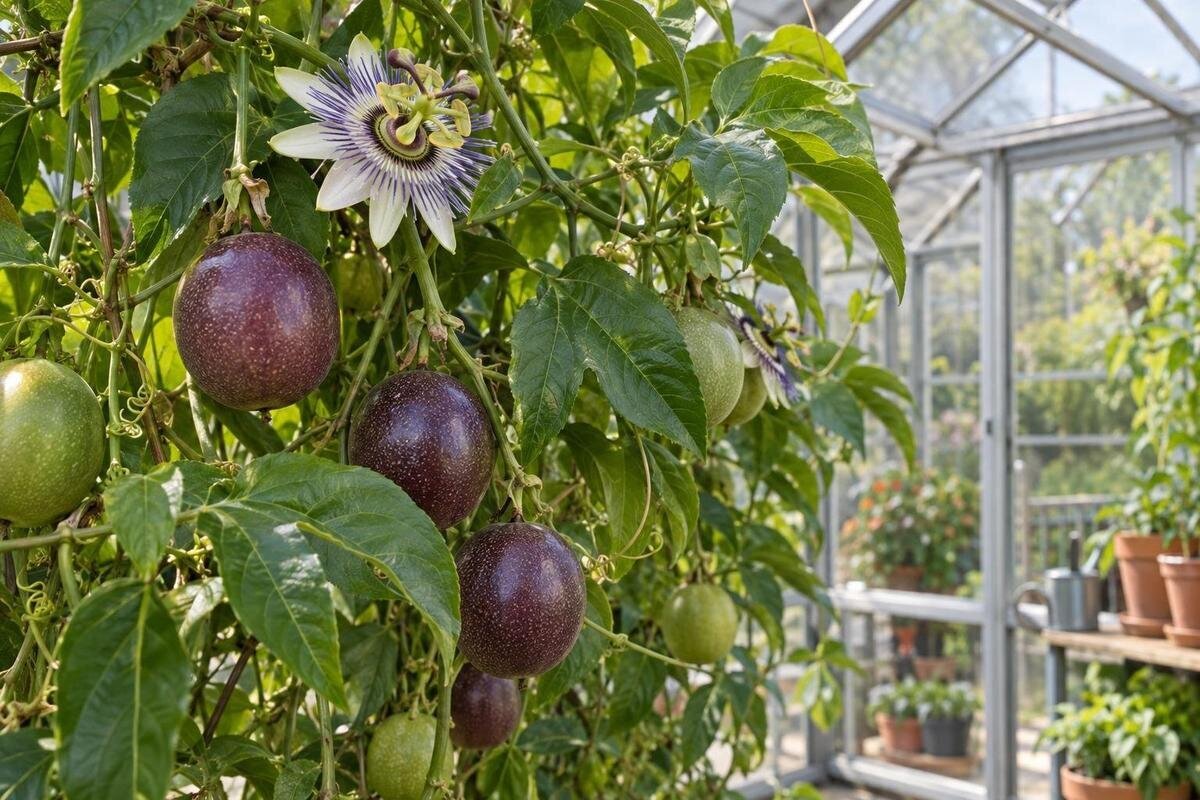
Growing under glass
Passion fruit under glass is possible, but a fast-growing vine is not proof that it will crop. RHS guidance presents it as a project likely to yield a few fruits rather than a large harvest. In a UK greenhouse, the main hurdles are winter cold, a sufficiently warm and bright growing season, successful pollination and space for training. This guide separates ornamental passionflowers from edible passion fruit and explains what to check before giving a tender vine a permanent place.

Edible passion fruit and ornamental passionflowers
Passion fruit sold for eating is usually the fruit of Passiflora edulis. It is a vigorous, tendril-climbing vine with striking flowers, but growing any passionflower does not automatically mean growing a worthwhile edible crop. A nursery label that gives only Passiflora, or simply says passionflower, leaves important questions unanswered: species, fruit quality, cultivar and pollination needs. Look for the botanical name and a named edible-fruit selection. The distinction matters under glass, where a plant can flower well even if its species or growing requirements are not suited to the crop you want.
The familiar blue passionflower, Passiflora caerulea, is usually grown for its flowers and is not a dependable substitute for a named passion-fruit cultivar. Other Passiflora species also differ in their fruit and growing needs. A colourful flower or small berry is not proof that a plant will provide the flavourful crop you expect. Keep the plant label, and do not eat fruit from an unidentified ornamental vine. If your aim is an edible harvest, establish the species and cultivar when you buy the plant rather than trying to identify it later from its leaves or flowers.
Choose a named cultivar for fruit
Choose a named P. edulis cultivar and establish its pollination requirements with the nursery before buying. The supplied RHS guidance describes both purple and yellow fruit, but fruit colour alone is not enough information on which to base your planting plan. Ask whether the particular selection can set fruit as a single plant, whether hand-pollination is recommended and whether another cultivar is needed. If the nursery recommends a second plant, request the name of a suitable partner rather than buying another vine at random. Also ask whether the proposed pair is expected to flower at the same time in your growing conditions. A recommended partner is of little practical use if no fresh pollen is available when the first vine flowers. Establish whether you can accommodate both plants before buying either, rather than discovering the need for a second vine after the first has filled its allotted space.
Choose a healthy, labelled plant rather than relying on seed if a particular fruit type matters. Seed-raised passionflowers may not resemble their parent, so seed does not offer the same certainty about the selection you are growing. A named plant gives you a clearer starting point, but cannot guarantee a crop in a cool greenhouse. Ask about its expected vigour and recommended training before purchase, since a small pot can develop into a substantial climber. Keep the cultivar details and the nursery’s advice with your growing notes: they will guide your pollination plan and help you assess the plant’s performance over successive seasons.
Winter protection for tender passion fruit
Passiflora edulis is tender and frost-sensitive. A greenhouse can shelter a plant and make the growing season warmer, but an unheated structure can still become cold, particularly overnight. Glazing does not provide heat by itself. A sharp cold spell or prolonged chill can damage leaves, shoots and roots; even a plant that survives may not produce a useful crop. Do not assume that a sheltered position, a large enclosure or the greenhouse label alone will protect an evergreen vine through a UK winter.
Decide on winter care before planting. A suitably warm protected space may be needed, or you might choose a container that can be moved while the vine is still manageable. Use the plant supplier’s cultivar-specific guidance to establish the conditions you need to maintain. Record overnight temperatures at the proposed plant position during cold weather; a daytime reading alone will not show the lowest temperature the plant experiences. If using heating, discuss the required conditions and suitable equipment with a qualified professional rather than choosing it from floor area alone. The Lean-To Greenhouse is listed in sizes from 40 to 154 ft², but the footprint does not establish winter temperatures or thermal performance. Include the running cost of planned heating and the practicality of checking the plant throughout winter in your decision. If moving it elsewhere is your preferred approach, identify that space and its access route before training the vine onto a permanent support.
Give the vine bright light and room to ventilate
Choose a position with good light, while allowing for light shading in hot weather. Edible passionflowers need consistent warmth and good light for fruiting, but direct summer sunlight through glass can scorch their growth. Shade from a wall, trees or taller crops is different from temporary shading used to protect foliage during hot spells. Consider how shadows move through the day and across the seasons, rather than judging the position only at midday in summer. If the vine is in a pot, allow for its eventual size when choosing a spot: moving it into a brighter corner can become difficult once it has been trained and filled out.
Ventilate the greenhouse during sunny weather so heat does not build excessively, and keep vents and doors clear of the growing vine. Stagnant, crowded growth is harder to manage and makes it more difficult to inspect flowers and leaves. The Bloomcabin Prestige Greenhouse is listed in sizes from 40.6 to 302 ft²; that range helps with footprint comparisons, but your site, surrounding shade and the ventilation available in the selected model determine whether the chosen position will work. Check the layout against the actual growing space you need.

Pollination and fruit set
Passion-fruit flowers have both male and female parts, but their presence does not guarantee that pollen reaches the stigma. Under glass, do not rely solely on insects visiting the flowers: RHS guidance recommends transferring pollen by hand to help ensure fruit set. If flowers open repeatedly but no fruit develops, review the nursery’s pollination advice for your cultivar and consider whether pollen is being transferred. Record whether a flower develops into a swelling fruit rather than judging success by flowering alone. A small ovary that drops is not enough to diagnose the cause; review watering, light and warmth alongside the pollination routine before deciding what to change.
Hand-pollination is a practical option under glass. On a fully open flower, use a clean, dry, soft brush to collect fresh pollen from the anthers and transfer it to the stigmas. For a cultivar that needs cross-pollination, use pollen from the compatible second plant rather than assuming pollen from the same vine will work. Mark a few treated flowers with loose labels and record the date and pollen donor. Comparing those flowers with untreated ones can help you assess whether your pollination routine is making a difference, although it will not rule out problems with temperature or plant condition. When comparing layouts such as the T-Shaped Orangery Greenhouse, check the exact plan for safe access to the flowers. Allow working space beside the trained shoots, not just a route past the pot. Flowers beyond comfortable reach make careful pollen transfer difficult; arrange the support so routine pollination does not require leaning over neighbouring crops or standing on an unstable surface.
Use independent support for a vigorous vine
Passion fruit climbs with tendrils and can become a substantial, leafy vine. Plan a strong support system that is separate from the greenhouse glazing and its vents or doors. Do not assume that a greenhouse frame is designed to carry the weight or pull of a mature plant. If you are considering attaching a support to any part of the structure, ask the greenhouse supplier or a suitably qualified professional whether that arrangement is appropriate.
Train a main stem along a vertical support, then guide selected side shoots where there is room for light and access. Use ties that do not cut into growing stems, and check them as the vine thickens. Keep growth clear of doors, vents and neighbouring plants so routine maintenance remains possible. The Spacious Greenhouse is listed from 506 to 753 ft², but area is not a measure of structural capacity or usable wall length. Plan the vine’s route and support separately, and leave enough space to move around it.
Choose between planting in the ground and using a container
Planting in greenhouse soil gives the roots room to establish, but it makes the vine a long-term feature in that position. Check that the site drains freely and that you can protect the plant in winter before committing to a permanent planting. A container makes it easier to move a younger vine to a protected place, but it needs enough root room, a stable base and good drainage. A mature plant can become awkward to move, so do not count on being able to shift it after the vine has grown across its support.
For either method, avoid leaving roots waterlogged. If you use a pot, make sure excess water can drain and that the container will fit through the greenhouse doors on the route to its winter location. Include the support and trained growth in that assessment: a pot that fits through a doorway when empty may be much harder to move with a vine attached. Decide which ties can be released and how the shoots will be carried without dragging them across the ground. A greenhouse with built-in storage is listed in sizes from 59.4 to 302 ft². Check the exact plan to understand how storage and growing space are arranged. Keep the route to stored tools clear, and establish where watering equipment will go so that neither the container nor its drainage blocks everyday access. These layout details matter more than the total footprint when the vine becomes a permanent occupant.
Water and feed for steady, balanced growth
During active growth, aim for consistent moisture rather than repeated swings between a dry rootball and saturated soil. Check the growing medium before watering: greenhouse conditions and container size affect how quickly it dries. In cooler, dimmer periods the plant may use less water, so adjust rather than following a fixed summer routine. Good drainage matters in both soil and containers; standing water can leave roots short of the air they need.
Use a fertile, free-draining growing medium and feed during active growth according to the product label. RHS guidance recommends liquid feeding for container-grown passionflowers during the growing season, with no feeding in winter. Avoid increasing the dose simply because the vine is large, and record what you apply so that feeding remains consistent. Regular checks also mean you need a clear route to the root zone. The Classic Greenhouse is listed in footprints from 40.6 to 302.3 ft²; compare the selected size with the space needed for the vine, other crops and access for watering and feeding, rather than treating the full stated area as spare.

Pruning a trained passion-fruit vine
Pruning helps keep a trained vine within its space, but cutting it back indiscriminately can remove shoots that would have flowered. In cultivated P. edulis, flowers are generally borne on new growth from an established framework. Retain the main trained stems and enough healthy shoots for flowering, while removing dead, damaged or badly crowded growth. A major cut is best planned for a period when the plant can resume active growth, rather than just before a cold, dim spell; follow cultivar-specific advice if it differs.
Leave room to reach the plant’s base and inspect its canopy as well as to guide new growth. A Pyramid-type greenhouse is listed in sizes from 60 to 203 ft²; use the actual plan to check working space at the points where the vine will be trained, rather than relying on floor area alone. Keep shoots from blocking vents or trapping neighbouring crops in shade. As you inspect the plant, distinguish the stems that form its framework from the side shoots you intend to manage. A simple photograph taken before pruning can help you keep track of that arrangement as new growth develops. After the main harvest, review which parts of the framework were productive before removing more growth. If flowers and fruit were concentrated in one accessible, well-lit area, consider whether the training elsewhere needs adjustment instead of applying the same cut to every shoot.
Allow a long, warm season for fruit to ripen
A successful flower and a swelling fruit are only part of the crop. Passion fruit needs enough warmth and light after setting to ripen, and flowers produced late in the season may not have time to finish before conditions cool. Fruit colour varies by cultivar, so use the plant label or supplier’s guidance to judge maturity. Do not assume that every small fruit will reach a good eating stage simply because it remains attached to the vine. Record flowering dates, the first visible fruit set and the point at which fruit reaches the cultivar’s recognised harvest stage. Those observations will help you distinguish a vine that fails to set fruit from one that sets successfully but runs out of growing season. They also give you a more useful basis for future planning than the number of flowers alone.
Plan the year around the plant’s growth, not a rigid calendar date. As light and warmth increase, adjust watering to the growing medium and guide new shoots; during flowering, watch for pollination and fruit set. Later, keep developing fruit in a bright position without allowing the canopy to obstruct ventilation. When fitting passion fruit into an existing crop calendar, account for the space occupied by its support and winter container as well as its summer foliage. Unlike a short-season vegetable, a retained vine cannot simply be cleared away to release the whole area for the next crop. The Limited Edition Greenhouse is listed in sizes from 40.6 to 302 ft². When comparing a selected size, draw the vine’s year-round position alongside your other crops and the paths needed to tend them. At the end of the season, review ripe fruit harvested, unripe fruit remaining and the resources used to maintain the plant. That gives a clearer picture of whether this edible-growing project suits your greenhouse than vigorous growth alone.
Frequently asked questions
Can I grow passion fruit in an unheated greenhouse in the UK?
A vine may grow during the warmer months, but an unheated greenhouse is not reliable winter protection for tender Passiflora edulis. Cold can damage or kill it, and a short or cool growing season may leave fruit unripe. Plan for suitable winter protection if you want a dependable crop.
Do I need two passion fruit plants to get fruit?
Check the named cultivar’s requirements with the nursery before deciding. Ask whether it can set fruit as a single plant and whether hand-pollination or a second cultivar is recommended. If a partner is needed, obtain a specific recommendation and check that both plants are expected to flower together. Do not assume that buying any two passionflowers will solve poor fruit set.
Why does my passion fruit vine flower but not set fruit?
Flowers alone do not guarantee pollen transfer. RHS guidance recommends hand-pollination under glass, using a soft brush to move pollen from the anthers to the stigma when flowers open. Check the nursery’s advice for your cultivar too. Review light, warmth and watering alongside pollination; a flower that fails to develop into fruit does not identify the cause on its own.
Can I eat fruit from a blue passionflower?
Blue passionflower is usually grown for its flowers, rather than as a reliable source of the familiar passion fruit. Do not identify an edible crop by appearance alone: confirm the species and use species-specific guidance before eating fruit from an ornamental vine.
How long does passion fruit take to ripen under glass?
There is no dependable timetable for every greenhouse. Ripening depends on cultivar, pollination, light and the length of the warm growing season. Late-set fruit may not mature before conditions cool. Check the cultivar’s ripe colour and harvest guidance rather than judging by the flower alone.
Treat passion fruit as a long-term, tender vine rather than a quick greenhouse crop. A named edible cultivar, a warm and bright season, a realistic winter plan, successful pollination and independent support all matter. If those conditions cannot be provided, the vine may still offer striking flowers, but a reliable harvest is a different prospect.
