
Heating Seedling Benches Rather Than the Whole Greenhouse
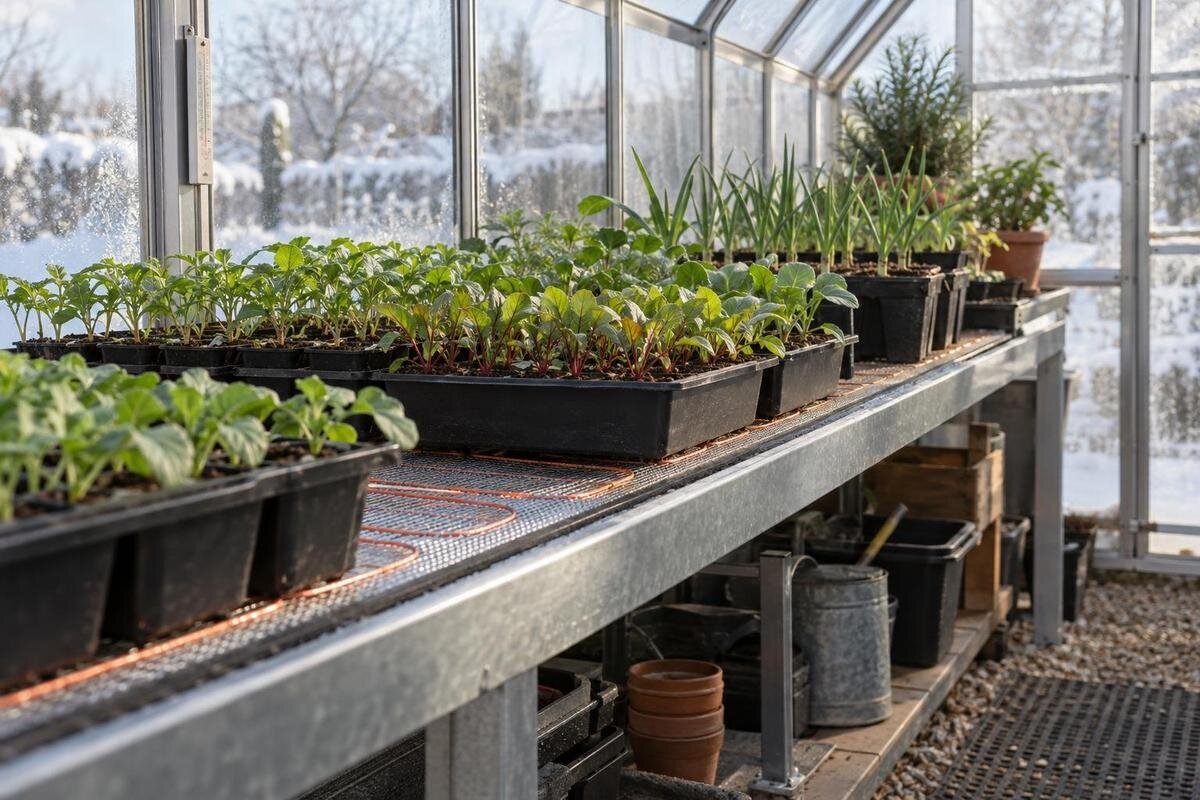
Greenhouse heating
Heating only the propagation bench can make sense when you need a warm seed or rooting area but do not need a warm climate across the greenhouse. It is not a like-for-like replacement for a greenhouse heater: the bench can warm the compost while leaves, neighbouring pots and the air remain cool. The right comparison starts with the temperatures your crops need at each stage, how much area must be heated and what conditions the structure can maintain. This guide explains where bench heat helps, where it falls short and how to compare running costs without assuming a guaranteed saving.

Bench heat warms the growing medium, not the whole greenhouse
A heated seedling bench is a local heat source for seed trays, pots or propagation media. It is intended to warm the growing medium around a defined surface rather than keep every part of the greenhouse at one temperature. A heat mat and a purpose-built heated bench are different formats, but the buying questions are similar: how much of the surface is heated, how is its temperature controlled, and which containers may sit on it? Heat transfer depends on the equipment and its approved arrangement. This can suit propagation when roots or compost need warmth but the wider space does not, provided the surrounding air remains suitable for the crop.
The medium and greenhouse air can be at different temperatures, particularly as conditions change through a day or overnight. A root-zone reading cannot show whether leaves and stems are in suitable air, so treat those as separate measurements. Bench heat alone cannot be relied on to protect foliage, plants on unheated shelves or other contents elsewhere in the structure. The Classic Accoya / Limited Edition greenhouse listing spans 40.6–302 sq ft; that range describes floor-area options, not heater performance or usable bench space. Base the comparison on the exact selected layout and the surface to be heated, rather than assuming the whole footprint needs the same treatment.
Set the target for the crop and propagation stage
Set a target for the crop rather than choosing a generic ‘seedling temperature’. Seeds and cuttings differ, and propagation guidance may distinguish germination from conditions after emergence. Check the seed supplier’s or propagation source’s recommendation and note whether it refers to compost, air or both. A thermometer in the greenhouse aisle may not represent a tray’s medium, while a probe in the medium cannot describe the air around foliage. Where guidance gives a range, plan to monitor it rather than treating one number as universally correct. This is especially useful when several batches share a bench and have different requirements.
Needs can change after seedlings emerge. Light, moisture and air movement matter alongside root warmth, and excessive warmth relative to available light can be unhelpful for some young plants. Rooted cuttings, newly germinated seedlings and plants being hardened off are not necessarily suited to the same setting. Recheck crop-specific guidance as plants develop and group batches with comparable targets where possible. A short record of crop, sowing date, intended medium conditions and actual readings helps explain why a setting changed. If batches have incompatible targets, do not assume one thermostat setting will suit them all.
Size the heated area around the trays you will use
Measure the working bench and mark the trays, pots and space needed to handle or inspect them. Count the area that needs controlled warmth, not just the table’s full length or the greenhouse’s floor area. If sowing is occasional or batches are small, it may be practical to heat a defined part, provided the chosen equipment is intended for that arrangement. A crowded bench can make access and monitoring difficult; a larger heated surface may be left underused. Include room to water, label and move containers, and decide whether one batch or several will occupy the warm zone at the same time.
A T-shaped orangery greenhouse is a structure choice, not evidence of the usable length of a continuous bench. Use the plan for the exact version you are considering and sketch in benches, paths and staging before deciding how many heating zones to buy. A floor-area total is a poor substitute for a layout drawing where working space and access matter. Confirm the selected dimensions and clearances, then compare the heated bench footprint with the area you can actually use. Leave enough room to reach trays and inspect plants without having to shift a whole batch.
When the plants need warm air as well
Whole-greenhouse heating is relevant when the air itself needs to stay within a crop’s required range across more than one bench. That may apply where plants occupy different levels, grow in the ground or share a wider minimum air-temperature requirement. It can also matter when the greenhouse is used as a consistently warm working environment. The appropriate air target depends on the crop and task; local root-zone warmth cannot stand in for it. Plants on a warm bench may still have cold leaves and stems, while plants outside the heated footprint receive no direct bench heat.
A bench and a space heater can be used together, but define each job: one addresses medium conditions in propagation trays, while the other addresses the air across the intended part of the greenhouse. This avoids assuming that one thermostat reading covers both. If considering a greenhouse with built-in storage, mark on the selected layout which areas are meant to share the target air conditions. The listing name identifies a storage-oriented model, but does not establish how a particular configuration separates air or how much volume needs heating. Set that boundary before estimating a whole-space heater.

Why greenhouse size does not predict heating cost on its own
Local heating concentrates warmth around the propagation trays, which is why it is often considered for this task. That does not prove it will use less energy in every greenhouse. An electric bench heater’s consumption depends on its power input and actual operating time; heat transfer, controls and surrounding conditions affect how long it needs to run. Whole-space heating must replace heat lost from the structure while maintaining the chosen air temperature. The comparison changes if the greenhouse already needs background heating for other plants. Treat a claimed saving as something to measure, not an automatic result of heating fewer square feet.
Heat loss reflects more than floor area: exposed surfaces, glazing or other covering, draughts, ventilation, insulation, wind and outside conditions all matter. The Pyramid-type greenhouse listing covers options from 60 to 203 sq ft, which can help identify the footprint under consideration but is not a heat-loss rating. Compare the selected structure, intended air and medium targets, and the periods when heating is required. If a whole-space heater needs to be sized from a heat-loss estimate, use documented construction and exposure information or a competent professional’s assessment; floor area alone cannot establish a reliable capacity.
Choose equipment for the bench and greenhouse environment
Choose equipment to match the size and pattern of the propagation work. A mat intended for a small number of trays and a larger bench-heating system are not interchangeable simply because both warm pots. Check the permitted area, tray arrangement, temperature control and sensor requirements, and whether the system is intended for the containers you plan to use. Do not assume that a domestic warming product is suitable for a greenhouse, where watering and condensation are part of normal use. If the specification is unclear about how the product may be used, ask the manufacturer or supplier rather than adapting it.
Check the documented input rating and operating environment, and whether the control can work with the chosen heater. A greenhouse listing does not by itself establish electrical compatibility: the Prestige greenhouse listing spans options from 40.6 to 302 sq ft, but that range says nothing about heater provision, insulation, ventilation or electrical supply. Compare the selected footprint with the bench layout, then verify equipment requirements separately. Follow the heater manufacturer’s instructions and ask a qualified professional about electrical supply or installation. The same principle applies to any other heating system with its own safety or ventilation requirements.
Measure root-zone and air temperatures separately
Use a thermostat designed for the heater to control the target zone, and position its sensor according to the manufacturer’s instructions. For root-zone heating, a useful reading represents the medium or tray conditions, not simply the temperature of the bench frame or the greenhouse air. Trays at the edge, containers of different depths and uneven contact with a heating surface can experience different conditions. Once the actual trays are in place, compare readings at representative points and adjust the layout or control only as the equipment guidance allows. The thermostat display alone does not prove that every pot matches it.
Measure air independently at seedling height, away from direct sunlight or a surface being heated, and take readings where the plants sit. On cold nights and bright days, the relationship between medium and air can change, so one midday check gives only a partial picture. Keep a short log of air and root-zone readings, heater operating periods and any ventilation changes. Repeat measurements after rearranging trays or changing the heated area. A record helps reveal cold edges or warm spots and shows whether the wider air target is also being met.
Watering and ventilation still need attention
Bench warmth does not replace routine moisture checks. Warm media may dry at a different rate from an unheated tray, but container size, compost, airflow and watering all affect the result. Inspect the medium and containers instead of following a fixed interval copied from another bench. A dry-looking surface does not necessarily mean the compost below needs water, and heat is not a remedy for poor drainage or waterlogged media. Keep drainage openings clear and avoid leaving containers standing in collected water unless the propagation method specifically requires it. When comparing heated and unheated positions, record watering as well as temperature so that their effects are not confused.
Air movement and ventilation still matter around foliage, and they influence greenhouse temperature at the same time. A warmed bench does not prevent humid air from collecting around leaves or a sunlit greenhouse from warming quickly; manage the crop’s ventilation needs without assuming that local heat controls the wider climate. The Spacious Greenhouse listing covers 506–753 sq ft, but its stated floor-area range does not document ventilation provision or air distribution. Verify the options for the exact configuration and consider where trays will sit relative to openings. Do not block necessary ventilation simply to preserve bench warmth; judge the two zones separately.

Compare running costs using actual equipment data
For a fixed-power electric heater, multiply its input in kilowatts by the hours it is actually energised to estimate kilowatt-hours. Multiply that figure by the electricity unit rate that applies when it runs to estimate the energy charge; standing charges and other tariff details are separate. Thermostatic cycling means elapsed time is not the same as run time: a heater switched on overnight may operate for only part of that period. Use an energy meter where appropriate or record actual on-time instead of multiplying the rating by every hour on the clock.
Compare bench and whole-space options over the same weather period and crop target, using documented ratings and observed operation. For whole-space heating, include the structure’s measured footprint and relevant heat-loss factors; do not infer electricity use from greenhouse area or a heater label alone. The Classic aluminium greenhouse range is listed from 40.6 to 302.3 sq ft, but the selected footprint is only one input, not an expected bill. Use your tariff, runtime and temperature log, and separate measured results from assumptions about colder or windier spells. If a critical temperature must be maintained, use a properly supported sizing estimate rather than a rough comparison.
Choose bench heating, whole-space heating or both
Bench-only heating may suit a defined batch that needs warmer media when the rest of the collection can tolerate the greenhouse’s ambient conditions. Whole-greenhouse heating is the relevant option when plant leaves, multiple growing areas or a broader air target also need protection. A combined system is worth considering only when both targets matter; it adds equipment and controls to manage, so be clear about what each unit is meant to maintain. These are practical distinctions, not fixed labels: use crop-specific guidance and readings from the locations that matter before choosing an arrangement.
Plan where each batch will go when it no longer needs the heated surface. Moving seedlings to an unheated bench changes their root-zone conditions even within the same greenhouse, so check the receiving position against the crop’s requirements before making space for another sowing. If comparing Lean-To Greenhouse options, the listed range of 40–154 sq ft provides a starting point for checking whether the selected layout can accommodate both propagation and subsequent growing areas. Allow access to both without moving trays through a crowded work area. A useful arrangement supports the full propagation cycle, rather than providing a warm surface with nowhere suitable for plants to go afterwards.
Frequently asked questions
Will a heated seedling bench keep the greenhouse frost-free?
No. A bench heater is intended to warm trays or growing medium over a defined area. The surrounding air and plants elsewhere can remain cold. If the wider collection needs a controlled air temperature, consider whole-greenhouse heating and measure both the air and the root zone.
Does bench heating always cost less than heating the whole greenhouse?
Not automatically. A smaller heated area may use less energy in some setups, but the result depends on the heater’s input, how long it runs, how it is controlled, heat loss from the greenhouse, the target and your tariff. Compare measured use over equivalent conditions rather than assuming a saving.
Can seedlings stay on a heated bench after germination?
That depends on the crop and its stage. Check propagation guidance and reassess the medium and air conditions as seedlings develop. Light, moisture and ventilation remain important; do not keep using a germination setting simply because the trays are still on the bench.
Should the thermostat measure bench temperature or air temperature?
For a bench heater, the control sensor should represent the heated zone or medium, positioned as the manufacturer specifies. A separate thermometer near the seedlings shows the surrounding air. These readings answer different questions and should not be treated as interchangeable.
Can I use any heat mat in a greenhouse?
No. Check that the product is specified for its intended greenhouse conditions, tray arrangement, moisture exposure and control equipment. Follow the manufacturer’s instructions, and ask a qualified professional about electrical supply or installation questions rather than adapting a product by guesswork.
For propagation, compare the conditions in the growing medium with the air around the plants, alongside the time each heating system runs. If only a defined batch needs warmth at root level, a heated bench may meet that need without maintaining a chosen air temperature throughout the greenhouse. If foliage, other plants or the wider growing area also require controlled air conditions, bench heat alone is insufficient. Choose according to measured conditions and crop guidance, not an assumed energy saving.
