
What Can You Protect in an Unheated Greenhouse During a Late Frost?
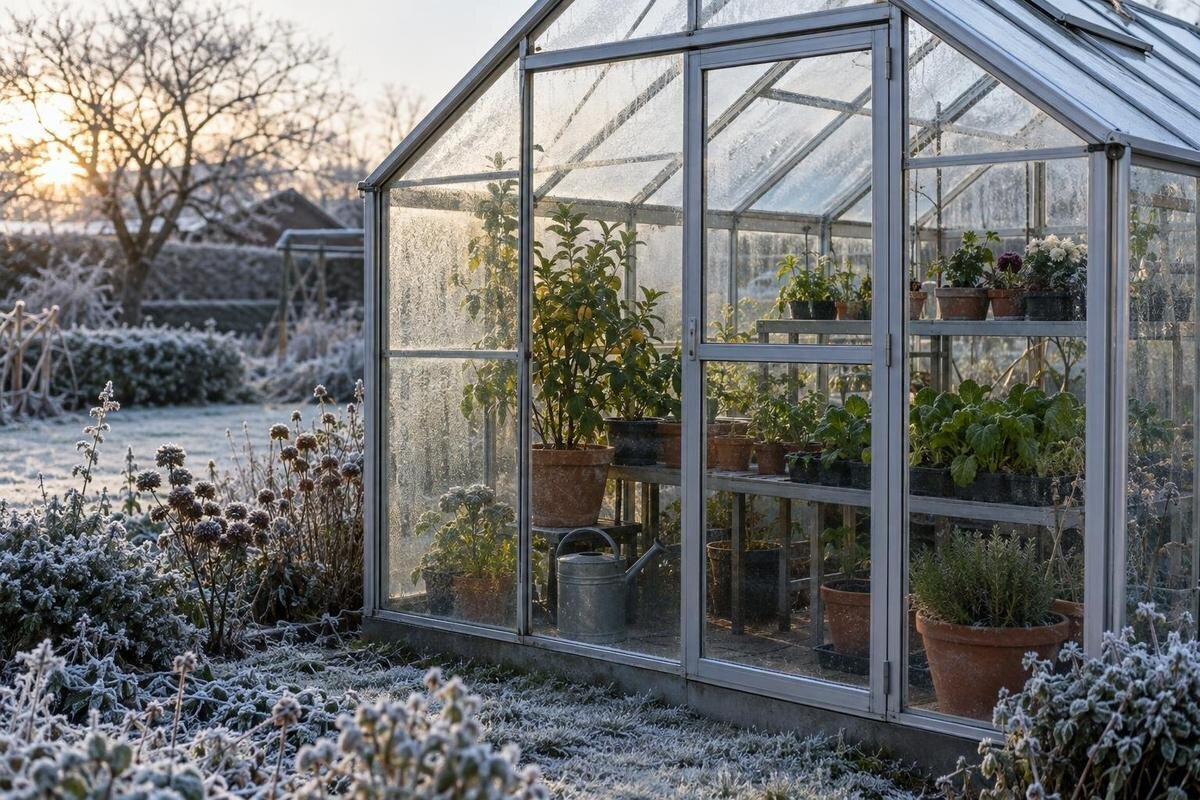
Late frost protection
A late frost does not stop at the greenhouse door. An unheated structure can shelter crops from wind and wet weather, yet still cool enough for frost to form inside. The useful question is which plants are most exposed, what can be moved or covered before nightfall, and what an overnight reading says the next morning. This guide sets out a practical triage order, with temporary measures that reduce risk rather than promise a frost-free night.

What an unheated greenhouse can and cannot protect
An unheated greenhouse is a shelter, not a temperature guarantee. It reduces exposure to wind and rain, and sunlight can warm the space during the day, but that warmth is not a dependable overnight heat source. As the structure and its contents cool, the air, leaves and containers can fall to temperatures at which frost forms indoors. Being behind glazing, or having felt warm in the afternoon, is no proof that a crop will remain safe.
Risk depends on the structure’s condition and surroundings, how much sun it received, the wind and cloud, how long the cold lasts, and where each plant sits. A brief dip and several hours of freezing conditions are different challenges; a minimum reading alone does not show the duration. Nor does yesterday’s successful protection prove that the same arrangement will work through a colder night. Decide in advance which plants you could move if the forecast worsens, rather than committing every crop to staying under glass. For a future purchase, the Limited Edition aluminium greenhouse is one option to compare using its published specification. Ask about the glazing, door closure and ventilation arrangement for the version you are considering. Those details help you plan how to manage the space, but they are not evidence of a guaranteed overnight temperature. Choose a structure around your growing needs without treating it as a substitute for frost protection.
Measure the overnight minimum where the plants are
Use the local forecast to decide when to prepare, then measure conditions inside the greenhouse. A minimum–maximum thermometer or logger placed around the height of vulnerable foliage can record the overnight low. Put it in a representative spot, away from glazing, an outside wall, a door or vent, and direct contact with a bench. In a tall or divided space, one reading may not describe every growing area.
Record the date, forecast low, inside minimum, sensor position, whether doors or vents were open, and which plants were covered or moved. Reset a minimum–maximum thermometer after recording the result, following its instructions, so an older low does not confuse the next morning’s check. A logger can also show how long the cold persisted. Where possible, compare a reading beneath the fleece with one outside it, using comparable instruments positioned according to their instructions. Keep sensors out of direct sunlight when assessing daytime air temperature. Air readings are useful evidence, but leaves and other surfaces may be colder, so a reading just above freezing is not proof that every plant escaped frost. When considering the T-shaped orangery greenhouse, use the proposed layout to identify separate growing areas that may warrant monitoring. Check access to each measuring point: a thermometer hidden behind crowded staging is less likely to be read consistently.
Prioritise tender crops, seedlings and soft growth
Put plants with little tolerance for cold at the top of your list. Common examples include tomatoes, peppers, cucumbers, aubergines and basil, as well as tropical houseplants and tender bedding plants. Give their seedlings and cuttings particular attention. Recently purchased plants may also need protection if they have been kept warm or are producing soft new growth. Not every seedling is frost-tender: crop, variety and growing conditions matter. Use the plant label or seed packet as a starting point, rather than assuming all young plants respond alike.
Next, consider recently transplanted plants, small plug trays and valuable specimens that would be difficult to replace. Established plants described as hardy may cope better, but their resilience depends on the variety, growth stage and conditions; it is not immunity to frost. Divide your collection into plants to move, plants to cover and plants to leave in place with monitoring. Mark the trays or pots so that someone helping you can follow the same priorities. If protected space is limited, distinguish irreplaceable cuttings from spare seedlings rather than covering everything equally and leaving the tenderest crop exposed. When comparing the Pyramid-type greenhouse, check its published plan against the footprint of your trays and cover supports. The practical question is whether you can reach and protect your priority plants without moving the entire collection, not whether a particular roof shape looks as though it would retain more warmth.
Move potted plants to safer shelter first
Potted plants are often the easiest to protect because you can move them before temperatures fall. If possible, take the most tender ones to a place you know stays above freezing. For a longer stay, choose a suitably bright sheltered space; avoid leaving plants in a very warm, dark spot for days. If you cannot move them indoors, group pots in a more sheltered part of the greenhouse, away from doors, draughts and glazing.
Prepare the destination before carrying plants across: clear a stable surface, put down suitable trays and make sure pots will not obstruct a doorway. Label mixed trays, especially if several crops look similar at this stage. For a single night, reliable protection from freezing takes priority over an ideal growing position; for repeated nights, light and suitable daytime conditions become more important. Return plants when conditions allow, not simply at a fixed hour each morning, and keep a record of anything still in temporary shelter. If covers and carrying trays need a permanent home, the aluminium greenhouse with built-in storage is a relevant listing to examine. Check the storage dimensions, access and relationship to the growing area before buying. Space for dry fleece and labels can make preparation more convenient, but a storage compartment should not be treated as frost-free plant accommodation without temperature evidence.

Using horticultural fleece over plants that cannot be moved
For plants rooted in a bed or too awkward to move, horticultural fleece can reduce exposure. Put it in place before the cold arrives and, where practical, support it on hoops or a light frame so it does not press on leaves and shoots. Secure it so it cannot shift, but avoid crushing the crop or creating a sealed enclosure. A cover draped over the plant and down towards the bed or pots can reduce draughts around the covered area.
Fleece provides a buffer, not warmth of its own, and the amount of protection varies with the material and conditions. Check the cover maker’s guidance on use and any stated protection limits; do not apply a rating for one material to another. Allow enough width to cover the crop without stretching the fabric tightly over its tallest shoots. Inspect it for tears and gaps before nightfall, and secure the edges using suitable supports or weights without damaging plants. Do not assume that plastic touching leaves works like fleece: contact with cold surfaces and trapped moisture can create problems. Freestanding supports avoid relying on unverified frame attachments. If reviewing the Bloomcabin Prestige Greenhouse, compare the intended bed or staging layout with the space needed for those supports. Confirm compatibility before attaching anything to the structure, and leave room to lift the cover for inspection without catching it on fittings or foliage.
Give seedlings and cuttings extra attention
Seedlings and cuttings of frost-tender plants deserve early attention. Their roots occupy small cells or pots, and young growth has not necessarily developed the resilience of an established plant. Gather trays that need similar protection so you can move or cover them together. Keep labels with each batch and separate crops with different cold tolerances; age alone is not a useful guide to hardiness. Choose a position based on your temperature readings: do not assume that a shelf, bench or floor is automatically the warmest place.
A shared cover can make a group of trays easier to protect, provided it is supported clear of delicate growth and does not prevent drainage. Check the tallest seedlings as well as the tray edges: a cover that fits low-growing plugs may press on taller shoots. Keep growing media at its normal appropriate moisture level; soaking trays at the last minute is not a reliable frost measure. Look beneath the cover during the next day's checks rather than judging the whole batch from the nearest tray. If you are comparing growing-space sizes, review the Spacious Greenhouse against the staging you actually need. Include tray depth, working access and the space occupied by a temporary cover in your plan. A larger floor area may offer more layout choices, but it can also leave more plants to inspect and move; it does not establish that the seedlings will remain frost-free.
Protect container roots and check for cold spots
Roots in a container are exposed to cold around the sides as well as from above, so protect the pot separately from the foliage. If a plant must remain in the greenhouse, you can group its pot with others and wrap the pot sides in dry insulating material. Keep drainage holes clear and do not seal the whole plant or container in plastic. Use fleece over the canopy when needed; wrapping the pot does not protect the leaves.
Glazing, outside doors and floor-level draughts can make one position colder than another, but the coldest spot depends on the actual structure. Keep foliage from touching glazing and check suspected cold areas before rearranging everything. Distinguish an avoidable draught from the general cooling of the whole greenhouse: moving a pot away from a gap may reduce exposure without taking it out of freezing conditions. Use dry, removable pot insulation and inspect beneath it after use so that drainage and the container remain accessible. Large pots may be too heavy to move safely at short notice, making early placement particularly important. When considering a Classic aluminium greenhouse, use the chosen dimensions and door details to plan routes for bulky containers as well as benches. Leave enough access to wrap or cover a specimen where it stands, rather than relying on being able to carry it elsewhere on the frost evening.
Close doors and vents as the greenhouse cools
Ventilate during the day when conditions call for it, particularly if sunshine is warming the greenhouse. Closing doors and vents too early can leave plants in an overheated space, while leaving openings wide as the evening cools may expose crops to draughts. As daytime warmth fades, close openings in line with the equipment instructions. This can reduce cold air entering, but it cannot guarantee that the temperature will stay above freezing.
Check the greenhouse again in the morning and ventilate as daytime conditions require; a closed space can warm quickly in sun and may become damp. Decide who will uncover plants and attend to doors and vents if you will be away. Automatic openers respond according to their design and adjustment, not to the needs of an individual crop, so follow the manual and do not force an operated vent shut. Keep fleece, ties and support frames clear of moving parts. A cover that was harmless overnight may obstruct a vent when it opens the next day. When comparing a lean-to greenhouse, check the precise vent configuration and operating guidance, including which openings are manually controlled. Consider whether you can reach them with your intended staging in place. This is a practical access check, not a reason to assume the adjoining wall will supply enough warmth to prevent frost.

Shade screens do not replace frost covers
A shade screen or curtain is intended to change the amount of sunlight reaching plants; it should not be counted as an overnight frost cover unless the product is specifically described for that use. Depending on its material and position, a screen left in place may also reduce the sunlight reaching crops during the day. Do not assume that a shading accessory provides insulation simply because it hangs inside the greenhouse.
Check the instructions for any shading system and use only options specified for the structure and purpose. Shading and frost protection solve different problems, so assess them separately in a buying list: one manages incoming sunlight, while the other is intended to reduce cold exposure. If a supplier describes a curtain as suitable for both purposes, ask for the relevant instructions and evidence rather than transferring claims from another accessory. Before a frost night, check that your chosen cover can be deployed without snagging on a screen or blocking access. In the morning, review both arrangements as conditions change. Removing fleece while leaving unnecessary shading over seedlings can limit their daylight; removing all shading automatically can be equally inappropriate in strong sunshine. Make each adjustment according to the plants, weather and accessory guidance.
What to record after a frost
Wait until plants have thawed before handling them, then examine leaves, stems and growing points. Frost injury can appear as limp, darkened or water-soaked tissue, but the extent is not always clear at first. Avoid discarding a plant or cutting off large amounts of growth just because it looks wilted immediately after a cold night. Recovery varies by crop and by how much of the plant was affected.
Photograph damaged plants in place and note their position, the overnight minimum, the forecast, the covers used and whether doors or vents were closed. Take an overall view as well as a close-up, keeping the plant label visible where possible. Record apparently unaffected plants too: neighbouring crops of different varieties or growth stages may respond differently, so survival does not prove that a whole area was safe. If you have humidity readings, retain them as context for dampness or condensation, not as a substitute for temperature data. Compare notes after successive cold nights before drawing conclusions about a protective method. Where a logger recorded a longer cold period, that may help explain a different outcome. Use the record to revise your priority list, allowing more time to move the plants that proved vulnerable.
Frequently asked questions
Will an unheated greenhouse stay above freezing?
Not reliably. A greenhouse can reduce exposure to wind and may warm in sunshine, but it has no dependable overnight heat source unless one is added. Conditions vary within the structure, so use an overnight minimum reading where the plants are rather than assuming the greenhouse is frost-free.
Which plants should I protect first?
Prioritise frost-tender plants, including tomatoes, peppers, cucumbers, aubergines and basil, along with tropical houseplants. Give their seedlings, cuttings and soft new growth particular attention. Vulnerable plants in small pots may also need extra protection because their compost is exposed around the container. Not all seedlings are frost-tender, so check the needs of the particular crop or variety.
Is horticultural fleece enough on its own?
Fleece can provide a useful buffer, especially when supported over a crop, but it does not generate heat or guarantee protection. Its effect depends on the material, how it is used and the conditions that night. Follow the cover maker’s instructions and move especially vulnerable plants if you have a safer place for them.
Should greenhouse vents be shut during a frost night?
After ventilating during the day, close doors and vents as the greenhouse cools towards evening, following the instructions for your equipment. This can reduce draughts but cannot keep the space above freezing. Reopen as daytime conditions require ventilation, rather than leaving the greenhouse shut through a sunny spell.
What should I do after a plant has been frosted?
Let the plant thaw before handling it, then assess the damage. Some symptoms become clearer later, so avoid making an immediate decision based on drooping alone. Photograph affected plants and note their positions, the overnight minimum and what covers were used; those details can help you plan for the next cold night.
The realistic aim is selective protection: move the tenderest plants where possible, cover those that must stay, and check the overnight minimum rather than trusting the greenhouse to stay warm. A plant list is only a starting point because variety, growth stage and position matter. Your notes and photographs will show which crops and spots in your greenhouse need attention first when another late frost is forecast.
