
Should You Move Your Greenhouse When You Move House?
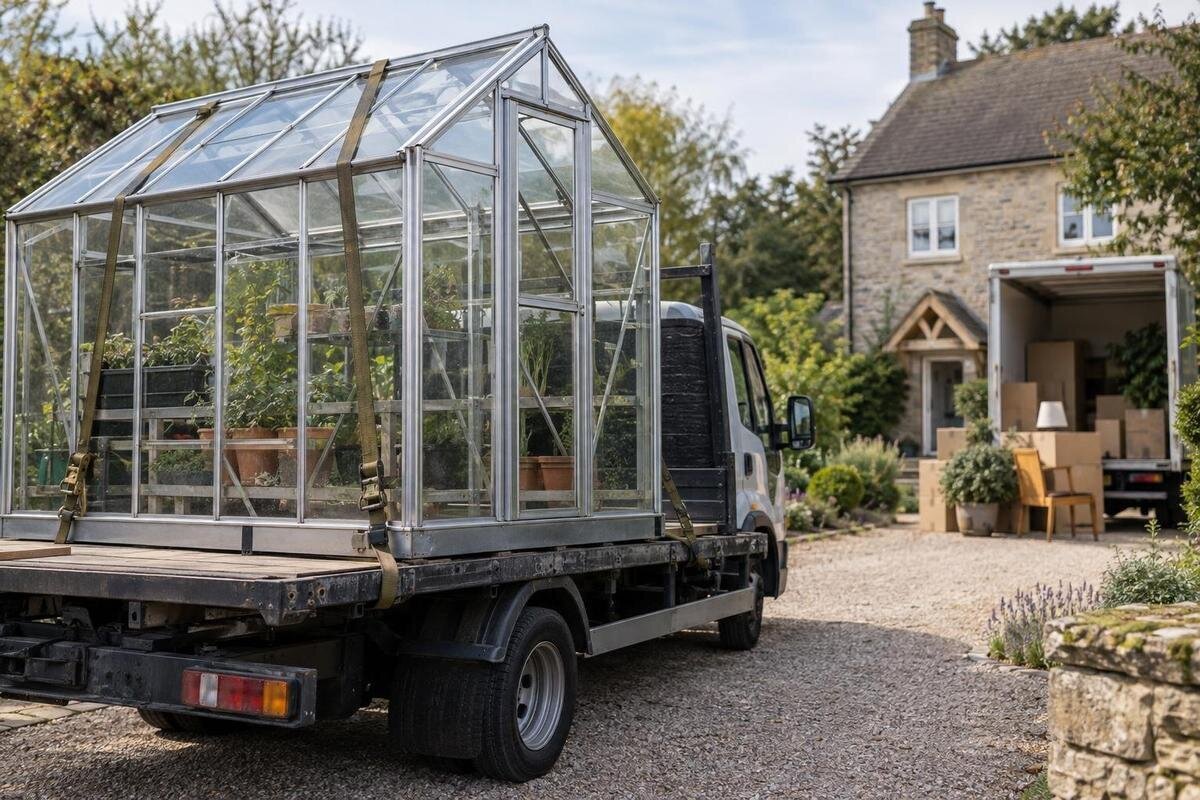
Moving house with a greenhouse
Moving house can turn a useful greenhouse into a difficult decision. The structure may still suit your gardening, but dismantling, transport and rebuilding bring cost, effort and a risk of damage. Whether it is worth taking depends on its condition, the new garden, the work a specialist says is needed and the full cost compared with leaving or replacing it. First confirm what has been agreed with the buyer; then assess the greenhouse and destination. There is no general rule that an old greenhouse should be moved, or that buying new is automatically the better choice.

Confirm what is included in the house sale
Before arranging removal, confirm what was agreed about the greenhouse in the house sale. Do not assume it automatically stays with the property or that you can take it without discussion. The frame, fixed base, benches, heaters, irrigation equipment and loose tools may be dealt with separately. Ask the buyer, through the estate agent and your solicitor or conveyancer, to confirm the arrangement in writing. If you rent rather than own the property, ask the owner before removing a fixed structure. This is a practical check on the agreement, not a universal statement about what legally counts as a fixture.
Make the arrangement specific: whether the whole structure stays, which fittings remain, when it must be removed, and who deals with the cleared ground or any damage. If the buyer wants it, agree the condition in which it will be left; if you are taking it, check that the work can happen before handover and that contractors can access both properties. Record whether shelves, staging or connected equipment are included. A greenhouse may be straightforward to move physically yet impossible to remove on the dates or terms you have agreed.
Inspect condition and repairability
Look over the greenhouse before asking anyone to price the move. Check for corrosion, decay, distortion or loose joints as appropriate to its construction; cracked or missing glazing; gaps around panels; doors or vents that no longer close; and movement at the base. If you cannot tell whether a defect affects the frame or panel support, ask a greenhouse installer to assess it. Dated photographs and a short list of missing panels, improvised repairs and parts that already need attention can help a mover estimate the work. Age alone is a weak guide: a well-kept older structure may be a better candidate than a poorly maintained newer one.
Condition is only half the question; ask whether the greenhouse is realistically repairable and supported. If you know the manufacturer or model, check whether instructions, matching panels and fittings are available, and ask the supplier or an installer whether that particular structure is suitable for dismantling. Do not assume a generic pane or fastener will fit, or that parts for a similar design will work. Keep photographs of any identifying labels alongside the original paperwork, and distinguish confirmed replacement parts from items that a supplier still needs to identify. An apparently small repair can affect the decision if an essential component cannot be obtained. Ask whether the assessment leaves any areas unexamined and what uncertainty that creates for the quote. If replacement is worth considering, the aluminium greenhouse range is one product family to examine. Compare its current dimensions and inclusions with your needs; it is not automatically equivalent to the greenhouse you own.
Check the new garden against the greenhouse footprint
Compare the greenhouse’s measured footprint and height with the new garden, not just with the patch of ground it occupied before. Include space to operate the door, usable paths, access along the sides for routine cleaning and repairs, and room for beds, staging or other equipment. Look at how nearby walls, fences, trees and buildings affect light and shelter through the day and across the growing season. A sunny position at the old house says nothing conclusive about the light available at the new one.
Check the base and route to the proposed position as well. A base made for the old ground should not be assumed to suit a different surface. Levels, drainage and anchoring may need assessment by a greenhouse installer or competent builder; do not rely on an informal guess where the base or ground is uncertain. Check that people and components can reach the intended spot. If the plot calls for a different arrangement, a lean-to greenhouse option is one form to compare with other layouts, but the name alone does not establish that a particular wall, footprint or site will work.
Allow for dismantling and reassembly risks
A greenhouse that is sturdy in normal use is not automatically suitable to move as one assembled unit. Its route out of the garden, the size and construction of the frame, glazing and lifting arrangements all matter. Trying to move the whole structure may strain joints or panels, and restricted gates or corners can make the plan impractical. Do not treat an intact move as a shortcut. Ask a qualified greenhouse installer or relocation specialist to assess whether it is feasible before anyone attempts it.
Taking the structure apart brings different risks. Glazing can break, fittings can be worn or lost, and a frame or panel may be damaged during handling. Reassembly can also expose problems that were not obvious while everything was in place. The risk depends on the construction, condition, available instructions and the experience of whoever does the work. Ask the assessor to distinguish existing defects from possible handling damage and explain which problems would prevent completion rather than merely add a repair cost. That distinction helps you judge whether relocation is a manageable project or an uncertain commitment. If relocation is ruled out, compare replacement designs against your growing needs. For a different shape, the pyramid-type greenhouse provides an option to assess for usable internal space, staging positions and access, rather than choosing on appearance alone.

Compare complete costs, not just removal fees
Build the relocation figure from a written estimate, not a single removal charge. Allow for assessment, dismantling, protective packing, loading, transport, storage, unloading, reassembly and parts that may need replacing. Include any additional visit, access restriction or work needed to clear or repair the old site. Ask which amounts are estimates and what might change them. Costs depend on the structure and both properties, so a general figure is less useful than an itemised quote for your situation. Keep your own time separate from the contractor’s charges: arranging visits, emptying the greenhouse, finding paperwork and waiting for access still affect whether the move is worthwhile. If you intend to do some of the work yourself, identify exactly which paid tasks that removes rather than treating your involvement as a saving against the entire quote. A brief task log can make this comparison more realistic without assigning an arbitrary hourly value to your time.
Compare that total with the full cost of a replacement: the chosen greenhouse, delivery, site preparation or base work, installation and removal of the old structure. A product page such as the Prestige Greenhouse listing can identify an option to price, but it does not settle the cost of a complete installation or the details of the chosen configuration. Put both quotes on the same basis, including VAT where applicable, and separate work needed under either option from work caused specifically by relocation. Mark unpriced items as unknown rather than entering zero. If repair costs remain uncertain, ask the provider to explain a plausible additional allowance and what it covers; do not invent a percentage to make the figures look complete. Do not let the original purchase price decide the question; that money has already been spent. Count any resale value only if there is a realistic buyer, and compare what you would spend from now with the likely usefulness of each option.
Check exactly what each quote covers
A relocation quote should say who is responsible for assessment, dismantling, protecting and packing the parts, loading, transport, storage and reassembly. Ask what happens if a panel breaks or a fitting cannot be reused, who sources replacements, and whether additional visits are charged separately. Check what insurance covers, including damage in transit, and note any exclusions or excesses. If the greenhouse has water or electrical services, clarify whether disconnection and reconnection are included or need to be arranged separately with appropriate qualified professionals.
Give the provider the manufacturer or model details if you have them, and ask whether the quote assumes that every panel and fitting can be reused. A broad promise to relocate a greenhouse may not cover rebuilding it at the new address. Compare it with a replacement quote on the same basis; the limited-edition greenhouse range can be a starting point for identifying an option to price. Confirm the chosen model’s actual contents, delivery and installation arrangements rather than assuming they are included. A clear list of exclusions is useful information when deciding whether the risk is acceptable.
Decide whether the old layout still suits you
The new home may call for a different use of the garden. Consider how much growing space you need, who will use the greenhouse, how you will reach the beds or staging, and whether you need space for equipment as well as plants. Measure against those needs instead of trying to preserve the old arrangement at any cost. If the existing footprint would block a path or leave too little room to work, moving the greenhouse may preserve a structure but not deliver a useful layout.
If storage is part of a changed brief, the greenhouse with built-in storage is one listing to compare. Check the actual layout, measurements and access to that area, and whether it suits what you intend to keep there; the product name alone does not answer those questions. Apply the same scrutiny to any replacement design. If the old greenhouse still fits the garden and your plans, there may be no reason to replace it simply for the sake of change. If it does not, the cost of adapting the new site belongs in the relocation comparison.
Plan for the time when the greenhouse is unavailable
A greenhouse may be unavailable while it is dismantled, in storage or waiting for a prepared base, so consider what will happen to any plants or equipment that depend on it. Moving plants is a separate decision from moving the structure. If the old house must be cleared by a particular date, include the time needed to empty the greenhouse in your moving plan. Think through the possible gap in use rather than assuming the greenhouse will be ready as soon as you arrive. Note which plants need temporary accommodation and whether you actually have somewhere suitable for them; if not, giving them away or changing that season’s growing plans may be more practical. For stored components, confirm who provides the space, how long the agreed charge covers and whether the provider’s protection and insurance arrangements apply throughout storage. Avoid a plan that relies on keeping everything at the old property after access has ended.
Coordinate access to both properties, the contractor’s work window, transport and readiness of the new site. Ask the provider what could delay the work and allow some contingency instead of relying on a same-day transfer. Establish which tasks depend on others: an available transport date is of little use if the destination cannot receive the parts or the installer cannot begin. If you choose a replacement, confirm order, delivery and assembly timing directly for the selected configuration. If your revised garden plan includes a T-shaped layout, the T-shaped orangery greenhouse is an option to discuss while obtaining that schedule. The useful date to plan around is when the complete greenhouse can be used, not simply when the components arrive.

Leaving it for the next owner is an option
If the greenhouse is serviceable, the next owner may want to keep using it. Leaving it in place can avoid dismantling and transport, but only if the buyer agrees. Ask rather than assuming they will value it as you do, and record what stays: the structure, base, shelves, staging and any accessories. Agree its condition and whether it must be cleared or left ready for use. If the buyer does not want it, do not treat that as permission to leave it behind.
Other possibilities include selling it separately before handover, offering it to someone who can collect it, or arranging removal and disposal. Each takes time and may require a contractor to assess the structure, so include those costs and dates in your comparison. If it cannot be relocated and the buyer declines it, ask a suitable removal or waste provider how to deal with the frame and glazing. A confirmed handover to someone who wants the greenhouse can be simpler than moving it, but it still needs to be part of the agreed plan.
A practical test for moving, replacing or leaving it
Moving is most plausible when the sale arrangement is clear, the greenhouse’s condition and parts have been assessed, the new garden can accommodate it, and a competent provider can describe the full job and its likely cost. Replacement deserves a closer look when the structure needs substantial work, the new site calls for another layout, or the complete relocation price is close to a suitable new installation. Leaving or passing it on can make sense when the buyer agrees and transport would add little value. These are decision prompts, not fixed rules. Record the evidence beside each option: the assessment date, measured site, quoted scope, unresolved costs and expected period without a greenhouse. Identify any condition that would rule an option out, such as no agreed removal access or no suitable position at the new address. Only then compare preferences such as appearance or familiarity. A low quote cannot compensate for an option that cannot be completed.
For example, if an installer considers a greenhouse suitable for dismantling and reassembly, the measured new site can take it without major changes, and an itemised quote compares well with a replacement, moving may be the sensible choice. If repairs, storage, a new base or a change of use alter that picture, the advantage may disappear. If you are considering a substantial increase in growing space, the Spacious Greenhouse listing gives a published range of 506–753 sq ft to investigate. Treat that as a starting point for comparing scale, then obtain the chosen configuration’s dimensions and site requirements. Extra space is only valuable if you need it and can accommodate it. The decision should follow the structure’s actual condition, the new garden and complete costs.
Frequently asked questions
Is moving an existing greenhouse usually cheaper than buying a new one?
Not automatically. Compare the complete relocation cost, including assessment, dismantling, transport, storage, parts, base work and reassembly, with a replacement quote that includes delivery, preparation and installation. A removal fee alone is not comparable with a complete new-build figure. The result depends on the greenhouse’s condition, access, distance and the new site.
Can a greenhouse be moved while still assembled?
A specialist may judge an intact move feasible, but its appearance is not enough to determine that. The frame, glazing, joints, size, route and lifting arrangements all affect the risk. Do not assume moving it in one piece is a shortcut; ask a qualified greenhouse installer or relocation firm to assess it first.
Do I have to leave the greenhouse when I sell my house?
Do not decide by assumption. Confirm the agreed position with the buyer and your solicitor or conveyancer, and record which parts stay, what must be removed and by when. A fixed base and detachable fittings may need separate clarification.
What should a greenhouse relocation quote cover?
Check whether it includes assessment, dismantling, protection and packing, loading, transport, storage, unloading, reassembly and any replacement parts or base work. Ask what insurance covers, what is excluded, and who pays if parts are damaged or cannot be reused. Confirm separately who handles any connected services.
When should I replace a greenhouse instead of moving it?
Replacement is worth comparing when the frame or glazing needs substantial attention, parts or instructions are hard to find, the new garden cannot accommodate the existing footprint, or a complete relocation quote approaches the cost of a suitable new installation. These are prompts to compare actual quotes, not automatic rules.
The question is not only whether a greenhouse can be taken apart, but whether it can become a sound and useful greenhouse again at the new address. A clear sale agreement, a condition assessment, a site check and complete quotes reveal the practical trade-offs. If an important part of that picture is missing, clarify it before committing to removal. The right outcome may be relocation, replacement or an agreed handover to the next owner.
