
How to Overwinter Geraniums in a Greenhouse
Seasonal greenhouse care
Garden-centre “geraniums” are usually tender pelargoniums, and saving them depends on whether you let them rest or keep them growing. Both approaches can work in a greenhouse, but a cool, slow-growing plant needs much less water than one kept in active growth. Check the plant’s identity, monitor overnight temperatures near the pots and adjust moisture and ventilation to match. A glazed greenhouse is not automatically frost-free, so base your choice on its actual winter conditions and the needs of the cultivar.

Before choosing a greenhouse 1
Identify your geranium before overwintering
On labels and in everyday speech, “geranium” often means Pelargonium, the tender bedding plant grown in containers and summer displays. True geraniums, commonly called cranesbills, belong to the genus Geranium; many are hardy outdoor perennials and do not need the same protected winter treatment. Look for the botanical name on the label before you move a plant into the greenhouse. If it says Pelargonium, treat it as vulnerable to frost unless reliable cultivar instructions specify otherwise. A greenhouse can shelter it from rain and wind, but the air and compost around a pot can still become cold enough to injure it. The shared common name is not a reliable guide to how a plant behaves in winter.
Pelargoniums also differ within the group. Zonal types, often labelled Pelargonium × hortorum, are familiar upright bedding plants; ivy-leaved forms include P. peltatum, while regal pelargoniums are often identified as P. × domesticum. Regals have different light preferences from zonals during the growing season, but that does not mean they should spend winter in a dark corner. Scented-leaved pelargoniums include many species and hybrids, so seek guidance for the named plant rather than assigning the whole group one temperature. The botanical label is particularly useful for these less uniform plants. The RHS specifically identifies soft-stemmed zonals as good candidates for overwintering from rooted cuttings. If the label is missing, identify the plant as far as possible before choosing a storage method.
Choose between a cool rest and winter growth
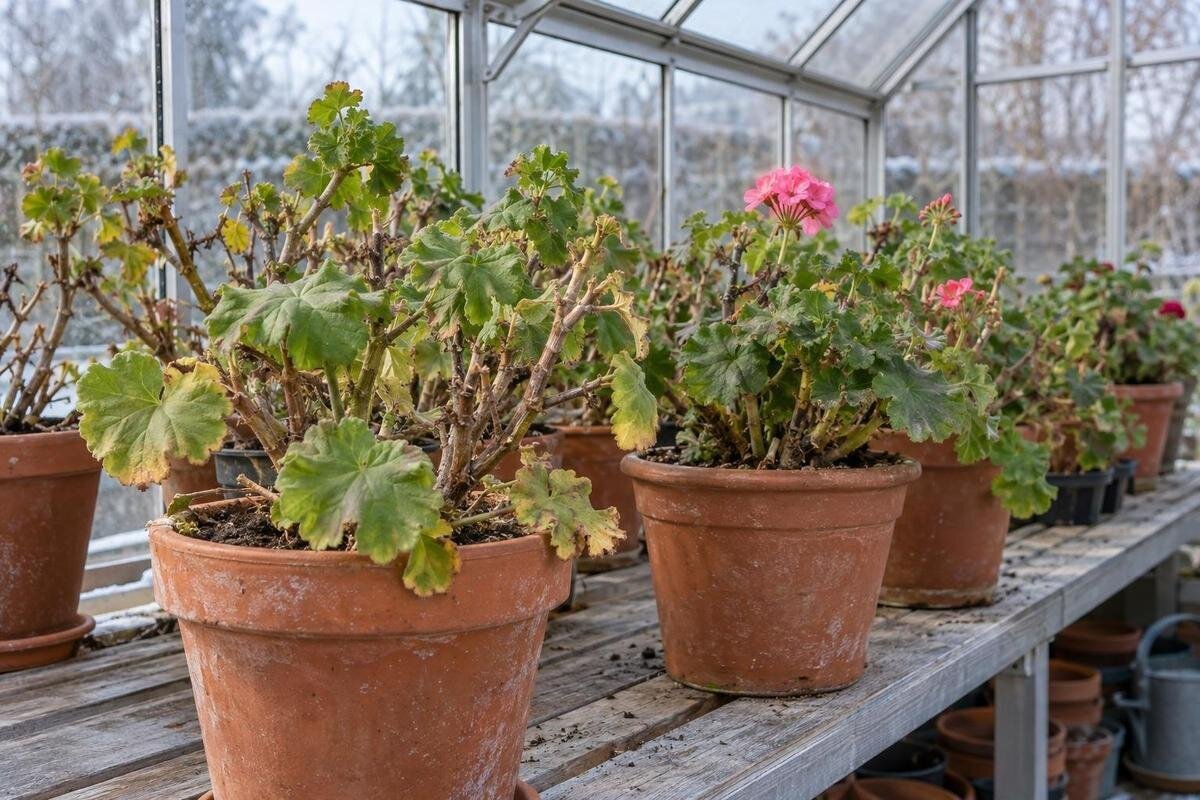
A cool winter rest slows growth without requiring the plant to lose all its leaves. In a cool greenhouse, a pelargonium may retain some foliage or shed the weakest leaves while its stems and roots stay alive. Give it enough light to keep remaining foliage sound, reduce watering as growth slows and do not feed it to force tender shoots. This suits gardeners who want to keep whole established plants but cannot provide the light and warmth needed for sustained winter growth. The trade-off is that plants may look untidy and need cleaning or pruning in spring. Treat “dormant” here as a practical description of minimal growth, not a reason to put a leafy plant in darkness.
Keeping plants in active growth preserves leafy specimens and can give you a larger plant sooner in spring, but it takes more light, a steadier frost-free environment and closer watering checks. It suits valued plants with a bright position better than a dark corner that merely happens to be sheltered. A mixed collection can use both routines: rest robust zonals, reserve a brighter place for plants that should continue growing, and take healthy cuttings as insurance for favourites. The Bloomcabin Spacious Greenhouse range is listed in sizes from 506 to 753 ft². For a large collection, compare that footprint with the space needed for separate plant groups, staging and access rather than counting how many pots will fit edge to edge.
Before choosing a greenhouse 2
Measure the greenhouse’s coldest temperatures
Use a min/max thermometer to record the lowest temperature in the greenhouse, not only the daytime reading. Place it near leaf height and check again near pots on the floor or a bench: cold air can collect low down, while a sunny afternoon can make the upper part of the house much warmer than the overnight conditions. Plants near glazing may also experience a colder pocket than those in the centre. Record readings during several cold nights, including clear weather. A brief cold spell can reveal problems that a mild day conceals. These checks help you decide whether the greenhouse can support a cool rest or whether pots need a more reliably protected position.
The RHS recommends a light, airy, frost-free position for container-grown pelargoniums overwintered under glass. It also notes that many can continue flowering at 7–10°C. That figure describes a possible flowering regime, not a survival threshold for every zonal, regal or scented-leaved cultivar. For plants resting in their pots, use frost protection, adequate light and restrained watering as the starting points, then follow any more specific cultivar guidance. An unheated greenhouse may freeze overnight even after a warm afternoon. The Classic aluminium greenhouse listing is one structure to compare; check the chosen configuration’s dimensions and ventilation rather than inferring its winter temperature from the model name.
Care for pelargoniums during a cool winter rest
Move pots in before frost threatens, then inspect the foliage, stems and compost surface. Remove flowers, yellow leaves and dead material, and deal with pests before plants sit close together for months. Trim only what is damaged, diseased or so long that it prevents practical spacing; a severe late cut is not necessary for every cultivar and may leave a weak plant with little foliage. Make sure each pot drains freely and is not sitting in a full saucer. Label cultivars while they are easy to recognise, so you can apply different care and compare results next spring. Bare-root storage is a separate method requiring careful control of drying and damp: exposed roots can dry excessively, while damp stored material can develop mould. Keeping plants in pots makes moisture checks easier.
Once growth slows, stop routine feeding and let the compost dry partly between waterings. Check below the surface rather than relying on a calendar: the rootball should not stay wet, but it should not be left completely dry for weeks either. Use a modest amount of water when needed, allow excess to drain and remove it from trays. Keep dormant pots cool and bright enough for any remaining leaves; a warm, dark corner encourages weak shoots, while a damp, cold one increases the risk of rot. Include the Lean-To Greenhouse listing in a floor-plan comparison only after checking the actual footprint against the pots and the route needed to reach them.

Before choosing a greenhouse 3
Maintain light for plants kept leafy
Plants kept leafy through winter need the brightest position you can provide, not simply the warmest one. Weak daylight combined with excess warmth can produce long, pale, floppy stems. Space pots so their leaves are not pressed against one another or a cold pane, and turn them occasionally if growth leans towards the light. Winter sunshine can still warm a greenhouse rapidly, so air it on suitable mild days and check the night-time reading before deciding to raise the temperature. Remove spent flowers and do not encourage soft new growth with heavy feeding while light remains limited; steady, compact growth matters more than a winter display.
The RHS advises full light for pelargoniums grown indoors or under glass, with protection from scorching midday sun. Its separate advice that regal cultivars prefer partial shade when planted out should not be interpreted as a recommendation for dim winter storage. Give leafy overwintering plants good daylight and use cultivar guidance for any additional requirements, particularly among scented-leaved species and hybrids. As conditions warm, active leaves may use more water, but extra heat cannot compensate for inadequate light. When comparing structures, request the internal height and ventilation details for the selected Limited Edition greenhouse range configuration. Allow clearance above tall plants and check that their foliage will not obstruct the openings.
Water according to growth and temperature
Pelargonium stems and leaves hold water, so a cool plant uses it slowly and can rot if its compost stays saturated. Check each pot rather than watering every one on the same day: feel the compost a couple of centimetres below the surface and lift the pot to judge whether it has become lighter. A dormant plant usually needs only a modest drink once the rootball has begun to dry; avoid both a wet, cold root zone and extreme desiccation. Pot size, compost, temperature and leaf area all alter how quickly moisture is used, so there is no dependable winter interval.
Leafy, actively growing plants may need water more often than dormant ones, particularly if the greenhouse is milder, but let excess drain and keep water off dense foliage where possible. Empty saucers and trays so roots are not left standing in water. If a plant is barely growing, routine feeding is unnecessary; resume a balanced feed only when sustained new growth and brighter spring conditions show that it is using nutrients. A persistently wet mix can contribute to yellowing or soft growth, while shrivelling can have several causes, so check the compost and roots before reacting. Compare a real floor plan for watering access, including the T-Shaped Orangery Greenhouse listing, so you can reach every pot without pushing past or crowding plants.
Before choosing a greenhouse 4
Ventilation and pest checks through winter
Cool, damp conditions and lingering moisture on foliage favour grey mould, while persistently wet compost can encourage root rot. Give pots space for air to move between leaves, clear fallen petals and leaves promptly, and water earlier in the day so accidental splashes do not remain wet overnight. Condensation on the greenhouse is a useful prompt to check spacing and airflow, though it does not by itself show whether the plants are too wet. On mild, dry days, open available vents or the door briefly to exchange stale, humid air; close them before the temperature drops sharply. Ventilation does not make a frost-prone greenhouse safe, so keep using the thermometer while airing.
Inspect leaf undersides, growing tips and stems at least weekly for aphids, whitefly, mealybugs and signs of mould. Separate an affected pot promptly, remove dead or badly infected material and clean tools before working on another plant. Check new plants and cuttings before bringing them into the collection, too; a small pest problem is easier to contain before pots are crowded for winter. When considering the Pyramid-type greenhouse range, ask for the vent positions and opening details of the selected model. Check that you can operate the openings with your planned staging and plants in place, rather than having to move pots whenever the greenhouse needs airing.
Plan the space around pots and access
Plan for mature foliage and winter access, not just the number of pots. A tall, bushy pelargonium may need more vertical clearance than its pot suggests; small plants are easier to inspect when grouped at a reachable height. Keep a clear route to the door, vents and every bench, and leave room to lift out one pot for inspection. Do not push foliage against glass or pack containers tightly together. Overcrowding hides pests, traps damp air and makes careful watering awkward. If you have different groups, mark separate areas for dormant plants and leafy ones so their water and temperature routines are not confused.
Before settling on shelves or staging, check that each surface is suitable for the pots you intend to place there and that the arrangement leaves openings accessible; do not assume a greenhouse listing proves a particular shelf load. Store spare pots and tools where they do not obstruct the growing area or air movement. The greenhouse range with built-in storage is one category to inspect if integrated storage matters to you; check the exact product details and plan to see how much floor area remains for plants and whether stored items could block vents. Keep tools clean and avoid leaving damp compost or fallen leaves among overwintering pots.

Before choosing a greenhouse 5
Match the greenhouse to your winter routine
Choose a structure around the routine you can sustain. For a cool rest, look for a site and configuration where you can monitor the pots, keep them away from likely cold spots and ventilate damp air without losing access. For active growth, account for the brightest usable position, headroom, door access and whatever reliable frost protection your plan depends on. Glazing can trap daytime warmth, but it does not guarantee frost-free nights, and a spacious floor does not necessarily provide more winter light. Nearby shade and the position of the site affect how much daylight reaches plants. If supplementary heating is part of the plan, obtain qualified advice on suitable equipment and installation rather than improvising.
Measure the full footprint, internal height, route from the door to benches and space needed to open vents; then compare those measurements with your tallest plants and watering routine. Check the exact published configuration for dimensions, glazing, ventilation options and any base or staging details you need, since versions can vary. Bloomcabin Prestige Greenhouse is one greenhouse listing to assess against that checklist, not a promise of a particular winter temperature. Before committing to a layout, establish where you will monitor temperatures and how you will move vulnerable pots if a cold spell exceeds the protection your setup can provide.
Bring plants back into growth in spring
When days lengthen and temperatures become more reliable, bring dormant plants back into growth gradually. Remove dead or soft stems, check for pests and resume watering in small increments as new shoots appear; do not soak a pot just because it has been dry for weeks. If the rootball has pulled away from the pot or the compost drains poorly, repot as growth resumes rather than leaving roots in a saturated mix. Give leafy plants more light before encouraging vigorous new growth. Prune to shape when new shoots show where healthy growth is forming, and avoid removing more foliage than the plant can replace.
Keep tender pelargoniums under cover until local frost risk has passed, then acclimatise them to outdoor conditions gradually over about two weeks. Begin with short periods in a sheltered spot and bring them back under cover if cold returns. Sudden shifts from a protected greenhouse to wind, strong sun or cold nights can stress soft winter growth. Cuttings that made it through winter can be potted on once they are growing steadily. Note which plants rested well and how low the greenhouse temperature fell; those records help you decide whether to give that cultivar a cool rest or maintain it actively next season. Wait for clear signs of growth before assuming a bare-looking stem is dead.
Frequently asked questions
Can I overwinter pelargoniums in an unheated greenhouse?
Only if its overnight temperatures remain suitable for your plants. An unheated greenhouse can become as cold as the weather outside, so record readings near the pots during cold spells. If the temperature risks frost damage, move the plants to a more reliably protected place rather than relying on daytime warmth.
How often should I water a dormant pelargonium?
There is no dependable weekly schedule: temperature, pot size, compost and remaining foliage all affect how quickly it dries. Check beneath the surface and water modestly when the rootball has begun to dry. Keep it from staying wet, but do not leave it bone-dry for a prolonged period.
Should I prune geraniums before winter?
Remove dead or diseased material and trim only what is needed to fit the plant comfortably. A severe cut is not necessary for every cultivar and can leave a weak plant with little foliage. Label plants before pruning, and shape them more fully as healthy growth resumes in spring.
Do regal pelargoniums need different winter conditions?
Do not assign all regals a separate winter temperature without cultivar guidance. The RHS recommends a light, airy, frost-free position for container-grown pelargoniums under glass. Regals prefer partial shade when planted out, but this does not justify dim winter storage. Water according to retained foliage, actual growth and compost moisture rather than the plant group alone.
Can I keep pelargonium cuttings through winter?
Yes. Rooted cuttings can be overwintered in a bright, frost-free place, but their smaller rootballs may dry sooner than those of mature plants. Check them individually, avoid waterlogged compost and give them enough light to prevent weak, stretched growth.
Successful overwintering means matching each pelargonium’s winter routine to its type and growth. A cool rest and continued leafy growth are both viable approaches when light, temperature and watering suit the plant. Retaining leaves does not necessarily mean a plant is actively growing, so judge its needs by new growth and how quickly its compost dries. Keep notes on the lowest readings and the plants that respond well; next autumn, you can repeat the approach that suited each cultivar rather than treating the whole collection as one.
