
How to Overwinter Oleanders in a Greenhouse
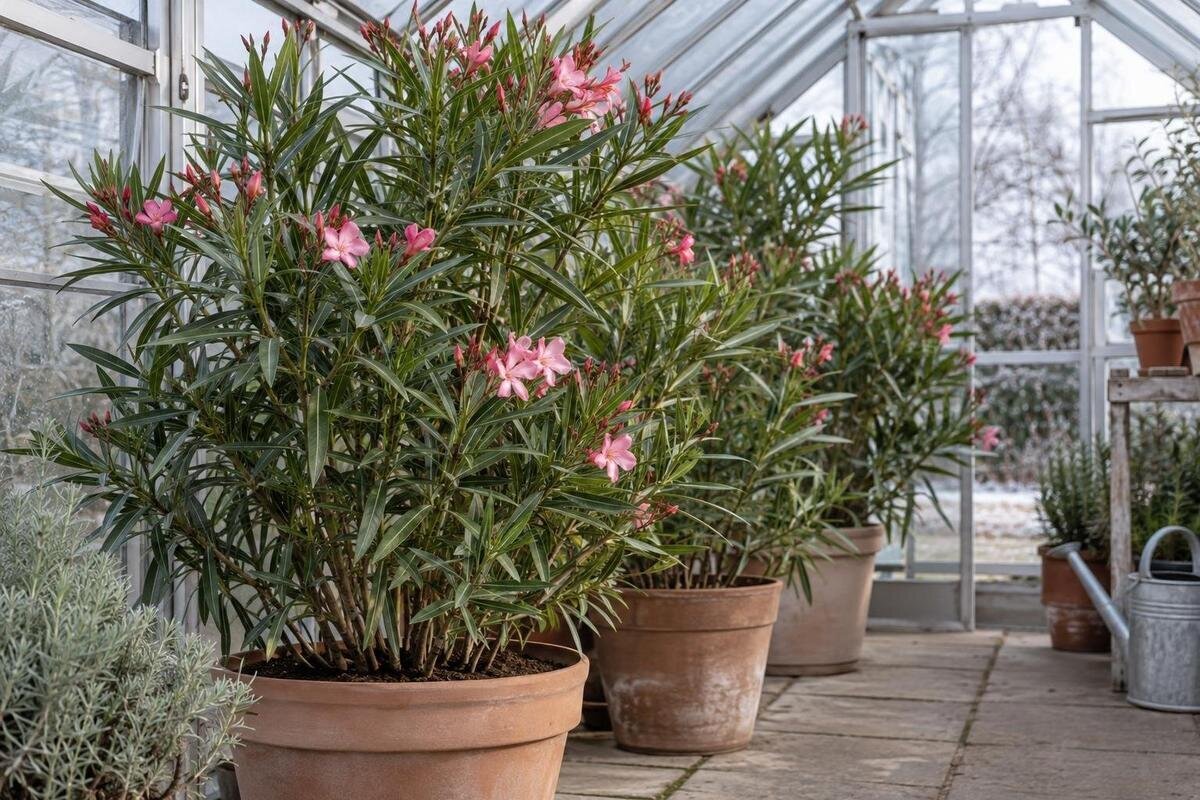
OLEANDER WINTER CARE
Overwintering an oleander under glass is about balancing cool conditions with enough winter light. Nerium oleander stays evergreen, so it is not treated like a bulb that can be stored dry and dark; in a warm, dim greenhouse it may produce soft growth, while an unheated structure can still become very cold at night. The plant is also poisonous, which affects how you inspect, move and prune it. This guide focuses on container-grown oleanders and covers greenhouse conditions, pest checks and safe handling.

Can an oleander be overwintered in a greenhouse?
Yes, provided the greenhouse offers a bright, reliably frost-free place that stays cool rather than warm and dim. Nerium oleander is evergreen: growth slows in winter, but its leaves remain and it does not need a completely dry dormant period. Glass can shelter it from wind and rain, yet an unheated greenhouse may still fall close to outdoor night temperatures. Sunshine can raise the temperature quickly during the day, followed by a sharp drop after sunset. Treat the structure as a buffer, not proof that the plant is protected from frost. That distinction matters especially during a prolonged cold spell, not just on a sunny afternoon.
Container-grown oleanders are easier to move than established shrubs in the ground, but the pot still needs to pass through the doorway without catching on the frame or scraping branches. Plan the move before cold weather, while the compost is not frozen and the plant is manageable; do not wait for frost damage to appear. Measure the pot, the broadest part of the canopy and the route into the greenhouse. A lean-to greenhouse is one format to compare, but check the chosen model’s internal height, door clearance, vents and real winter conditions. Floor area alone cannot confirm that a shrub will fit or stay frost-free. Avoid a last-minute drastic cut simply to squeeze an oversized plant inside.
What winter temperature suits an oleander?
Aim for cool, bright, frost-free winter quarters rather than a warm room. The RHS plant profile recommends full light and good ventilation under glass, but does not specify an overwintering temperature range. Its outdoor hardiness rating should not be treated as a guaranteed safe temperature for a potted plant. Keeping the plant cool slows growth while allowing its evergreen leaves to receive daylight. Prolonged warmth can encourage soft new growth when light is limited. Do not let the root ball freeze: roots in a container are more exposed than roots in the ground. If readings repeatedly approach freezing, move the plant to another suitable frost-free place rather than testing its tolerance.
Use a minimum–maximum thermometer near the plant, out of direct sun, and check the lowest reading in the morning. Note a sunny afternoon reading too, since temperatures under glass can swing considerably between day and night. When comparing the Limited Edition greenhouse range, consider where the oleander would stand and how you would monitor conditions there. A reading beside the door may not represent the temperature in a sheltered corner, so measure at the intended winter position before moving the plant. Keep a record through colder weather rather than relying on a single mild night. If you are considering supplementary heat, ask a qualified professional to assess safe provision and suitability; do not improvise an electrical or flame-based solution.
How much light does an oleander need in winter?
Keep the plant in the brightest practical part of the greenhouse. Oleander retains its foliage and benefits from good natural light, even while cool conditions slow growth. A dark shed or shaded corner is not equivalent to bright winter quarters: in low light, the plant may lose leaves or produce weak shoots if the space is also warm. Check the site at different times of day, because the low winter sun can leave areas shaded by a wall, fence or nearby tree. Clean glazing helps make the most of available daylight, and other pots should not block light from reaching the oleander’s canopy.
Look at the light reaching the leaves, not just the brightness at the doorway. Leave space above and around the canopy, and avoid pushing the plant behind taller specimens. If you are comparing layouts such as a T-shaped orangery greenhouse, assess the actual position of the glazing and the shade at your own site; the product’s shape or name does not establish how much light a particular planting spot receives. Where a plant has been moved from a very bright outdoor position, check it for stress and avoid making several major changes to its conditions at once.
Ventilation and condensation in a winter greenhouse
Cool winter quarters still need some fresh air. In a closed, damp greenhouse, condensation can linger on leaves and surfaces, particularly where crowded foliage restricts airflow. On mild, reasonably dry days, ventilate enough to refresh the space, keeping an eye on the thermometer so the plant is not exposed to a sudden chill. Close vents before evening temperatures fall, and avoid placing the pot directly beside a door or opening where cold air can blow onto it. Condensation by itself does not diagnose a plant disease, but persistent dampness is a reason to review airflow, watering and the position of the pot. Check whether leaves remain wet long after the glazing has dried.
Ventilation arrangements differ between greenhouses, so check the details for the exact model you are considering rather than assuming that every structure has the same openings or controls. A pyramid-type greenhouse is one option to inspect; look for the stated ventilation provision and consider whether you can reach and use it when needed. Do not leave a door or vent open overnight in cold weather simply to clear condensation. If you cannot air the greenhouse on suitable days without risking a sharp temperature drop, consider whether another winter position would be more dependable for the oleander.

Allow room for the pot, canopy and access
Oleanders can become broad, and a mature container plant may take up more room than its pot suggests. Measure the widest part of the canopy as well as the container, then allow space to reach the leaves, check for pests and water without brushing against the plant. Keep foliage from pressing against glazing, where it can be damaged or stay damp. Think about the route from the entrance to the winter position, including turns and any narrow points. A plant that fits on paper may still be difficult to move or inspect if it is wedged behind other pots.
Plan the usable growing area around the plant, rather than counting every part of the greenhouse floor as free space. If considering a greenhouse with built-in storage, check how the storage affects the room left for the oleander and a clear access route. Place the pot on a stable, level surface that is appropriate for its weight, and avoid leaving it standing in drained water. Make enough room to remove fallen leaves and to check the floor and pot for dampness. A simple sketch with the pot, canopy and walking route marked can reveal access problems before the plant is moved.
Watering and feeding during the cool months
An oleander needs less water when cool conditions slow its growth, but the compost should not be allowed to dry out completely for a prolonged period. Check below the surface with a finger rather than watering by calendar: a dry-looking top layer can conceal damp compost underneath. When the upper compost is beginning to dry, water and allow the excess to drain. A large pot may stay moist for longer than a small one, and a cool, shaded corner dries more slowly than a bright position. These differences are why a fixed weekly amount is unreliable. Where practical, compare the pot’s weight before and after watering to help recognise when it is drying.
Make sure the pot’s drainage holes are clear and empty any saucer or outer container that holds water. Persistently saturated compost can leave roots short of air, especially when the plant is using little water. Do not continue a summer feeding routine through a cool period when growth has slowed; extra fertiliser will not correct problems caused by cold, low light or wet compost. Resume feeding only when the plant is visibly growing again, using the product directions for the plant and container. Avoid repotting simply because winter has arrived; first assess the plant’s condition and whether its current container drains properly.
Check oleanders for pests before and during winter
Inspect the plant before moving it under glass, then check it regularly through winter. The RHS identifies scale insects, mealybugs and glasshouse red spider mite as possible oleander pests under glass. Scale insects can look like small, fixed bumps on stems or leaf veins; mealybugs may appear as white, cottony patches. Red spider mite can cause pale speckling on leaves and, in a more established infestation, fine webbing. Look beneath leaves, around leaf joints and along stems, not just at the top of the canopy. Sticky residue or sooty-looking growth can also be a clue that sap-feeding insects are present. An early check makes it easier to notice a change before pests spread to neighbouring plants.
If you find pests, keep the oleander apart from other plants while you identify the problem and decide how to manage it. Wear gloves when inspecting or wiping leaves, and collect any material that comes away so it is not left within reach of children or pets. For a treatment, use only a product labelled for the intended plant and place of use, and follow its directions; do not assume a household remedy is suitable in a greenhouse. Plan a separate inspection position that lets you reach both sides of the canopy without brushing against neighbouring plants. When reviewing the Bloomcabin Prestige Greenhouse, check whether the proposed layout leaves this space accessible when all your winter pots are inside. A packed greenhouse makes isolation and thorough inspection harder.
Handle this poisonous plant with care
All parts of oleander are poisonous if eaten, including leaves, flowers and cuttings. The RHS advises wearing gloves and other protective equipment when handling it. Cover your arms when moving, pruning or cleaning around the plant, and use eye protection when cutting stems. Wash your hands and clean your tools after handling it, and keep gloves used for this work separate from food preparation. Keep the plant and any fallen material out of reach of children and pets. Do not use its leaves or flowers in food, and do not leave prunings where animals can chew them. These precautions matter even when the plant is not actively growing.
Plan the move before lifting: clear the route, avoid carrying the pot by its branches and ask for help or use an appropriate aid if the container is too heavy to handle safely. Prune only what is necessary, such as dead or damaged material, rather than making a severe cut merely to fit the plant into the greenhouse. Never burn oleander prunings, as the smoke can be harmful. Before disposing of cuttings, check local council guidance for green waste and keep the material away from compost or garden waste that children or animals can reach.

Keep a simple winter routine and plan the move outdoors
A brief regular check is more useful than reacting only when leaves look damaged. Record the overnight low, feel the compost, look beneath leaves and check for persistent condensation or standing water. If the greenhouse becomes too warm on a bright day, ventilate when outdoor conditions allow; close it again before the evening cools. Weekly checks are a practical routine, but inspect sooner after a sudden temperature change or if you notice sticky leaves, leaf drop or new markings. A short note of temperature and watering can help distinguish a one-off change from a repeated pattern.
Do not use a fixed calendar date to move the oleander back outside. Wait until the risk of damaging cold has passed for your situation, then acclimatise it gradually to outdoor wind, brighter sun and changing temperatures. A plant that has spent months under glass may need time to adjust rather than going straight into an exposed position. If you are comparing the spacious greenhouse range for a collection of container plants, plan the spring move as well as winter storage. Check the entrance clearance against the largest pot, allow room to turn it, and avoid a layout that requires moving every other plant first. Keep the route clear so the oleander can be returned to shelter if the forecast deteriorates.
What to do if leaves change or the greenhouse gets too cold
Yellowing or leaf drop does not point to one cause on its own. Consider recent temperature changes, low light, compost that is too wet or too dry, and signs of pests before deciding what to change. Check whether the problem affects older leaves, new growth or one side of the plant, and look closely at the undersides and stems. Make one sensible adjustment at a time, then observe the plant rather than increasing watering and feeding together. These checks help avoid treating a symptom with something that could make another cause worse.
If your thermometer records conditions that threaten frost-free wintering, move the oleander to a suitable bright shelter if you can do so safely. Do not rely on daytime sunshine to offset repeated cold nights, or try to solve the problem by putting the plant in a warm, dark room. Before choosing from the Classic aluminium greenhouse range, decide what you would do during a prolonged cold spell: identify an alternative bright position, check that the pot can reach it and allow time for a safe move. This contingency matters more than choosing a larger footprint alone. If no dependable winter shelter is available, resolve that limitation before buying a greenhouse specifically to house the oleander.
Frequently asked questions
What temperature should an oleander have in winter?
Choose cool, bright, frost-free winter quarters. The supplied RHS guidance recommends full light and good ventilation under glass, but does not give a specific winter temperature range. Measure the overnight low where the plant will stand and arrange alternative shelter before freezing conditions threaten.
Can I leave an oleander in an unheated greenhouse?
An unheated greenhouse is suitable only while it remains frost-free. Monitor overnight lows at the plant’s position and follow the weather forecast; readings from mild nights do not establish protection during a cold spell. Have another suitable, bright shelter ready before frost threatens.
How often should I water an oleander in winter?
There is no reliable fixed schedule. Check just below the compost surface, since the top can look dry while the compost underneath is still damp. Water as the upper compost begins to dry and let excess water drain away. The plant usually needs less water in cool conditions than during summer growth.
Which pests should I look for?
Inspect for scale insects, mealybugs and glasshouse red spider mite. Look beneath leaves and around stems and leaf joints for fixed bumps, cottony patches, sticky residue, fine webbing or pale speckling. These signs are clues for closer inspection, not a diagnosis on their own.
Is oleander safe to handle?
Oleander is poisonous if eaten and needs careful handling. Wear gloves and protective clothing when moving or pruning it, keep the plant and fallen material away from children and pets, and never burn its prunings. Seek prompt professional advice if ingestion is suspected.
A greenhouse can provide useful winter shelter for an oleander, but only if it remains bright, cool and frost-free in practice. Measure the overnight temperature, adjust watering to the compost rather than a calendar, and inspect leaves and stems regularly. Give the canopy room, ventilate when conditions allow and use gloves whenever you handle the plant or its cuttings. These checks help you judge whether your greenhouse is suitable for the whole winter, rather than assuming that shelter from rain alone is enough.
