
How to Identify Replacement Parts for a Discontinued Greenhouse
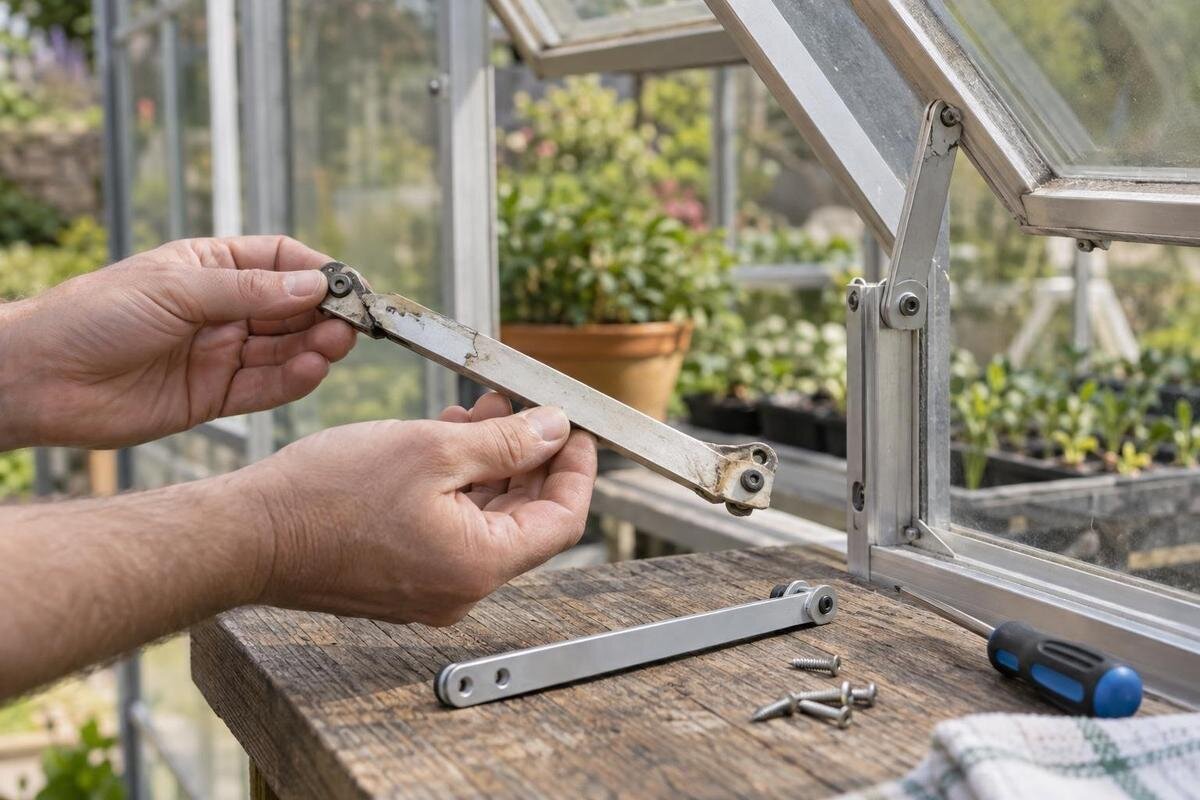
Greenhouse repair guide
Finding a spare part for a discontinued greenhouse begins with identification, not guesswork. A broad description such as “an old greenhouse” rarely tells a manufacturer or installer which frame, glazing panel or fitting is involved. Gather model clues, clear photographs, measurements and original paperwork before asking about availability. That makes it easier to check a precise part and reduces the risk of ordering something that merely looks similar.
What discontinuation means for spare parts
“Discontinued” usually describes the sales status of a greenhouse model, not the fate of every component. Some parts may still be identifiable or available, while others may no longer be supplied; only the maker or an informed supplier can confirm the position for your specific model. The age of the greenhouse does not establish which revision it is, either. Treat the label as a prompt to collect better evidence, rather than proof that repair is impossible or that a similar-looking component will fit. Start by naming the item you need as specifically as you can: for example, a glazing retainer, door wheel, vent hinge, seal or frame section. “Greenhouse spare” or “replacement window” is not precise enough to identify it.
Decide whether the enquiry concerns one replaceable component, a complete assembly, a glazed panel or the greenhouse as a whole. That distinction affects the evidence needed: a small fitting may carry a stamp or part reference, whereas a frame member may need a profile and position. Write down what has failed and whether it is missing, worn, bent or broken; do not alter it to make a photograph easier. If damage appears to affect the frame, or a pane is cracked, avoid dismantling the structure and have it assessed by a qualified greenhouse installer or glazier before handling it further.
Find the greenhouse’s original details
Look for documents created when the greenhouse was bought or assembled: an order confirmation, invoice, assembly manual, parts list, technical drawing, packaging label or correspondence with the retailer or installer. Copy the manufacturer’s name exactly as printed, then note any product code, model or range name, serial number, revision, size designation and purchase date. A date can narrow a search, but does not identify a specification by itself, particularly if the greenhouse was assembled later or has changed hands. Keep the full document or scan, and record the page where a useful part number appears; a cropped image can hide the manual’s title or revision.
Check labels only where they are safely visible, such as on accessible frame ends or around a door surround. Do not climb on the greenhouse, lift glazing, loosen a structural bar or strip a fitting to reach a hidden mark. If no label is visible, write “not found” and list the clues you do have; a clear gap is more useful than a guessed model. Ask a previous owner whether they know the supplier, approximate installation date or whether a section was replaced. Keep what they remember separate from details confirmed by paperwork, and note any known alterations so they are not mistaken for the original specification.
Separate the exact model from its general type
Keep the manufacturer, model family and exact variant as separate details in your notes. One name may identify a family, while another describes a shape, size or configuration. For example, Garden Orangery T is a whole-product name; “T-shaped” alone is a description of the layout. When recording your own greenhouse, preserve the complete wording on its paperwork rather than shortening it to a general type. Copy punctuation, suffixes and codes, and mark missing information as unknown. This helps the recipient distinguish a documented identity from your description of the structure’s appearance.
Check suffixes, edition wording and any recorded differences in size or configuration. Do not use a photograph from a search result, or a neighbour’s similar-looking greenhouse, to fill in missing model details. If your paperwork gives several names, record where each appears: the invoice, manual cover and parts drawing may use different descriptions. Searching old emails for the retailer’s name or an order reference may help reconnect those records. A current catalogue can provide useful terminology, but it cannot establish compatibility with an older build. Keep possible matches separate from confirmed details until the manufacturer or a qualified installer has reviewed them.
Photograph the whole structure and the part
Take a clear set of photographs before anything is moved. Include the whole greenhouse from the front and at least one side, with the roof outline, door and affected area visible. Add a wider view showing the part in relation to the nearest corner, glazing bar, ridge or base; a close crop alone can make its position hard to understand. Use even light where possible so reflections do not obscure the detail. If you cannot safely photograph every side, say which view is missing rather than climbing or reaching across glazing. Keep the original images and note the date and viewpoint.
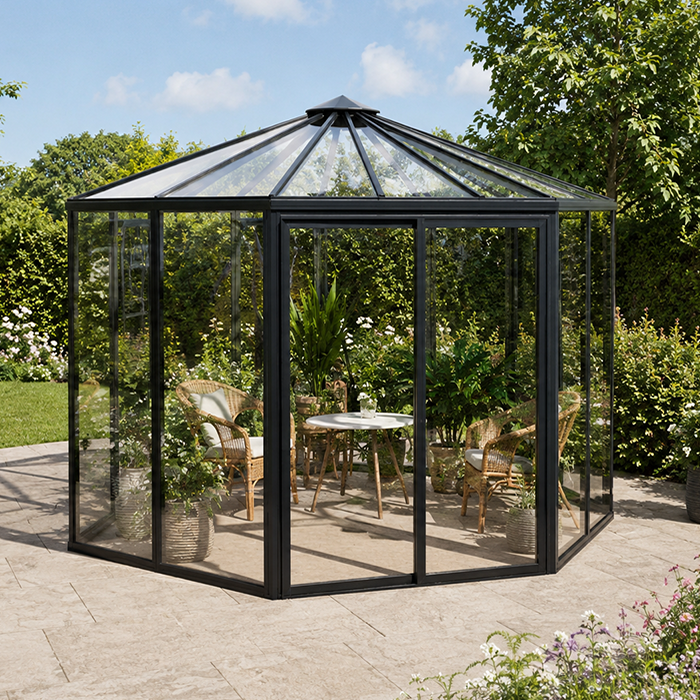
Then photograph the component close up, first as installed and from another angle if the detail is already accessible. Show any visible stamps, slots, screw heads, clips, joints or wear, but do not prise open a channel or remove a connected part solely for a photograph. A ruler placed alongside an accessible component can show scale, although it does not replace a measurement. Roof shape can help explain the wider view: Oasis pyramid-type greenhouse provides a named catalogue reference for a pyramid form. Your close-ups should still show the actual junction or fitting under discussion. Give each image a simple filename identifying its viewpoint and component.
Measure the part, opening and position
Measure the component itself only if it is loose or safely accessible, and measure the opening or mating area separately. Record length, width and depth in millimetres, stating which edge or surface each figure refers to. For a glazed panel, note the available measurements only when they can be obtained safely. A nominal greenhouse size is not necessarily the size of a particular part. Repeat each reading and note if an edge is obscured, worn or difficult to reach; do not turn an uncertain measurement into a precise-looking figure. If a part has an unusual outline, a labelled sketch can show which measurement belongs to which edge.
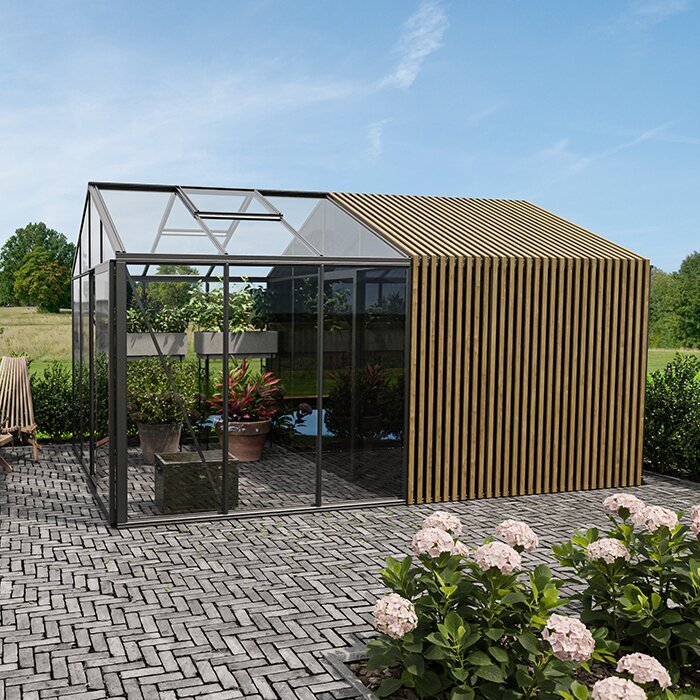
Position matters as much as size. Say whether the component is at the roof, eaves, side, base, door or vent, and identify the bay or nearest corner. State left or right from a clear viewpoint, such as standing outside facing the door. Configuration also belongs in the description: the title Limited Edition greenhouse with built-in storage illustrates wording that distinguishes a storage configuration. If your own structure has separate areas, mark the affected area on a sketch rather than giving a dimension without context. For a previously replaced item, distinguish measurements of the present part from those of the opening; they may tell different stories.
Describe the frame profile and its connections
Where a component meets an aluminium frame, the extrusion profile can be an important clue. If an end face is already visible without disturbing the structure, photograph it square-on and record its outside width and depth, the shape and position of any channels, and which way it faces. Note whether a separate bar, cap or retainer sits against it. Two profiles can share a similar external width but have different grooves or fixing routes, so one overall measurement is not enough to identify a match. A cover may hide the section: do not remove it, cut or drill a member, or dismantle the frame just to expose a profile.
Record how the part joins the surrounding frame: visible hole positions, slots, clips, fasteners and the surfaces that meet. Include any stamping or part mark, but treat colour, apparent material and visual resemblance as supporting clues only; photographs can hide small differences. Keep whole-product names, such as Bloomcabin Prestige greenhouse, in the model field of your enquiry and put markings on the individual component in a separate part-reference field. This prevents a supplier from mistaking a range name for an extrusion code. If you cannot see the profile safely, send an in-context photograph and ask what further evidence is useful. Do not assign a profile name without a drawing or other reliable record.
Identify glazing, doors and vents separately
Glazing needs its own identification check because a photograph or opening measurement may not establish the panel specification or how it is retained. Record the panel’s location, any measurements obtained safely, visible markings and the relevant manual reference. Do not order glass by width and height alone or assume that a panel which appears to fit is an approved substitute. If a pane is cracked, overhead or awkward to reach, do not remove it to obtain a better measurement; ask a qualified glazier or greenhouse installer to identify and measure it. A clear photograph can support that assessment, but it does not replace the required specification.
For doors, vents and other moving components, say what the part does and where it sits, then record its orientation and any visible reference. A door wheel, track, hinge, handle, vent opener and catch are distinct components; specify whether the item is attached to the moving leaf or the surrounding frame. Keep any separate maker’s label on a mechanism distinct from the greenhouse name. Edition wording also belongs in the model description: Limited Edition greenhouse is a whole-product title, not a hardware reference. Do not force a stiff mechanism to expose a hidden fitting. Describe the fault from normal use, and say whether the component is missing, detached or still installed.
Check manuals and manufacturer records
Search for the official assembly manual, parts list or technical drawing using the full manufacturer and model wording, including any product code. Check the document’s revision or date before relying on a part number: a manual for a similar-looking range may show a different frame or fitting. Save the relevant page together with the document title and drawing reference, not just as a cropped picture. If you find several versions, keep them separate until the manufacturer confirms which one applies. An original retailer or installer may be able to help locate older records when a public listing is no longer easy to find.
Match a reference to the correct assembly and position on the drawing. Check whether it identifies a single item, a handed pair or a larger assembly, and whether it belongs to the frame, glazing system or door hardware. Familiar wording such as Classic greenhouse can be useful when searching for documents, but retain the complete model code and document version alongside it. Record the drawing’s item number separately from the spare-part code: a number pointing to an illustration may simply locate an entry in a parts list. Check that entry for its description and quantity. If two documents give different codes, send both references and ask which applies rather than choosing the newer-looking one.
Send a parts enquiry that can be assessed
Put the strongest clues together in one concise message. State that the greenhouse is discontinued if you know this, give the manufacturer, model and variant exactly as recorded, and mark uncertain details clearly. Name the component, its location and the reason for replacement. Attach an overall photograph, an in-context view, a close-up of its profile or marking and a short set of measurements with units. Include a manual page, drawing number or part code if available. Label each photograph so the recipient can tell which side and component it shows; a sequence is easier to assess than a large batch of uncaptioned images.
Ask the supplier to confirm the exact spare-part identifier and compatibility with the stated model, version and position before ordering. If they propose a substitute, ask what establishes the match, what is included and whether any associated fittings must also be replaced. For a wall-adjoining structure, include the affected component’s position relative to the wall; the category name lean-to greenhouse alone does not convey that detail. Ask for the proposed item to be identified in writing, including its handing where relevant. If the supplier cannot resolve fit or installation requirements from your evidence, arrange an installer’s review rather than ordering on the assumption that any discrepancy can be corrected during fitting.
When repair cannot be confirmed
If no exact part can be identified, ask the manufacturer or original supplier whether they can cross-reference the model from your records and whether any documented alternative exists. A component that looks close is not a reliable reason to modify a frame, drill new holes or change a connection. Do not alter structural members to make a part fit. An experienced greenhouse installer can inspect the existing structure and advise whether repair is possible, particularly where glazing or structural components are involved. Establish whether their assessment covers only identification or also the condition of neighbouring components and the proposed repair. Finding a part and establishing that the repair is suitable are separate questions.
Sometimes the useful outcome is a clear answer that a repair route cannot be confirmed, rather than a forced substitute. If you then explore replacing the whole greenhouse, treat that as a separate decision. Define the required layout, access and use before comparing named candidates such as the Bloomcabin Orangery. Request the proposed model’s actual dimensions and base requirements rather than assuming it will occupy the old footprint. Your existing photographs can explain site constraints, while the old measurements provide a starting point for a fresh survey. Ask the installer which existing elements, if any, can be retained. Keep the replacement quotation separate from the parts enquiry so that the scope of each option is clear.
Frequently asked questions
Does a discontinued greenhouse model mean no spare parts are available?
No. Discontinuation describes the model’s sales status; it does not confirm whether every component is unavailable. Ask the manufacturer or original supplier about the specific part, using the model details and any part number you have. Availability and compatibility both need to be confirmed.
What if I cannot find the greenhouse’s model number?
Gather the paperwork, any visible labels, photographs of the whole structure and the part, its position and safe measurements. Mark uncertain details as unknown rather than guessing. The manufacturer, original retailer or a qualified greenhouse installer may be able to assess those clues.
Can I order a part that looks similar?
A similar appearance or measurement is not enough to establish compatibility. Profiles, grooves, fixings and versions can differ. Ask for the exact part identifier and confirmation that it matches your greenhouse’s model, variant and position before ordering.
Is a photograph enough to identify replacement glazing?
A photograph can show the panel’s position and condition, but it may not establish its specification or how it is retained. Use the manual and safe measurements where available. If the panel is cracked, overhead or difficult to reach, ask a qualified glazier or greenhouse installer to assess it.
What should I include in a parts enquiry?
Give the manufacturer, model and variant as recorded, name the component and its location, and attach an overall photograph, close-ups and measurements with units. Include any manual, drawing or part reference. Ask the supplier to confirm the exact part and compatibility before you order.
A useful replacement-parts enquiry combines the greenhouse’s identity with evidence about the exact component: where it sits, how it connects, what its profile looks like and which measurements are confirmed. Manuals, labels and photographs can narrow the search, but compatibility should be confirmed by the manufacturer, supplier or a qualified installer. Keeping that confirmation with the greenhouse records will make later repairs easier to identify too.
