
Choosing Peat-Free Growing Media for Greenhouses
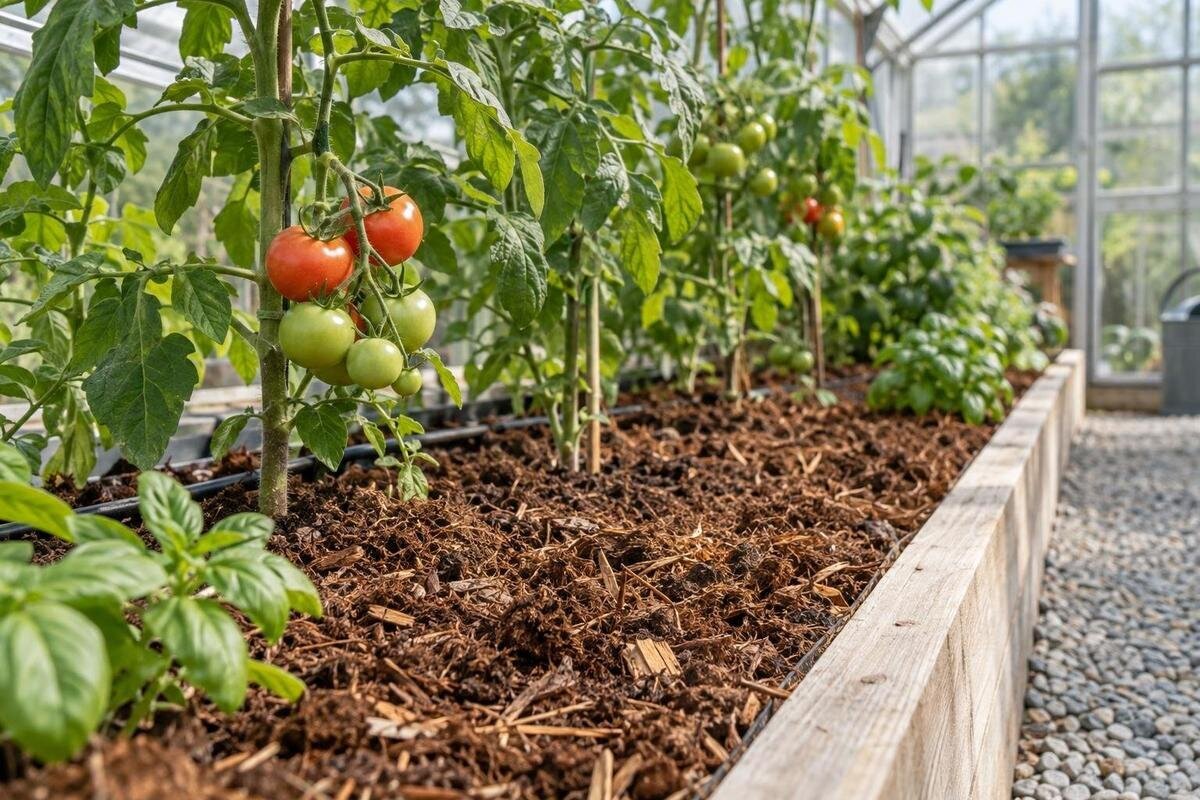
Growing media under glass
Choosing peat-free growing media for a greenhouse is not simply a matter of replacing one bag and keeping the same routine. Peat-free products can combine coir, composted bark, wood fibre, green compost and other ingredients in very different proportions and grades. That changes how a mix wets, holds water, drains and supplies nutrients. Under glass, beds and containers receive no rainfall, so irrigation and ventilation have a direct effect on the root zone. Compare the crop, growing system and supplier’s product information together. A small trial, followed by closer moisture checks, gives you a better basis for adjusting than relying on the words peat-free or copying an old watering schedule. The aim is a consistent root environment suited to the way each crop is grown.

Why peat-free media behave differently under glass
Peat-free is a category, not a single recipe. One product may rely on coir or wood fibre; another may combine composted bark, green compost, loam or several materials. Ingredient names do not tell the whole story: particle size, processing and proportions influence how the mix wets, holds its shape and drains. Even products with similar labels can behave differently, and a changed batch or formula may alter familiar results. The term itself says little about nutrient charge, pH or suitability for seed sowing. Check the exact product and its stated use rather than assuming that every peat-free bag will work like the one you last used.
In an enclosed greenhouse, beds and containers receive no direct rainfall, so irrigation is the main source of water. Sun, warmth, ventilation, pot size and plant cover all affect how quickly the root zone changes. A blend that holds a useful reserve in a large container may stay too wet in a poorly drained one; a fast-draining mix may need closer checks in a small pot. These are interactions between recipe, depth, container and crop, not fixed properties of all peat-free media. Aim for a root zone that retains available moisture while allowing excess water to drain and air to return.
Match the medium to the crop and growing method
Begin with what you are growing and where it will stay: seed modules, young transplants, mature plants in pots or grow bags, or crops in a permanent bed. Consider how long the crop will occupy the medium and whether you will move it into a larger container. A seedling raised briefly in a module presents a different task from a tomato plant growing in the same pot for several months. Crops sharing a greenhouse need not share a watering or feeding routine. Group plants by their growing requirements where practical, and choose a product whose stated use covers the stage you are planning.
An open-bottomed bed interacts with the soil beneath it, whereas a pot depends on the medium inside it and the container’s drainage. A product suitable for potting may not be intended as a complete bed medium, and material sold for improving soil may not be a ready-to-use potting mix. Draw the bed rows, containers and working aisle before deciding what you need. If the greenhouse is also being selected, compare that plan with the current dimensions and access details for the T-shaped orangery greenhouse. Allow room to reach the plants as they grow, not just space for newly planted pots; photographs alone cannot establish whether the arrangement will fit.
What common ingredients contribute
Coir is often included for its fibrous structure and water-holding contribution, but the balance of fine fibre and larger pieces changes the result. Wood fibre and composted bark can contribute a more open texture; particle size and stability matter as they settle or break down. Green compost may add organic matter and nutrients, but its pH, nutrient content and physical quality depend on the material and processing. A blend can combine components to balance their different properties. Do not select by one ingredient name or assume that a high proportion of any single material guarantees good drainage or moisture retention. Check the product description for its intended application.
Ask what the complete blend is designed to do rather than trying to rank its ingredients separately. Two coir-based products, for example, may have different textures and nutrient provision, so an ingredient list is only the beginning of the comparison. Where available, use the supplier’s information on water retention, drainage and recommended handling to understand the finished product. Keep a small sample alongside its packaging when comparing mixes, so you can relate the description to what you actually receive. If you are also considering the Pyramid-type greenhouse, include a space for handling trays and trial pots in your layout: keeping samples labelled and separate makes comparisons easier.
Check the balance of air and water
Air and water use the same pore spaces in a growing medium. After watering, excess water should be able to move away while some remains available to roots. If fine material settles or is compressed, air spaces can shrink; at the other extreme, a very open or coarse mix may drain quickly and need more frequent checks. Water sitting on the surface or running out of a pot is not, by itself, proof that the mix is unsuitable. Pot drainage holes, the bed beneath the mix, dry patches and watering speed can all affect what you observe. Assess the medium at the depth and in the container or bed where it will be used.
Test a representative amount in the intended pot or bed rather than judging dry material by feel alone. Fill it according to the supplier’s instructions without pressing the medium firmly into place, as compaction can reduce the space available for air. Water evenly, let excess drain, then check below the surface for dry pockets or persistently saturated areas. Keep pot drainage outlets unobstructed, including where containers sit on trays or benches. When reviewing the limited-edition aluminium greenhouse with built-in storage, plan growing and storage areas separately so bags and equipment do not obstruct access to containers. Being able to inspect the lower part of each pot helps you distinguish a drainage problem from a watering problem.

Adjust watering by checking the root zone
Do not assume that every peat-free mix needs more water or a shorter interval between watering. Check below the surface: a small pot can be examined by touch or weight, while a bed can be checked with a trowel at the depth where roots are growing. Compare different containers and crop areas, since a shaded pot and one in full sun may not dry at the same rate. A dry surface can sit above moist medium, and a damp surface does not guarantee that the lower part of a pot is evenly wet. Use these checks to decide when to water, rather than relying on the calendar alone.
When changing products, watch how the new mix wets and dries over several watering cycles before resetting a timer or routine for the whole greenhouse. If water runs through quickly, inspect the medium for dry pockets before assuming the whole pot has been watered. Apply water gradually and follow any rewetting guidance supplied with the product. If water remains on the surface, pause and inspect drainage and moisture below it rather than continuing to pour. For a layout being considered alongside the Prestige greenhouse with metallic base, mark where you will stand to water and check each crop. A reachable inspection point is useful even when irrigation is automated, because a timer cannot show whether the medium has wetted evenly.
Read nutrient and pH information before feeding
Peat-free does not tell you whether a mix contains fertiliser. Some ready-to-use products include a starter nutrient charge; others provide little or no initial feed. Check the label for the intended crop, nutrient information and any stated period of supply before adding fertiliser. Plants in containers may lose soluble nutrients through repeated watering, while a greenhouse bed also interacts with the soil and material already present. These differences make a general feeding calendar unreliable when you switch mixes. Follow the product guidance and observe the crop rather than adding feed simply because the medium is peat-free.
The stated pH matters because it affects how available nutrients are to plants. Avoid correcting pH or adding extra fertiliser on the basis of one leaf symptom: watering problems, root conditions and nutrient issues can look similar. If growth is consistently poor, use a test suitable for the growing medium and compare the result with guidance for the crop and product. Keep results for beds and different container mixes separate; one sample need not represent the whole greenhouse. When planning a larger growing area, including one being compared with the spacious orangery greenhouse, mark these sampling areas on the plan. Labelled results are more useful than an average that conceals differences between growing systems.
Use the right grade for sowing, pots and beds
A dedicated seed-sowing mix is usually presented as a different product from one intended for potting on. Check the label for texture and nutrient provision, especially for small seeds and young seedlings. A very coarse medium may not suit a small module, while a product with a nutrient charge may not be intended for every stage of propagation. Once roots fill their first container, choose a mix labelled for the next stage rather than assuming that the seed compost will remain suitable indefinitely. Keep bags or stored batches identified so that propagation media are not confused with mixes for established plants.
For mature container crops, look for a product intended for plants grown in pots or grow bags. For beds, establish whether the material is meant to be used on its own or incorporated with existing soil, and follow the supplier’s guidance on preparation. Do not turn a soil improver into a potting mix simply by adding another ingredient without a suitable recipe. Keep propagation and potting products separately labelled, with a clean place to fill trays and containers. If you are comparing the classic aluminium greenhouse with your proposed layout, include this handling space as well as the planted area. It lets you prepare the appropriate grade without spreading loose material across paths or confusing opened bags.
Check the supplier, batch and order quantity
A useful product description should do more than say peat-free. Look for the ingredients, intended uses, pack volume, pH and nutrient information, and ask the supplier for clarification if important details are missing. For a larger order or a crop that needs repeatable conditions, enquire about batch identification and any available quality data. If a supplier changes the recipe or source material, the same product name may not be enough to explain a difference in performance. Keep the packaging or record the product and batch details so you can compare results rather than trying to remember which mix was used.
Plan the amount from measured beds and containers, then consider how it will be delivered, moved and stored according to the supplier’s instructions. Compare bagged and bulk options using their stated volumes, the quantity you can handle and whether you have a suitable storage area. Before accepting a substitution, check whether its intended use and product information match your requirements. If the greenhouse is still being chosen, compare the access details for a lean-to greenhouse with the route from the delivery point. Note any narrow passages and where bags could be set down while you work. These practical details help you choose a manageable order without assuming that a bulk delivery can reach the growing area directly.

Trial a small quantity before changing everything
A small trial is a practical way to see how an unfamiliar medium behaves in your own greenhouse. Use a few pots or a short section of bed at the same depth and with the same crop you intend to grow. If possible, keep a comparable group in the familiar mix, with watering and light as similar as you can manage. Observe how evenly the new product wets, how it drains and whether it settles after watering. A tray of seedlings alone may not tell you how the same blend will behave in a deep container or a permanent bed, so match the test to the eventual use.
Record the product, batch, crop, container size and watering observations. Note whether the medium dries evenly, stays wet at depth, or shrinks away from the pot; record feeding as well, since a nutrient change can affect plant growth. Look at the trial through more than one watering cycle and long enough to cover the stage for which the mix is intended. A single poor-looking plant is not a reliable verdict on a whole product. Comparing like with like gives you better information about whether to adjust watering, choose another grade or use the mix only for a particular job.
Plan growing space and media volume together
Before ordering, draw the greenhouse floor plan and mark the beds, containers, access routes and any area needed to handle trays or supplies. Measure the usable planting area rather than treating the full footprint as growing space. Calculate bed volume by multiplying internal length, width and intended fill depth in metres; multiply the result in cubic metres by 1,000 to express it in litres. Add the stated capacities of pots separately, avoiding double-counting grow bags bought ready-filled. Compare the total with the supplier’s pack volume and follow its guidance on filling and settling. Weight is not a substitute for volume, because the density and moisture content of different mixes vary.
Use the resulting quantity to compare the total purchase needed, rather than judging value by the price of one bag. A product sold in a smaller pack may require more packs for the same planting plan, and a delivery charge can affect the comparison if one is quoted. For a layout being considered alongside the limited-edition aluminium greenhouse, keep the media calculation attached to the drawing so changes to beds or container numbers are reflected in the order. Identify which volume needs propagation compost, container medium or bed material instead of treating the total as one interchangeable purchase. This gives you a clear order for the chosen system without buying an unsuitable grade simply to fill the space.
Frequently asked questions
Are peat-free growing media suitable for every greenhouse crop?
There is no single mix for every crop and growing method. Check whether the product is intended for seed sowing, potting, containers or beds, then compare its structure and nutrient information with the crop’s needs. Trial it with a small number of plants before changing a whole bed.
Does peat-free compost need watering more often?
Not necessarily. Water retention and drainage depend on the ingredients, particle sizes, container and crop. Check moisture below the surface rather than assuming that peat-free means either faster drying or more frequent watering. Small pots and modules may need closer attention than larger volumes of media.
Can I use the same mix for seeds, pots and greenhouse beds?
Only if the label says it is suitable for each use. Seed-sowing mixes, media for established plants in containers and products intended for beds can have different textures and nutrient provision. A mix that works in a seed tray is not automatically suitable for a crop growing in a large pot for several months.
When should I start feeding plants in peat-free media?
Check the label for any starter fertiliser or stated nutrient charge and how long it is intended to last. Then consider the crop, its growth and how it is watered. Avoid adding feed automatically at planting; if growth is poor, check moisture, pH and the product guidance before changing the feeding routine.
What information should a supplier provide about a peat-free mix?
Look for the ingredients, intended use, stated volume, pH and nutrient information. For a larger order or a crop that needs consistent conditions, ask about batch identification and available quality data. The words peat-free alone do not describe a mix’s texture, nutrient content or suitability.
Peat-free growing media should be judged as a specific blend in a specific growing system, not as one material with a universal watering rule. Check the ingredients, intended use, pH and nutrient information; test how the mix wets and drains at the depth your crop will occupy; and record the product and batch. Then adjust irrigation and feeding using root-zone checks and the product guidance. That approach makes it easier to find a reliable mix for greenhouse beds, pots or propagation, and to notice a change before it affects every crop.
