
Rain Shelter or Greenhouse: Which Suits Your Crops?
Growing advice
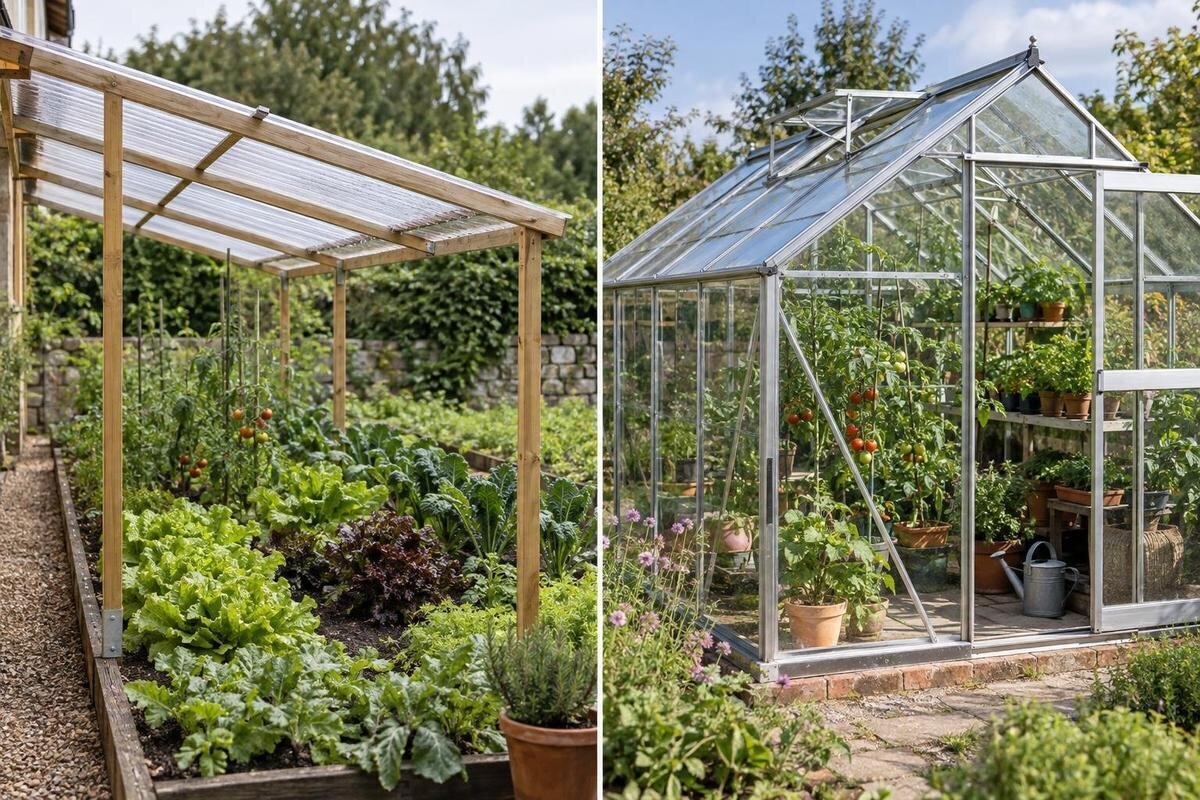
Whether a rain shelter or a greenhouse suits your crops depends on the problem you need to solve. A simple rain shelter keeps direct rainfall off selected plants while leaving much of the growing area open to outdoor air. A greenhouse adds enclosing sides, offering broader weather protection but also requiring deliberate ventilation and watering. The distinction matters if you want to keep leaves dry, protect young plants or grow beyond the usual outdoor season: cover alone does not promise a warm, frost-free environment.

Before you choose 1
The difference is how much weather you exclude
For this comparison, a rain shelter means a roof or cover that intercepts rain over a bed or group of plants; designs vary, and some are seasonal while others are more substantial. The defining point is that much of the sides remain open, so the cover targets overhead rain rather than creating an enclosed growing environment. A greenhouse has sides as well as a roof. It separates the crop area from more of the outdoor weather, although doors, vents, glazing and siting all affect conditions inside. A sheltered bed remains closely tied to outdoor air and temperature; a greenhouse lets you adjust air exchange through its openings. Neither label alone tells you exactly what conditions a crop will experience.
Both structures intercept natural rainfall, so plants below them should not be treated as if a shower has watered the root zone. The difference is enclosure, not necessarily size: a rain shelter can cover a long bed, while a greenhouse may occupy a compact plot. Open sides allow freer air exchange, though wind and rain can still reach crops from the sides. In a greenhouse, the balance between shelter and ventilation depends on the openings provided and how you use them. Decide whether you want rain exclusion for plants that otherwise suit outdoor conditions, or an enclosed space whose air, moisture and temperature you will actively manage. That distinction is more useful than comparing the area of roof alone.
Crops that benefit from rain protection
Rain protection is most useful when a particular crop or harvest is repeatedly affected by wet foliage, soil splash or rain-damaged fruit. Gardeners might cover tomatoes, grapes or other susceptible fruiting plants rather than shelter every bed. Keeping direct rain off leaves can reduce one source of prolonged wetting, but it does not make a crop immune to disease: spores may arrive by other routes, dew can form, and humid, still air can prolong moisture. Choose crops and varieties for the conditions you can provide, and leave enough room around plants to inspect them and encourage airflow. Targeted cover makes most sense when only some plants need protection and other beds benefit from natural rainfall.
A roof is less useful when crops tolerate local rainfall, the rain is welcome, or the main aim is warmth rather than leaf protection. Some crops may gain little from overhead cover, while seedlings or plants with vulnerable fruit may benefit during a particular period; the answer depends on variety and growing conditions. Match the roofed area to the plants you need to protect. Consider mature height, staking or other supports, and whether picking, pruning and watering remain easy. Plan for the crop at full size, not just when newly planted. The covering material matters too: check that it provides the light transmission the crop needs rather than assuming all rain covers are alike.
Before you choose 2
What an open-sided shelter leaves exposed
An open-sided shelter has clear limits. It reduces direct rainfall from above, but cannot be assumed to stop wind-driven rain, strong gusts, cold air or frost. In exposed weather, rain can enter from the sides, and a temporary cover may have different support requirements from a permanent structure. The openness also means there is little separation from night-time cold: rain protection is not thermal protection. Do not judge suitability from the word shelter alone. Confirm what the structure is designed for, how it is intended to be secured and what site conditions the supplier specifies. For a permanent installation or exposed position, ask the manufacturer or a qualified installer to confirm suitable support and anchoring rather than improvising.
Observe which direction rain usually comes from at the proposed site, including where nearby fences or buildings leave gaps exposed to wind. Plants near a roof edge may receive sideways rain even when those in the centre stay dry. Check the shelter's covered area against the mature spread of the crop, rather than just the bed beneath it. If side rain is a persistent problem, an enclosed option may be more appropriate. The Lean-To Greenhouse listing gives a range from 40 to 154 sq ft. When considering this type of enclosure, check the wall connection, position of the entrance and surrounding access in the proposed configuration; the area figure alone does not establish whether it fits the site.
A greenhouse offers more control, not a fixed climate
A greenhouse provides a more distinct growing space: it can reduce exposure to wind and direct rain and, in sunshine, the enclosed air may become warmer than the air outside. That can help with propagation and crops that need more shelter, but the temperature can rise quickly on bright days. Use ventilation openings according to the structure and conditions; leaving a greenhouse shut in warm sun can expose plants to damaging heat. Check which doors, vents or other openings are included and how air can move through the chosen configuration, rather than inferring ventilation capacity from a model name or appearance. The structure still needs regular observation as the weather changes.
More enclosure does not automatically mean a stable or frost-free growing environment. An unheated greenhouse can cool markedly overnight, while sunshine may warm it during the day. Glazing, frame design, ventilation and location all matter, and exact behaviour depends on the full specification. The Pyramid Greenhouse Bloomcabin Oasis listing gives a size range of 60 to 203 sq ft; that figure helps compare area, but it does not establish glazing, vent provision or temperature performance. Treat listed footprint and climate suitability as separate questions. If a crop needs particular temperature conditions, verify how the proposed configuration will meet that need before choosing it.

Before you choose 3
Season extension depends on temperature and light
A greenhouse may lengthen the practical growing window by sheltering seedlings and plants from rain and wind, and by giving you a place to start or protect crops. The benefit varies with crop, season, daylight, site and how you manage the space. It does not bring spring forward by a fixed number of weeks or guarantee winter growth. For an early start, light and suitable temperatures can be just as limiting as rainfall; young plants may still need protection from cold nights. For later harvests, the crop must tolerate declining light and temperature or receive suitable extra heat. Check crop-specific growing guidance rather than using the structure as a calendar.
Separate the jobs you expect the greenhouse to do: raising seedlings, carrying summer crops, sheltering hardy plants or growing heat-demanding crops. Each calls for different expectations about temperature, airflow and the time you can spend managing it. Seedlings raised under cover may also need gradual acclimatisation before moving outdoors. An unheated structure can offer useful shelter without providing the conditions for warmth-demanding plants; adding heating changes the brief and may require qualified installation advice. The Classic aluminium greenhouse range lists options from 40.6 to 302.3 sq ft. Plan when each crop will occupy the space: trays needed in spring may overlap with the planting of summer crops, so allow for that overlap rather than counting the same area twice.
Plan for watering, drainage and humidity
Plan to water according to the soil or growing medium, not the weather forecast. Under either roof, rainfall may miss the crop completely, so check moisture around the root zone and water when the plants and medium need it. A rain shelter with open sides may catch a sideways shower, but that is not reliable irrigation. A greenhouse gives you more reason to observe watering closely because rain is excluded and warmth may increase water use. Avoid following a fixed frequency without considering pot size, crop stage, airflow and weather; those factors change how quickly a bed or container dries. Keep drainage adequate so water does not sit around roots.
Moisture management includes drainage and air movement as well as watering. Water spilling from a roof can make a wet strip at the edge, while condensation and transpiration can raise humidity inside an enclosed space. Ventilate in line with the crop and the structure, and leave room for air to move around foliage; a roof does not remove humidity by itself. Keep watering tools and supplies accessible without blocking a route. The greenhouse with built-in storage is one listed configuration; inspect its available dimensions and specification to judge whether the storage suits your equipment, rather than assuming every watering can, hose or bag of growing medium will fit.
Before you choose 4
Access, crop groups and pollination
Access is part of crop care, not a spare strip to fill later. Mark the outside footprint, then map the beds, path, door opening and room to reach each plant. Under an open shelter, you may be able to work from several sides, but check that posts, roof edges or braces do not obstruct planting and picking. Inside a greenhouse, usable growing area is smaller than the overall footprint once you allow a path and access to doors or vents. A larger floor area is useful only if you can tend it and use the light well. Leave space to carry pots or harvested produce without brushing through delicate plants.
Think about separating crops that need different watering routines or harvest at different times, and whether pollinators can reach flowering plants. An open shelter leaves more direct access from outside; greenhouse doors and ventilation openings may affect pollinator access, and needs vary by crop. Do not assume an enclosure is insect-proof or that a roof improves pollination. The T-Shaped Orangery Greenhouse is one named layout to assess; compare the selected configuration’s plan and dimensions with routes and proposed beds instead of assuming its shape automatically creates convenient crop zones. Let the crop map guide the decision.
Size the space around beds and working routes
Decide on a footprint after listing the jobs and plants, not from a model name or a broad ‘small’ or ‘large’ label. Estimate how many plants you intend to grow and their mature spacing, then add the beds, containers and equipment they require. Distinguish permanent features from movable ones: a fixed bench occupies space throughout the season, while seed trays may leave once planting begins. Tall crops also need suitable clearance above them, so floor area is only part of the calculation. If you are covering one bed, check whether a rain roof can cover the mature crop without obstructing work around it. For a greenhouse, draw the proposed beds and working routes to scale before deciding how much space is needed.
Compare sizes only after confirming the dimensions for the exact configuration and the unit of measure; use a plan where available. The Limited Edition greenhouse range is listed from 40.6 to 302 sq ft, covering several overall areas, but those figures do not tell you the width, length or internal route for every option. Measure the intended site and allow access to the entrance and room to work outside it. If you expect to expand later, decide whether a larger area would be used consistently or would simply add watering, ventilation and maintenance. Select a footprint that accommodates the crops and working space you genuinely need, rather than one that only looks generous on a product page.

Before you choose 5
Compare the complete greenhouse specification
A product comparison should go beyond area and shape. Verify the external and internal dimensions, door position and opening size, ventilation arrangements, glazing type and any base included for the exact configuration. Then check how the greenhouse is intended to be supported, what surface or preparation it requires, and whether the proposed site is appropriate for it. For windy or otherwise exposed locations, ask the manufacturer or a qualified installer about requirements; do not infer structural suitability from another model or from headline area. Also consider delivery access and the route for bringing components to the site. Compare like with like, using the same chosen size and specification where possible.
Make a short crop brief before comparing specifications: list intended crops, months of use, level of shelter needed, whether heating is planned and the time available for ventilation and watering. Then look for a configuration that answers those needs in its verified documentation. The Prestige Greenhouse with Metallic Base is identified with a metallic base, but that name alone does not settle what preparation or support the site needs; verify the exact package and installation requirements. If a feature is not stated for the selected size or configuration, ask for clarification before treating it as included. A useful comparison matches the whole intended use, not just one headline feature.
A rain shelter, a greenhouse or both?
Choose a rain shelter when the main requirement is keeping direct rain off a limited group of crops, outdoor temperatures suit them, and regular watering is manageable. Choose a greenhouse when you need protection from more directions, a defined working area or a broader range of seasonal tasks, and can keep on top of ventilation and moisture. If both needs occur, the approaches can complement one another: a greenhouse may serve propagation or sheltered crops while a separate rain roof protects selected beds. They are not interchangeable, and using both adds footprint and upkeep rather than removing care. Consider whether the second structure solves a distinct problem before setting aside space for it.
For a small number of outdoor crops, a targeted rain roof may meet the need without committing the whole growing area to enclosed conditions. A greenhouse becomes more useful when several tasks genuinely require shelter, such as raising plants and tending summer crops in the same space. The Spacious Greenhouse range is listed from 506 to 753 sq ft; that scale warrants a clear plan for how the area will be used throughout the growing season. Consider the workload at its busiest point, when watering, picking and raising replacement plants may coincide. If direct rain is the only problem, enclosing more space may add work without addressing a new need. Choose the extent of cover to match the jobs you will actually carry out.
Frequently asked questions
Will a rain shelter extend the growing season?
It can keep direct rain off plants and make some tasks easier, but an open-sided cover does little to separate crops from outdoor night temperatures. Do not treat it as frost protection or a guaranteed way to sow earlier. Use the crop’s temperature and light requirements to judge whether simple rain cover is enough.
Does a greenhouse prevent fungal problems?
No. A roof reduces direct wetting from rainfall, but dew, condensation, humid still air and infection from other routes can remain. Ventilation, plant spacing and crop hygiene still matter, and susceptibility varies. Treat rain protection as one part of growing conditions, not a guarantee against disease.
Do covered crops still need watering when it rains?
Usually. A roof intercepts much of the rainfall, so check the growing medium near the roots and water when needed. Sideways rain under an open shelter is inconsistent, and a greenhouse normally excludes direct rain altogether. Do not assume runoff reaches the bed or is collected unless your setup is designed for it.
Is an unheated greenhouse frost-free?
No. Without suitable heating, temperatures can fall markedly overnight; sunshine can also warm the space quickly during the day. A greenhouse offers shelter, not a guaranteed temperature. Check the chosen configuration against the crop’s requirements and plan any heating separately, using qualified help for installation.
Which cover is better for pollination?
Neither is automatically better. Open sides generally allow more direct access from outside, while a greenhouse’s doors and vents affect access. The result depends on the crop and how the structure is used. Check each crop’s pollination needs rather than assuming either cover is best.
Both covers can keep overhead rain off plants, but only a greenhouse creates a more enclosed growing space to manage. Choose a rain shelter when the need is specific and outdoor conditions suit the crop; choose a greenhouse when broader shelter and seasonal flexibility are worth the additional attention to temperature, airflow and watering. The best fit is the one that answers a real growing need without making everyday care harder.
