
Refurbishing an Old Aluminium Greenhouse: What Is Worth Saving?
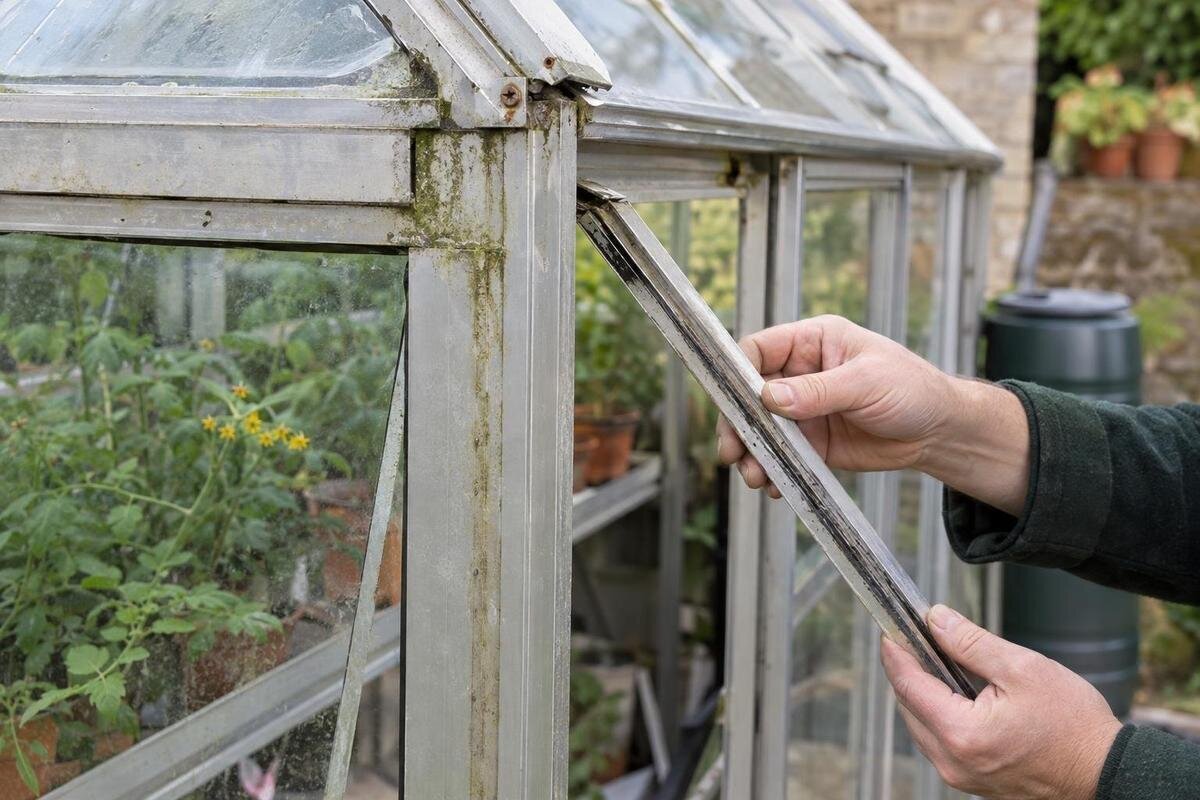
GREENHOUSE REFURBISHMENT
Before spending money on an old aluminium greenhouse, separate appearance from condition. A frame may need only a few identifiable parts, or hidden damage at joints and supports may make a simple refresh a poor plan. Audit the frame, base, glazing and hardware separately, then confirm that replacement parts match the exact model. The result should be a clear list of what can be retained, what needs replacement and what requires an installer’s assessment—before restoration work begins.

Identify the greenhouse before ordering parts
Start by establishing exactly what you have. Look for the manufacturer’s label, model name or code, serial number and any date information; check the original invoice, instruction booklet, assembly drawings and correspondence as well. A greenhouse may have been extended or altered, so compare the paperwork with the structure rather than assuming the first document describes every section. Search stored boxes for labelled components or part references, keeping loose pieces associated with the position they came from. Overall width and length help describe the greenhouse, but do not identify it reliably: similar-looking profiles, clips and pane sizes can differ between models or model generations. If you inherited the greenhouse with the property, ask whether the previous owner kept repair invoices or photographs. These may help explain an extension, replacement door or change of glazing. Record the source of each document so the supplier can distinguish original assembly information from records of later work.
Create a record before cleaning or dismantling anything. Take wide photographs of each side and the roof from a safe position, followed by close-ups of joints, glazing bars, the base, door and vent hardware, and visible defects. Add a simple sketch showing the location of a cracked pane, missing clip or bent member; consistent labels make a later parts enquiry easier to follow. Do not go beneath damaged glazing or remove a component just to search for a number. If the model remains unknown, say so and provide the best evidence available rather than ordering a part on resemblance alone.
Assess the aluminium frame and its joints
Inspect the frame in sections: upright posts, eaves, ridge, roof bars, corners, connectors and the points where it meets the base. Note bends, cracks, unusual gaps, movement, heavy pitting, worn fastening holes and repairs that have introduced different fixings. Photograph damage to the finish before rubbing it clean. Dirt, a superficial mark or coating loss, if the frame is coated, is not the same as a distorted profile; equally, a smart finish does not confirm that the joints are sound. Keep cosmetic observations separate from concerns about the frame’s condition in your record. This lets an installer assess the important defects without losing them in a long list of scratches. Where an old repair is visible, record its location and any supporting paperwork. A previous patch should neither be accepted as sound nor condemned solely because it looks different.
One damaged piece does not automatically rule out retaining the rest, but deformation, separated joints, movement or repeated misalignment need more than a cosmetic judgement. Ask a qualified greenhouse installer to assess whether the frame can be retained as a whole and whether any proposed repair is supported by the manufacturer. Do not drill new holes, splice members or substitute profiles based on appearance. If replacement is recommended, include the Classic aluminium greenhouse range in your comparison and request a specification for a complete new structure. Keep that enquiry separate from the search for parts for the existing frame.
Check the base for signs of movement
Look along the perimeter where the frame meets its base, using only accessible areas. Note gaps, separation from supports, changes in alignment and any visible deterioration in the base or other supporting material. A door or vent that has started to catch can be worth recording alongside these observations, but it does not by itself identify the cause. Note whether water appears to collect persistently near the base; do not treat a visual inspection as proof that the structure is stable. Do not lever the frame or stand on it to test for movement.
A problem at the base may need attention before anyone can judge whether the frame is worth keeping. Avoid packing, shimming, reshaping or reusing old fixings unless the manufacturer’s instructions and a suitable installer confirm the approach. For an existing lean-to, include the wall connection in the installer’s assessment. If replacement is being considered, the Lean-To Greenhouse range provides a format to compare with your current arrangement. Ask what supporting base and wall connection the proposed model requires, and whether the installation quote includes assessing the existing supports. Retaining the same location does not necessarily mean retaining the same installation details.
Record the condition and type of the glazing
From a safe distance, note the position and number of cracked, missing, loose, cloudy or mismatched panes. Check the paperwork for the specified glazing material rather than identifying it by age, colour or appearance alone. A broken pane, a loose panel or an exposed edge can cause injury: do not touch, reposition or measure it. Keep people away from the affected area and arrange competent help. For intact glazing, record any maker’s markings or material description that can be read without dismantling anything. A labelled location such as roof, left side or door is more useful than a general request for a pane.
The repair scope depends not only on how many panes appear damaged, but also on whether their specified material, thickness, dimensions and retention method can be confirmed. Follow the greenhouse maker’s documentation or ask an installer to confirm the replacement specification; do not substitute a pane merely because it looks similar. If failures are widespread or matching panels cannot be confirmed, compare professional glazing work with the scope of replacing the structure. When considering a Limited Edition aluminium greenhouse as a replacement, request its glazing specification alongside the quotation. Compare the complete proposals, including fitting, rather than judging either option only by the number of panes supplied.

Inspect glazing bars and retaining hardware as a system
Glazing bars, clips or retaining strips, seals and fasteners work together to hold the panels in place. Look for missing clips, displaced retainers, bent bars, damaged seals, loose fixings or signs that different types of hardware have been mixed. Note whether a problem appears in one location or repeats across the roof or sides. Do not pull at a seal, force a clip or remove a bar while glazing remains in place: an old or deformed part may still be retaining a panel. Label any component that is already detached and can be handled safely.
Before ordering, compare the manufacturer’s drawing or parts list with the exact model and, where available, its revision or part code. Similar-looking strips and fittings are not necessarily interchangeable. Establish whether a damaged bar is the issue, or whether a clip or fixing has failed; replacing one visible item may not resolve the underlying problem. Ask the manufacturer or installer whether an older part number has an approved replacement and whether any other components need to be changed with it. If no compatible repair can be confirmed, record that as a constraint before spending on cosmetic work.
Check doors, vents and moving parts
If the glazing and surrounding frame appear safe, make a gentle check of the door or vent and stop as soon as you meet resistance. Record whether a door catches, a hinge or handle is loose, a track is obstructed, or a vent mechanism fails to move as expected. Do not force a jammed part or dismantle it to find a number. A door that rubs may point to a hardware fault, but it can also accompany a change in frame or base alignment. Note the exact point of contact and photograph it rather than trying to correct the alignment by guesswork.
Use the manual to identify the hardware variant and any relevant part reference; do not assume a similar-looking replacement will fit. If the problem is partly about access or layout, include that in a replacement brief rather than treating every inconvenience as a failed hinge. A T-shaped orangery greenhouse is a distinct product format to compare at that stage. Use the proposed model’s plan and dimensions to assess door positions, working space and access around the structure. This separates a repair that restores the existing door from a replacement chosen to improve the overall layout.
Confirm the exact part before making an enquiry
Put the information for a parts enquiry in one place: manufacturer, model code, serial number if present, and the relevant page or drawing reference. Identify the part’s location and orientation, such as roof or side and left or right, and state how many are needed. Add clear photographs of the whole area and a close-up of the part or fixing. Supply measurements only when they can be taken from an accessible component without disturbing the frame or glazing, and label how each measurement was taken. If any detail is uncertain, mark it as uncertain instead of presenting a guess as a part number.
Send one organised enquiry through the manufacturer’s or seller’s parts route and ask them to confirm that the proposed component matches the exact model. If a part is unavailable, ask whether a replacement code has been confirmed for that model, then discuss any alternative with an installer. Do not assume that a part for a later or similar greenhouse is interchangeable. If the audit instead points to replacement, the Prestige greenhouse with metallic base is another option to investigate. Ask the supplier to explain the proposed base arrangement and the site preparation it requires, so these costs are included in your comparison.
Compare the whole repair scope
Write down the work by system: frame, base, glazing, retainers and seals, doors and vents, plus any identified installation work. Separate confirmed defects from suspected causes and optional improvements. When asking for a quote, establish whether it covers inspection, parts, glazing work, fitting and any removal or disposal, or only the components listed. Ask which conditions or unknowns could change the scope. This makes it easier to compare proposals and prevents a quote for a few visible parts being mistaken for a full refurbishment plan. Request separate entries for necessary repairs and appearance-only work, such as an approved finish repair. If several tasks require the same access or dismantling, ask whether they have been priced together or separately. Also establish how unexpected damage will be reported and agreed before additional work proceeds. These details give you a usable budget without pretending that every defect can be known in advance.
Consider labour and access as well as the parts themselves, and do not put a precise total on work that has not yet been assessed. If replacement is on the table, compare it against the same priorities: footprint, shape, access and intended use. A pyramid-type greenhouse range is one distinct format to review if you are open to a different design. Compare its documented plan with the space you need for beds, staging and paths; overall floor area alone does not describe that arrangement. Keep desirable changes separate from the cost of restoring basic function. For example, a different layout may justify replacement for your needs, but it should not be presented as evidence that the old greenhouse is unrepairable.

Decide which parts are worth retaining
Retaining the frame is most defensible when an installer has assessed it, the base is suitable to keep, the glazing specification can be confirmed and compatible replacement parts have been identified. These are points to verify, not conclusions that can be reached by looking at the finish alone. A greenhouse with a few clearly identified, limited repairs presents a different scope from one with repeated movement, damaged connections and uncertain glazing support. Ask the installer to state what can be retained and what remains uncertain. Apply that judgement to individual components too: the frame, intact glazing, door hardware and base need not all receive the same verdict. Ask for retained items to be identified in the scope, including any checks needed before reuse. This avoids both discarding serviceable components unnecessarily and counting questionable parts as savings before their condition and compatibility have been assessed.
Treat significant distortion, repeated separation at joints, unexplained movement or an inability to identify a critical component as reasons to pause before spending on cosmetic restoration. They do not, on their own, prove that the greenhouse is beyond repair; they do call for a professional view. If built-in storage is part of what you want from a replacement, a product listed as an aluminium greenhouse with built-in storage is a separate design reference. Do not assume that adding storage to an old frame is supported by that listing.
Choose between refurbishment and replacement
Ask for clearly defined options where both routes are plausible: a refurbishment scope and, where appropriate, a replacement specification. Compare what each includes, which parts are to be retained, how components are identified, what work is excluded and what assumptions have been made about the base. A recommendation is easier to evaluate when it explains why the frame can be kept or why the work extends beyond a simple parts change. Keep the drawings, part references and photographs with the final record, whether you repair or replace.
A replacement may not occupy the same footprint, so check the space available, access for installation and the greenhouse’s intended use rather than assuming the old base can be reused. Confirm the proposed model’s dimensions and installation requirements with its supplier or installer. If you are considering a substantially larger structure, the Spacious Greenhouse is listed from 506 ft² to 753 ft²; those figures describe that product listing, not the size or suitability of your site. Use comparisons to define a new brief, not to infer a fit.
Frequently asked questions
Is a standing frame enough to show that an old greenhouse can be refurbished?
No. The frame may still be standing while joints, base supports or glazing retainers have deteriorated. Record what you can see, then have a qualified greenhouse installer assess significant movement, distortion or damaged connections before you buy parts.
Can I replace a broken pane with one that looks similar?
Not without confirming the specified material, dimensions, thickness and retention method for the exact greenhouse. A close visual match does not prove compatibility. Keep clear of broken or loose glazing and arrange for a competent professional to assess and handle the replacement.
What information helps identify a replacement part?
Gather the manufacturer and model code, serial number if available, manual or assembly drawing, the part’s location, and clear labelled photographs. Include a part number or measurements only if you can obtain them safely. Ask the supplier to confirm the part for your exact model.
Could a sticking door mean the frame is damaged?
It could, but it may also be a problem with the door’s track, hinge or other hardware. Note where and when it catches, and whether other parts look out of alignment. Do not force it; seek an installer’s assessment if the cause is unclear.
When should I compare replacement with refurbishment?
Consider both when damage affects several systems, key parts cannot be identified, or an installer cannot confirm that the frame and base can be retained. There is no universal cutoff: compare written scopes for the same work and include any professional assessment needed.
Refurbishment is worthwhile when the surviving structure can be retained and compatible repairs can be specified, not simply because the aluminium is still standing. A labelled condition record and confirmed part references can turn an uncertain project into a defined scope. If key details remain unknown, get an assessment before buying components. The right outcome may be a carefully refurbished greenhouse or a considered replacement; the audit helps establish which one you are paying for.
