
When Is It Time to Replace Greenhouse Polycarbonate Panels?
GREENHOUSE REPAIR GUIDE
Greenhouse polycarbonate can become cloudy, marked or discoloured without the panel necessarily needing replacement. The useful distinction is between a change in appearance and a loss of fit or function: cracks, holes, loose edges and a sheet that no longer sits securely call for more attention than superficial weathering. This guide explains what to inspect, when an approved repair may be enough, and how to request a replacement that matches your greenhouse. Do not decide by colour alone or buy a sheet simply because its measurements look similar. If an overhead panel is loose or unsafe to reach, keep clear and arrange a qualified assessment.

Cloudiness alone is not proof of failure
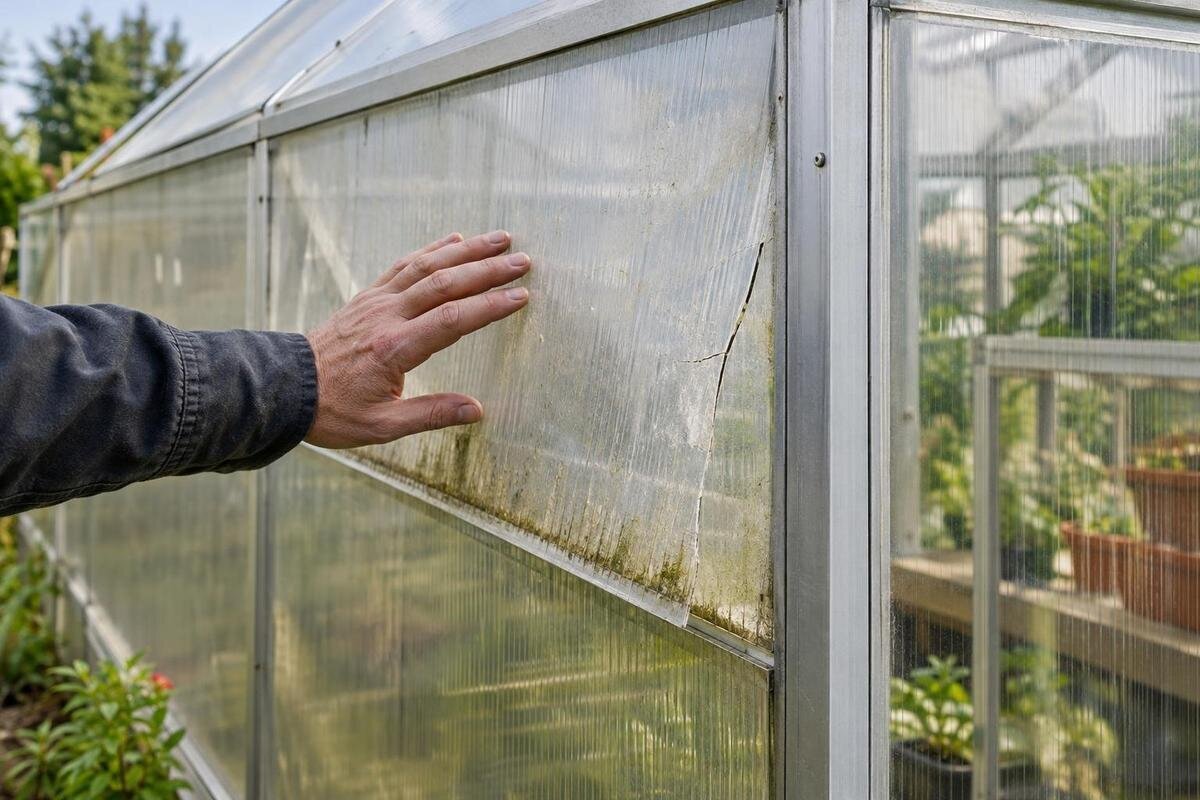
Polycarbonate can gradually look less clear, become discoloured or develop fine surface marks. Those changes do not, by themselves, show that a sheet is cracked or no longer fitted correctly. Dirt, water marks or other residue may also make a panel appear cloudy. If it is safely accessible, clean it only by the method recommended in the greenhouse manual, then inspect it again when dry. Avoid abrasive pads and unapproved solvents: an unsuitable cleaner may add marks and make it harder to distinguish residue from lasting change. Note whether the cloudiness is on an accessible face or seems to be within the panel; do not dismantle it to investigate.
Judge condition by more than colour. Look for through-cracks, holes, displaced edges, missing retainers or a sheet that moves; these are stronger signs of functional trouble than a general loss of clarity. Compare panels only as a rough clue, since cleanliness, orientation and exposure may differ. If the greenhouse seems noticeably darker, do not estimate panel performance from a photograph or a single glance. For growing, a persistent change in clarity may still matter even without breakage. Ask the manufacturer whether the original panel type has an approved replacement match. Age alone is not a reliable replacement date for an individual panel; dated notes can help you tell whether a change is continuing.
Cracks, holes and loose panels need attention
A through-crack, puncture, missing fragment, split edge or sheet partly out of its retaining profile is different from a surface mark. A line that reaches an edge or fixing, or appears to grow between inspections, deserves prompt attention; do not assume that a short crack will stay small. An opening may admit rain or wind-driven debris, while a loose sheet can move and worsen its condition. Note where the damage is—on the roof, a side wall or near a door—and whether nearby panels are also affected. That information helps the manufacturer or installer understand what needs assessing.
Do not push, pull or tap a panel to test how firmly it is held. If a roof sheet is moving, has partly come free or could fall into an occupied area, keep people clear and arrange professional help; do not stand beneath it or climb up to refit it. Avoid working on the greenhouse in windy or otherwise unsafe conditions, and do not dismantle adjacent panels unless the manual directs a competent person to do so. If a panel is secure but cracked, document it and ask whether prompt replacement is appropriate. These precautions limit risk; they do not repair the damage.
Distinguish surface marks from cracks
Inspect from a safe position, using daylight and an angle that makes fine lines visible. A surface scratch may catch the light differently from a crack through the sheet, but do not rub, bend or press the panel to find out. Look for a crack reaching an edge or fixing, a hole, a split corner, a section no longer covered by its retainer, or a visible change in the gap at a joint. Check the neighbouring sheet and frame from the same safe position so you can describe whether the problem seems isolated. A phone photo from ground level can help preserve a clear view without leaning over the structure.
Take an overview photo that shows which part of the greenhouse is affected, then a closer image of the mark. Record the date, panel position and whether the damage appears to go through the sheet. Photograph the line from more than one angle if reflections obscure it, without moving the panel. These images can help an installer assess the visible damage, although they cannot establish its depth or the security of concealed edges. Keep the photos with the greenhouse identification: if your paperwork names a T-Shaped Orangery Greenhouse, record that wording and any model or version reference.
When an approved repair may be enough
A repair may be enough when the polycarbonate itself is intact and the issue is limited to a separate, replaceable component identified in the manual, such as a retaining piece. Removable surface residue may also be the whole problem. Ask whether the manufacturer supplies the relevant component and whether the panel needs to be removed to address it. A sheet that appears to sit unevenly may have a problem with its support or retention, but do not push it back into place based on appearance alone. The manual or an installer can help distinguish a replaceable fitting from damage to the panel itself.
Do not assume that tape, glue, sealant or a generic patch is an approved permanent repair. A method that looks convenient may not be suitable for the particular panel or location. Ask the manufacturer whether the proposed remedy is temporary or permanent, what fault it addresses and whether the panel can remain in service afterwards. Include the greenhouse identity in that enquiry, using the wording on your paperwork, such as Pyramid-type greenhouse. If a repair is authorised, keep the written guidance with the part details. If the sheet is split or has lost a piece and no repair is authorised, request a matching replacement rather than improvising.

Check the frame and panel retainers
Before ordering a panel, look for visible signs that the surrounding frame or retention system may also need attention. Note missing clips or profiles, a panel edge no longer held in place, an obvious change in alignment, or damage that has appeared repeatedly in the same area. These observations do not establish the cause, but they can show why replacing a sheet alone may not resolve the problem. Do not tighten, add or move fixings unless the manufacturer’s instructions specify the method for your greenhouse. Unapproved changes can make it harder for an installer to assess the original arrangement.
When you contact the manufacturer, describe what is beside the damaged panel as well as the panel itself. Include a wider photograph showing the adjoining frame members and a closer view of any displaced or missing retainer. Distinguish an item you can see is missing from one whose condition is simply unclear; a photograph may not show a concealed fitting. For a greenhouse with built-in storage, use the original order details to identify the affected section accurately. Ask whether the proposed replacement includes only the sheet or also the relevant retaining components. If the support or alignment needs attention, have that assessed before arranging panel replacement, so the new sheet is not fitted into an unresolved problem.
Match the replacement to the original panel
A replacement needs to match more than the panel’s apparent length and width. Check which panel type and profile the manufacturer specifies, along with any stated thickness, edge details or orientation. The correct fit may depend on the greenhouse model, the panel’s position and the way it is retained. A sheet that looks similar or has comparable measurements is not automatically an approved match. Use the manual, technical drawing or spare-part reference where available. Where the original is a multiwall panel, ask the supplier to confirm its construction and any specified channel direction or edge treatment. Where the instructions identify an outward-facing surface, that requirement also belongs in the replacement specification. Do not infer these details from the colour of the sheet or a catalogue photograph. The supplier should resolve missing specifications before you order, rather than leaving you to adapt an unidentified sheet.
When requesting a match, ask which exact panel part is intended for your model and whether any associated retainers or fittings are also needed. Give the panel location and any part code, rather than describing it only as a roof or side sheet. If the paperwork names a Prestige Greenhouse, include the specific model or version details from that paperwork. Ask whether the replacement is supplied ready for its designated position or requires preparation covered by the manufacturer’s instructions. This affects what work you are buying and who should carry it out. If an alternative part is offered because the original is unavailable, request written confirmation that it is approved for your greenhouse, together with any changes to the required fittings or fitting method.
Decide whether one panel or several need attention
If damage is confined to one panel and the surrounding panels, frame and retainers appear intact, ask whether replacing that panel alone is appropriate. Look at adjacent glazing for similar cracks, holes, loose edges or changes in clarity, but do not dismantle it to compare. Several affected panels, or damage recurring around the same part of the frame, may call for a broader assessment. Record how many panels are involved and where they are; this helps the supplier or installer understand the scope without relying on a general description such as “the roof is worn”.
If several panels need attention, compare the proposed repair with the condition of the rest of the greenhouse before deciding how much to replace. Replacing one panel may leave a visible difference in appearance, but uniformity alone is not proof that sound panels need changing. Ask for the repair scope to distinguish panels that are damaged, fittings that need replacement and sound panels that would only be removed for access. That makes a quotation easier to understand and prevents an appearance preference from being confused with necessary work. Check whether the quotation covers the panels, associated parts, labour and removal of the old material. A whole-greenhouse listing such as Spacious Greenhouse belongs in a separate comparison: its purchase price alone would not represent the full scope of replacing an existing structure. Compare complete proposals rather than a loose sheet with a finished greenhouse.
What to include in a spare-parts enquiry
Gather the details that can identify the greenhouse: its exact model name, any label or serial reference, the order confirmation and the manual if you still have them. Add the location of the damaged panel—roof or wall, and the particular side or section—and say whether it is cracked, holed, cloudy, loose or missing. Include an overview photo and a close-up, making sure the images show enough context to identify the panel position. For several affected panels, label the photographs consistently and mark their positions on a simple sketch, with the doorway as a reference point. This avoids ambiguity about left and right when someone views the greenhouse from the opposite direction. If you have a part code from the manual, include it exactly as printed. Say whether that code identifies the sheet itself or an adjoining component, if the drawing makes the distinction clear.
Ask the manufacturer or retailer to confirm the correct part and any associated components before ordering. Provide measurements only if you can take them safely or the supplier asks for them; do not climb onto the greenhouse to obtain a dimension. State how a measurement was taken, since an exposed panel area is not necessarily the full sheet size. If the paperwork identifies a Classic aluminium greenhouse, use that name alongside the order or version reference. If you have inherited the greenhouse and have no paperwork, explain that rather than guessing its identity. Send accessible labels and overall photographs, then ask what further evidence is needed. A useful enquiry distinguishes confirmed details from estimates.

When a whole-greenhouse replacement may be worth considering
A panel replacement is not always the only option to assess. If several panels are damaged, the frame or retaining system also appears compromised, or the correct spare cannot be identified, compare the scope of an approved repair with replacing the greenhouse as a whole. Consider the condition of the remaining panels and frame, the site layout, the access needed for work and how much of the original structure would remain in use. A manufacturer or installer can assess condition and compatibility; do not assume that a panel change will resolve a separate frame problem.
If you explore a different complete greenhouse, assess its site suitability and glazing specification separately from your current panel repair. A Lean-To Greenhouse is one model to enquire about, not a spare-panel solution or a confirmed match for your site. Ask the supplier for the specific model’s dimensions, glazing options and installation requirements before including it in your comparison. Consider whether the existing growing layout, door access and maintenance access would still work with the proposed structure. Keep the repair quotation and the new-greenhouse proposal separate, including any removal and site preparation each requires. Replacing the whole greenhouse is most worth investigating when there is a wider condition or layout problem, rather than simply a cosmetic change to one otherwise secure panel.
Arrange replacement work safely
Use the manufacturer’s instructions for the exact greenhouse and panel, and decide whether the work is appropriate for you before starting. Roof panels, awkward access, a loose sheet or an uncertain retaining system may call for a qualified installer. Do not stand on greenhouse framing, work beneath an unsecured panel or try to reshape the frame to make a replacement fit. If the instructions are missing or do not clearly cover the panel, ask the manufacturer or an installer to confirm the approved method instead of relying on a generic online demonstration.
Check that the replacement is intended for the original glazing arrangement; do not assume that polycarbonate can be substituted for glass or another panel type just because it appears to fit. For a Limited Edition greenhouse, obtain the instructions that correspond to the version identified on your paperwork. Before work begins, agree who will check the completed installation against those instructions. Afterwards, inspect the finished area from a safe position for visible gaps, displaced edges or fittings that appear incomplete, and raise concerns with the installer rather than adjusting them yourself. Ask the installer to explain any remaining appearance differences and whether further work is needed elsewhere. Keep the replacement part reference, fitting instructions and dated photographs together. These records provide a useful baseline if the same area changes again and help identify what was actually replaced.
Frequently asked questions
Does a cloudy or yellowing panel need replacing?
Not automatically. Clean it by the method in the greenhouse manual, let it dry and check for cracks, holes, movement or a change that affects how you use the greenhouse. Ask the manufacturer about persistent loss of clarity.
Can I replace just one greenhouse panel?
Possibly, if the correct panel is available and the surrounding frame, retainers and neighbouring panels are in suitable condition. Confirm the model, panel location and part reference with the manufacturer or an installer.
Will any polycarbonate sheet of the same size fit?
No. Similar dimensions do not confirm the right panel type, thickness, profile, edges or fit. Ask for a manufacturer-approved match rather than choosing a sheet by measurement alone.
What should I include in a spare-parts enquiry?
Provide the exact model name, any order or serial reference and the panel location. Add the manual’s part code if available, plus clear overview and close-up photos. Give measurements only if they are safe to take or requested.
Can I replace a roof panel myself?
Follow the manufacturer’s instructions and consider access before deciding. Do not climb on greenhouse framing or work beneath a loose panel. For roof glazing, unsafe access or uncertain fit, ask a qualified installer.
Replacement should depend on the panel’s condition, fit and confirmed compatibility—not its age or a patch of haze alone. A cracked, holed or unsecured sheet needs a prompt, approved response; an intact panel with surface ageing may not. Record the greenhouse model and affected panel, check the manual, and have the manufacturer or installer confirm the matching part before work. That helps avoid replacing a sound panel or fitting a sheet that looks right but has not been confirmed for the greenhouse.
