
Buying a Small Greenhouse on Black Friday: Choose a Size You Won't Outgrow
Greenhouse buying guide
Planning to buy a small greenhouse on Black Friday? The word small may make an option sound easy to place, but it does not tell you its actual footprint, usable growing area or the space needed to reach it. A better choice comes from matching measured space to the crops and tasks you expect to accommodate, then considering realistic changes to your plans. This guide focuses on the size decision and explains what to measure, how to compare layouts and what to confirm when an offer refers to a particular model or size.

Before you buy 1
Treat ‘small’ as a description, not a measurement
Small is a relative description, not a standard size. A greenhouse that looks compact beside a large garden may occupy most of a narrow plot; another can have a modest external footprint yet feel tight once trays, pots and working space are included. A product name, category label or photograph cannot tell you the precise footprint or how much room remains inside. Treat the published dimensions for the exact model and size as your starting point, not the wording used to describe it. Even two listings presented as compact can differ in width, depth, height and outline. Compare measurements rather than adjectives, and check what each figure describes.
Set a firm limit for the ground you can give up before browsing. Mark out the area that is genuinely available, rather than counting a path or a bed you would prefer to keep. Note fixed obstacles such as fences, walls, trees and existing garden features, then distinguish them from space you might be willing to change. A greenhouse that fits within the boundary still needs to work as part of the garden: the remaining route should be usable, and the placement should not rely on moving something you intend to keep. Having that limit written down helps you compare candidates consistently, even when a seasonal listing makes one option look especially appealing. Photograph the marked-out area and note its measurements, so you can revisit the plan accurately rather than relying on memory while comparing models.
List what the greenhouse needs to hold
Begin with the plants you actually expect to grow, rather than a general idea of having a greenhouse. Write down the crops, approximate quantities and stages of growth you want to accommodate. A few seed trays at the start of the season use space differently from mature plants kept inside for longer, and growing several crops at once may need more room than rotating them through the same area. Use the mature size and growing guidance for your chosen plants when planning their positions; do not estimate capacity from the number of small pots that fit on an empty floor.
Include the jobs the greenhouse will support as well as the plants. You may want space to pot seedlings, sort trays, store a small selection of tools or move plants in and out. Those tasks can compete with growing space, particularly if equipment will stay there while plants are in place. Decide which activities are essential and which can happen elsewhere in the garden or at another time. This turns a vague wish for ‘a bit more room’ into a practical capacity check: will the layout support your usual routine without constantly shifting plants, trays or equipment out of the way? Consider the busiest point in your growing year, when seedlings, mature plants and supplies may all need space at once.
Before you buy 2
Measure the footprint and compare it with the site
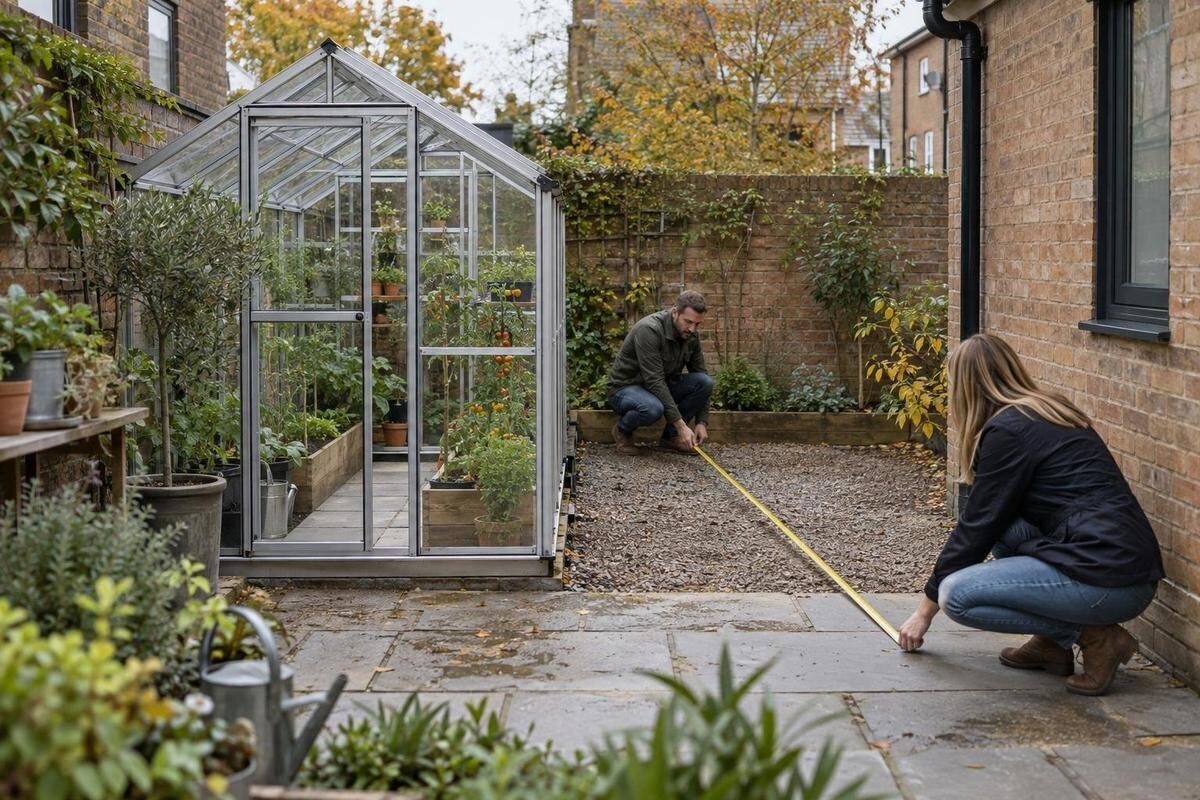
Measure the clear ground where the greenhouse could stand, recording the maximum width and depth available. If the usable area is irregular, mark its outline with string or another temporary marker rather than assuming it is a simple rectangle. Check the measurement from more than one point where boundaries angle or narrow, and note any fixed features that reduce the space. This gives you a site plan to compare against product information. It is more reliable than judging fit from a photograph, a general category name or a rough estimate made while browsing. Record whether measurements are taken to a fence, wall or border, because these boundaries can make a seemingly small difference important.
Once you have a candidate, compare your plan with its published outside measurements and any stated base dimensions. Do not assume those figures mean the same thing: the greenhouse’s overall size, the area it rests on and the space available inside answer different questions. The aluminium classic greenhouse listing can be assessed in the same way as any other candidate: use the measurements published for the exact option, not its name, to decide whether its footprint fits. If a relevant dimension is unclear, seek clarification before treating the option as a match.
Allow for likely changes in your growing plans
A size that works today can feel restrictive if your plans grow, but buying for every possibility can use valuable garden space without improving your everyday experience. Think about changes you can reasonably foresee: perhaps you are likely to raise more plants from seed, add another crop or keep plants inside for a longer part of the season. Separate those likely plans from ideas you may never put into practice. Then consider whether the extra room they would need is compatible with the space you measured, rather than assuming a bigger greenhouse is automatically the better choice. Base this judgement on activities you expect within the next few growing seasons, not an undefined wish for maximum capacity.
A useful test is to plan both your current use and one realistic next stage. If the layout works only for today’s smallest crop list, decide whether that restriction matters to you; if a larger plan would make access awkward, it may not be a sensible upgrade. A label such as limited edition says nothing about capacity: if you consider the limited-edition aluminium greenhouse, compare its published dimensions with the same growing plan you use for other candidates. No size can guarantee that your interests will never change, but a decision based on likely use is less likely to feel cramped straight away.

Before you buy 3
Compare the layout as well as the shape
The outline of a greenhouse can affect how you arrange plants, benches and space to work. Two options with similar outside measurements need not offer the same practical layout, so consider where you would put trays and how you would reach the plants you intend to grow. Look at width, depth and height together; a floor plan alone cannot tell you whether the internal arrangement suits your intended use. A particular shape is not automatically more spacious, more efficient or easier to place. Those are questions to answer from its dimensions and the way you expect to use it. Draw a simple plan at the same scale for each candidate to make differences in circulation and usable corners easier to see.
If you are considering an aluminium lean-to greenhouse, compare its published width, projection and height with the site you have measured, including the wall or boundary that forms part of your plan. The format name does not establish how much growing room it provides or whether it will fit the available space. Check that the measured outline leaves room for the access you need, rather than treating a particular style as an automatic space-saver. Apply the same principle to any other format: use the stated figures and your proposed layout, not assumptions based on a product label.
Separate floor space from usable growing space
A greenhouse’s outside footprint is only one part of the size decision. Think about how much of the interior you will need for plants, access and everyday tasks. Benches, shelves, large pots and trays may take up floor area, while the height and internal clearance matter for plants that need vertical room. Any internal measurements provided should be read alongside the outside dimensions, not used as a substitute for them. Sketching the positions of planned plants and equipment can expose a cramped route or a layout that depends on moving everything each time you work. Leave a route that lets you inspect and water plants without repeatedly lifting trays or squeezing past larger containers.
Storage deserves the same scrutiny. If you are considering a listing titled aluminium greenhouse with built-in storage, look for details explaining what is included, where the storage sits and how it affects the room available for growing. The title alone does not tell you its dimensions or how the interior is arranged. Do not add an assumed amount of storage to your plan, or count the same area as both storage and planting space. If you intend to add benches or other accessories separately, check their stated dimensions and compatibility before relying on them to make a small footprint work.
Before you buy 4
Check the route in and the space around it
A greenhouse can fit its intended spot yet be awkward to reach. Check the route you will use from the gate or house, noting narrow passages, turns, steps and fixed obstacles. Think separately about the route for everyday use and the route needed to bring the item to its position. Ask what delivery access or package information is available if the path is tight; the dimensions of the assembled greenhouse do not necessarily tell you what access will be needed before installation. Keep enough usable space for the ways you expect to reach, tend and maintain the greenhouse. Also consider where you will temporarily place compost, pots or harvested plants, so the approach does not become blocked during routine work.
At the proposed position, check the space required for any doors or openings described in the product information, as well as the clearance specified for installation or ongoing access. If a listing such as the garden orangery T is on your shortlist, use its published overall dimensions and instructions rather than estimating the outline from its name or a small image. Follow the manufacturer’s guidance for preparing the site. If you are unsure whether the ground or proposed base is suitable, ask a qualified professional rather than relying on a guess.
Compare Black Friday offers against your size shortlist
When a Black Friday offer is displayed, first identify the exact model, size and configuration it applies to. A product page may show more than one option, so make sure the selected size, the stated specifications and the advertised offer refer to the same item. Do not assume that an offer covers every size on a page, or that a lower-priced option will meet the growing plan and site limits you have already set. Comparing the size shortlist first keeps seasonal messaging from turning a poor fit into an apparently attractive choice. Save the relevant model details with your measurements, particularly if you are comparing several variants that have similar names.
Use the pyramid greenhouse listing, if it is among your candidates, in the same way: check the published dimensions for the exact option rather than treating its style name or image as evidence of a particular footprint. Compare offers only between candidates that pass your space and use tests, and read the terms shown for those specific options. If an offer does not apply to the size that suits your garden, avoid changing a well-considered plan just to match it. A seasonal offer is relevant to the size decision only when it relates to an option that genuinely fits.

Before you buy 5
Confirm the exact specifications before ordering
Before choosing between close candidates, check the product information for the exact size you intend to order. Compare its outside width and depth with your site plan, then review any stated base dimensions, internal measurements and height. These figures are not interchangeable: outside dimensions help you assess the footprint, while internal figures, when supplied, help you plan how to use the space. The Prestige greenhouse with metallic base listing, like any named model, needs to be judged by the specifications for the exact option rather than by its title. Do not use a photograph or a neighbouring size’s details as a substitute.
Read the information about what is included and what, if anything, is separate, so your layout does not depend on an accessory you have not selected. Check the model and size shown in the order summary against the option you assessed, and review the delivery information for any access or site requirements relevant to your garden. If the instructions leave an important point about the base or preparation unclear, ask the retailer or manufacturer before ordering. Where the site itself raises a practical concern, seek advice from a qualified professional instead of trying to resolve it from a product image. Keeping a copy of the selected specification also makes it easier to check that the ordered variant matches your final plan.
Choose the smallest option that meets your real needs
Make your shortlist using three tests: does the outside footprint fit the measured site, does the interior support your current growing routine, and does it leave room for the changes you genuinely expect? A quick sketch can help you test the plant positions, equipment and access together. If two sizes both pass, compare the extra capacity of the larger one with the garden space it uses. If neither passes, revisit the crop quantities or intended layout instead of assuming that a label such as compact will solve the problem. This approach also gives you a clear reason to reject options that appear tempting during a limited seasonal promotion.
If the Bloomcabin Orangery is on your shortlist, assess its stated dimensions and layout information by the same tests as any other candidate; the name is not a measure of capacity. Apply that discipline to every option, then choose the size that fits both your garden and the way you plan to grow. You cannot know every future use in advance, but you can avoid buying on the basis of a seasonal label alone. A well-chosen small greenhouse is one whose limits you understand and can live with, rather than one that merely fits an attractive description.
Frequently asked questions
Is there a standard size for a small greenhouse?
No single label tells you the greenhouse’s exact footprint or usable growing space. Compare the published dimensions of each specific model and size with the space you have measured.
Should I buy a bigger greenhouse for future plans?
Allow for changes you genuinely expect, such as raising more seedlings or growing an additional crop. A larger footprint is only useful if it fits the site and leaves enough room for access and everyday tasks.
What should I measure in the garden?
Measure the clear area available for the greenhouse, then compare it with the exact outside dimensions of the option you are considering. Also account for access routes, any door opening and the clearance specified in the product instructions.
How should I compare a Black Friday greenhouse offer?
Check which exact model, size and configuration the offer applies to. Compare its published dimensions with your shortlist before weighing up the offer; do not assume it covers every size shown on a product page.
Can I estimate a greenhouse’s size from its name or photograph?
No. Names and images can help you identify a listing, but they do not establish its measurements or internal layout. Use the specifications for the exact option you plan to order.
The most useful size is not necessarily the smallest one available or the largest one your garden can hold. It is the option that fits the measured site, supports the plants and tasks you have planned, and allows for changes you genuinely expect. Compare the exact dimensions and offer details for each candidate, and let those facts—not a seasonal description—settle the choice.
