
Can Solar Panels Support Greenhouse Heating in Winter?
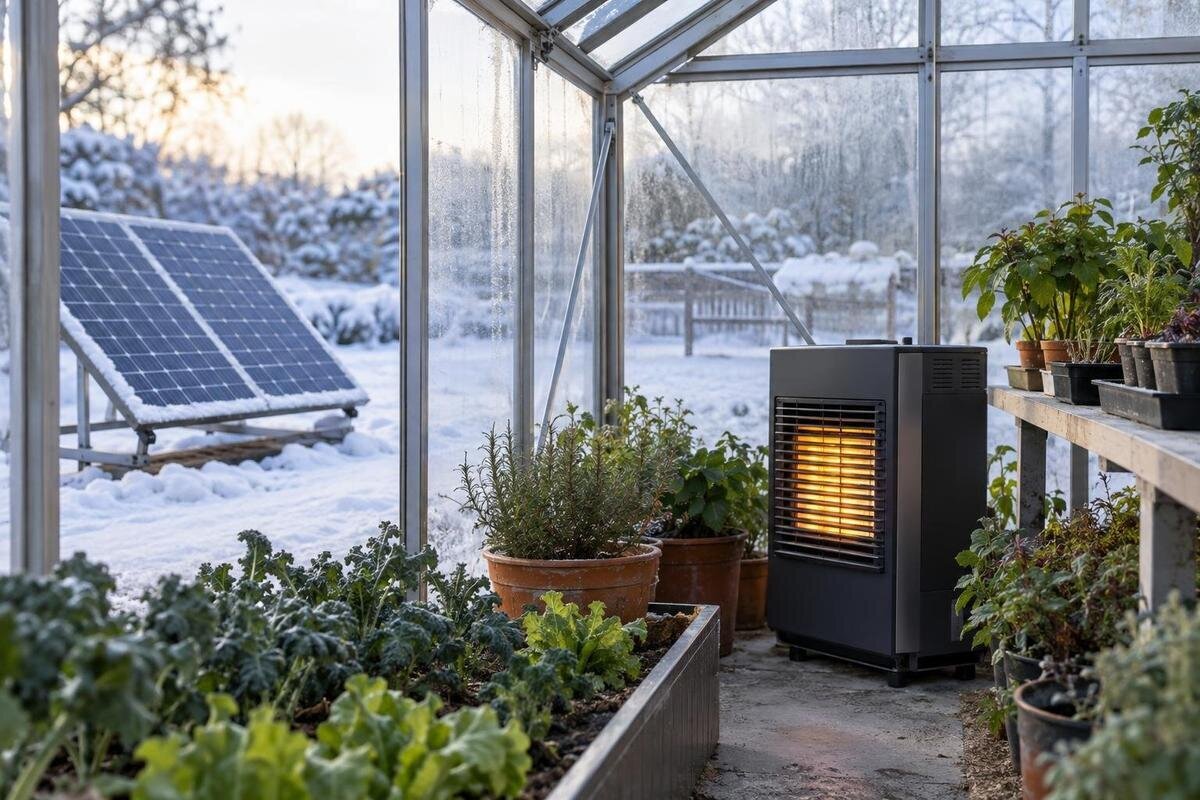
Greenhouse heating and winter energy
Photovoltaic (PV) panels can contribute electricity to a greenhouse heater, but winter is the hardest season in which to rely on them. Days are shorter, output varies with cloud and shade, and heat is often needed after sunset. A realistic assessment compares the greenhouse’s winter electricity use with generation from the exact panel site, then checks what a battery can shift and what covers any shortfall. For many growers, solar is a way to reduce grid imports rather than a promise of an independently heated greenhouse. The result depends on the plants’ requirements, the structure, the heater and the wider electricity system.

01
What winter solar can realistically do
Photovoltaic panels produce electricity, not stored warmth. If that electricity runs an electric heater while the sun is shining, it may displace some imported power at that moment. In a grid-connected arrangement, the grid can provide the remainder when demand exceeds PV output, subject to the system and supply arrangements. Without a battery, daytime generation cannot be carried into the evening. With one, some surplus can be shifted, but only within the battery’s usable capacity and after conversion losses. The amount and timing of generation still vary; a panel’s peak rating or one bright-day demonstration does not show what it will supply through a cold, cloudy spell.
Define the job before judging the system. Protecting a collection from low temperatures is a different task from maintaining warmth for crops with higher needs; set targets using reliable horticultural guidance for the plants you intend to grow. Decide whether all the greenhouse needs conditioning or only a defined area, whether heat is needed overnight and what should happen after several dull days. A solar contribution may be worthwhile even when grid electricity remains essential. Treat full winter self-sufficiency as something to demonstrate from site-specific evidence, rather than an assumption based on an annual output figure.
Measure the heater’s winter energy use
Start with the heater’s winter electricity use, rather than comparing a panel’s peak wattage with a heater’s rating. The heater rating describes the power it may draw while operating; energy use across a night or cold spell depends on run time, control behaviour, outside weather and the chosen temperature. A suitable energy monitor on an existing heater, used according to its instructions, can establish a real pattern. Where measurement involves fixed wiring or you are unsure what is suitable, ask a qualified electrician. If the greenhouse is not yet heated, use a documented heater specification and a professional estimate based on the intended conditions. Keep readings in kilowatt-hours (kWh), and separate the heater from fans or other equipment where possible.
For a planned installation, ask the heating professional to distinguish the required heat output from the electricity needed to deliver it. A direct electric heater and a heat pump do not deliver the same amount of heat per unit of electrical input; for a heat pump, request documented performance at the expected operating conditions rather than relying on a headline rating. Include auxiliary electricity use where relevant, and confirm crop temperature requirements using reliable horticultural advice. The Limited Edition greenhouse range is listed from 40.6 to 302 ft². Identify the selected size and intended heating equipment in the estimate so that you can compare proposals on the same basis.
02
The greenhouse’s heat loss sets demand
Heat demand depends on how readily warmth escapes as well as on the heater. Relevant factors include the area and type of glazing, frame and seals, gaps, ventilation, exposure to wind and the difference between the target inside temperature and outdoor conditions. A run of colder nights can increase the burden compared with a calm, mild period. Floor area alone is not enough: the exposed surface affects heat loss, while the contents and internal volume also influence warming-up requirements. Two greenhouses with the same footprint are not automatically equivalent. Daylight can warm the space temporarily, but do not count on that as reliable heat after sunset. This is why square footage alone cannot sensibly determine a panel or battery size.
For the Bloomcabin Prestige Greenhouse, listed from 40.6–302 ft², request glazing, frame, seal and ventilation details for the selected variant. These give a heating professional a better basis for estimating losses than the catalogue area alone. Ask which outdoor conditions and ventilation settings the estimate assumes, and whether it represents a typical winter period or a more demanding cold spell. If a structure is already in use, note obvious gaps and compare consumption across different weather rather than extrapolating from a sunny day. Record any subsequent repairs or changes to glazing and seals: an estimate made before those changes may no longer describe the greenhouse being heated.
Use a site-specific winter solar forecast
Request a month-by-month estimate for the specific PV array and location, not only an annual yield figure or a generic national average. The forecast should state its assumptions about position, orientation, tilt, shading at different times of year, inverter and system losses. Nearby trees, buildings, chimneys and boundaries can affect winter sunlight; leafless branches may still cast shade. Ask whether the figures describe a typical month or take low-output periods into account, and how uncertainty is presented. A monthly average helps compare seasons, but it will not tell you whether generation is available on the cold, cloudy days when the heater runs longest. Make sure the estimate is based on the final proposed panel position.
Confirm how the modules will be supported. A house roof or ground-mounted array needs its own suitable site assessment, and a greenhouse roof must not be presumed able to carry panels. The manufacturer's documentation and a suitably qualified professional must confirm any proposed mounting arrangement. When considering the Bloomcabin Lean-To Greenhouse, listed from 40–154 ft², include the adjoining building in the site survey: its position may affect shade on the greenhouse or proposed array. Ask the installer to assess the actual relationship between the building, panels and winter sun. Treat panel support and greenhouse placement as separate design questions unless the exact structure is expressly approved for the proposed system.

03
Match generation to heating hours
A monthly energy balance is useful, but timing is decisive. PV output follows daylight, while greenhouse heat may be needed after sunset, overnight and on short winter days. Compare generation and expected or recorded heater use over shorter intervals, using inverter and meter data where available, rather than subtracting one monthly total from another. A midday surplus cannot cover evening demand unless it is stored; electricity exported to the grid is not physically reserved for the greenhouse, and later imports follow the household’s supply arrangements. Look at cold, dull periods as well as typical days, because the worst mismatch matters more than a high-output sunny afternoon.
If the PV system also supplies a house, account for the loads already using its electricity. Household appliances and other equipment may take generation before the greenhouse heater can use it, depending on timing and system controls. For a proposed Bloomcabin Classic Greenhouse, listed from 40.6 to 302.3 ft², compare the planned heating schedule with household demand during the same hours. Ask for the comparison to show electricity used directly from PV, exported, stored and imported separately. This makes a daytime surplus visible without treating it as overnight coverage. Where readings are available, use matching time intervals; figures from different days or weather conditions can give a misleading impression of how well generation and demand coincide.
What a battery can and cannot cover
A battery shifts energy; it does not produce it. Capacity, usually quoted in kWh, describes stored energy, while power, quoted in kW, limits how much can be delivered at once. Those figures answer different questions, particularly when a heater is one of several loads. Ask for usable rather than headline capacity, the system’s delivery limit, compatible inverter details, any reserve unavailable for routine use and the losses involved in charging and discharging. If other household loads share the battery, greenhouse heating may not have sole access to its output. A nominal battery size alone is not enough to tell you how long the heater can run.
Have the installer model more than a single sunny-day cycle. Ask how much winter PV remains after daytime use, how much can actually be stored and what happens after consecutive days when the battery is not fully recharged. If the home uses most generation as it arrives, little may be left for the greenhouse after dark. For a Bloomcabin Pyramid-type greenhouse, listed from 60 to 203 sq ft, provide the heater's expected electricity use and operating hours for the selected configuration. Ask the proposal to show the battery's starting charge, competing loads and remaining reserve through a low-output spell. Those assumptions explain its proposed contribution more clearly than a nominal capacity figure alone.
04
Grid supply, tariffs and backup
A grid connection can cover demand when PV output is insufficient, provided the supply is available and the system is configured for ordinary grid use. Do not assume a standard grid-connected PV installation will keep the heater running in a power cut. Ask the solar installer whether the proposal includes a backup function, which loads it is designed to support and whether battery reserve is held for an outage. Have a qualified electrician confirm compatibility with the heater and controls. Off-grid operation is a different design problem: stored energy, low-output periods and a dependable alternative supply all need professional assessment. Even with a battery, its configuration determines whether power is available to the intended load.
Keep energy cost comparisons separate from claims about physical coverage. Check the actual import rate during heating hours, any time-of-use terms, export payment arrangement and standing charges. These vary by contract and can change the financial value of using or exporting a solar unit, but they do not make the heater's kWh requirement disappear. Include battery and system costs and their stated losses in any financial comparison; without a quote and tariff, no dependable saving or payback figure can be given. Set out what happens if the grid is unavailable or the battery runs low, including a professionally assessed alternative heat source where needed and a way to notice a problem. An additional electric heater is not an outage solution unless a suitable power supply is available.
Reduce the heat requirement first
Reducing demand can make a solar contribution more useful. Group crops with similar temperature needs and, if appropriate for their growing requirements, consider heating a defined bench or inner area rather than the whole greenhouse volume. An internal partition or horticulturally suitable insulating layer may reduce the area being kept warm, but must not compromise light, ventilation, access or safe heater operation. Covering glazing also changes the light reaching plants, and sealing every opening is not an appropriate winter strategy. Choose measures for the crop and structure, not simply because they reduce a theoretical heat loss; preserve the ventilation needed for growing conditions.
The Bloomcabin Spacious Greenhouse listing covers 506–753 ft². For a greenhouse of that listed scale, identify which crops need protection and whether every part needs the same target temperature. Sketch the proposed heated area, benches, access routes and ventilation openings before requesting a revised demand estimate. Ask the supplier which insulation or partition options, if any, are documented for the selected configuration; do not assume accessories are included or compatible. A smaller heated zone is useful only if the intended separation and growing conditions can actually be achieved. Compare the whole-space and zoned proposals on the same weather assumptions, including the cost and practical consequences of creating that zone.

05
Assess the greenhouse and panel site separately
Choose the greenhouse and solar-panel location as related but separate parts of a design. For the greenhouse, record the exact footprint, height, glazing, ventilation arrangement and any documented thermal options; for the array, record the final position and shading. Ask suppliers for specifications for the selected configuration, not general statements about a product family. An annual household solar estimate and a catalogue area cannot substitute for those details. If the structure is not yet on site, keep the drawings and site layout consistent between greenhouse and solar quotes so that shade, access and the area to be heated are not assessed from conflicting plans.
A dimensioned plan is especially useful when comparing different greenhouse shapes. For the T-Shaped Orangery Greenhouse, mark the intended growing areas, heater location and any proposed internal separation on the selected configuration's plan. Ask the estimator to identify which parts are included in the heated area and how the exposed surfaces have been represented. Give the same drawing to everyone preparing a quote, with its revision date clearly recorded. Otherwise, one proposal may assume the whole structure is heated while another covers only part of it. Keep maintenance access and the panel installation's working space visible on the overall site plan so that both projects can be assessed together without confusing their specifications.
Check the result through a cold spell
Once the system is operating, check performance against the estimate rather than relying on memory. Keep records of PV generation, electricity imported and exported, battery charge and discharge if fitted, heater energy use, and indoor and outdoor conditions during representative weather. Comparing the same cold, dull periods across these records helps show whether heating demand rose as solar contribution fell, whether other household loads used the surplus and how much storage was available after dark. A monthly total can conceal a few demanding nights. Use manufacturer-approved monitoring equipment and ask a qualified electrician about any measurement that involves fixed wiring.
Review whether the intended crop target was maintained through a challenging spell and whether grid imports or backup use matched the plan. A mild, bright week does not demonstrate winter resilience. If the figures differ from the forecast, ask the installer to revisit shading, heater use, household loads and battery operation before adding equipment. For the Limited Edition greenhouse with built-in storage, listed from 59.4 to 302 ft², record the selected layout and identify the area covered by the heating measurements. Note changes in stored contents, crop arrangement, doors or partitions that could affect the comparison. Consistent records help distinguish a change in how the greenhouse is used from a shortfall in the solar system's expected contribution.
Frequently asked questions
Can solar panels run a greenhouse heater at night?
PV panels do not generate electricity after dark. A battery can supply some energy stored during the day, but usable capacity, discharge limits, conversion losses and competing household loads all affect how much reaches the heater. Without stored energy or an available grid supply, you need another suitable backup.
Will a battery make my greenhouse self-sufficient?
Not by itself. The battery can shift energy, but it cannot make more electricity than the panels generate. Assess winter generation, usable battery capacity, power output, other loads and the length of low-sun periods together. Ask an installer to explain the assumptions behind any claim of independence.
Can I mount PV panels on my greenhouse roof?
Do not assume the roof is designed to support them. A product name, photograph or greenhouse area does not establish load capacity. Check the manufacturer’s documentation and have a suitably qualified professional assess the exact structure and proposed mounting system. A separate roof or ground-mounted array is another option to assess.
Is annual solar output enough to judge winter heating?
No. An annual total can hide low winter generation and long periods when heat is needed after sunset. Use an estimate for the specific panel site by month, and compare output with heater use over the timescale relevant to the heating schedule. Account for shading and other loads on the system.
How can I estimate the cost of solar heating?
Start with measured or professionally estimated heater use in kWh, then apply your actual import tariff and export terms. Include any battery’s stated losses and the quoted system costs in the comparison. Without those details there is no dependable universal saving or payback figure.
Solar panels can support greenhouse heating in winter when local output, time-matched demand and any battery are assessed together; they should not be treated as a guarantee of heat through cold, dark spells. Define the crop target, establish the likely load for the exact structure, obtain a winter-specific PV estimate and compare it with grid supply and suitable backup. If the figures show that solar covers only part of demand, that can still be useful, provided the remaining energy need is understood.
