
Starting Dahlias in a Greenhouse Before Planting Out
Dahlia growing guide
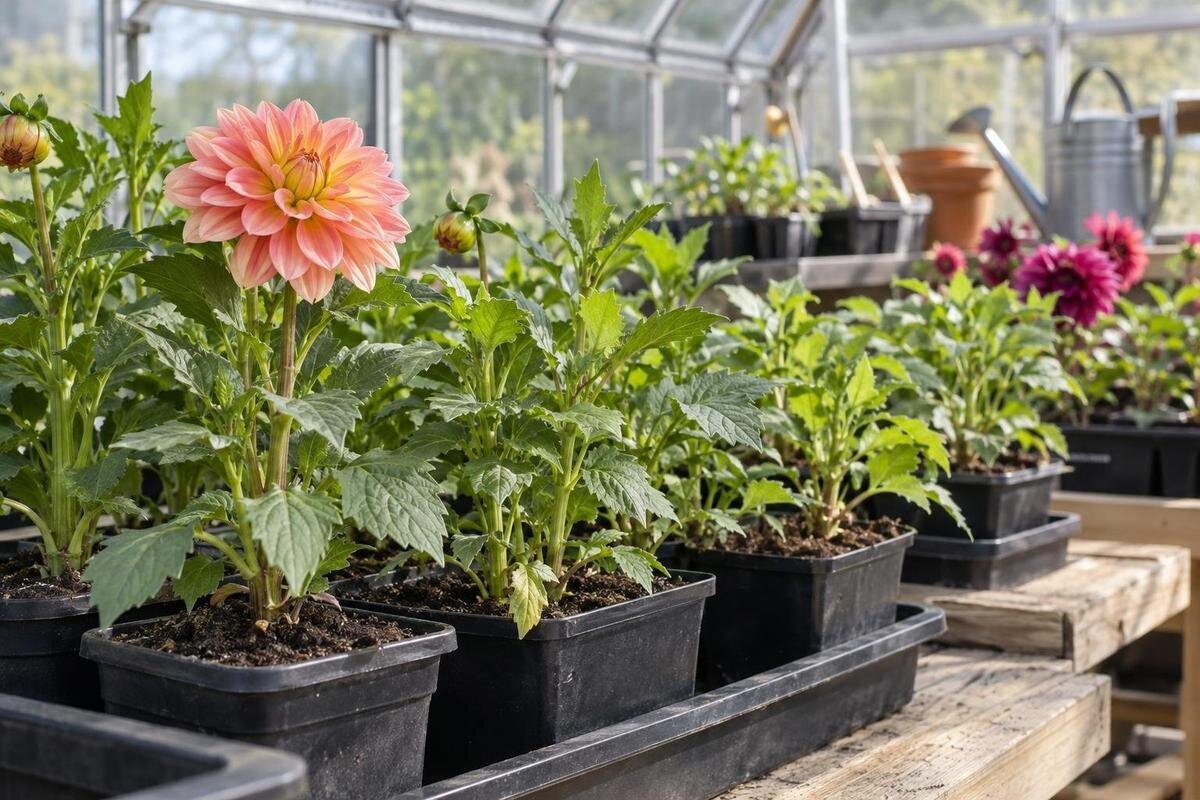
Starting dahlias in a greenhouse lets tubers sprout and young plants establish before they face the garden. The advantage depends on keeping them bright and frost-free, not simply potting them early. This guide covers tuber checks, potting, greenhouse care, staging space and the gradual move outdoors.

01
Why start dahlias under glass?
Starting dahlias in pots under glass gives tubers time to sprout while outdoor beds are still cold or unsettled. By planting-out time, a tuber may have made roots and sturdy shoots, giving it a head start over one planted straight into the ground. That can bring flowering forward, but does not guarantee flowers on a particular date: variety, light, watering and weather after planting all affect progress. The main gain is control over the early stage, especially if you want to raise several named varieties separately. It also lets you spot a slow or damaged tuber before it takes up space in a border.
Dahlias are frost-sensitive, so emerging growth needs protection from freezing. An unheated greenhouse shelters plants from wind and rain but may still become very cold overnight; glass alone does not guarantee frost protection. Put a minimum thermometer near the pots rather than judging the air by touch, and decide where containers can go during a cold spell. When considering a Classic aluminium greenhouse, include this overnight monitoring in your plans. Record the lowest readings alongside the weather forecast to understand conditions at pot level. A sunny afternoon is not evidence that the space will remain frost-free until morning.
Check the greenhouse before potting
Before bringing tubers in, check how much daylight the greenhouse receives and where pots can stand without blocking the path. Choose a position where you can reach each container to water it, read its label and inspect its leaves. Avoid filling every shelf: you will need room to ventilate, lift pots out and move them if conditions change. If the greenhouse already holds other plants, set aside a clear area for dahlias rather than squeezing them into whatever space remains. A separate staging area also makes it easier to notice a pot that is drying out or developing a problem.
Assess the site as well as the structure. A wall, fence or nearby building may shade the growing area, and stored equipment can obstruct a door or reduce access. Observe where shadows fall in the morning and afternoon, rather than judging the position at one sunny moment. If you are considering a Lean-To Greenhouse, compare the selected configuration's dimensions with your available space and the position of surrounding buildings. Allow access to the pots once benches are installed, and check that doors and vents can open without obstruction. A sheltered site can still be too shaded for sturdy young growth.
02
Plan tuber numbers around usable space
Count the pots you can accommodate before deciding how many tubers to start. A dormant tuber takes up little room, but its pot will stay in place for weeks and its foliage needs more space as it grows. Leave gaps around containers so you can reach them without knocking stems, and keep labels where they can be read from the path. Lay out a few empty pots on the bench to test the arrangement, allowing room beyond their rims for developing leaves. Reserve space for plants that may need larger pots if planting out is delayed. For a mixed collection, label each pot with its variety and potting date rather than relying on memory once several shoots look alike.
Storage and work areas take up space as well as plants. The listing for a greenhouse with built-in storage gives sizes from 59.4 to 302 ft²; those figures describe the listed size range, not spare bench capacity. Check the chosen configuration and allow for storage, paths and access before estimating how many pots will fit. Even a large stated area can become awkward if containers block a vent or make watering difficult. For a small batch, an existing clear bench may be more useful than a larger floor area filled with equipment.
Inspect tubers for a sound crown and eyes
Unpack tubers gently and inspect them before putting them into compost. Healthy planting material should feel firm rather than mushy, with no wet, spreading rot. Slight wrinkling after storage does not, by itself, prove that a tuber is dead. Remove loose packing material and keep varieties separate while you check them. Discard badly decayed tubers rather than trying to start them alongside sound material. If one looks doubtful but is still firm, pot it separately and label it so you can monitor its progress. Handle the narrow necks joining the storage roots to the crown carefully: they can break if you lift a heavy cluster by a single root.
Look for the crown, where the tuber cluster joins the old stem, and check for small buds or eyes around it. A dahlia needs an eye attached to crown tissue to produce a shoot; a detached storage root with no eye will not grow into a plant. If you divide a clump, make sure each piece has a sound tuber and a visible eye before cutting. When eyes are hard to see, leave the cluster intact rather than splitting it by guesswork. Clear labels also help you identify slow starters if different varieties begin growing at different times.

03
When to pot dahlia tubers
In the UK, March or April is a common time to pot dahlia tubers under cover, but treat those months as a broad guide rather than a deadline. Work back from when you expect to plant outside, using local frost risk and the state of your garden rather than a fixed national date. Starting too early can leave long shoots and crowded roots waiting in pots while nights remain cold. If your greenhouse cannot stay frost-free, delay potting or move newly potted tubers to a safer place until conditions settle. The aim is sturdy, manageable growth, not the earliest possible shoot.
Match the batch to the amount of bright, protected space you can provide throughout the waiting period. The longer plants remain in pots, the more likely they are to need rearranging or potting on, so a smaller batch can be easier to manage than many early starts. Remember that spring seedlings may need the same benches just as the dahlias begin to spread. When comparing the Limited Edition aluminium greenhouse, use the selected configuration's dimensions to plan space for both crops at their busiest stage. If that overlap would leave plants crowded or shaded, starting fewer tubers or potting some later is a more practical choice.
Pot tubers with the crown near the surface
Use clean pots with drainage holes and fresh, free-draining multipurpose compost. Choose a pot that accommodates the whole tuber cluster without forcing it in or breaking its necks, with a little room for compost around it. Avoid an unnecessarily large container, which holds more wet compost than a newly starting plant can use. Moisten the compost before use so it is damp rather than sodden, then put enough in the pot to support the tuber. Set the tuber with the old stem or crown uppermost and any visible eyes near the surface. Cover the storage roots with compost, but leave an emerging shoot exposed. Leave a little space at the rim for watering, press the compost only lightly and attach the variety label.
Prepare a clear place for each container before opening the tubers, so that none are left lying on a bench while you organise the rest. If you are choosing a greenhouse for potting and staging, compare the plan of the T-Shaped Orangery Greenhouse with your working arrangement. Allow space for a potting surface, compost and a clear route for carrying filled containers; the overall shape does not establish the available bench area. Keep tools and labels within reach while you work, then clear loose compost from the staging. Group pots by variety or start date without stacking them or blocking access to the plants.
04
Water carefully as the shoots appear
Water sparingly at first. A dormant tuber in permanently wet compost can rot before it has made roots, so if the mix is already damp, do not keep adding water simply because the pot has been filled. Check moisture with a finger and make sure excess can drain away. Once shoots are clearly growing, water more thoroughly and allow the pot to drain; aim for evenly moist compost, not a saturated base. The surface may dry faster on a sunny day than the lower compost, so check a little below the top instead of reacting to the surface alone.
As leaves develop, plants use more water, but there is no useful fixed daily schedule for every pot. Pot size, compost, greenhouse warmth and ventilation all affect how quickly it dries. Check containers regularly and adjust to what you feel, rather than letting them wilt and then soaking them repeatedly. Empty standing water from trays and remove fallen leaves from the bench. Use these checks to inspect shoot tips and leaf undersides for aphids, and look for slug damage on tender growth, particularly around pots standing near the ground. Isolate a plant with a developing pest problem while you identify it and choose an appropriate control. If one tuber fails to shoot, inspect it separately rather than increasing its watering to match vigorous neighbours.
Give young plants light and ventilation
Place pots in the brightest practical part of the greenhouse. Dahlia shoots grown in low light can become pale, elongated and weak, especially when warmth encourages growth faster than available light. Avoid hiding them behind stored compost or taller plants, and leave enough distance for leaves to receive light from above and the sides. Turn pots gently if stems lean strongly in one direction. A warm, dark corner is not a useful shortcut: strong light and protection from frost matter more than trying to force rapid growth.
Greenhouses can warm quickly in spring sunshine even while nights stay cold. Ventilate on mild, bright days to prevent the space becoming hot and stuffy, then adjust openings as the weather cools. Check plants as well as the thermometer: wilting in damp compost calls for a check of heat and root condition, not an automatic extra watering. When comparing a Prestige Greenhouse with Metallic Base, look at the specified ventilation arrangements and whether you can reach and operate the openings with benches in place. Ask which controls are included in the selected configuration. Keep foliage clear of opening vents so that ventilation remains usable as the plants grow.

05
Leave room for taller plants and moving pots
Keep pots spaced as stems and leaves develop, not just when they are newly planted. Crowded foliage is harder to inspect, and stems can be damaged when they rub against neighbouring containers during watering or moving. Tall varieties may need support before they lean: use a cane in the pot and tie the stem loosely, without fastening it to greenhouse glazing or framework. If you want a bushier plant, pinch out the growing tip only once it is established and has several pairs of leaves. This encourages branching, but can delay flowering. If outdoor planting is delayed and roots have filled the container, move the plant into a slightly larger pot with fresh compost. Support the rootball during the move rather than pulling on the stem, then allow room for the larger container on the bench.
Check headroom and access as well as floor area, particularly if you are raising tall varieties or using large pots. A greenhouse may have room for a bench yet still be awkward for reaching and carrying plants once their stems are long. The Spacious Greenhouse listing gives sizes from 506 to 753 ft²; that scale is not a requirement for starting a few tubers. If you are considering a larger structure for a collection, check the chosen option's plan for usable bench space, height and a clear path rather than relying on its name or total area.
Harden off before planting outside
Greenhouse-grown plants need hardening off before they meet full outdoor sun, wind and cooler nights. Begin when they are growing strongly and the forecast is suitable. Over about a week or two, put pots outside in a sheltered position for part of the day, then gradually lengthen their time out and introduce more sun and air movement. Bring them back under cover at night if it is cold, and pause the process during strong wind or an abrupt cold spell. Check the pots while they are outside: sun and moving air can dry compost more quickly than the greenhouse does.
Plant dahlias into the garden only when local frost risk has passed; late May or June is a common UK guide, not a promise for every year or site. Choose a sunny position with soil that drains freely, and prepare the bed before taking the plants out of their pots. Set each plant at the same compost level it occupied in its container, keeping the rootball intact, then water it in and label its position. Put supports for taller varieties in place at planting to avoid disturbing established roots later. For a large batch, plan the daily carrying route during hardening off: the Pyramid-type greenhouse listing covers 60 to 203 ft², but you will need the selected layout and doorway dimensions to assess access with filled pots.
Frequently asked questions
Can I start dahlias in an unheated greenhouse?
Yes, if you can keep the pots from freezing. An unheated greenhouse may still become very cold overnight, so monitor conditions near the plants and move pots to a frost-free place during cold spells. Do not assume that the glass alone protects new shoots from frost.
When should I pot dahlia tubers in the UK?
March or April is a common guide for starting tubers under cover, but the right time depends on your local planting window and greenhouse conditions. Aim for sturdy, manageable growth when outdoor planting becomes realistic, rather than potting as early as possible.
How often should I water potted dahlia tubers?
Check the compost rather than following a fixed schedule. Keep it only slightly moist before shoots appear, then water more thoroughly as growth develops, allowing excess to drain away. Pots dry at different rates depending on their size, compost and greenhouse conditions.
Do greenhouse-grown dahlias need hardening off?
Yes. Gradually expose them to outdoor light, wind and cooler air over about a week or two. Start in a sheltered place for part of the day, extend their time outside as conditions allow, and bring them under cover at night if it is cold.
When can I plant dahlias outside?
Wait until the risk of frost has passed in your garden. Late May or June is a common UK guide, but the season and conditions at your site can shift the timing. Harden plants off first, and keep them under cover if a cold spell delays planting.
A successful greenhouse start balances a useful head start with enough restraint to keep young growth healthy. Check for viable eyes, avoid waterlogged compost, give shoots light and room, and plan for cold nights as well as bright days. When the plants are sturdy, harden them off gradually and plant out in response to local frost risk, not a fixed date.
